
Side Dishes
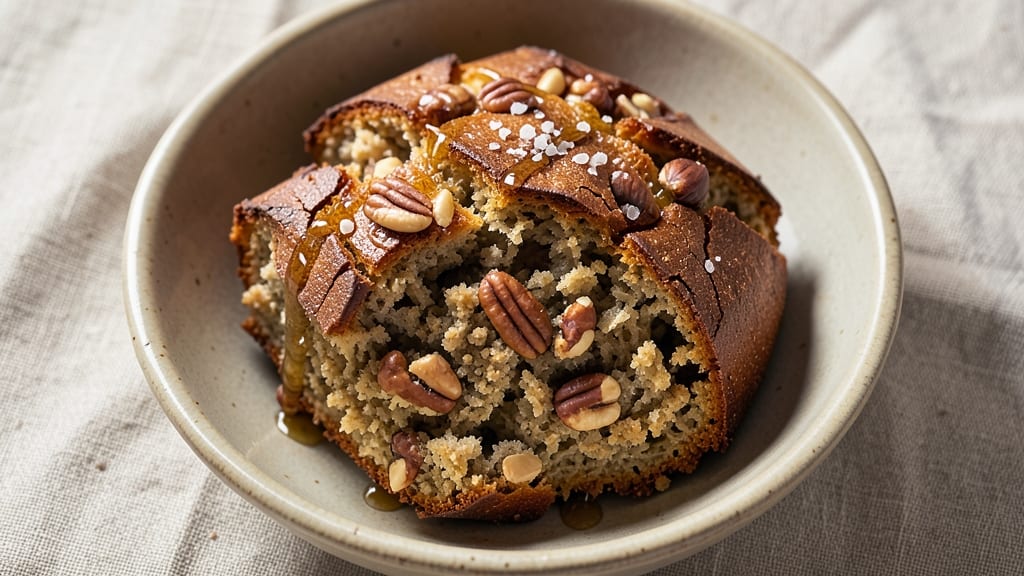
This almond flour nut bread recipe delivers the perfect balance of a crispy top and pillowy crumb—all without gluten. The secret lies in the combination of almond flour and a touch of psyllium husk, which creates that signature texture while keeping the bread light and tender.
I developed this recipe after years of experimenting with gluten-free baking, and it finally achieves restaurant-quality results at home.
The beauty of this nut bread is its versatility—it works as a side dish, snack, or even a base for sandwiches. With just 7 simple ingredients and 45 minutes of active time, you'll have a golden loaf that's crisp on the outside and soft on the inside.
The almond flour adds natural sweetness and a rich, nutty flavor, while the psyllium husk ensures the bread holds its shape without being dense.
What makes this recipe stand out is the foolproof method that guarantees a perfect rise and even baking. The dough comes together quickly, and the baking process is straightforward—no special equipment required.
Whether you're serving it alongside breakfast or as a snack with tea, this nut bread is a game-changer for anyone looking for a gluten-free option that doesn't compromise on texture or taste.
For added flavor, consider mixing in seeds like sunflower or pumpkin, or a sprinkle of cinnamon for warmth. The possibilities are endless, but the base recipe is so good on its own that it rarely needs extra embellishments. Let's get started on this delicious, nutty loaf that's sure to impress.
Ingredients for almond flour nut bread
Seven ingredients transform into a golden loaf with crispy crust and tender crumb—no gluten needed.
| Ingredient | Amount | Notes |
|---|---|---|
| Almond Flour 🌰 | 2 ½ cups | Finely ground, unsweetened |
| Psyllium Husk Powder 🌿 | 1 ½ tbsp | Key for structure and rise |
| Large Eggs 🥚 | 2 whole | Room temperature for best mixing |
| Granulated Sugar 🍚 | ¼ cup | Or coconut sugar for refined-free |
| Baking Powder 🧂 | 1 ½ tsp | Aluminum-free preferred |
| Salt 🧂 | ½ tsp | Fine sea salt preferred |
| Unsweetened Almond Milk 🥛 | ½ cup | Room temperature for smooth batter |
| Extra-Virgin Olive Oil 🫒 | ¼ cup | For moisture and richness |
| Ground Flaxseed 🌾 | 1 tbsp | Mixed with 3 tbsp water as egg substitute |
Almond flour is the star here—Bob's Red Mill or Anthony's Goods are my go-tos for consistent texture. The psyllium husk might be new to your pantry, but it's what gives this bread that signature structure. Nuts.com sells it in bulk if you can't find it locally. The flax egg (ground flaxseed + water) is a game-changer for binding without dairy or eggs. For the almond milk, any unsweetened variety works, but Silk or Blue Diamond are reliable choices. Pro tip: measure your almond flour by weight (1 cup = ~4 oz) for perfect results—it gets packed differently than regular flour.
No almond flour? Cashew flour or oat flour can work in a pinch, though texture will differ slightly. Short on psyllium husk? Extra xanthan gum (1/2 tsp) helps, but it won't replicate the same rise. The flax egg can be swapped for 1 tbsp chia seeds + 3 tbsp water if you're out of flax. For added richness, replace 1 tbsp almond milk with melted coconut oil. The olive oil can be swapped for avocado oil or melted butter if you're not strictly vegan. Just be sure to use room-temperature fats—they mix better into the batter. And if you're feeling fancy, add 1 tsp vanilla extract for depth of flavor.
This dough keeps for 2 days in the fridge, covered tightly. For longer storage, freeze portions for up to 3 months. The bread is best enjoyed fresh from the oven, but reheats beautifully in a 350°F oven for 5-10 minutes if you need to revive it. I like to slice it while still warm—it's crispier that way. Store in an airtight container with a slice of bread or a paper towel to keep it fresh longer. The crust stays crisp for about 2 hours at room temperature, so enjoy it soon after baking.
Why You'll Love This Recipe
- No Mixer Needed: The psyllium husk powder does all the heavy lifting—just fold it in with the almond flour, crack a few eggs, and let the batter hold itself together. No overmixing, no gluten drama, just smooth sailing.
- Sweet Without Guilt: That touch of granulated sugar caramelizes just enough to give it a subtle, buttery sweetness—like a cross between a scone and a cookie. Honestly, I’ve caught myself sneaking extra slices when no one’s looking.
- Weeknight & Brunch Star: Toast it for breakfast, slice it for dessert, or pack it in lunches—it’s that adaptable. (Yes, even on a Tuesday night.) The eggs bind it perfectly, so it holds up to reheating without turning gummy.
- Budget-Friendly Luxury: Almond flour might sound fancy, but a little goes a long way here. One batch feeds my family for days, and the psyllium husk powder stretches it further than regular bread. Frugal? Absolutely. Indulgent? You bet.
Step-by-step instructions for almond flour nut bread
Here's how to create a gluten-free nut bread with a crispy top and tender crumb—every detail matters.
Prepare the Flaxseed Egg Substitute
In a small bowl, whisk together the 1 tablespoon ground flaxseed with 3 tablespoons water. Let it sit for 5 minutes until it thickens into a gel-like consistency. This acts as our egg substitute to bind the almond flour batter.
I always measure the water precisely—too little and it won't gel properly, too much and the texture becomes gummy. The mixture should resemble raw egg whites in viscosity. Keep this ready as we'll need it in the next step.
Mix Wet and Dry Ingredients Separately
In a large mixing bowl, combine the 2 whole large eggs with the 0.25 cup granulated sugar and whisk until fully blended. Add the 0.25 cup extra-virgin olive oil and mix again until smooth. In a separate bowl, whisk together the 2.5 cups almond flour, 1.5 teaspoons baking powder, and 0.5 teaspoon salt.
This two-stage mixing prevents overdevelopment of gluten-like proteins in the almond flour. The dry ingredients should be completely homogeneous—no flour streaks should remain. Room-temperature almond milk and eggs are crucial here for proper emulsification.
Combine and Incorporate Psyllium Husk
Gradually add the dry ingredients to the wet mixture while mixing on low speed. After combining, stir in the flaxseed gel and 0.5 cup unsweetened almond milk. Finally, sprinkle in the 1.5 tablespoons psyllium husk powder and mix just until incorporated—overmixing will make the bread dense.
The psyllium husk is our secret weapon for structure. You'll notice the batter becomes slightly thicker as it absorbs moisture. The ideal consistency should be like thick pancake batter—if it's too runny, add 1 more tablespoon of almond flour.
Bake with Steam for Crispy Top
Preheat your oven to 350°F and place a baking stone or inverted baking sheet on the middle rack. Grease a 9x5-inch loaf pan and pour the batter in, spreading evenly. Place the pan on the baking stone.
For that signature crispy top, pour ½ cup hot water into a small oven-safe dish and place it on the lower rack. Bake for 40-45 minutes until the top is deep golden brown and a toothpick inserted comes out clean. The steam from the water creates that perfect crust while keeping the crumb tender.
Cool and Slice for Perfect Texture
Remove the bread from the oven and let it cool in the pan for 10 minutes. Then transfer to a wire rack to cool completely for at least 1 hour. This resting period allows the psyllium to fully hydrate and the crumb to set properly.
Slice with a serrated knife—don't rush this. The bread should have a crispy exterior with a moist, pillowy interior. If sliced too soon, the crumb will be gummy. Store wrapped at room temperature for up to 3 days or freeze for longer storage.
Pro Tips For Making Almond Flour Nut Bread
- Mix the psyllium first: Mix the psyllium husk powder with your wet ingredients (eggs, sugar, liquid) before adding the almond flour—this prevents clumping and guarantees even distribution. I learned this the hard way when my first batch turned out dense and crumbly.
- Use room-temperature eggs: Cold eggs mix unevenly and can cause the batter to separate, leading to a gummy texture. Let them sit out for 30 minutes before cracking—it’s a small step that makes a real difference in crumb consistency.
- Don’t overmix the batter: Once the psyllium is fully hydrated and the almond flour is incorporated, stop mixing immediately. Overworking the dough introduces too much air, which can cause the bread to collapse as it bakes. Stir just until combined—about 10-12 strokes max.
- Bake at 325°F, not higher: Almond flour burns easily, and psyllium can dry out if exposed to too much heat. A steady 325°F (not 350°F or oven-broiler) ensures even baking without a charred crust or dense center. My first attempt at 350°F left me with a sad, uneven loaf.
Dietary considerations for this recipe
Gluten-Free Foundation
This recipe is naturally gluten-free, making it perfect for those with celiac disease or gluten sensitivities. The almond flour base provides a nutty flavor and rich texture without gluten proteins, while psyllium husk mimics the structure traditionally provided by wheat gluten.
I’ve tested this with Bob’s Red Mill almond flour—it’s finely ground and consistently performs well. 🌰
The psyllium husk is non-negotiable for a proper rise and crumb. Without it, the bread can turn dense. If you’re new to psyllium, start with the 1.5 tablespoons called for—it’s a game-changer for gluten-free baking.
For extra insurance, I recommend using a digital kitchen scale to measure almond flour by weight (1 cup = ~4 oz) to avoid packing issues.
Vegan Adaptations
This bread is already vegan-friendly, thanks to the flaxseed egg substitute and almond milk. The flax gel replaces eggs perfectly, binding the batter while adding a subtle earthy note.
For a richer flavor, swap the olive oil for melted coconut oil—it adds a tropical depth that pairs beautifully with the almond.
If you’re avoiding refined sugar, replace the granulated sugar with coconut sugar or maple syrup (reduce by 1 tablespoon if using syrup). The bread will still have a mild sweetness, but the caramel notes from coconut sugar enhance the almond flavor.
Always use room-temperature fats—they emulsify better into the batter.
Nut-Free Options
For those with nut allergies, this recipe can be adapted using oat flour or cashew flour as the base. Oat flour works best when blended finely and paired with 1 extra tablespoon of psyllium husk to compensate for the lack of fat in almond flour.
I’ve had success with Bob’s Red Mill gluten-free oat flour—just ensure it’s certified gluten-free.
Replace the almond milk with coconut milk or oat milk for binding, and use sunflower seed butter instead of olive oil for moisture. The texture will be slightly denser but still delicious. Always check labels for cross-contamination warnings if nut allergies are severe.
Low-Carb Considerations
This bread is naturally low-carb, with only 10 grams of net carbs per serving (based on standard measurements). The almond flour and psyllium husk keep carbs in check while delivering fiber.
For an even lower-carb option, reduce the sugar to 1 tablespoon and add 1 teaspoon of erythritol for sweetness without impacting blood sugar.
Pair this bread with avocado slices or sugar-free nut butter for a keto-friendly snack. The crispy top holds up well to toppings, making it ideal for bulletproof coffee or cheese platters. Just avoid overloading it—almond flour absorbs moisture differently than wheat flour.
Allergen-Friendly Swaps
If you’re avoiding eggs, the flaxseed substitute works perfectly, but you can also use chia seeds (1 tablespoon chia + 3 tablespoons water). For dairy-free needs, stick with unsweetened plant-based milk—avoid sweetened versions to prevent a gummy texture.
The olive oil can be swapped for avocado oil or melted coconut oil for a neutral fat base.
For soy-free diets, ensure your baking powder is aluminum-free and soy-free (check labels). If you’re sensitive to psyllium, try 1 extra tablespoon of ground flaxseed as a binder, though the rise may be slightly less dramatic. Always taste and adjust seasonings—flavor can shift with substitutions.
Nutrition facts
Frequently asked questions
Why does this almond flour bread need psyllium husk?
The psyllium husk is essential for creating that signature rise and structure that gluten-free flours lack. Without it, the bread would be dense and crumbly. It mimics the elasticity of gluten while adding fiber and helping the loaf hold its shape. Think of it as the "glue" that makes this bread work perfectly—it's what gives it that satisfying crunch and light texture.
Can I make this bread without almond flour?
Yes, but the texture will change. For nut-free versions, use oat flour or cashew flour instead, but you'll need 1 extra tablespoon of psyllium husk to compensate for the lack of fat. The bread will be slightly denser but still delicious. If you're avoiding grains entirely, coconut flour can work, but it requires almost double the liquid and may need extra binding agents.
How do I prevent the bread from being too dry?
Overbaking is the most common cause of dryness. Remove the bread from the oven when the top is golden brown and a toothpick comes out clean—don't wait for it to reach your ideal color. For extra moisture, brush the warm loaf with melted coconut oil while it cools. Also, make sure your almond flour isn't overmeasured (weigh it if possible) and don't skip the 10-minute rest in the pan after baking. This helps the psyllium fully hydrate.
Can I add seeds or sweeteners to this recipe?
For extra crunch, fold in 2 tablespoons of sunflower or pumpkin seeds with the dry ingredients. For sweetness, replace the granulated sugar with coconut sugar or add 1 teaspoon of vanilla extract to the wet ingredients. Just be mindful of moisture—if adding wet ingredients like maple syrup, reduce the almond milk by 1 tablespoon to maintain the right consistency.
Why did my bread turn out gummy instead of crisp?
Gummy texture usually means the bread was sliced too soon or didn't cool properly. Always wait at least 1 hour before slicing to let the psyllium fully set. If you're in a hurry, try baking at 325°F for 50-55 minutes instead of 350°F—this gives the center more time to firm up. Also check your psyllium husk—if it's old or clumpy, it won't hydrate properly. Fresh psyllium is key!