
Side Dishes
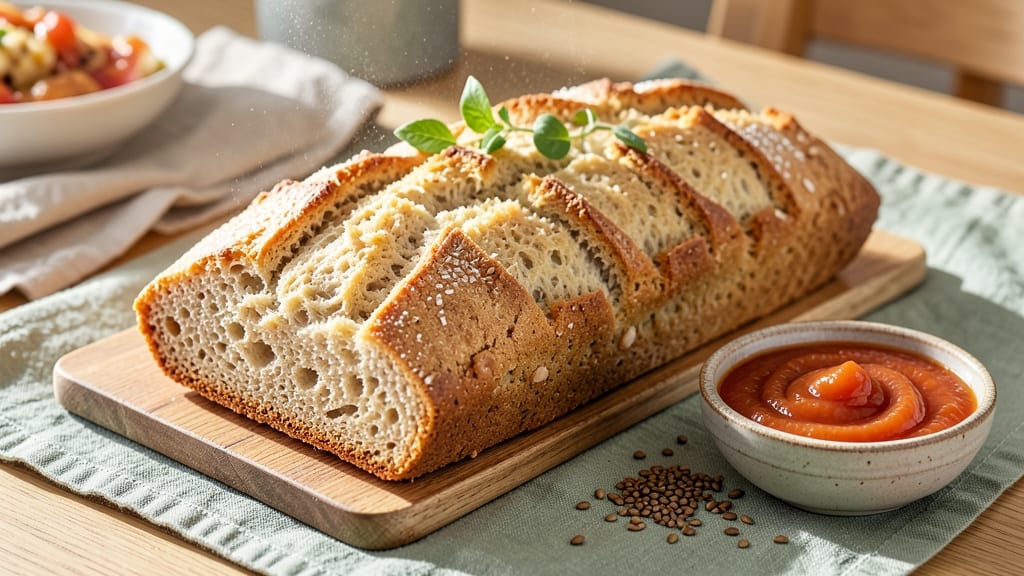
This almond flour and coconut flour bread recipe delivers a lightweight, gluten-free loaf that surprises with its airy texture and nutty flavor. ✨ After years of experimenting with grain-free baking, I've perfected a method that creates a bread with just the right crumb—tender yet sturdy enough to slice without crumbling.
The combination of these two flours creates a unique texture that's nothing like traditional bread, but still satisfies that craving for something warm and comforting.
The secret lies in proper hydration and binding—coconut flour absorbs moisture aggressively, while almond flour adds richness and structure. I use flax eggs for binding (no cholesterol, no guilt) and a touch of apple cider vinegar to activate the leavening agents.
This recipe yields a loaf that's naturally sweet from the nuts, with a delicate crumb that holds up beautifully for toast or sandwiches.
What makes this recipe truly special is how it bakes up with a golden crust and an open, even crumb—no dense, brick-like results here. The bread stays fresh for days when stored properly, making it perfect for meal prep or sharing with friends who need gluten-free options.
With just 8 simple ingredients, you'll be amazed at how restaurant-quality this loaf turns out.
Whether you're following a gluten-free diet, avoiding grains, or simply curious about nut-based baking, this recipe delivers results that will change how you think about grain-free bread. The method is straightforward, and I've included troubleshooting tips for common issues like density or crumbling. Let's get baking!
Ingredients for almond flour and coconut flour bread
Eight simple ingredients transform into a golden, gluten-free loaf with perfect crumb and nutty richness.
| Ingredient | Amount | Notes |
|---|---|---|
| Blanched Almond Flour 🌰 | 2 ½ cups | Finely ground, unsweetened |
| Coconut Flour 🥥 | ½ cup | Unsweetened, sifted |
| Ground Flaxseed 🌾 | 3 tbsp | For flax eggs |
| Filtered Water 💧 | ¾ cup | For flax eggs |
| Unsweetened Applesauce 🍎 | ½ cup | For moisture binding |
| Apple Cider Vinegar 🍏 | 1 tbsp | Activates leavening |
| Baking Soda 🧂 | 1 ½ tsp | Diamond Crystal preferred |
| Sea Salt 🧂 | 1 ½ tsp | Fine grain preferred |
| Pure Maple Syrup 🍁 | 2 tbsp | For subtle sweetness |
| Cold-Pressed Olive Oil 🫒 | ¼ cup | Extra-virgin preferred |
| Pomegranate Juice 🍇 | ¼ cup | For fermentation |
The almond flour is the backbone of this recipe—Bob's Red Mill blanched almond flour is my go-to as it's finely ground and unsweetened. Coconut flour, while less common, is essential for structure but absorbs moisture aggressively, so measure it carefully and sift before mixing. For the flax eggs, Bob's Red Mill ground flaxseed works best, and let the mixture sit for 5 minutes to fully gel. The applesauce acts as a binder, so don't substitute with oil unless you're comfortable adjusting hydration. Whole Foods or Trader Joe's carry all these ingredients in their baking sections.
No applesauce? Unsweetened mashed banana works in a pinch, though it adds a slightly different texture. Substitute pomegranate juice with sparkling water and 1 tsp lemon juice for a lighter rise, though flavor will differ. For a sweeter loaf, increase maple syrup to 3 tbsp, but the natural sweetness of the nuts balances well. The baking soda must be Diamond Crystal—Aluminum-free brands like this react properly with vinegar. If you're concerned about density, add 1 tsp psyllium husk to the dry ingredients for extra lift.
This bread keeps remarkably well—3-4 days in an airtight container at room temperature, or up to 1 week in the fridge. For longer storage, slice and freeze portions for up to 3 months. The crust stays crisp for about 2 days, so toast immediately if you prefer that texture. To revive stale slices, wrap in a damp towel and microwave for 15 seconds. The loaf is best baked fresh, but reheating in a 350°F oven for 5 minutes restores its warmth.
Why You'll Love This Recipe
- No Mixer Needed: I swear by this recipe when my hands are full—just stir, pour, and bake. The ground flaxseed and applesauce do all the heavy lifting for a light, airy crumb without a single whisk stroke.
- Nutty-Sweet Magic: That combo of almond flour and applesauce? It’s like a warm hug in bread form—naturally sweet, subtly rich, and just enough coconut flour to keep it tender. Honestly, I’ve never missed refined flour in toast this good.
- Weeknight Hero: Slice it fresh for breakfast or pack it for lunch—it stays soft for days (yes, even when my kids forget their lunchboxes). The coconut flour keeps it from drying out like regular bread, so it’s my go-to for grab-and-go mornings.
- Budget-Friendly Staple: A little goes a long way, and the ingredients last forever. I buy almond flour in bulk, and the flaxseed adds protein without breaking the bank. Between us, this bread costs less than half what I used to spend on store-bought, and it’s way better.
Step-by-step instructions for almond flour and coconut flour bread
This gluten-free loaf delivers perfect texture and rise using precise ratios and technique.
👨🍳 Step 1: Create Flax Eggs and Combine Wet Ingredients
In a small bowl, whisk together the 3 tbsp ground flaxseed with the 0.75 cup filtered water. Let it sit for 5 minutes until it thickens into a gel-like consistency—this is your flax egg substitute. In a separate large bowl, combine the 0.5 cup unsweetened applesauce, 0.25 cup pomegranate juice, 0.25 cup cold-pressed olive oil, and 2 tbsp pure maple syrup. Mix well until fully emulsified, creating a smooth base.
Here's the thing—pomegranate juice acts as a natural fermenting agent, while the applesauce binds moisture without adding density. The olive oil ensures tender crumb, but don't overmix or you'll develop gluten-like toughness. The mixture should be thick but pourable, like heavy batter.
👨🍳 Step 2: Sift Dry Ingredients and Mix with Wet
In a medium bowl, sift together the 2.5 cups blanched almond flour and 0.5 cup coconut flour. This prevents clumping and ensures even distribution. Add the 1.5 tsp baking soda and 1.5 tsp sea salt, then whisk to combine. Create a well in the center and pour in the wet ingredients along with the flax egg mixture.
Using a silicone spatula, gently fold everything together until just combined—you should still see dry flour streaks. Overmixing develops gluten-like proteins in the almond flour, leading to dense bread. The batter will be thick and sticky, similar to cookie dough but with more moisture from the pomegranate juice.
🍳 Step 3: Add Vinegar and Rest for Optimal Rise
Stir in the 1 tbsp apple cider vinegar last—this activates the baking soda immediately, creating tiny air pockets that help with rise. Transfer the batter to a greased 8.5x4.5-inch loaf pan (or equivalent) and smooth the top with a spatula. Tap the pan gently on the counter 3-4 times to remove any air bubbles trapped in the batter.
Cover with plastic wrap and let rest at room temperature for 30 minutes. This resting period allows the flours to fully hydrate and the vinegar to fully activate. Don't skip this step—it's what gives this bread its light, airy texture rather than a dense one. The batter will thicken slightly during this time.
🔥 Step 4: Bake at Low Temperature for Even Cooking
Preheat your oven to 325°F—lower than usual for gluten-free baking, which prevents over-browning while ensuring even cooking. Place the loaf pan in the center rack and bake for 50-60 minutes. You'll know it's done when the top is golden brown and a toothpick inserted in the center comes out clean with just a few moist crumbs clinging to it.
Real talk: gluten-free breads often have a shorter window between done and overdone. Start checking at the 45-minute mark—the edges should pull away slightly from the pan, and the top should have a crispy crust. If it browns too quickly, tent loosely with foil after 30 minutes to prevent over-browning while allowing steam to escape.
⏰ Step 5: Cool and Slice for Perfect Texture
Remove the bread from the oven and let it cool in the pan for 10 minutes before transferring to a wire rack. This gradual cooling prevents cracking. For best results, let it cool completely for at least 1 hour before slicing—this allows the crumb to set properly. The bread will have a tender, slightly chewy interior with a crisp crust, and a subtle sweetness from the maple syrup.
Slice with a serrated knife for clean cuts. Store wrapped at room temperature for 2-3 days or freeze for up to 3 months. The pomegranate juice gives it a subtle fruity note that pairs beautifully with butter or jam, while the coconut flour adds a delicate nuttiness that balances the richness of the almond flour.
Pro Tips For Making Almond Flour And Coconut Flour Bread
- Mix the Flaxseed First: Whisk the ground flaxseed with the filtered water before adding anything else—this gives the binding gel time to form properly. I used to toss it in last minute, and the bread always ended up dense or crumbly. Give it 5 minutes to thicken like pudding before folding it into the dry ingredients.
- Weigh Your Coconut Flour: Coconut flour absorbs moisture like a sponge—don’t eyeball it. Use a kitchen scale for accuracy; 1 cup packed coconut flour can weigh 120g, while loose fluff weighs 100g. That tiny difference makes a real impact on texture, especially when paired with almond flour’s dryness.
- Don’t Overmix the Dough: Once the wet and dry ingredients come together, stop folding after 2-3 turns. Overworking the dough introduces too much air, which can make the bread collapse in the oven. Think "just combined," not "fluffy batter"—this recipe isn’t gluten-based, so it behaves differently.
- Bake Until Internal Temp Hits 190°F: The bread’s done when the center reads 190°F, not when it looks golden. I learned this after cutting into loaves that were still gummy inside. A meat thermometer is worth it—this bread’s dense enough that visual cues lie. Pull it out just before it hits that temp, then let it rest 10 minutes.
Serving suggestions for this recipe
Butter Pairings
This bread shines with European-style cultured butter—I love Plugrá or Kerrygold for their rich, tangy flavor that complements the nutty sweetness. For a lighter option, try Trader Joe's Everything But the Butter (it's actually dairy-free but mimics the flavor perfectly).
Spread a thin layer on warm slices to enhance the crust's crispness. 🧈
Sweet Toppings
Drizzle with local honey or maple syrup while still warm for a caramelized finish. I also love almond butter (like Justin's) with a sprinkle of flaky sea salt—the salt cuts through the sweetness beautifully. For a fruity twist, add sliced banana or fresh berries to toasted slices.
Savory Spreads
Try avocado mash with lime juice and cilantro for a creamy, tangy contrast. Hummus (especially roasted red pepper or beet varieties) pairs wonderfully with the bread's delicate crumb. For a protein boost, layer with smoked salmon and creme fraiche—the richness balances the bread's natural sweetness.
Breakfast Ideas
Use this bread for French toast—dip slices in a mix of egg, vanilla extract, and cinnamon, then pan-fry in butter until golden. For a quick breakfast, top with Greek yogurt, granola, and sliced almonds.
The bread's sturdy texture holds up perfectly to soaking without falling apart. ✨
Sandwich Potential
This bread makes an excellent gluten-free sandwich base for PB&J, turkey and avocado, or grilled cheese (use dairy-free cheddar like Violife). The neutral flavor lets fillings shine, while the crisp crust adds satisfying texture.
For a gourmet touch, try prosciutto and fresh figs with a drizzle of balsamic glaze.
Dessert Twist
Toast slices and top with whipped coconut cream, toasted coconut flakes, and dark chocolate shavings for a decadent treat. The coconut flour adds a subtle tropical note that elevates the dessert.
For a coffee pairing, serve with espresso and a sprinkle of cocoa powder—the bitterness balances the bread's sweetness perfectly. 🍫
Nutrition facts
Frequently asked questions
Why does this bread need both almond flour and coconut flour?
Almond flour provides richness and structure while coconut flour adds binding properties and a slightly sweet flavor. The combination creates a perfect balance—almond flour gives the bread its tender crumb, while coconut flour helps it hold together without being too dense. The ratio used here (5:1) ensures a light texture without the grittiness that can come from too much coconut flour.
Can I make this bread without flax eggs?
Yes! For a 3 tbsp flax egg substitute, try 3 tbsp chia seeds + 9 tbsp water (let sit for 5 minutes) or 1/4 cup unsweetened applesauce. If you prefer no binders, add 1 tsp psyllium husk powder to the dry ingredients—it improves moisture retention and structure. The bread may be slightly denser without the flax, so check for doneness at 45 minutes.
Why does my bread turn out dense instead of light?
Density usually happens from overmixing (which develops gluten-like proteins) or skipping the 30-minute rest before baking. Always sift the flours, fold just until combined, and let the batter rest—this allows the vinegar to activate fully and the flours to hydrate properly. If it's still dense, try adding 1/2 tsp extra baking soda next time or reducing coconut flour by 1 tbsp.
How do I store this bread to keep it fresh?
Store in an airtight container at room temperature for 3-4 days—the coconut flour helps it stay moist longer than traditional bread. For longer storage, slice and freeze portions for up to 3 months. To revive stale slices, wrap in a damp towel and microwave for 15 seconds. The crust stays crisp for about 2 days, so toast immediately if you prefer that texture.
Can I add seeds or nuts to this recipe?
Fold in 1/4 cup chopped walnuts, sunflower seeds, or pumpkin seeds with the wet ingredients. For extra crunch, sprinkle toasted coconut flakes on top before baking. Just be mindful of the 50-60 minute bake time—seeds may need an additional 5-10 minutes to crisp up. Start checking for doneness at 40 minutes if adding extras.