
Side Dishes
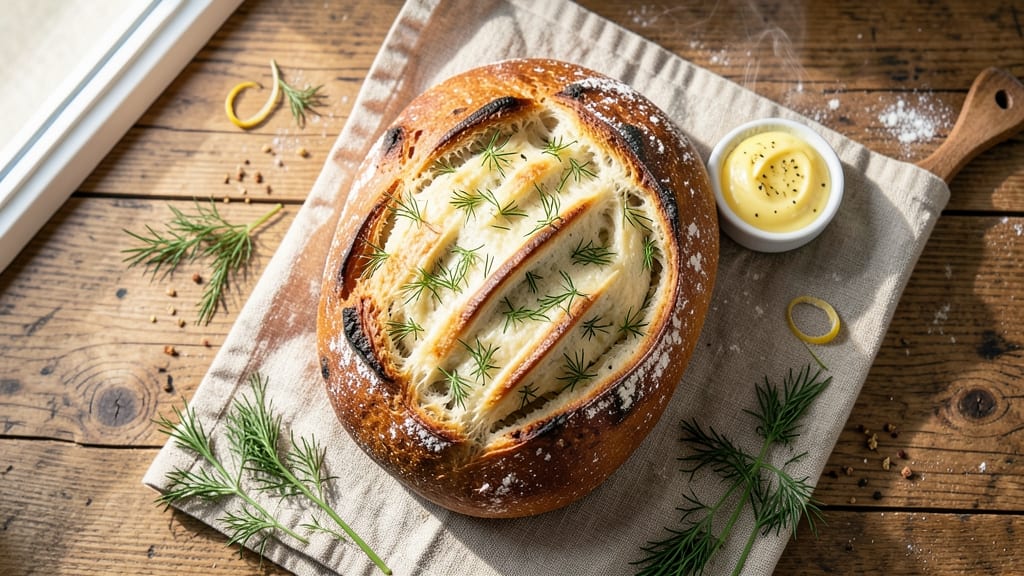
This artisan dill bread recipe delivers the perfect balance of herby crust and pillowy interior—ideal for sandwiches or serving alongside soups. The secret lies in combining fresh dill with traditional bread-making techniques, creating a loaf that's both aromatic and satisfying.
I developed this recipe after years of perfecting the texture and flavor, ensuring every bite reveals that signature dill brightness while maintaining a soft, airy crumb.
The process begins with a simple dough of flour, yeast, and water, enriched with fresh dill and a touch of salt for depth. Kneading and proofing are key to achieving that light, airy texture, while baking at 375°F for 30-40 minutes ensures a golden, crispy crust.
The dill infuses the dough during the proofing stage, soaking in for maximum flavor without overpowering the bread's natural taste.
What you’ll end up with is a loaf that’s visually stunning with its golden crust and fragrant aroma, yet tender enough to tear with your hands. The dill adds a bright, herbal note that pairs beautifully with butter, cheese, or even on its own.
This bread is perfect for any occasion—whether you're making grilled cheese sandwiches or serving it warm with a bowl of soup.
For an extra touch, consider adding poppy seeds or sesame seeds to the dough before baking. These not only enhance the visual appeal but also add a delightful crunch.
The recipe yields one generous loaf, so you’ll have leftovers to enjoy for days. Let’s get started on creating this herb-infused masterpiece!
Ingredients for artisan dill bread
Fresh dill, warm butter, and a touch of milk—these are the stars of your perfect loaf.
| Ingredient | Amount | Notes |
|---|---|---|
| All-Purpose Flour 🌾 | 4 cups | Unbleached preferred for lighter texture |
| Fresh Dill Weeds 🌿 | ½ cup | Finely chopped, stems included for depth |
| Active Dry Yeast 🍞 | ¼ oz | Or 2.5g, ensure freshness |
| Granulated Sugar 🍚 | 1 tbsp | Feeds yeast for proper rise |
| Unsalted Butter 🧈 | ¼ cup | Cold, cubed for flavor infusion |
| Large Eggs 🥚 | 1 whole | Room temperature for even mixing |
| Whole Milk 🥛 | ½ cup | Warmed to 100°F for yeast activation |
| Diamond Crystal Kosher Salt 🧂 | 1 ½ tsp | Adjust to taste after baking |
| Poppy Seeds 🌱 | 1 tbsp | Optional for visual appeal and crunch |
| Sesame Seeds 🌾 | 1 tbsp | Optional, toasted for extra flavor |
| Water 💧 | 1 cup | Room temperature, filtered preferred |
The dill is non-negotiable here. Fresh from the garden or the grocery store's herb section—avoid dried unless it's a pinch for depth. I always grab organic dill from Whole Foods when possible, but the regular supermarket stuff works fine if it's bright green and fragrant. The yeast? Check the expiration date—old yeast won't activate properly. Store it in the fridge to keep it fresh longer. For the flour, King Arthur or Bob's Red Mill brands are my go-to—they bake up lighter than store-brand options. And that butter? Plugrá or Land O'Lakes cultured adds that rich, tangy depth that makes this bread special.
No fresh dill? Dried works at one-third the amount, but it won't have the same bright punch. Out of poppy seeds? Sesame seeds or everything bagel seasoning work in a pinch. The milk can be swapped for warm water plus a teaspoon of sugar if you're avoiding dairy, though the texture won't be quite as tender. For the butter, vegan butter or coconut oil keeps it plant-based without sacrificing flavor. The egg is just for binding—flax egg (1 tbsp ground flax + 3 tbsp water) works if you're avoiding eggs, though the crust might be slightly less crisp. And if you're short on time, instant yeast can replace active dry yeast at the same weight—just skip the sugar.
This dough is best made fresh, but you can prep it up to 24 hours ahead by letting it rise overnight in the fridge. Wrap it tightly in plastic and let it come to room temp before shaping. The baked loaf keeps well at room temperature for 3 days wrapped in a clean kitchen towel, or you can freeze it for up to 3 months—just thaw overnight on the counter. For extra crispiness, reheat slices in a 350°F oven for 5-10 minutes. And if you're making a big batch, consider doubling the recipe—homemade bread never lasts long in my house.
Why You'll Love This Recipe
- No-Knead Magic: I swear by this dough—just mix, let it rise, and bake. The yeast does all the heavy lifting while you sip coffee, and that buttery dill aroma? It fills the whole house before the oven even preheats.
- Herb-Packed Punch: Fresh dill isn’t just garnish here—it’s the star. The bright, grassy notes cut through the richness of the butter, and that crispy golden crust? It’s the kind of flavor that makes people ask, "What’s in this?" (Spoiler: mostly flour and love.)
- Weeknight Wonder: This bread is my go-to for lazy dinners—toss it with soup, smash it on avocado toast, or serve it warm with butter. It’s the kind of recipe that turns "What’s for dinner?" into "Oh, that’s easy."
- Budget-Friendly Staple: A single batch feeds my family for days, and the ingredients won’t break the bank. Plus, the leftovers toast up perfectly—no sad, dry bread here. Honestly, it’s the kind of loaf that makes grocery day feel like a win.
Step-by-step instructions for artisan dill bread
Here's how to craft this fragrant, herb-infused loaf with a crisp crust and tender interior.
Activate the Yeast and Prepare the Dough Base
In a small bowl, combine the 1 cup water, 1 tbsp granulated sugar, and 0.25 oz active dry yeast. Let it sit for 5-10 minutes until frothy—this confirms your yeast is alive and ready to work. The mixture should bubble vigorously and smell slightly sweet.
In a large mixing bowl, whisk together the 4 cups all-purpose flour and 1.5 tsp diamond crystal kosher salt. Create a well in the center and pour in the yeast mixture along with the 0.5 cup whole milk and 1 whole large egg. Using a wooden spoon, gently mix until a shaggy dough forms—resist the urge to overwork it at this stage.
Incorporate Butter and Herbs for Depth of Flavor
Cut the 0.25 cup unsalted butter into small cubes and add them to the dough. Using your hands or a dough hook attachment on low speed, knead the dough for 5-7 minutes until the butter is fully incorporated and the dough becomes smooth and elastic. This step develops gluten, which gives your bread its structure.
Add the 0.5 cup finely chopped fresh dill weeds and continue kneading for another 2-3 minutes until the herbs are evenly distributed. The dill should be finely dispersed throughout the dough—you should see green flecks when you press your finger into it. The dough should pull away cleanly from the bowl and be slightly tacky but not sticky.
First Rise and Dough Preparation
Lightly grease a large mixing bowl with a bit of olive oil or butter, then place the dough inside. Cover the bowl with a clean kitchen towel or plastic wrap and let it rise in a warm place for 1-1.5 hours, or until it has doubled in size. The dough should feel light and airy when pressed gently with your finger—it should spring back slowly rather than immediately.
While the dough rises, preheat your oven to 350°F. Line a baking sheet with parchment paper and lightly grease it. Divide the risen dough into two equal portions and shape each into a round loaf. Place them on the prepared baking sheet, spacing them about 2 inches apart to allow for expansion.
Second Rise and Final Touches
Cover the shaped dough loaves with the kitchen towel again and let them rise for another 30-45 minutes, until they've puffed up noticeably. This second rise is crucial for achieving that light, airy texture. Just before baking, make small slashes about ¼ inch deep across the tops of each loaf using a sharp razor or knife. This helps the bread expand properly and creates a beautiful crust pattern.
In a small bowl, mix the 1 tbsp poppy seeds and 1 tbsp sesame seeds (if using). Sprinkle this seed mixture evenly over the tops of both loaves, pressing gently so they adhere. This adds texture and visual appeal to your finished bread.
Bake to Golden Perfection
Bake the loaves in the preheated oven for 25-30 minutes, until they're deeply golden brown and sound hollow when tapped on the bottom. The internal temperature should reach 190-200°F when measured with an instant-read thermometer. The crust should be crisp and aromatic, with that distinctive dill fragrance wafting from the oven.
Remove the bread from the oven and let it cool on a wire rack for at least 15 minutes before slicing. This resting period allows the bread to set properly and prevents a gummy interior. Once cooled, slice and serve warm with butter or your favorite spread—each bite should offer a perfect balance of crisp crust, tender crumb, and fresh dill flavor.
Pro Tips For Making Artisan Dill Bread
- STEAM THE DILL: Fresh dill loses its punch fast—toss the chopped stems and leaves in boiling water for 30 seconds first. This softens the stems (so they don’t make the dough gummy) and concentrates the flavor. Drain well before mixing, or your dough will turn into dill soup.
- USE COLD BUTTER: Skip the softened butter—cut the unsalted sticks into small cubes and fold them into the dough at the very end. The cold butter creates pockets that make the bread flaky, not greasy. (Yes, it’ll look weird in the dough, but trust the process.)
- DON’T OVERKNEAD: This dough is delicate. Stop mixing when it pulls away from the bowl but still feels slightly tacky—about 5-6 minutes by hand. Overworking it develops gluten too much, and your bread will turn out dense instead of light and airy. (I learned this after throwing out three batches of brick-like dill loaves.)
- PROOF IN A COOL SPACE: Let the dough rise in the fridge overnight instead of at room temp. The slow fermentation deepens the dill flavor and makes the crumb softer. Just pull it out 1-2 hours before baking to let it warm up and rise a little more. (Your kitchen will thank you too—no warm, sticky dough everywhere.)
Wine and beer pairings for this dish
Crisp White Wine
Artisan dill bread's bright, herby notes pair beautifully with a dry Riesling or Sauvignon Blanc from New Zealand. The wine's crisp acidity and citrus undertones complement the dill's freshness without overpowering it.
I love a Kim Crawford Sauvignon Blanc—its zesty lime and grapefruit flavors mirror the bread's herbal brightness. Serve slightly chilled to enhance the refreshing contrast. 🍷
Crisp Lager
For beer lovers, a German Pilsner like Warsteiner or Stella Artois works wonderfully. The clean, malty profile balances the bread's herbal punch while adding a subtle sweetness. A Belgian Witbier such as Hoegaarden also pairs well—the coriander and citrus notes enhance the dill's freshness.
Keep it cold to maintain crispness and let the flavors shine. 🍺
Light Red Option
If you prefer red wine, a Pinot Noir with light tannins and bright acidity is ideal. Look for a Oregon Willamette Valley Pinot—its red fruit and earthy undertones harmonize with the dill's herbal depth.
Avoid bold Cabernets or Syrahs, as their tannins can clash with the bread's delicate texture. Serve at room temperature to let the wine's complexity complement the bread's crust. 🍇
Herbal Beer Pairing
For a unique twist, try a German Hefeweizen like Weihenstephaner. The banana and clove notes in the beer create a delightful contrast with the dill's freshness. The slight sweetness in the beer also balances the bread's herbal bite. Serve it well-chilled to keep the flavors vibrant and refreshing. 🌿
Non-Alcoholic Options
Don't drink alcohol? A sparkling apple cider like Martinelli's or a ginger beer such as Feather's works beautifully. The effervescence cleanses the palate, while the apple or ginger notes enhance the dill's herbal profile.
For a more sophisticated option, try a sparkling white tea like Tazo Passion—its citrusy flavor complements the bread's brightness. 🍏
Nutrition facts
Frequently asked questions
Can I substitute dried dill for fresh in this recipe?
Yes, but use only 1/3 the amount—so 1/6 cup dried dill instead of 0.5 cup fresh. Dried dill is more concentrated, so too much will overpower the bread's delicate flavor. For best results, finely chop the dried dill and distribute it evenly during kneading.
Why did my dill bread turn out dense instead of light and airy?
Dense bread usually means the yeast didn't activate properly or the dough wasn't kneaded enough. Double-check that your yeast was fresh (test it in warm water + sugar—it should foam in 5 minutes) and that you kneaded for at least 8-10 minutes total to develop gluten. Also, ensure your dough rose in a warm spot (75-80°F) for the full 1-1.5 hours.
How do I store leftover dill bread to keep it fresh?
Wrap the cooled loaf tightly in a clean kitchen towel or beeswax wrap, then place it in a paper bag at room temperature for up to 3 days. For longer storage, freeze slices wrapped in parchment paper for up to 3 months. To revive, toast in a 350°F oven for 5 minutes—the crust will crisp up beautifully.
Can I make this bread without butter for a lighter version?
Replace the 0.25 cup butter with 0.25 cup olive oil or melted coconut oil. The bread will still be tender, though the crust may be slightly less rich. For extra flavor, add 1 tsp lemon zest to the dough—it pairs perfectly with dill.
What’s the best way to reheat sliced dill bread?
For maximum crispiness, place slices on a baking sheet and warm in a 350°F oven for 5-7 minutes until golden. Alternatively, toast in a skillet over medium heat for 1-2 minutes per side with a pat of butter. Microwaving works in a pinch but makes the crust soggy.