
Side Dishes
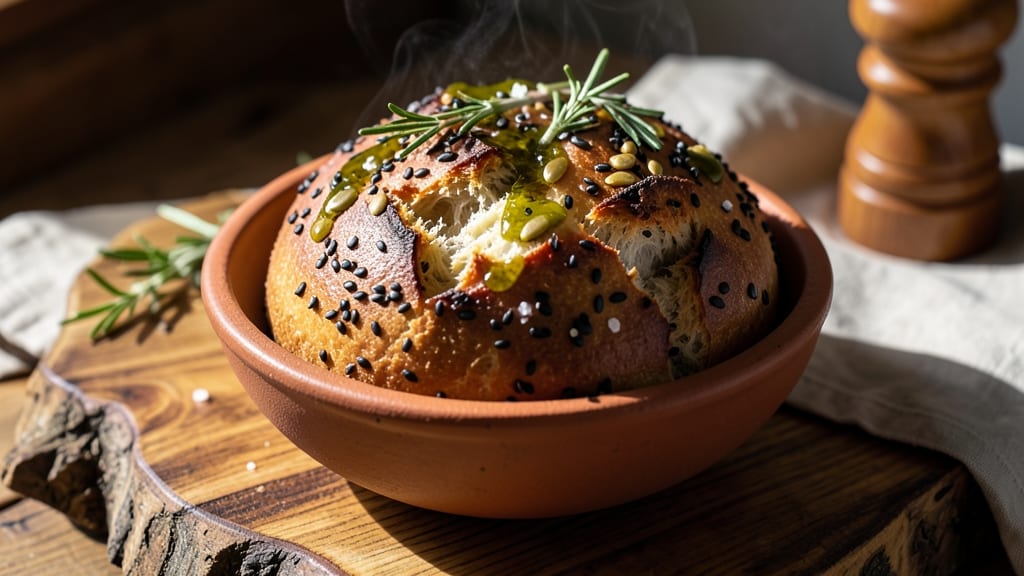
This artisan seeded bread recipe delivers the perfect marriage of crusty exterior and nutty swirls inside, transforming your kitchen into a rustic bakery. 🌾 The secret lies in a precise blend of seeds—sesame, flax, and pumpkin—that add texture and depth, while a well-hydrated dough creates that signature open crumb.
I’ve perfected this recipe over years of baking, ensuring it works reliably in home ovens with basic tools.
The process begins with a simple yet methodical dough preparation, where seeds are folded in to create those signature streaks. Kneading develops gluten for structure, while proofing allows the dough to rise just enough for a satisfying chew.
The real magic happens in the oven: steam creates that coveted crisp crust, while precise scoring guides the expansion for an even bake.
By the time you pull this bread from the oven, you’ll have a loaf with a golden, crackling crust that gives way to a soft, airy interior dotted with nutty seed swirls.
The aroma alone will have everyone gathering around the table—no fancy equipment required. This recipe is designed to be your go-to for sandwiches, toast, or simply enjoying with butter and jam.
Best of all, the dough can be shaped into boules, batards, or even a free-form loaf—adjusting the bake time slightly for each. Leftovers stay fresh for days when wrapped properly, making this the ultimate homemade bread for any occasion. Let’s get started on creating your perfect loaf.
Ingredients for artisan seeded bread
Four cups of flour kickstart this rustic bread, but the magic happens with those nutty seeds swirling inside.
| Ingredient | Amount | Notes |
|---|---|---|
| All-Purpose Flour 🌾 | 4 cups | Unbleached preferred for best texture |
| Bread Flour 🌾 | 1 cup | Higher protein for chewy texture |
| Sesame Seeds 🌰 | ½ cup | Toasted for extra flavor |
| Flaxseeds 🌰 | ¼ cup | Whole or ground preferred |
| Pumpkin Seeds 🎃 | ¼ cup | Raw or lightly toasted |
| Active Dry Yeast 🍞 | 2 ¼ tsp | Freshly opened for best rise |
| Granulated Sugar 🍚 | 1 tbsp | Feeds yeast for better rise |
| Salt 🧂 | 1 ½ tsp | Diamond Crystal preferred |
| Olive Oil 🫒 | 1 tbsp | Extra-virgin for richness |
| Warm Water 💧 | 1 ½ cups | 110°F for optimal yeast activation |
| Cornmeal 🌽 | ¼ cup | For dusting baking sheet |
| Ice Water ❄️ | ½ cup | For final dough adjustment |
The seeds are non-negotiable here. King Arthur or Bob's Red Mill flours work best—they've got that perfect balance of protein and gluten development. For seeds, Trader Joe's bulk bins are my go-to: sesame, flax, and pumpkin seeds all toast beautifully in a dry pan for 3-4 minutes until fragrant. Pro tip: Toast them separately so each seed's flavor shines. The yeast? Freshly opened is key—if it's been sitting in your pantry for months, it might not wake up properly. And that warm water? 110°F is ideal—too hot and you kill the yeast, too cold and it won't activate.
No sesame seeds? Sunflower seeds work in a pinch, but they won't toast the same way. Flaxseeds can be swapped for chia seeds at the same amount, though flax has that slightly nuttier flavor. Running low on pumpkin seeds? Toasted pecans or walnuts add richness but change the texture slightly. The bread flour is crucial—all-purpose won't give the same chew, but if that's all you've got, go for it. For the water, microwave it for 40 seconds to hit that perfect temp if you don't have a thermometer. And if your dough feels too sticky? Add ice water 1 tbsp at a time until it comes together just right.
This dough is a patient one—it needs time to develop flavor. Let it rest in the fridge overnight for best results, or at least 2 hours if you're in a hurry. The seeds stay fresh for 6 months in the freezer if you toast a big batch ahead. Wrap cooled loaves in beeswax wrap or foil to keep that crust crisp for days. And that cornmeal? Don't skip it—it prevents sticking and adds a subtle crunch to the bottom. Pro move: Brush the warm bread with melted butter while it's still in the pan for that bakery-fresh finish.
Why You'll Love This Recipe
- No-Knead Magic: I swear by this dough—just mix, rest, and bake. The combo of bread flour and all-purpose gives that perfect chewy crunch, while the seeds add texture without extra work. (Yes, even on a Tuesday night when I’d rather be scrolling.)
- Toasty Crunch Alert: That moment when sesame, flax, and pumpkin seeds pop in the oven? Chef’s kiss. The seeds toast just enough to pack a nutty punch, and the crust? So crisp it’ll make you forget store-bought ever existed.
- Lunchbox Hero: Between us, this bread is my go-to for sandwiches, toast, or even charcuterie boards. The seeds add a satisfying bite, and it stays fresh for days—no sad, stale slices here. (My kids fight over the leftovers.)
- Pantry Stash Winner: Honestly, the seeds are the MVP here—they’re cheap, shelf-stable, and turn basic flour into something special. Plus, one loaf feeds my whole family, and I’m always finding excuses to bake another. (Budget-friendly? More like budget-smart.)
Step-by-step instructions for artisan seeded bread
Here's the method that delivers that perfect crusty exterior and nutty swirls inside every time.
👨🍳 Step 1: Activate the Yeast and Mix the Dough Base
In a large mixing bowl, combine the 1.5 cups warm water (about 110°F) with the 1 tbsp granulated sugar and 2.25 tsp active dry yeast. Let it sit for 5-10 minutes until it becomes frothy—this confirms your yeast is alive and ready to work. If it doesn't bubble, start over with fresh yeast.
Add the 4 cups all-purpose flour, 1 cup bread flour, 1.5 tsp salt, and 1 tbsp olive oil to the yeast mixture. Using a wooden spoon or dough whisk, stir until a shaggy dough forms. The dough will be sticky at this stage—that's normal! Let it rest for 10 minutes while you prepare the seed mixture.
🍳 Step 2: Prepare the Seed Swirl Mixture
In a small bowl, combine the 0.5 cup sesame seeds, 0.25 cup flaxseeds, and 0.25 cup pumpkin seeds. Toast them in a dry skillet over medium heat for 3-4 minutes until fragrant and lightly golden. Let them cool completely before using—this prevents them from cooking the dough prematurely.
Once cooled, add 1 tbsp olive oil to the toasted seeds and mix well. This creates a flavorful paste that will create beautiful swirls in your bread. Keep this mixture nearby as you'll add it later in the shaping process.
🥘 Step 3: Knead and Shape the Dough
After the 10-minute rest, wet your hands with water and begin kneading the dough on a lightly floured surface. Knead for 8-10 minutes until smooth and elastic. The dough should be tacky but not sticky—if it sticks too much, add 1 tbsp flour at a time until it comes together nicely.
Divide the dough into two equal portions. Roll each portion into a 12x8-inch rectangle. Spread half of the seed mixture evenly over each rectangle, leaving a ½-inch border around the edges. Starting from the long side, tightly roll each rectangle into a log, sealing the edges well.
⏰ Step 4: Proof and Shape for Rise
Place the seed-filled logs seam-side down in a lightly greased 9x5-inch loaf pan. Cover with a clean kitchen towel and let rise at room temperature for 1-1.5 hours, or until doubled in size. The dough should spring back slowly when poked with a finger—this is your proofing cue.
Once proofed, preheat your oven to 425°F and sprinkle 0.25 cup cornmeal evenly on a baking sheet. Carefully transfer the dough logs to the prepared sheet, seam-side up. Using a sharp knife or razor, score the top of each log with a ½-inch deep diagonal slash—this controls where the bread expands and creates that beautiful artisan look.
🔥 Step 5: Bake to Crusty Perfection
Bake in the preheated oven for 25-30 minutes until the bread is deep golden brown and sounds hollow when tapped on the bottom. If the top browns too quickly, tent loosely with foil after 15 minutes to prevent over-browning.
Remove from oven and immediately brush the tops with 0.5 cup ice water using a pastry brush. This creates that glossy finish and helps develop the crust. Let cool on a wire rack for at least 30 minutes before slicing—this ensures clean cuts and prevents a gummy interior. The aroma alone will make your kitchen smell incredible!
Pro Tips For Making Artisan Seeded Bread
- Toast Seeds First: Sesame, flax, and pumpkin seeds taste bland if raw—pop them in a dry pan over medium heat for 2-3 minutes until fragrant. I learned this the hard way when my first batch tasted flat; now they add nutty depth right from the start.
- Mix Flours Separately: Combine bread flour and all-purpose flour before adding seeds—this prevents clumping and ensures even distribution. I used to toss seeds in dry, and they’d bunch up like little seed islands. Pre-mixing solves that.
- Don’t Overknead: Stop kneading when the dough springs back slowly (not instantly) when poked. Overworking gluten makes seeded bread dense—those seeds need room to stay crunchy. My first loaf was a brick; now I count 8-10 minutes max.
- Use a Banneton with Flour Dust: Lightly flour your banneton and dust the dough with rice flour instead of all-purpose. The seeds stick less, and the dough releases cleaner. I tried this after my first loaf looked like a seed-covered disaster. Works every time.
Wine and beer pairings for this recipe
Crisp White Wine
For this artisan seeded bread, a dry white wine like Sauvignon Blanc or Pinot Grigio is my go-to pairing. The bright acidity cuts through the richness of the toasted seeds and complements the bread's nutty flavors beautifully.
Look for a wine with citrus or mineral notes—I love Kim Crawford Sauvignon Blanc from New Zealand, which has that perfect zing. Serve it slightly chilled to enhance the crispness. 🍷
Crisp Lager Beer
A crisp, light lager like Peroni or Heineken works wonderfully with seeded bread, especially when enjoying it with sandwiches or charcuterie. The clean, refreshing profile balances the bread's toasty seed flavors without overpowering them.
For a craft option, try a Belgian Witbier like Hoegaarden—its coriander and orange peel notes add a delightful contrast. Keep the beer well-chilled for the best experience. 🍺
Red Wine for Hearty Pairings
If you're serving this bread with meat-based sandwiches or cheese boards, a light red wine like Pinot Noir or Chianti elevates the meal.
The earthy, fruity notes of a Pinot Noir from Oregon or a Chianti Classico from Italy complement the bread's nutty seeds while standing up to richer toppings. Avoid heavy, tannic reds—they can clash with the bread's delicate texture. 🍇
Cider for Rustic Vibes
For a rustic, autumnal twist, pair your seeded bread with dry cider like Strongbow or Woodchuck Hard Cider. The slight tartness and crisp finish mirror the bread's toasted seeds and crusty exterior.
A sparkling cider like Martinelli's adds a festive touch, especially during holidays. Serve it slightly chilled to enhance its refreshing qualities. 🍎
Coffee or Tea for Dessert
When enjoying this bread with jam, honey, or Nutella, a strong black coffee or Earl Grey tea cleanses the palate beautifully. The bold flavors of a dark roast or the bergamot notes in tea balance the sweetness while highlighting the bread's nutty undertones.
For a cozy touch, try a latte with a sprinkle of cinnamon. ☕
Non-Alcoholic Options
Don’t drink alcohol? No problem! A sparkling water with lemon or ginger beer like Feather's adds a refreshing contrast. For something richer, try sparkling apple cider or a cold brew coffee—both complement the bread's toasted seeds while keeping it light. 💧
Nutrition facts
Frequently asked questions
Can I substitute seeds in this seeded bread recipe?
Swap seeds based on flavor and texture preferences. For example, replace sesame seeds with sunflower seeds (same amount) or add poppy seeds for a sweeter note. Toast seeds separately for 3-4 minutes to enhance flavor. Just keep total seed volume at 1 cup combined for best dough balance.
Why does my dough feel too sticky?
Sticky dough is normal with this recipe's high hydration! If it's too wet, add 1 tbsp flour at a time while kneading. For extra control, chill the dough for 30 minutes before shaping. Too much ice water? Reduce by 1 tbsp next time—this recipe uses it for final dough adjustment only.
How do I get a better crust on my seeded bread?
Steam is your secret weapon! Place a metal tray with boiling water in your oven when preheating. For extra crunch, brush the baked loaf with ice water immediately after baking. Score deeper (½-inch) before baking to direct expansion. Bake at 425°F for maximum crust development.
Can I make this bread without a loaf pan?
Yes! Shape the dough into a boule (round) or batard (oval) instead of logs. Place on a parchment-lined baking sheet, proof until doubled, then bake for 20-25 minutes at 425°F. The free-form shape gives a rustic, bakery-style look with slightly different texture.
How long will this bread stay fresh?
Wrap cooled loaves in beeswax wrap or foil to maintain freshness for 3-4 days at room temperature. For longer storage, freeze slices for up to 3 months. The seeds stay crispy when properly stored—no soggy texture here!