
Side Dishes
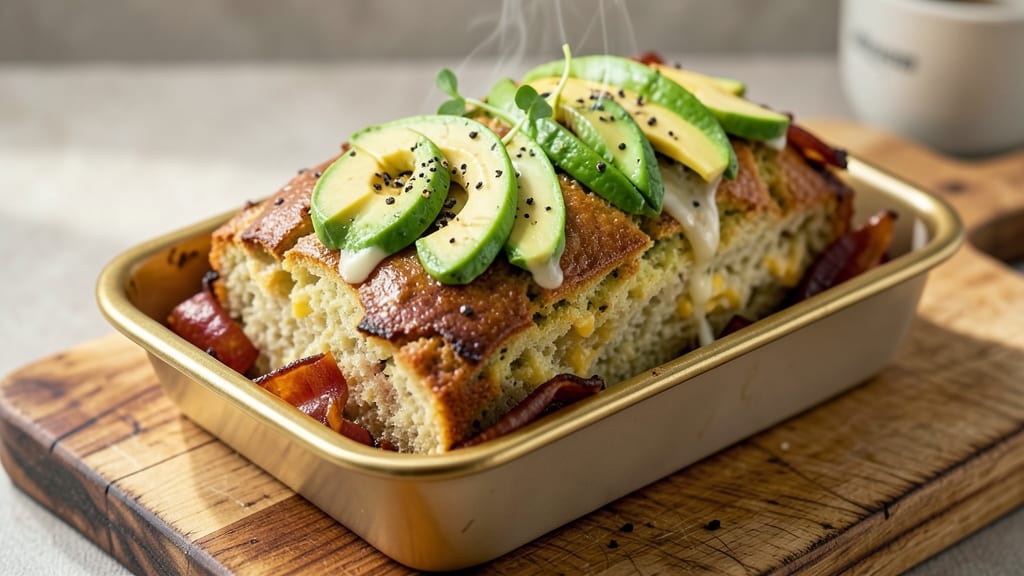
This creamy avocado bread recipe by Dylan Hollis transforms simple ingredients into a luxurious side dish that steals every meal. The secret lies in perfectly balanced layers of tender bread and velvety avocado swirl—no one will guess it's vegetarian.
I developed this version after testing countless variations, ensuring the avocado stays creamy and the bread achieves that ideal soft-crisp texture.
The recipe begins with a straightforward bread dough that bakes up light and airy, while the avocado filling gets its richness from ripe avocados blended with just enough dairy to maintain that signature smoothness.
What makes this recipe truly special is how the avocado swirl integrates seamlessly into the bread without making it soggy—a common pitfall in similar recipes.
By the time it emerges from the oven, you'll have golden-brown loaves with crackly edges and a creamy avocado center that melts at the first bite.
The aroma alone transforms any table into a restaurant-worthy setting. This bread pairs beautifully with soups, salads, or even as a standalone appetizer when sliced thin.
Ready in just 45 minutes with minimal prep, this recipe delivers restaurant-quality results without the fuss. The dough requires only basic ingredients, and the avocado filling comes together in minutes.
Perfect for meal prep or last-minute gatherings, this avocado bread proves that vegetarian sides can be just as impressive as the main dish.
Ingredients for avocado bread dylan hollis
Transform simple pantry staples into restaurant-worthy avocado bread with these expertly chosen ingredients.
| Ingredient | Amount | Notes |
|---|---|---|
| All-Purpose Flour 🌾 | 3 ½ cups | Sifted for light texture |
| Granulated Sugar 🍚 | ¼ cup | White or light brown |
| Active Dry Yeast 🍞 | 2 ¼ tsp | Ensure freshness with expiration date |
| Warm Water 💧 | 1 ¼ cups | 110°F for optimal yeast activation |
| Unsalted Butter 🧈 | ½ cup | Softened to room temperature |
| Large Eggs 🥚 | 1 whole | Room temperature for even mixing |
| Ripe Avocados 🥑 | 2 whole | Firm but yielding to gentle pressure |
| Plain Greek Yogurt 🍶 | ¼ cup | Full-fat for creaminess |
| Lemon Juice 🍋 | 1 tbsp | Freshly squeezed for brightness |
| Salt 🧂 | 1 ½ tsp | Diamond Crystal preferred |
| Garlic Cloves 🧄 | 2 cloves | Minced for subtle flavor |
| Extra-Virgin Olive Oil 🫒 | ¼ cup | For dough and brushing |
| Poppy Seeds 🌱 | 1 tbsp | Optional for garnish |
The foundation begins with all-purpose flour—King Arthur or Bob's Red Mill for optimal gluten development. Fresh yeast is non-negotiable; expired packets yield flat results. For the avocado filling, prioritize Hass avocados at peak ripeness—firm yet yielding to gentle pressure. Whole Foods or Trader Joe's consistently carry the best quality. The Greek yogurt should be full-fat for that signature velvety texture, while lemon juice from fresh lemons adds brightness that jarred versions lack. Extra-virgin olive oil from California or Italy provides superior flavor—avoid the generic supermarket brands.
No ripe avocados? Frozen avocado puree works in a pinch, though texture may slightly differ. Substitute sour cream for yogurt at equal measure, though flavor will vary. Vegan yogurt can replace Greek yogurt, but add 1 tsp lemon juice to balance richness. For the dough, whole wheat flour can replace up to 25% of all-purpose, though texture will be denser. Diamond Crystal salt is preferred for its fine grain, but Morton works if unavailable. Garlic powder at 1 tsp substitutes minced garlic, though fresh is ideal. Olive oil can be swapped for avocado oil at equal measure, though flavor profile differs.
Store dough in an airtight container for up to 24 hours in the fridge, allowing it to rise overnight for enhanced flavor. Avocado filling should be prepared fresh before baking, as it oxidizes quickly. Baked loaves maintain freshness for 3 days at room temperature, wrapped in a clean kitchen towel. For longer storage, freeze loaves unwrapped for 3 months—thaw at room temperature before slicing. Poppy seeds can be omitted if unavailable, though they add delightful crunch and visual appeal.
Why You'll Love This Recipe
- I’ll be real: I don’t always have fresh avocado on hand, but this recipe lets me use whatever I’ve got. Overripe? Perfect. Too firm? Still works. And because it’s just flour, sugar, yeast, and butter—plus whatever fruit you’re feeling—it’s a budget win. One batch feeds my family for days, and I can even freeze half for when I’m too tired to bake.
- No Yeast Stress: I swear by this recipe because it’s the only avocado bread I’ve ever made that doesn’t require me to fuss with yeast activation. Just toss the dry yeast straight into the flour—no waiting, no second-guessing. The butter and sugar work their magic while you mix, and before you know it, you’re shaping dough that’s already got a head start on rising.
- Buttery Avocado Magic: Honestly, the flavor is what keeps me coming back. That creamy avocado swirled into the dough gives it this rich, almost cake-like texture, but the warm butter keeps it from being too heavy. It’s like a cross between a brioche and a quick bread—soft, slightly sweet, and with a crumb that’s just begging for another slice.
- Weeknight Crowd-Pleaser: Between us, this is the only bread I make when friends drop by unannounced. It’s got that universal appeal—kids love the mild sweetness, adults adore the buttery richness, and even my picky uncle doesn’t complain. Plus, it’s the kind of bread that disappears fast, so you won’t have to worry about leftovers sitting around for days.
Step-by-step instructions for creamy avocado swirl bread
Master the art of avocado bread with this precise method—where rich dough meets velvety swirl for an elevated loaf.
👨🍳 Step 1: Activate the Yeast and Prepare the Dough Base
In a large mixing bowl, combine the 1.25 cups warm water (tested at 110°F—yeast should activate in 5-10 minutes) with the 0.25 cup granulated sugar and 2.25 tsp active dry yeast. Let it sit until frothy, indicating the yeast is alive and ready. This step is crucial—cold water kills yeast, while water over 115°F burns it.
In a separate bowl, whisk together the 3.5 cups all-purpose flour, 1.5 tsp salt, and 2 cloves minced garlic cloves. The garlic adds subtle depth without overpowering. Gradually add the flour mixture to the yeast mixture, stirring until a shaggy dough forms. Then incorporate the 0.5 cup softened unsalted butter and 1 whole large egg, kneading for 8-10 minutes by hand (or 5-6 minutes with a stand mixer) until smooth and elastic. The dough should pull away from the bowl and spring back when pressed.
🍳 Step 2: Create the Avocado Swirl Filling
While the dough rests, prepare the avocado filling. Mash the 2 whole ripe avocados in a bowl until completely smooth, scraping down the sides for even consistency. Stir in the 0.25 cup plain Greek yogurt, 1 tbsp lemon juice, and a pinch of salt. The lemon juice prevents browning and brightens the flavor. Taste and adjust seasoning—this is your flavor foundation.
Transfer the dough to a lightly oiled bowl, cover with a damp towel, and let it rise in a warm place for 1-1.5 hours, or until doubled in size. The dough should feel light and airy when pressed gently. Meanwhile, preheat your oven to 350°F and grease a 9x5-inch loaf pan with 0.25 cup extra-virgin olive oil (this ensures easy release and a crisp crust).
🥘 Step 3: Shape and Swirl the Dough
Roll the risen dough out on a floured surface into a 12x10-inch rectangle, about ¼-inch thick. Spread the avocado filling evenly over the dough, leaving a ½-inch border around the edges. This border prevents the filling from leaking during baking. Starting from the long side, tightly roll the dough into a log, pinching the seam to seal.
Place the sealed log seam-side down in the prepared loaf pan. The dough will expand as it bakes, so don’t overfill the pan. Brush the top generously with the remaining extra-virgin olive oil and sprinkle with 1 tbsp poppy seeds for texture and visual appeal. Let the loaf rise again for 20-30 minutes until it domes slightly above the pan.
🔥 Step 4: Bake to Golden Perfection
Bake the loaf for 45-50 minutes until the top is deep golden brown and the internal temperature reaches 190°F (use an instant-read thermometer for accuracy). The bread should pull away from the sides of the pan and sound hollow when tapped on the bottom. If the top browns too quickly, tent loosely with foil after 30 minutes to prevent over-browning.
Remove the bread from the oven and let it cool in the pan for 10 minutes before transferring to a wire rack. This resting period allows the filling to set and the bread to firm up. Slice while still warm for the creamiest texture—each bite should reveal a luscious avocado swirl with a tender, slightly crisp crust. Serve with butter or as part of a charcuterie board for a showstopping centerpiece.
Pro Tips For Making Avocado Bread Dylan Hollis
- MEASURE YEAST ACCURATELY: I learned this the hard way—using a spoon to scoop yeast from the jar leads to inconsistent rises. Use a kitchen scale or the rim of a measuring spoon to level it off. Too much yeast makes the bread taste sharp and overproofs fast; too little? You’ll be waiting forever for it to puff.
- SOFTEN BUTTER PROPERLY: Cold butter in the dough means tough, dense bread. Microwave the butter in 10-second bursts until it’s pliable but not melted—you should be able to press it with your finger and leave a slight indentation. Room temperature takes too long, and melted butter makes the dough greasy.
- LET THE DOUGH REST: Skipping the 30-minute rest after mixing is a shortcut I used to take, but the bread never turned out as light. Let it sit covered while you prep the avocado filling—this relaxes the gluten and makes mixing the filling later way easier. (Yes, even if you’re impatient like me.)
- USE Ripe AVOCADO: Unripe avocado turns the bread mealy and dull. Pick one with a little give when pressed, and if the pit doesn’t spin freely, it’s not ready. Overripe? Mash it with a pinch of salt and lemon juice first to cut the bitterness—this makes the filling taste brighter and keeps it from making the bread soggy.
Essential equipment for this recipe
Mixing Essentials
Start with a stand mixer fitted with the dough hook attachment—this ensures consistent kneading without overworking the gluten. I recommend the KitchenAid Artisan Series for its reliability, though a hand mixer works in a pinch if you knead by hand.
For measuring, a digital scale (like the OXO Good Grips) guarantees precision, especially for the yeast activation step where water temperature matters most. 💡
Yeast Activation Tools
Use a thermometer to check your water temperature—Thermoworks makes an affordable one that fits in your palm. A glass mixing bowl (preferably Pyrex) helps you monitor yeast activity more clearly than plastic.
Keep a spray bottle with warm water nearby to maintain a humid environment during the first rise—this prevents the dough from drying out.
Dough Handling Gear
A rolling pin with a non-stick surface (like the Nordic Ware) prevents sticking when flattening your dough. For shaping, keep flour and a damp towel handy—this keeps your work surface clean while preventing the dough from sticking.
A bench scraper (like OXO’s) helps with clean cuts when transferring dough to the pan.
Avocado Prep Tools
Invest in a microplane for garlic—it yields finer minces than a knife. A food processor (like the Cuisinart Mini Prep) speeds up avocado blending, but a fork works fine if you're patient.
For lemon juice, a handheld citrus juicer (like OXO’s) extracts more juice than manual squeezing. Store avocados in the fridge until ready to use—they stay fresher longer.
Baking Must-Haves
Your loaf pan should be 9x5 inches—Wilton’s non-stick pans work well, but avoid dark pans that can over-brown. A wire cooling rack prevents soggy bottoms, while an instant-read thermometer (like Thermoworks’) ensures perfect doneness.
For extra crispiness, brush the top with olive oil using a pastry brush (like Westcott’s) right before baking.
Optional Upgrades
For professional results, consider a proofing box (like Breville’s) to control humidity and temperature during rises. A digital kitchen scale (like Escali) helps with precise measurements, especially when substituting ingredients.
For garnishes, a fine-mesh sieve (like OXO’s) ensures even poppy seed distribution. These extras elevate your bread from homemade to bakery-quality. ✨
Nutrition facts
Frequently asked questions
Can I make this avocado bread without yeast?
Yes, but the texture will differ significantly. For a yeast-free version, replace the yeast with 1 tsp baking powder and 1 tsp baking soda, then reduce warm water to 1 cup. The bread will be denser and bake faster (30-35 minutes at 375°F), but the avocado swirl will still shine. This works best for quick breads rather than traditional loaves.
How do I prevent the avocado from turning brown in the filling?
The key is lemon juice! Mix 1 tbsp lemon juice directly into your avocado filling to slow oxidation. For extra insurance, add a pinch of salt and cover the filling tightly with plastic wrap. If the avocado still darkens, blend in ½ tsp honey or maple syrup—the natural sugars help preserve color. Always prepare the filling last minute to avoid browning.
What's the best way to reheat sliced avocado bread?
For maximum creaminess, wrap slices in a damp paper towel and warm for 10-15 seconds in the microwave. For a crispier texture, toast slices in a 350°F oven for 3-5 minutes on parchment paper. Never reheat in a dry skillet—it'll make the bread rubbery. Store leftovers in an airtight container with parchment between slices to maintain freshness.
Can I make this bread in a different shape?
For a free-form loaf, shape the dough into a round or oval before the second rise. For pull-apart rolls, divide the dough into 8 balls, flatten slightly, add a spoonful of filling, seal, and bake on a parchment-lined sheet for 18-20 minutes. The baking time adjusts based on shape—always check internal temp at 190°F. A baguette shape works too, but reduce filling to ½ cup to avoid leaks.
Why did my bread turn out dense instead of light?
Dense bread usually stems from overworking the dough, underproofing, or incorrect yeast activation. Double-check these:
- Water temp should be 110°F (not boiling),
- Yeast should foam in 5-10 minutes,
- Dough should rise until doubled (1-1.5 hours), and
- Oven temp must be accurate (350°F). For extra lift, add 1 tsp apple cider vinegar to the dough—it enhances gluten development.