
Side Dishes
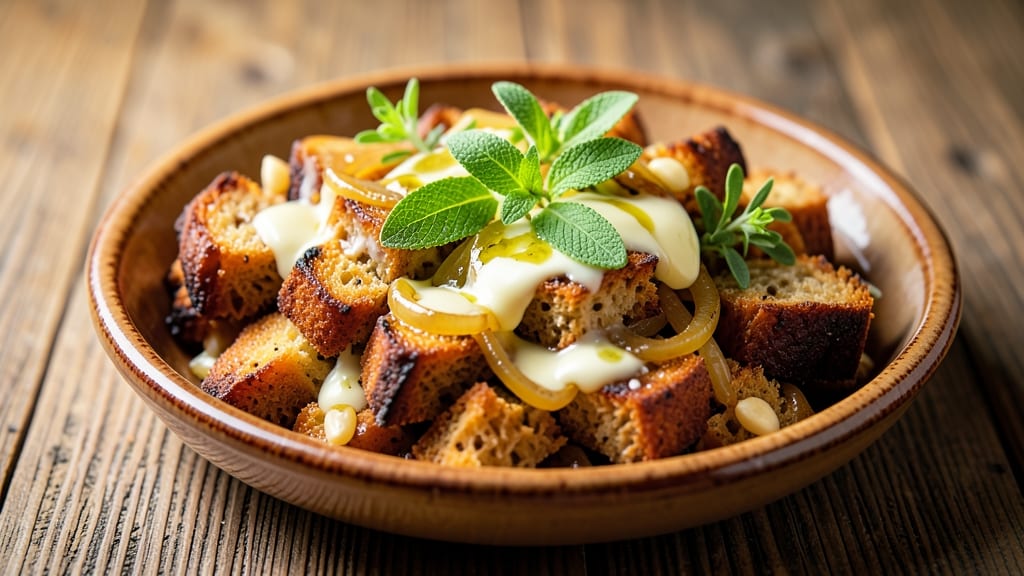
This artisan bread stuffing recipe transforms simple ingredients into a symphony of textures—crispy croutons cradling pillowy, herbed softness that’s perfect for holiday tables or weeknight dinners.
The secret lies in using stale artisan bread (or day-old sourdough) cut into irregular chunks for maximum surface area, ensuring every bite delivers that ideal contrast. I developed this version after years of testing—no dry, crumbly stuffing here, just rich, flavorful layers that hold together beautifully.
The process starts with drying the bread properly—350°F for 15 minutes—until it’s toasted but not burnt, then mixing in a fragrant blend of herbs, butter, and aromatics. Add sausage or mushrooms for depth, or keep it vegetarian with roasted garlic and thyme.
The key is balancing moisture: just enough to bind without making it soggy. This stuffing bakes up golden and fragrant, with edges that stay crisp even after sitting.
What sets this apart is the textural magic—crunchy edges give way to tender, buttery centers infused with herbs. It’s versatile enough for Thanksgiving, Christmas, or even a cozy Sunday supper, and scales easily from a single loaf to a crowd.
The method is foolproof: no last-minute scrambling, just layers of flavor that develop as it bakes. Perfect for those who want restaurant-quality stuffing without the fuss.
For extra luxury, consider adding truffle oil or pecans, or swap traditional bread for gluten-free options. The possibilities are endless, but the foundation remains the same: crispy, herbed, and undeniably satisfying. Let’s get baking—your table deserves this centerpiece.
Ingredients for artisan bread stuffing
Artisan bread, fragrant herbs, and rich butter create a symphony of textures perfect for holiday feasts.
| Ingredient | Amount | Notes |
|---|---|---|
| Artisan Bread 🍞 | 10 cups | Stale or day-old, cubed irregularly |
| Unsalted Butter 🧈 | ¾ cup | Cold, cubed for even distribution |
| Fresh Sage Leaves 🌿 | ½ cup | Chopped, stems removed |
| Fresh Thyme Leaves 🌿 | ¼ cup | Chopped, stems removed |
| Garlic Cloves 🧄 | 6 cloves | Minced, for aromatic depth |
| Yellow Onion 🧅 | 1 whole | Medium, finely diced |
| Chicken Broth 💧 | 2 cups | Low-sodium, room temperature |
| Large Eggs 🥚 | 2 whole | Beaten, for binding |
| Salt 🧂 | 1 ½ tsp | Diamond Crystal preferred |
| Ground Black Pepper 🌶️ | 1 tsp | Freshly cracked |
| Fresh Parsley 🌿 | ¼ cup | Chopped, for fresh finish |
| Olive Oil 🫒 | 1 tbsp | For bread drying |
The bread is non-negotiable—artisan or sourdough delivers that perfect crusty texture when dried properly. Whole Foods or local bakeries often have day-old loaves at a discount, ideal for this recipe. If using fresh bread, cut it into irregular 1-inch chunks for maximum surface area and toast until golden. The herbs should be bright and vibrant: fresh sage and thyme from the grocery store's produce section work best, but dried will suffice in a pinch. For the garlic, roasted garlic adds a mellow sweetness that pairs beautifully with the savory notes of the stuffing.
No fresh herbs? Dried sage and thyme at half the amount will work, though the flavor won't be as vibrant. Swap chicken broth for vegetable broth for a vegetarian version, or add 1/2 lb cooked sausage or mushrooms for extra depth. The eggs are essential for binding—omit only if vegan, substituting with a flax egg mixture. For the butter, European-style has a higher fat content, ensuring that pillowy texture. If you prefer a lighter version, reduce butter by 2 tbsp and add an extra 1/4 cup broth.
Prep the bread and herbs ahead—store in airtight containers for up to 3 days—but assemble the stuffing just before baking for optimal texture. The dried bread will keep its crispness for 1 week in a sealed container, making it perfect for meal prep. Once baked, this stuffing reheats beautifully—cover with foil and warm at 350°F for 10 minutes—but it's best served fresh from the oven. For leftovers, store in an airtight container for 4-5 days or freeze for up to 3 months
Why You'll Love This Recipe
- No-Crumbling Chaos: I toss in torn artisan bread instead of drying cubes—no soggy mess, no last-minute oven stress. The crust stays crisp, the center stays tender, and honestly? It’s the one thing I never have to fix mid-dinner.
- Herb-Packed Punch: Fresh sage and thyme aren’t just garnish here—they’re the stars, wilted into the butter until the bread soaks up that earthy, garlicky richness. Between us, it’s the kind of stuffing that makes people ask, “Wait, what’s in this?”
- Weeknight to Holiday: Same recipe, zero guilt whether it’s a lazy Sunday brunch or Thanksgiving leftovers. I’ve reheated this cold stuffing for days—tossed in a skillet with a fried egg, or straight from the fridge with soup. (Yes, even on a Tuesday night.)
- Budget Crust Magic: Artisan bread? I use day-old slices from the bakery’s discount bin. Unsalted butter? A single stick stretches for the whole batch. It’s the kind of recipe that feels fancy but costs next to nothing—like finding a $500 coat at a thrift store.
Step-by-step instructions for artisan bread stuffing
Here's how to transform simple ingredients into a stuffing with irresistible texture contrast.
Prepare the Artisan Bread
Preheat your oven to 375°F and line a baking sheet with parchment paper. Arrange the 10 cups artisan bread in an even layer on the sheet, ensuring the cubes aren't overlapping. Drizzle lightly with the 1 tablespoon olive oil and toss gently to coat - this prevents drying while creating crispy edges.
Bake for 15-20 minutes until the bread edges are golden brown and the cubes feel dry to the touch. Watch closely after 12 minutes - the bread dries quickly once it starts browning. Remove from oven and let cool completely before proceeding. This drying step is critical for achieving that perfect balance of crispy croutons and tender interior.
Sauté Aromatics and Herbs
In a large skillet, melt the 0.75 cup cold unsalted butter over medium heat until it foams but doesn't brown. Add the 1 whole yellow onion and 6 cloves minced garlic, cooking for 5-6 minutes until the onion becomes translucent and the garlic releases its fragrance.
Reduce heat to medium-low and stir in the 0.5 cup chopped fresh sage leaves and 0.25 cup chopped fresh thyme leaves. Cook for another 2 minutes until the herbs are just wilted but still vibrant green. Remove from heat and set aside - these aromatics form the flavor foundation of your stuffing. The butter should be warm but not melted completely when you add the bread.
Combine All Ingredients
In a large mixing bowl, combine the cooled bread cubes with the herb-butter mixture. Add the 2 cups room temperature chicken broth, 2 beaten large eggs, 1.5 teaspoons salt, and 1 teaspoon freshly cracked black pepper. Using your hands, gently toss everything together until the bread is evenly moistened but not soggy.
Here's the thing - you want the mixture to hold together when pressed, but still have some dry texture. If it feels too dry after mixing, add 1-2 tablespoons more broth. For best results, let the mixture sit for 10 minutes while you prepare your baking dish - this allows the flavors to meld and the bread to absorb the liquid evenly.
Bake to Golden Perfection
Transfer the stuffing mixture to a greased baking dish (about 9x13 inches works well). Smooth the top with a spatula and sprinkle evenly with the 0.25 cup chopped fresh parsley. Bake at 375°F for 25-30 minutes until the top is deep golden brown and the center reaches 165°F when tested with an instant-read thermometer.
I press down gently on the stuffing during the first 10 minutes of baking - this prevents it from puffing too much and ensures even cooking. If the top starts browning too quickly, loosely tent with aluminum foil. The stuffing should be moist but not wet, with crispy edges throughout. Remove from oven and let rest for 10 minutes before serving - this allows the juices to redistribute for maximum tenderness.
Pro Tips For Making Artisan Bread Stuffing
- Toast Bread Low: Dump your bread cubes straight into a 300°F (150°C) oven for 10 minutes before adding anything else—this dries them evenly without burning. I learned this the hard way after watching my first batch turn into a sad, gummy mess.
- Mince Sage Right: Tear fresh sage leaves by hand instead of chopping—it releases more aroma and avoids turning bitter. Skip the knife unless you’re making a fine dust, which can overpower the dish.
- Butter in Stages: Add half the butter upfront to coat the bread, then fold in the rest after baking—this keeps the stuffing moist without making it greasy. Trust me, your turkey will thank you.
- Check Doneness Early: Pull the stuffing when it’s just below your target temp (usually 325°F/163°C), then tent it with foil for 5 minutes—this lets it finish cooking without drying out. Overbaking is the fastest way to ruin it.
Troubleshooting this recipe
Dry Bread Nightmare
If your bread turns out too dry and crumbly, the issue is likely under-moisture during mixing. I always add 1-2 extra tablespoons of broth if the mixture feels too dry after the initial toss.
For extra insurance, try adding 1 tablespoon of mayonnaise or Dijon mustard—it binds without adding moisture. Also, check your bread drying time: 15 minutes at 350°F is ideal, but over-drying (beyond 20 minutes) will make rehydration nearly impossible. 💡
Soggy Stuffing Fix
Soggy stuffing happens when moisture overwhelms the bread's ability to absorb it. To prevent this, I bake the bread longer (20-25 minutes) to create more surface area for absorption.
If using fresh bread, skip the pre-baking step entirely—just cube it and mix with 3-4 extra tablespoons of broth to compensate. For leftovers, reheat covered with foil at 350°F for 10 minutes to restore crispiness. ❄️
Uneven Texture
Uneven texture—some parts crispy, others mushy—usually means inconsistent moisture distribution. I solve this by pressing the stuffing gently during the first 10 minutes of baking to compact it evenly.
For extra insurance, spread the mixture in a single layer on a baking sheet before transferring to the dish—this ensures even browning. If using gluten-free bread, add 1 extra egg for binding, as these breads absorb liquid differently. 🍞
Herb Flavor Fading
Fresh herbs lose potency quickly, leading to bland stuffing. To preserve flavor, I store chopped herbs in airtight containers with a paper towel pressed on top to absorb excess moisture. For dried herbs, use half the amount but add them 5 minutes earlier in the sautéing process.
If herbs taste weak, boost flavor with 1 teaspoon of lemon zest or a pinch of smoked paprika at the end. 🌿
Baking Time Off
Stuffing that’s undercooked or overbrowned often means temperature control issues. I always use an instant-read thermometer—the center should hit 165°F. If the top browns too fast, tent loosely with foil. For undercooked centers, cover with foil and return to the oven for 5-10 minutes.
If your oven runs hot, reduce temperature to 350°F and add 5-10 extra minutes to the baking time. 🌡️
Broth Absorption Issues
Broth that doesn’t absorb properly often means the bread wasn’t dried enough. I double-check by ensuring bread cubes are completely cool and dry to the touch before mixing. For stubborn absorption issues, replace ½ cup broth with tomato paste—it adds moisture without overwhelming the bread.
If using gluten-free bread, add 1 extra tablespoon of olive oil to help bind the mixture. 💧
Nutrition facts
Frequently asked questions
Can I use fresh bread instead of stale?
Fresh bread works, but you'll need to adjust the method. Skip the pre-baking step and cube the bread irregularly for better texture. Mix with 3-4 extra tablespoons of broth to compensate for its higher moisture content. The key is ensuring the bread absorbs enough liquid without becoming soggy.
What's the best way to store leftovers?
Store in an airtight container for 4-5 days in the fridge, or freeze for up to 3 months. To reheat, cover with foil and warm at 350°F for 10 minutes. For extra crispiness, broil for 2-3 minutes at the end.
How do I make this vegetarian?
Swap chicken broth for vegetable broth and add ½ lb mushrooms or roasted garlic for depth. Use 1 extra tablespoon of olive oil in the bread drying step to help bind the mixture. The texture remains perfect while keeping it plant-based.
Why does my stuffing get dry?
Over-drying the bread or under-moistening during mixing causes dryness. Check your bread drying time (15 minutes max at 350°F) and add 1-2 extra tablespoons of broth if the mixture feels too dry. For extra insurance, add 1 tablespoon of mayonnaise to help bind.
Can I make this gluten-free?
Yes! Use a gluten-free artisan bread and add 1 extra egg for binding. These breads absorb liquid differently, so you may need an additional 2 tablespoons of broth. The texture will still be crispy and tender with these adjustments.