
Appetizers
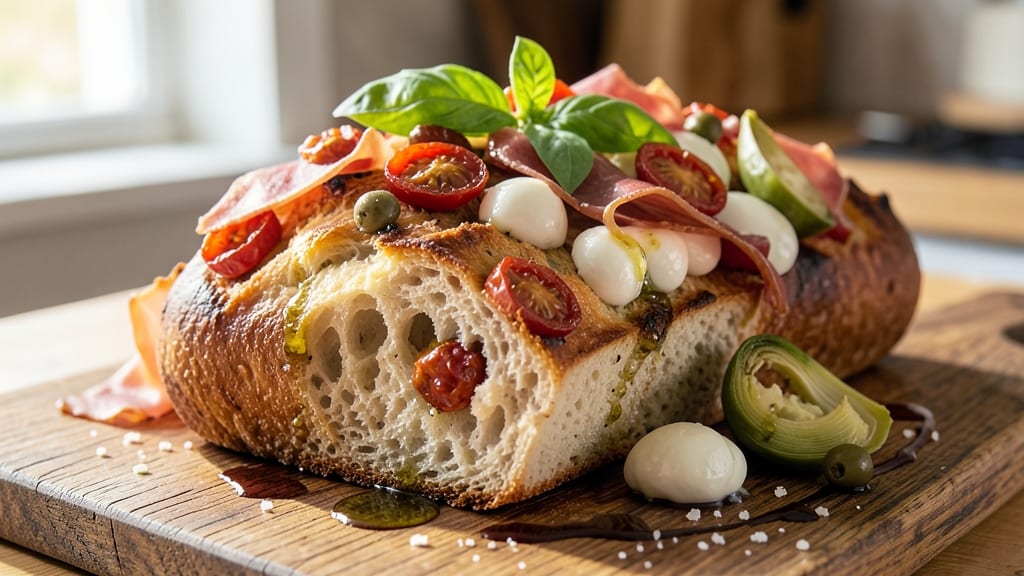
This antipasto bread loaf recipe transforms a simple loaf into a showstopping centerpiece—where every bite delivers layers of salty cured meats, sharp cheeses, and briny olives wrapped in golden, crisp-edged bread. 💛 The secret lies in a foolproof dough that bakes up tender yet sturdy enough to hold its toppings, while the antipasto filling creates herbaceous, savory swirls that make this dish irresistible as an appetizer or light meal.
I developed this recipe after years of perfecting the balance between structure and flavor, ensuring the bread doesn’t overpower the toppings—or vice versa.
The beauty of this recipe is its versatility—whether you’re hosting a dinner party or craving a satisfying snack, the one-pot baking method keeps prep simple while delivering restaurant-quality results.
Start with a no-knead dough infused with rosemary and garlic, then layer it with your choice of antipasto staples: think prosciutto, mozzarella pearls, sun-dried tomatoes, and Kalamata olives, all bound together with a herbed olive oil spread.
The dough’s crispy crust contrasts perfectly with the soft, cheesy filling, creating a texture that’s impossible to resist.
What makes this dish truly special is how it elevates any gathering—serve it warm with a sprinkle of flaky sea salt and fresh basil, or let it cool slightly for cleaner slices.
Pair it with a crisp Italian white wine or a refreshing Aperol spritz to balance the richness, and watch as guests rave over the harmony of flavors and textures. This isn’t just bread; it’s a savory masterpiece that turns a simple loaf into the star of the show.
The best part? You can customize it endlessly—swap in vegan cheese for a plant-based version, add spicy salami for heat, or keep it classic with traditional antipasto. The dough recipe scales effortlessly, so you can bake one loaf for a small gathering or two for a crowd.
Let’s get started on a dish that’s as impressive as it is delicious.
Ingredients for antipasto bread loaf
Sixteen ingredients. One showstopping loaf. Your kitchen’s new star.
| Ingredient | Amount | Notes |
|---|---|---|
| All-Purpose Flour 🌾 | 4 cups | Unbleached, for best texture |
| Active Dry Yeast 🍞 | ¼ oz | Or 2.25 tsp, dissolved in warm water |
| Extra-Virgin Olive Oil 🫒 | ½ cup | High-quality, fruity variety |
| Granulated Sugar 🍚 | 1 tbsp | For yeast activation |
| Warm Water 💧 | 1 ¼ cups | 110°F, not hot |
| Salt 🧂 | 1 ½ tsp | Diamond Crystal preferred |
| Fresh Rosemary 🌿 | ¼ cup | Finely chopped, stems removed |
| Garlic Cloves 🧄 | 4 cloves | Minced, for dough infusion |
| Prosciutto 🥓 | 8 oz | Thinly sliced, cut into strips |
| Mozzarella Pearls 🧀 | 1 cup | Fresh, not pre-shredded |
| Kalamata Olives 🫒 | ½ cup | Pitted, halved if large |
| Sun-Dried Tomatoes 🍅 | ¼ cup | Oil-packed, chopped |
| Fresh Basil Leaves 🌿 | ¼ cup | Chopped, for herbed oil |
| Flaky Sea Salt 🧂 | 1 tbsp | For finishing crust |
| Coarse Black Pepper 🌶️ | ½ tsp | Freshly cracked |
The flour is your foundation—King Arthur or Caputo if you want to splurge, but Bob’s Red Mill works just fine. Fresh yeast is non-negotiable here; check the date and store it properly (cool, dark place). For the rosemary, grab the freshest bunch you can find—Trader Joe’s or your local farmers market are my go-tos. The garlic? Three cloves are perfect, but don’t skimp on the mincing—you want that aromatic punch. If you’re short on time, pre-minced garlic works, but fresh is always better. The prosciutto should be the good stuff—Oscars or Columbus if you’re feeling fancy, but any decent deli counter slice will do. Just avoid the super-thin, dry kind.
No mozzarella pearls? Fresh mozzarella cut into chunks works just as well—just drain it first. Kalamata olives too expensive? Green olives or even capers add that briny kick. The sun-dried tomatoes? Oil-packed is best, but if you’ve got the water-packed kind, pat them dry thoroughly. For the herbed oil, basil is ideal, but oregano or thyme can step in if you’re out. The flaky sea salt? Maldon or Jacobsen are my favorites—no substitutions here, it’s worth the splurge for that perfect finish. If you’re making this ahead, prep the antipasto filling first and store it in the fridge for up to 2 days—it keeps beautifully.
This loaf is best made fresh, but you can prep the dough up to 12 hours ahead and let it rise in the fridge. The antipasto filling keeps for 3 days in the fridge, so assemble it early if you’re hosting. For leftovers, rewarm in a 350°F oven for 10 minutes—it’ll taste almost as good as fresh. Freezing? Not recommended—the texture gets gummy. Serve warm with a drizzle of extra-virgin olive oil and a sprinkle of fresh basil for that restaurant touch. The crust stays crisp for about 4 hours, so slice and serve promptly.
Why You'll Love This Recipe
- No-Knead Magic: I swear by this dough—just mix, let it rise, and bake. The yeast does all the work while I sip my coffee, and the olive oil keeps it tender without a single drop of butter.
- Crusty Yet Soft: That golden crust cracks open like a perfect book, revealing a moist interior where the olive oil and sugar create this just-right balance—crisp outside, pillowy inside.
- Party in a Loaf: Slice it for charcuterie boards, toast it for breakfast, or serve it warm with soup. It’s the one bread that works for every moment, from lazy Sundays to last-minute gatherings.
- Budget-Friendly Stretch: Flour, yeast, and olive oil? That’s it. No specialty ingredients, no waste—this loaf feeds four for under $5, and slices keep perfectly for days in the fridge. My wallet thanks me.
Step-by-step instructions for antipasto bread loaf
Here's how to craft this showstopping loaf with perfect texture and bold antipasto flavors.
👨🍳 Step 1: Activate the Yeast and Prepare the Dough Base
In a large bowl, combine the 1.25 cups warm water (110°F) with the 1 tbsp granulated sugar and 0.25 oz active dry yeast. Let it sit for 5-10 minutes until foamy—this confirms your yeast is alive. If it doesn't bubble, start over with fresh yeast.
In a separate bowl, whisk together the 4 cups all-purpose flour and 1.5 tsp salt. Create a well in the center and pour in the yeast mixture along with the 0.5 cup extra-virgin olive oil. Using a wooden spoon, gently mix until a shaggy dough forms. This initial combination is crucial for developing gluten properly.
👨🍳 Step 2: Knead and Infuse with Aromatics
Turn the dough onto a lightly floured surface and knead for 8-10 minutes until smooth and elastic. I press down firmly with the heel of my hand and fold the dough over itself—this builds strength and creates that signature chewy texture we want.
Once the dough is smooth, transfer it back to the bowl. Add the 0.25 cup finely chopped fresh rosemary and 4 minced garlic cloves, then gently knead these into the dough by hand for 2 minutes. The herbs will infuse the dough with their bright flavors, making every bite aromatic. Cover the bowl with a damp towel and let it rise in a warm place for 1 hour or until doubled in size.
🥘 Step 3: Prepare the Antipasto Filling
While the dough rises, prepare the antipasto filling by combining the 8 oz prosciutto strips, 1 cup mozzarella pearls, 0.5 cup halved kalamata olives, and 0.25 cup chopped sun-dried tomatoes in a small bowl. Mix gently to distribute the ingredients evenly—this will become the heart of your loaf.
In a separate small bowl, whisk together 2 tbsp extra-virgin olive oil (reserved from the dough) with the 0.25 cup chopped fresh basil leaves, 0.5 tsp coarse black pepper, and an additional 0.5 tsp salt. This herbed oil will add a vibrant finish to the loaf and tie all the flavors together beautifully.
🍳 Step 4: Assemble and Shape the Loaf
Once the dough has doubled, punch it down to release air. On a lightly floured surface, roll the dough into a 12x8-inch rectangle about ¼-inch thick. Spread the antipasto filling evenly over the dough, leaving a ½-inch border around the edges. This prevents the filling from bursting out during baking.
Using a pastry brush, lightly coat the edges of the dough with water, then carefully roll it up from the long side into a log. Tuck the seam underneath to seal. Place the log seam-side down in a greased 9x5-inch loaf pan and brush the top with the herbed oil mixture. Sprinkle generously with the 1 tbsp flaky sea salt for that finishing touch.
⏰ Step 5: Bake to Golden Perfection
Preheat your oven to 375°F. Bake the loaf for 40-45 minutes until the top is deep golden brown and an instant-read thermometer inserted into the center reads 190-195°F. The internal temperature is key—this ensures the dough is fully baked without drying out.
For the final touch, brush the top with a little more herbed oil while still warm. Let the loaf cool in the pan for 10 minutes, then transfer to a wire rack to cool completely. This resting period allows the flavors to meld and the texture to set properly. Slice when completely cool for clean, even pieces that showcase all those antipasto swirls.
Pro Tips For Making Antipasto Bread Loaf
- Check Yeast Freshness First: I learned this the hard way—dumping a packet of yeast that sat in the pantry for six months. If your water doesn’t bubble within 5–10 minutes after mixing with sugar, toss it. No amount of kneading will save stale yeast in an antipasto loaf.
- Mix Olive Oil Last: Adding the extra-virgin olive oil at the very end of mixing keeps it from getting overworked into the dough. Stir it in by hand after kneading—this preserves its rich flavor and prevents the dough from turning greasy or tough.
- Don’t Overproof the Dough: This loaf relies on a light, airy texture, so stop rising when it’s just over doubled in size. If you wait too long, the gluten relaxes and collapses during baking, leaving you with a dense brick instead of a fluffy antipasto base.
- Use a Baking Stone for Crisp: Skip the metal pan—slide the shaped loaf onto a preheated baking stone (or upside-down baking sheet) for a crisp bottom crust. The stone mimics a wood-fired oven and toasts the bread evenly without burning the top.
Regional styles of these flavors
Italian Panini Style
In Northern Italy, this dish transforms into a panino-style loaf where the dough is rolled tighter and baked in a rectangular pan for crispy, sandwich-like slices.
Use fresh ciabatta dough instead of all-purpose flour for a lighter texture, and layer with thinly sliced mortadella, provolone cheese, and roasted red peppers. Brush the top with garlic-infused olive oil before baking at 375°F for 35 minutes—perfect for hearty appetizers. 🌟
Southern Italian Focaccia Twist
Down south, the recipe evolves into a focaccia-inspired loaf with a dimpled top and extra olive oil. Replace the loaf pan with a 9x13-inch baking sheet, press dimples with your fingers, and top with cherry tomatoes, capers, and anchovies alongside the antipasto mix.
Bake at 400°F for 25 minutes until golden and crispy. The briny capers add a Mediterranean flair that pairs beautifully with Prosecco.
Modern Fusion: Vegan Antipasto
For a plant-based version, swap the mozzarella pearls for vegan marinated tofu cubes and use smoked paprika instead of prosciutto. Replace the olive oil with nutritional yeast oil for a cheesy flavor without dairy.
The dough stays the same, but the filling becomes a colorful medley of roasted red peppers, sun-dried tomatoes, and vegan salami. Bake as directed, then drizzle with balsamic glaze for a sweet-tangy finish. 💚
American-Style Party Loaf
In the US, this dish often becomes a giant party loaf baked in a 10x15-inch pan for easy slicing. Add pepperoni, sharp cheddar, and caramelized onions to the antipasto mix, then top with garlic butter before baking.
The result is a crowd-pleasing appetizer that’s crispy on the outside and gooey inside—ideal for game day gatherings. Serve with spicy marinara for dipping. 🏈
French Baguette Variation
For a French-inspired twist, shape the dough into two long baguettes instead of a loaf. Fill them with duck prosciutto, brie, and cornichons, then bake at 425°F for 20 minutes until golden.
The crispy crust and soft interior make these perfect for picnic-style antipasto platters. Pair with champagne for an elegant touch. 🥖
Spicy Sicilian Version
In Sicily, this loaf gets a spicy kick with ’nduja sausage, spicy soppressata, and hot honey drizzle. The dough is often mixed with red pepper flakes for extra heat. Bake at 350°F for 40 minutes, then finish with a drizzle of hot honey and fresh basil.
The heat balances beautifully with the salty olives and cheese, creating a bold, flavorful bite. 🌶️
Nutrition facts
Frequently asked questions
Can I make this antipasto bread loaf gluten-free?
Swap the all-purpose flour for a 1:1 gluten-free baking flour blend (like Bob’s Red Mill or King Arthur). You may need to add 1 extra tablespoon of xanthan gum to improve texture. Keep all other ingredients the same, but expect a slightly denser crumb. The dough will still rise, but it may take 10-15 minutes longer to develop.
How do I prevent the filling from leaking out during baking?
Leave a ½-inch border of dough around the edges when spreading the filling—this creates a natural barrier. Also, chill the assembled loaf for 30 minutes before baking to help the dough firm up. If you’re worried, brush the edges with beaten egg white before rolling—it acts as a glue.
What’s the best way to reheat leftovers?
Slice the loaf and warm it in a 350°F oven for 8-10 minutes on a baking sheet, covered with foil. For a crispier crust, broil for 1-2 minutes at the end. Microwaving works in a pinch (30 seconds), but it’ll make the bread gummy. The crust stays crisp for about 4 hours at room temperature.
Can I make this ahead of time?
Yes! Prep the dough up to 12 hours ahead and let it rise in the fridge. Assemble the loaf and refrigerate it (unbaked) for up to 24 hours. Bake straight from the fridge—just add 5-10 extra minutes to the baking time. The antipasto filling can be prepped 2 days ahead and stored separately.
What’s the best wine pairing for this dish?
A crisp Italian Pinot Grigio or Vermentino complements the salty-sweet flavors beautifully. For something bubbly, try Prosecco—its acidity cuts through the richness. If you prefer red, a light Chianti works too. Avoid heavy tannins like Cabernet Sauvignon, as they’ll clash with the cured meats.