
Side Dishes
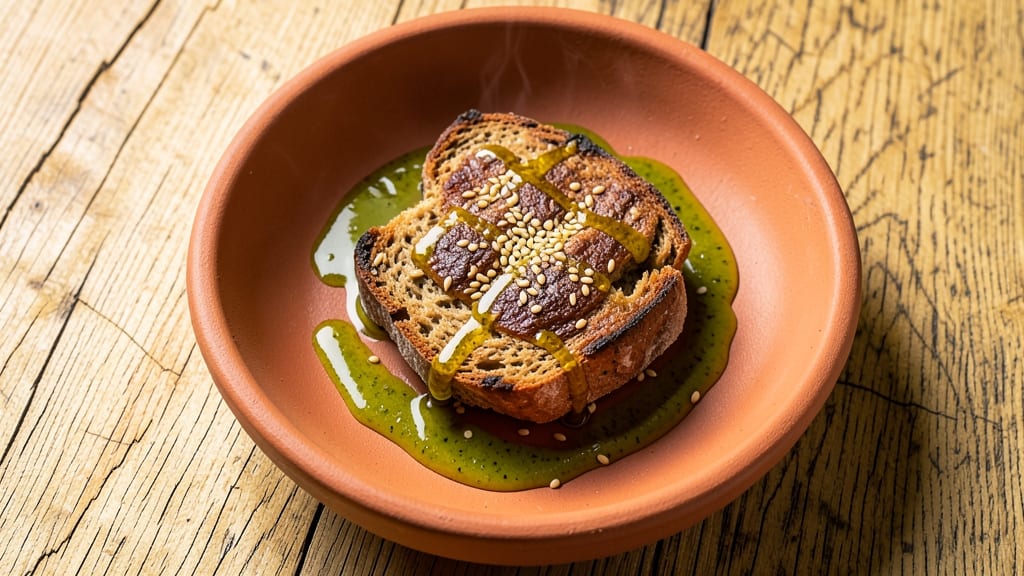
This ancient Greek barley bread recipe transports you to the bustling streets of Athens, where bakers crafted loaves with simple ingredients and timeless techniques. The nutty, earthy depth of barley flour creates a crusty exterior with a tender crumb—perfect for soaking up olive oil or pairing with Mediterranean dishes.
I've recreated the traditional method, using just water, salt, and barley flour for an authentic taste of history.
What makes this bread special is its simplicity and versatility—no yeast, no complicated steps, just a few ingredients and patience. The dough develops flavor as it rests, creating a loaf with a satisfying crunch and a subtle sweetness that balances its earthy notes.
Ancient Greeks relied on barley for its hardiness and nutritional value, and this recipe honors that tradition while delivering modern-day appeal.
Baking this bread requires minimal effort but yields impressive results. The dough comes together in under 10 minutes, then rests while you prepare your oven. When baked, the crust turns golden and crisp, while the interior remains soft and inviting.
Serve it warm with olive oil, fresh herbs, or alongside grilled meats and vegetables for an authentic Greek dining experience.
The beauty of this recipe lies in its adaptability—use it as a side, a base for sandwiches, or even as a rustic plate for dipping.
Whether you're recreating an ancient meal or simply enjoying a flavorful loaf, this barley bread brings a taste of history to your table with every bite.
Ingredients for ancient greek barley bread
Three core ingredients transform into rustic loaves with ancient Greek authenticity.
| Ingredient | Amount | Notes |
|---|---|---|
| Barley Flour 🌾 | 3 cups | Stone-ground for optimal texture |
| Water 💧 | 1 ½ cups | Room temperature preferred |
| Kosher Salt 🧂 | 1 ½ tsp | Diamond Crystal preferred |
| Extra-Virgin Olive Oil 🫒 | 2 tbsp | For dough and finishing |
| Honey 🍯 | 1 tbsp | Optional for subtle sweetness |
| Sesame Seeds 🌰 | 1 tbsp | For traditional topping |
| Fresh Rosemary 🌿 | 2 sprigs | Finely chopped for aroma |
| Fresh Thyme 🌿 | 1 sprig | Leaves only, finely chopped |
Barley flour is the heart of this recipe—Bob's Red Mill stone-ground or King Arthur varieties deliver the best texture. The Greeks relied on barley for its hardiness, and modern bakers appreciate its nutty depth. Look for 100% barley flour (not blends) at specialty stores or well-stocked supermarkets. If you can't find it, whole wheat flour at 1:1 ratio works in a pinch, though the flavor will differ slightly. The flour should be stored in an airtight container to prevent moisture absorption, which can make it clump and lose its freshness over time.
No honey? Maple syrup or agave nectar work equally well, though honey's floral notes complement the barley beautifully. The herbs—rosemary and thyme—can be swapped for dried at one-third the amount if fresh isn't available, but fresh delivers that authentic Mediterranean aroma. For olive oil, Kalamata or Greek varieties add subtle fruity notes, but any extra-virgin will suffice. The sesame seeds are traditional but optional; poppy seeds or everything bagel seasoning offer modern alternatives. If your water is particularly hard, filtered water prevents mineral buildup that could affect the dough's texture.
Barley flour dough benefits from a 24-hour rest in the fridge for optimal flavor development, though a 4-hour minimum works in a hurry. Store finished loaves wrapped in a clean kitchen towel at room temperature for up to 3 days or freeze for 3 months. For serving, brush warm slices with olive oil and sprinkle with flaky salt—this bread pairs beautifully with tzatziki, grilled halloumi, or roasted vegetables. The crust stays crisp for about 2 hours after baking, so enjoy it fresh or toast slices to restore crunch.
Why You'll Love This Recipe
- Five-Ingredient Magic: I swear by this—just flour, water, salt, olive oil, and honey. That’s it. No yeast, no kneading, no waiting around. Honestly, my lazy Sundays just got a whole lot easier.
- Earthy Honey Crunch: The barley flour gives it that hearty, nutty bite, while the honey adds this unexpected sweetness that lingers. Warm it up with a drizzle of olive oil? Absolute perfection. (Yes, even on a Tuesday night.)
- Meal Prep Hero: Slice it fresh, toast it later. Toss it in lunches, pack it for picnics, or serve it with dinner—it holds up like a champ. Between us, I’ve had this bread last me a full week without getting stale.
- Budget-Friendly Staple: Barley flour is cheap, olive oil lasts forever, and honey? A little goes a long way. I make a loaf every few weeks, and it’s always the first thing to disappear. My wallet and my stomach thank me.
Step-by-step instructions for ancient Greek barley bread
Transform simple ingredients into bread that tastes like it came straight from ancient Athens.
Combine Wet Ingredients for Optimal Gluten Development
In a large mixing bowl, whisk together the 1.5 cups water with the 1.5 tsp kosher salt until completely dissolved. The salt should fully integrate, creating a uniform solution. This step is crucial for even flavor distribution throughout the dough.
Next, add the 2 tbsp extra-virgin olive oil and 1 tbsp honey to the water mixture. Stir gently until the honey dissolves completely, creating a smooth liquid base. The olive oil will provide richness while the honey adds subtle sweetness that balances the earthy barley flavor.
I like to let this mixture sit for 5 minutes while I prepare the dry ingredients. This brief resting period allows the salt to fully hydrate and the honey to fully integrate, creating a more cohesive dough structure later.
Incorporate Barley Flour and Herbs for Authentic Flavor
Gradually add the 3 cups barley flour to the wet mixture while stirring with a wooden spoon. The barley flour will create a thick, shaggy dough that's initially quite sticky. This is normal—barley flour absorbs more moisture than wheat flour due to its higher protein content and unique starch structure.
Once all the flour is incorporated, add the finely chopped leaves from the 2 sprigs fresh rosemary and 1 sprig fresh thyme. Use your fingers to gently work the herbs into the dough, distributing them evenly. The herbs will infuse the bread with their distinctive Mediterranean aromatics, creating that authentic ancient Greek profile.
At this stage, the dough should be soft but manageable. If it feels too sticky to handle, add 1 tablespoon more barley flour (though this is rarely needed with the specified quantities). The dough should be cohesive enough to gather into a loose ball but still slightly tacky to the touch.
Knead the Dough for Proper Texture and Structure
Lightly flour a clean work surface and turn out the dough. Knead for 8-10 minutes using a rhythmic motion—push, fold, and turn the dough while rotating it 90 degrees with each push. The goal is to develop gluten without overworking the dough, which can make the bread dense.
You'll know the dough is properly kneaded when it becomes smooth and elastic, springing back slightly when pressed. Barley dough is more fragile than wheat dough, so handle it gently. The texture should be firm enough to hold its shape but still slightly soft to the touch.
After kneading, shape the dough into a round loaf and place it back in the mixing bowl. Cover with a damp towel and let it rest for 30 minutes at room temperature. This resting period allows the gluten to relax, making the dough easier to shape later and resulting in a more open crumb structure.
Shape and Proof for Maximum Rise
After the rest, shape the dough into a round loaf by gently pressing and folding the edges toward the center. Place it seam-side up in a lightly oiled 9-inch round baking pan or on a parchment-lined baking sheet. The shape should be slightly domed, with the edges tucked neatly underneath.
Cover the shaped dough with the damp towel and let it proof in a warm place for 1-1.5 hours, or until it has nearly doubled in size. The dough should feel light and springy when pressed gently with a finger—it should leave a slight indentation but not collapse completely.
For best results, proof the dough in a warm environment (75-80°F). If your kitchen is cooler, place the bowl near a warm oven (with the oven off) or use a proofing box. Avoid over-proofing, which can cause the bread to collapse during baking.
Bake to Crusty Perfection with Olive Oil Finish
Preheat your oven to 375°F with a baking stone or inverted baking sheet inside. This creates steam during baking, which helps develop that crispy crust we're after. Brush the proofed loaf with the remaining 1 tbsp extra-virgin olive oil, focusing on the top and sides.
Bake for 30-35 minutes until the bread is deep golden brown and sounds hollow when tapped on the bottom. The internal temperature should reach 190-200°F when measured with an instant-read thermometer. The crust should be firm to the touch with a slight crackle.
Immediately after removing from the oven, sprinkle the 1 tbsp sesame seeds evenly over the top. Let the bread cool on a wire rack for at least 15 minutes before slicing. This resting period allows the steam inside to escape, preventing a gummy texture. The bread will be at its best when served warm or at room temperature.
Pro Tips For Making Ancient Greek Barley Bread
- STIR UNTIL IT’S THICKER THAN YOU THINK: Barley flour loves to hide. Mix your dough until it reaches a stiff, almost crumbly consistency—like wet sand that holds its shape when pressed. I used to stop too soon, and the bread turned out dense and gummy. Test it by pressing a handful: if it cracks cleanly, you’re good.
- SALT THE WATER FIRST: Add all your kosher salt to the water before mixing in the barley flour. This ensures even distribution, not just pockets of saltiness. Trust me, your first bite will taste noticeably more balanced if you skip the "sprinkle later" approach.
- DON’T SKIP THE HONEY REST: Let the dough sit with honey for at least 20 minutes before shaping—this lets the sweetener soften the barley’s natural bite and bind the dough. I learned this the hard way when my bread crumbled apart like dry toast. Patience here makes the difference.
- USE OLIVE OIL SPARINGLY: Extra-virgin olive oil is flavorful, but too much will make your bread greasy. Stick to about 1 tablespoon for the dough and another for brushing—just enough to glaze, not drown. Over-oiling is why my first batch tasted more like a dip than bread.
Flavor customization for this ancient greek barley bread
Herb Variations
Swap the rosemary and thyme for other Mediterranean herbs to create different flavor profiles. Try 1 tbsp dried oregano and 1 tsp crushed fennel seeds for a more anise-forward flavor reminiscent of Greek island breads.
Alternatively, add ½ tsp ground coriander and ½ tsp cinnamon for a subtle sweetness that pairs beautifully with honey. I often use fresh dill when serving with fish dishes—its bright flavor complements the earthy barley perfectly. 🌿
Sweet Enhancements
For a sweeter loaf, increase the honey to 2 tbsp and add 1 tsp ground cinnamon to the dough. This variation works wonderfully as a breakfast bread or dessert accompaniment.
Another option is to replace the honey with 1 tbsp maple syrup and add ½ tsp vanilla extract for a warm, comforting flavor. The sweetness balances the barley’s earthiness beautifully, making it ideal for pairing with Greek yogurt or fresh fruit. 🍯
Savory Additions
Boost the savory depth by incorporating 1 tbsp toasted sesame seeds directly into the dough (in addition to the topping). For a heartier version, fold in ¼ cup chopped walnuts or pine nuts during kneading—these add texture and a buttery richness.
I also love adding 1 tsp smoked paprika for a subtle smokiness that pairs exceptionally well with grilled meats. These additions elevate the bread into a more substantial side dish. 🌰
Gluten-Free Adaptation
To make this bread gluten-free, replace the barley flour with a 1:1 gluten-free all-purpose flour blend like Bob’s Red Mill or King Arthur. Add 1 tsp xanthan gum to the dry ingredients to improve texture and binding.
Note that the flavor and texture will differ slightly, but the method remains the same. For extra moisture, reduce the water by 2 tbsp and increase the olive oil to 3 tbsp total to compensate. 💛
Regional Twists
For a Cretan-inspired version, add 1 tbsp chopped fresh mint and ½ tsp ground mastic to the dough. The mastic adds a unique resinous flavor that’s traditional in Crete. In Peloponnese-style, incorporate 1 tbsp chopped sun-dried tomatoes and ½ tsp dried basil for a tangy, herby twist.
These regional adaptations bring authentic local flavors to your table. 🗺️
Nutrition facts
Frequently asked questions
Why does this barley bread recipe use no yeast?
Ancient Greek breadmakers relied on natural fermentation methods without commercial yeast. This recipe uses barley's natural enzymes and the long proofing time to create a light texture. The result is a bread with subtle complexity and a crisp crust that ancient Greeks would recognize.
Can I make this bread without a baking stone?
Place a baking sheet on the lower oven rack to create steam, or invert another baking sheet above your loaf. For extra crispiness, spray the inverted sheet with water before baking. The key is maintaining moisture during the first 15 minutes of baking.
How can I tell when the bread is fully baked?
Look for a deep golden brown crust and listen for a hollow sound when tapping the bottom. The internal temperature should reach 190-200°F. If it's still slightly soft in the center, return it to the oven for 5-10 minutes more. The bread will firm up as it cools.
What's the best way to store leftover barley bread?
Wrap cooled loaves in a clean kitchen towel and store at room temperature for up to 3 days. For longer storage, freeze slices wrapped in plastic for 3 months. To revive, toast frozen slices directly from the freezer. The crust stays crisp best when stored this way.
Can I substitute barley flour with whole wheat?
While possible, the flavor and texture will differ significantly. Barley flour provides a unique nutty depth and lighter crumb. If substituting, use a 1:1 ratio but expect a denser, more hearty bread. For closer results, blend 50% barley and 50% whole wheat flour.