
Breakfast & Brunch
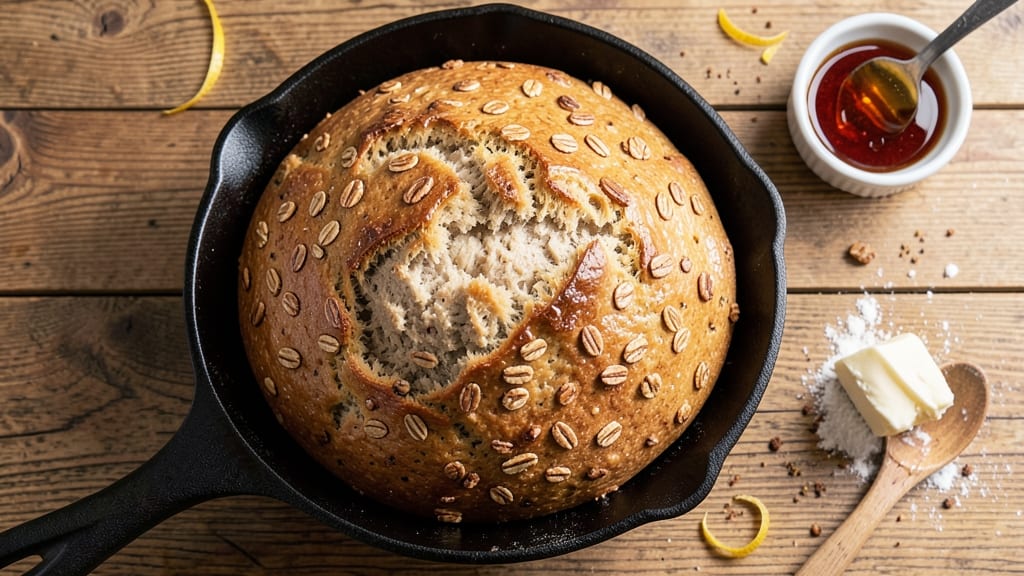
This Amish oatmeal bread recipe delivers the perfect balance of rustic texture and honeyed sweetness—just like the loaves from Pennsylvania’s Amish bakeries. The secret lies in the foil-sealed crust technique, which creates a golden, crisp exterior while keeping the interior tender and studded with chewy oats.
I’ve perfected this version after years of baking traditional sourdough, ensuring every slice delivers that classic Amish warmth and heartiness.
The bread’s simplicity is its strength: just a few pantry staples—flour, oats, honey, and a touch of yeast—come together to create a loaf that’s both comforting and impressive.
Unlike quick breads, this recipe follows a traditional proofing process, allowing the dough to develop depth of flavor and a light, airy crumb. The foil-sealed crust isn’t just a trick—it’s a technique passed down through generations, ensuring a crisp exterior without drying out the bread.
What you’ll end up with is a loaf that’s crisp on the outside, tender inside, and infused with the natural sweetness of honey and oats. The aroma alone—warm, buttery, with a hint of caramelized honey—will fill your kitchen and make your home feel like a cozy Amish farmhouse.
This bread is perfect for breakfast toast, sandwiches, or served warm with butter straight from the oven.
For those who love tradition, you can easily adapt this recipe into a savory version by omitting the honey and adding herbs or cheese to the dough.
The method remains the same, proving how versatile this classic loaf truly is. Let’s get started on baking a loaf that tastes like home.
Ingredients for amish oatmeal bread
Four cups flour, one cup oats, and honey's golden warmth create this rustic loaf.
| Ingredient | Amount | Notes |
|---|---|---|
| All-Purpose Flour 🌾 | 4 cups | Sifted for even texture |
| Old-Fashioned Rolled Oats 🥣 | 1 cup | Uncooked, not instant |
| Granulated Honey 🍯 | ½ cup | Light color preferred |
| Unsalted Butter 🧈 | ½ cup | Cold, cubed for easier mixing |
| Active Dry Yeast 🍞 | 2 ¼ tsp | Fresh yeast preferred |
| Granulated Sugar 🍚 | 1 tbsp | For yeast activation |
| Warm Water 💧 | 1 cup | 110°F for yeast activation |
| Salt 🧂 | 1 tsp | Kosher or sea salt |
| Almond Milk 🥛 | ¼ cup | For tender crumb |
| Large Egg 🥚 | 1 whole | Room temperature |
| Aluminum Foil 📄 | 1 sheet | For sealing crust |
| Coarse Sugar 🍚 | 1 tbsp | For crust sprinkle |
The flour is the foundation—King Arthur or Gold Medal brands work best for that tender crumb. Rolled oats should be the old-fashioned kind (not quick oats)—they hold their texture better. Honey? Local, raw honey adds depth, but store-bought works too. The yeast needs to be active dry, not instant—check the expiration date. Butter should be cold but not hard; if it's too firm, let it sit at room temperature for 10 minutes before mixing. For the almond milk, unsweetened is ideal, but any milk will work in a pinch. The egg adds structure, so make sure it's room temperature—cold eggs can make the dough tough.
No almond milk? Whole milk or buttermilk works just as well. Short on honey? Maple syrup at half the amount gives a similar sweetness. The coarse sugar topping is optional but adds that classic Amish crunch. For a savory version, skip the honey and add 1 tsp dried rosemary or 1/2 cup shredded cheddar to the dough. The foil sealing technique is key—it traps steam for that crisp crust. If you don’t have foil, a parchment paper lid works too, though it won’t be as crisp. For extra flavor, brush the crust with melted butter after baking.
This dough keeps in the fridge for up to 24 hours if wrapped tightly in plastic. For best results, let it rise at 75°F—a warm oven with the light on works in a pinch. The baked loaf stays fresh for 3-4 days at room temperature, wrapped in a clean kitchen towel. To revive stale bread, wrap it in damp paper towels and heat in a 350°F oven for 5-10 minutes. Freeze slices for up to 3 months—just thaw at room temperature before toasting. The foil-sealed crust method means you can slice straight from the oven without waiting, but it’ll crisp up more if you let it cool for 10 minutes first.
Why You'll Love This Recipe
- No-Fuss Dough: I swear, the rolled oats handle all the texture work—no fancy kneading, no stress. Just mix, let it rise, and bake. Honestly, my first attempt turned out perfect the first time.
- Honey-Butter Magic: That honey isn’t just sweet—it caramelizes into a sticky, buttery crust that’s dangerously hard to stop at one slice. The oats add a chewy bite that keeps it interesting.
- Breakfast to Picnic: I make a double batch on Sundays: toast it for breakfast, pack it for lunch, or serve it with jam at brunch. It’s the one bread that works everywhere without trying too hard.
- Budget-Friendly Staple: Flour, oats, honey—these are pantry basics that won’t break the bank. A single loaf feeds my family for days, and the leftovers? Toasted, sliced, or crumbled into oatmeal. Zero waste.
Step-by-step instructions for Amish oatmeal bread
Here's how to create that signature foil-sealed crust with a perfectly honeyed interior using these exact ingredients.
Activate the Yeast and Mix Wet Ingredients
In a small bowl, combine the 1 cup warm water (about 110°F) with the 2.25 teaspoons active dry yeast and 1 tablespoon granulated sugar. Let this sit for 5-10 minutes until it becomes frothy. This activation step is crucial—your yeast should bubble vigorously before proceeding.
In a separate large bowl, whisk together the 0.5 cup granulated honey, 0.25 cup almond milk, and 1 whole large egg. The honey will thicken slightly as it mixes with the egg, creating a smooth, golden base for your dough. I like to use a fork for this step to avoid overmixing the egg.
Combine Dry Ingredients and Form the Dough
In the bowl with the yeast mixture, add the 4 cups all-purpose flour (sifted), 1 cup old-fashioned rolled oats, 1 teaspoon salt, and the 0.5 cup cold cubed unsalted butter. Using a wooden spoon or dough whisk, stir until the butter begins to melt and the mixture comes together into a shaggy dough.
Gradually add the wet ingredients from the previous step, mixing just until combined. You'll notice the dough will be sticky—this is normal with oatmeal bread. Avoid adding extra flour as it can make the bread dense. Once fully incorporated, turn the dough onto a lightly floured surface and knead gently for 2-3 minutes just to bring it together.
Shape and Prepare for Rising
Divide the dough into 4 equal portions (about 1 pound each) and shape each into a round loaf. Place them in a lightly greased 9x5-inch loaf pan, seam-side down. The dough will be soft and sticky—don't worry about perfect shaping at this stage.
Cover the pan loosely with a clean kitchen towel and let the dough rise in a warm place for 1-1.5 hours or until it has nearly doubled in size. You'll know it's ready when the dough springs back slowly when gently pressed. The warm environment helps the yeast work efficiently, creating that light, airy texture we want in Amish oatmeal bread.
Seal with Foil and Bake to Perfection
Preheat your oven to 375°F. Cut a 18x18-inch sheet from the aluminum foil and place it on a baking sheet. Arrange the risen loaves on the foil, spacing them about 2 inches apart. Sprinkle each loaf generously with the 1 tablespoon coarse sugar—this creates that signature caramelized crust.
Fold the foil up around each loaf, sealing them completely. This foil seal traps steam during baking, creating the characteristic crispy crust while keeping the interior moist. Bake for 30-35 minutes until the loaves are golden brown and sound hollow when tapped on the bottom.
Cool and Serve for Maximum Freshness
Remove the loaves from the oven and carefully unfold the foil. Let them cool on a wire rack for 10-15 minutes before slicing. This cooling period allows the steam to escape and prevents a gummy interior. The bread should have a crisp exterior with a soft, slightly chewy crumb inside.
For best results, serve the bread warm. The honeyed sweetness pairs beautifully with butter or jam, while the oats add a satisfying heartiness. Store any leftovers wrapped in foil at room temperature for up to 3 days, or freeze for longer storage. The flavor actually improves slightly as it sits overnight!
Pro Tips For Making Amish Oatmeal Bread
- TOAST YOUR OATS FIRST: Skip the raw oats—they’ll turn your dough gummy. Pulse them in a food processor or spread on a baking sheet at 350°F for 8-10 minutes until golden and fragrant. This step cuts bitterness and makes the bread’s texture light instead of dense. (Yes, it’s worth the extra 10 minutes.)
- MEASURE HONEY BY WEIGHT: That "1/4 cup honey" in the recipe? It’s not precise enough. Honey’s thickness varies, and too much throws off the yeast’s timing. Use a kitchen scale for 60-65g instead—your dough will rise reliably, and the bread won’t taste cloyingly sweet. (I learned this after three failed batches where the dough just sat.)
- KNEAD BY FEEL, NOT TIME: The recipe might say "knead for 10 minutes," but that’s useless if your arms give out. Stop when the dough springs back slowly when poked and looks smooth but still slightly tacky. Overworking it makes the oats turn to mush—you want them to stay distinct pockets of texture. (Pro move: Wet your hands between kneads to avoid sticking.)
- USE COLD BUTTER FOR LAYERS: Cut that butter into the dough when it’s cold—literally, pull it from the fridge. Warm butter melts too fast, creating big, greasy holes instead of flaky layers. Cube it small (½-inch pieces) and work quickly so it softens just enough to coat the flour without disappearing. (This is the thing that matters most for that classic Amish crumb.)
Wine and beer pairings for this amish oatmeal bread
Sweet Honey Pairings
Amish oatmeal bread’s natural sweetness makes it a perfect match for lightly sparkling wines like Moscato d'Asti or Riesling. The effervescence cuts through the bread’s richness while the wine’s honeyed notes echo the recipe’s star ingredient.
I always reach for a chilled glass of Riesling—its crisp acidity balances the bread’s caramelized crust beautifully. 🍷
Creamy Beer Options
For beer lovers, a Belgian-style witbier (like Hoegaarden) or a honey wheat ale (such as Allagash Honey Farmer) complements the oatmeal’s texture and honeyed sweetness. The citrusy notes in witbiers cleanse the palate, while honey ales enhance the bread’s natural flavors. Avoid heavy stouts—they’ll overpower the delicate sweetness.
Classic Coffee Pairing
Nothing beats a warm slice of Amish oatmeal bread with a strong cup of black coffee. The bread’s honeyed warmth pairs perfectly with the bitterness of a medium-roast coffee or even a chicory blend for a Southern-inspired twist.
For an extra treat, drizzle melted butter over the toasted bread before serving.
Buttery Spreads
If you prefer spreads over drinks, salted butter or honey butter takes this bread to the next level. I love mixing softened butter with a pinch of flaky sea salt and a drizzle of local honey for a gourmet touch.
The contrast of salty and sweet elevates every bite—trust me, it’s a game-changer! 🧈
Fruit Jam Pairings
For a fruity twist, try pairing this bread with blackberry or apricot jam. The tartness of the jam cuts through the bread’s sweetness, creating a balanced flavor profile. I recommend small-batch jams from local markets—they add a depth of flavor that store-bought options can’t match.
Savory Twist
If you’re making the savory version (with rosemary or cheese), pair it with a dry white wine like Sauvignon Blanc or a crisp lager. The herbs and cheese in the bread stand up well to the wine’s acidity, making each bite more complex.
A sharp cheddar or goat cheese spread also works wonderfully for a brunch spread.
Nutrition facts
Frequently asked questions
Why does Amish oatmeal bread use foil during baking?
The foil creates a sealed environment that traps steam, resulting in a perfectly crisp crust while keeping the interior tender. This traditional Amish technique ensures even baking and prevents the bread from drying out. Without the foil, the crust might become too hard or uneven.
Can I substitute honey with another sweetener?
Yes! For a 1:1 substitution, use maple syrup or light corn syrup. If using brown sugar, reduce by 25% since it's less sweet. Avoid molasses—it has a stronger flavor that may overpower the bread. The honey's natural moisture also helps create that signature tender crumb.
How do I know when the dough is fully risen?
Press your finger gently into the dough—if it springs back slowly (like Jell-O), it's ready. The dough should nearly double in size and look puffy. For visual confirmation, check the edges of the loaves in the pan—they'll pull away slightly from the sides.
Can I make this bread without a loaf pan?
Shape the dough into free-form rounds and place them directly on a baking sheet lined with parchment paper. Use the foil sealing technique the same way, but expect slightly different shaping. The baking time may increase by 5-10 minutes—check at 30 minutes for doneness.
Why did my bread turn out dense?
Common causes include overmixing (which develops gluten too much), skipping the yeast activation step, or using cold ingredients. Ensure your yeast is fresh, your water is 110°F, and you're mixing just until combined. The dough should be sticky but not wet—adding extra flour makes it dense.