
Side Dishes
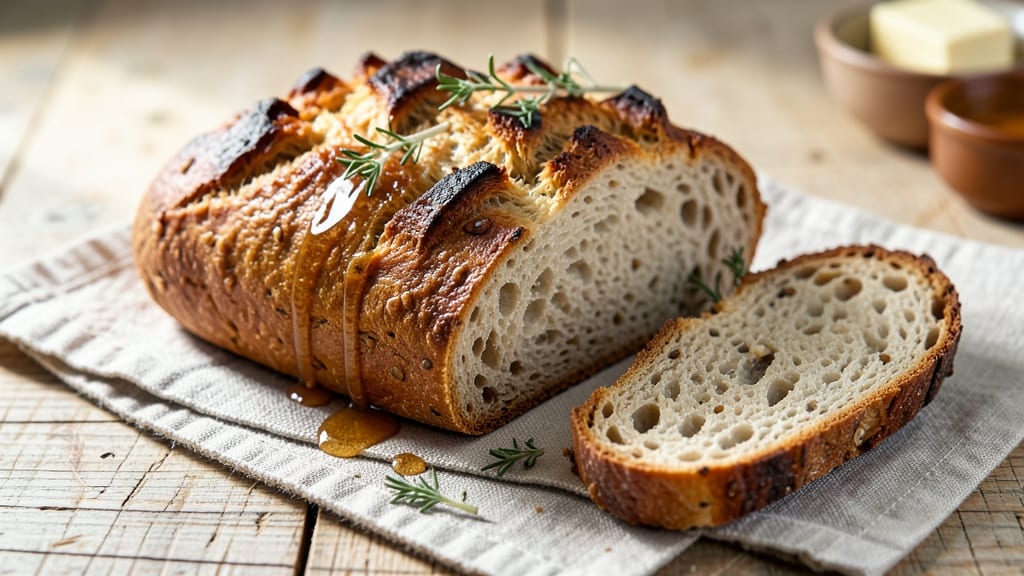
This Alpine grain bread recipe brings the rustic charm of Swiss mountain bakeries to your kitchen, where crisp crust meets nutty, hearty flavor in every slice. 💛 The secret lies in blending traditional Alpine flours—like rye or buckwheat—with whole grains, creating a loaf that’s both sturdy and tender, perfect for soaking up soups or pairing with charcuterie.
The bread’s signature texture comes from a high hydration dough (65-70%) that develops a chewy interior while forming a golden, crackly crust. Alpine bakers often use stone-ground flours for their robust flavor, but modern adaptations work with store-bought whole wheat or rye flour.
A slow fermentation—either with a sourdough starter or commercial yeast—deepens the bread’s complexity, giving it that unmistakable Alpine depth.
Baking at 425°F ensures a crisp exterior, while steam from a baking sheet keeps the crumb soft. The result? A loaf with a nutty, earthy profile and a satisfying snap—ideal for slicing thick or toasting for breakfast.
Whether you’re baking for a family dinner or a cozy weekend, this bread delivers rustic authenticity without fuss.
For extra Alpine flair, add seeds or nuts to the dough—think sunflower, pumpkin, or walnuts—for texture and flavor. Store wrapped at room temperature for up to 5 days, or freeze for longer shelf life. Ready to bake?
Ingredients for alpine grain bread
Rustic Alpine flours meet whole grains for a hearty loaf with crisp crust and nutty crumb.
| Ingredient | Amount | Notes |
|---|---|---|
| Stone-Ground Rye Flour 🌾 | 2 cups | For robust Alpine flavor |
| Whole Wheat Flour 🌾 | 1 ½ cups | Substitute for rye if needed |
| Buckwheat Flour 🌾 | ½ cup | Adds nutty depth (optional) |
| Active Dry Yeast 🍞 | 2 ¼ tsp | Or 1 packet sourdough starter |
| Warm Water 💧 | 1 ½ cups | 110°F for optimal yeast activation |
| Honey 🍯 | 2 tbsp | Feeds yeast and adds sweetness |
| Sea Salt 🧂 | 1 ½ tsp | Diamond Crystal preferred |
| Sunflower Seeds 🌻 | ½ cup | For Alpine crunch (optional) |
| Pumpkin Seeds 🎃 | ¼ cup | Adds earthy texture (optional) |
| Extra-Virgin Olive Oil 🫒 | 2 tbsp | For dough elasticity |
| Cornmeal 🌽 | 1 tbsp | For dusting baking sheet |
| Ice Water ❄️ | ¼ cup | For final dough adjustment |
The flours are everything here. Stone-ground rye from King Arthur or Bob's Red Mill gives that true Alpine bite, but Whole Foods bulk bins work too—just check the grind date. Buckwheat isn't wheat at all (it's a seed), which is why it adds that distinct nutty kick. If you can't find stone-ground, regular rye flour still works, but the flavor won't be as complex. Pro tip: Toast your seeds lightly before mixing—they'll release more aroma during baking. Costco sells bulk seeds at a fraction of the price, but the grocery store works too.
No buckwheat? Substitute with extra rye or whole wheat—just reduce the other flour by 1/4 cup to keep hydration balanced. Running low on honey? Maple syrup works 1:1, but it's heavier so adjust your yeast slightly. The yeast can be tricky—if your kitchen's cold, warm the water to 110°F and let it sit 5 minutes before mixing. No sourdough starter? Active dry yeast is fine, but let the dough ferment longer (up to 2 hours) for better flavor. And if you're feeling fancy, add a pinch of cinnamon—it pairs beautifully with the seeds.
This dough is high hydration, so it'll be sticky—don't fight it. Use a dough scraper like a pro. Wrap the shaped loaf in a damp towel while it proofs for that perfect crust. The bread keeps best at room temperature for 3-4 days in a bread bag, but it freezes beautifully too—just thaw overnight on the counter. For extra Alpine flair, brush the cooled loaf with melted butter and a sprinkle of flaky sea salt. Leftovers? Toast them—everything tastes better toasted.
Why You'll Love This Recipe
- No-Knead Magic: I swear by this—just mix, let it rise, and bake. The stone-ground rye and buckwheat handle all the heavy lifting while you sip your coffee.
- Earthy Crunch: That first bite? The rye’s deep bite and buckwheat’s nutty punch make it taste like a rustic European bakery, not my kitchen. (Yes, even on a Tuesday night.)
- Meal Prep MVP: Slice it fresh, toast it later. It keeps for days—perfect for breakfast wraps, charcuterie boards, or when you’re too tired to think.
- Pantry Goldmine: Honestly, you’re already stocked. Rye, whole wheat, and buckwheat are cheap staples, and the yeast? A single packet lasts forever. Budget-friendly doesn’t get better than this.
Step-by-step instructions for Alpine grain bread
Here's how to craft that perfect rustic loaf with a nutty Alpine kick.
👨🍳 Step 1: Activate the Yeast and Mix Wet Ingredients
In a large bowl, whisk together the 1.5 cups warm water (should feel like bathwater) with the 2 tbsp honey until fully dissolved. Sprinkle the 2.25 tsp active dry yeast over the surface and let it sit for 5-10 minutes until it becomes frothy. This tells you your yeast is alive and ready to work its magic.
In a separate small bowl, combine the 2 tbsp extra-virgin olive oil with the 1.5 tsp sea salt. The oil helps create a tender crumb while the salt enhances all those nutty Alpine flavors we're after. Mix well until the salt dissolves completely—this prevents gritty pockets in your final loaf.
👨🍳 Step 2: Combine Dry Ingredients and Hydrate
Add the 2 cups stone-ground rye flour, 1.5 cups whole wheat flour, and 0.5 cup buckwheat flour to your yeast mixture. The rye gives that deep, earthy Alpine character while the buckwheat adds nutty complexity. Use a wooden spoon or dough whisk to mix until you have a shaggy, sticky mass.
Gradually incorporate the wet ingredients while mixing vigorously. You'll want to work this dough by hand for about 5 minutes until it comes together into a rough ball that's still slightly sticky. This hybrid flour blend needs extra love to develop proper gluten structure—don't rush this step.
🥘 Step 3: Knead and Develop Gluten
Lightly flour your work surface and turn out the dough. Knead for 8-10 minutes until smooth and elastic. The dough should be tacky but not wet, and should spring back slowly when poked. This kneading develops the gluten network that gives your bread its satisfying chew and open crumb structure.
Here's where it gets tricky with these dense flours. If the dough feels too sticky, add 1-2 tablespoons of the 1.5 cups whole wheat flour at a time until it's manageable. Too much flour and your bread will be dense—just until it's workable. Shape into a round and place in a lightly oiled bowl.
⏰ Step 4: First Rise and Seed Incorporation
Cover the bowl with a damp towel and let rise in a warm place for 1-2 hours or until doubled in size. You're looking for about a 50-75% increase in volume. The dough should feel light and airy when pressed gently with a finger.
Once risen, fold in the 0.5 cup sunflower seeds and 0.25 cup pumpkin seeds by gently pressing them into the surface. These seeds add that signature Alpine crunch and texture contrast. Transfer the dough to a floured surface and shape into a 12-inch round or 9x5-inch loaf—whichever shape suits your baking pan.
🔥 Step 5: Final Shape and Bake to Perfection
Place the shaped dough on a parchment-lined baking sheet dusted with 1 tbsp cornmeal. This prevents sticking and gives that beautiful rustic base. Cover again and let rise for another 30-45 minutes until puffy.
Preheat your oven to 375°F with a Dutch oven inside for 30 minutes. Carefully transfer the dough (with parchment) into the hot Dutch oven. Bake covered for 30 minutes, then remove the lid and bake 15-20 minutes more until the crust is deep golden brown and sounds hollow when tapped.
🍞 Step 6: Cool and Enjoy
Remove from the oven and let cool on a wire rack for at least 1 hour. This resting period allows the internal structure to set properly and prevents a gummy crumb. The bread will continue steaming as it cools, developing those perfect textures.
Slice into thick pieces to reveal that open crumb and nutty flecks throughout. The crust should be crisp with a satisfying crack, while the interior remains tender with pockets of air. Store wrapped at room temperature for 3 days or freeze for up to 3 months—this bread only gets better with age.
Pro Tips For Making Alpine Grain Bread
- SIFT THE FLOURS: Stone-ground rye and buckwheat are dense—skip sifting, but toss the dry mix in a fine-mesh strainer with a fork first. This breaks up clumps without turning your dough into a powdery mess, and your yeast will wake up faster. (I learned this after my first batch turned into a brick.)
- HYDRATE THE BUCKWHEAT: Buckwheat flour soaks up water like a sponge—mix it with warm water first, then let it sit for 10 minutes before adding to the dough. This prevents a gummy, uneven texture and keeps your final loaf from collapsing. (Yes, it feels like extra work, but your bread will actually rise.)
- DON’T OVERKNEAD THE RYE: Rye dough is stubborn—it won’t develop gluten like wheat. Stop mixing once the ingredients just come together (about 3-4 minutes by hand). Overworking it turns your bread into a dense, chewy brick instead of a light, airy loaf. (I’ve done it. You don’t want to.)
- COOL IT BEFORE SLICING: Alpine grain bread stays moist longer, but slicing it warm makes a gummy disaster. Wait at least 2 hours—preferably overnight—before cutting. The starches set properly, and every slice will hold its shape. (Patience here saves you from a soggy sandwich.)
Serving suggestions for this dish
Charcuterie Pairings
This Alpine bread is a game-changer for charcuterie boards. Its nutty, hearty texture holds up perfectly against delicate cheeses like Gruyère or Comté, while the crisp crust provides contrast to creamy brie or camembert.
I love pairing it with dry-cured salami and prosciutto—the seeds add a satisfying crunch that balances the fatty meats. Add fig jam or honey mustard for a touch of sweetness that complements the bread's earthy notes. 🧀
Soup and Stew Companion
Alpine grain bread is a must with hearty soups and stews. Its sturdy crust can handle thick broths like French onion soup or Swiss rösti-inspired potato stew without falling apart. I especially love it with lentil soup—the bread's nutty flavor enhances the earthiness of the lentils.
For a rustic touch, tear the bread into chunks and let everyone dip their own pieces. A sprinkle of flaky sea salt on the bread before serving adds an extra layer of flavor. 🥄
Breakfast Toast Perfection
Toast this bread for a hearty breakfast that feels like a vacation in the Alps. Its dense texture holds up beautifully to toppings like scrambled eggs, avocado mash, and crumbled feta. I drizzle local honey and sprinkle crushed walnuts for a sweet-savory balance.
For a savory twist, top with smoked salmon, cream cheese, and fresh dill. The seeds add a delightful crunch that keeps every bite interesting. ☀️
Wine and Beer Pairings
A crisp Alpine white wine like Chasselas or Pinot Grigio complements the bread's nutty notes beautifully. For red wine lovers, a light Pinot Noir from Switzerland's Valais region enhances the earthy flavors without overpowering.
Beer enthusiasts should try a Belgian witbier—its citrus and spice notes cut through the richness. For a non-alcoholic option, sparkling apple cider adds a refreshing contrast. 🍷
Sweet Applications
Don't overlook this bread for desserts! Its sturdy texture makes it perfect for bread pudding or as a base for fruit tarts. I've used it to make a rustic peach galette by layering sliced bread with fresh peaches, honey, and cinnamon.
For a quick dessert, toast slices and top with mascarpone cheese, blackberries, and a drizzle of balsamic glaze. The nutty flavor pairs surprisingly well with sweet fruits. 🍓
Sandwich and Panini Potential
This bread excels in sandwiches and paninis. Its thick slices hold up to grilled chicken breast, provolone cheese, and caramelized onions without getting soggy. For a vegetarian option, layer with roasted red peppers, hummus, and arugula.
When making paninis, brush the bread with olive oil and toast in a panini press until golden. The seeds add a delightful texture contrast that elevates every bite. 🥪
Nutrition facts
Frequently asked questions
Why does this Alpine grain bread need such a long kneading time?
The blend of stone-ground rye, buckwheat, and whole wheat flour creates a dense, sticky dough that requires 8-10 minutes of kneading to properly develop gluten. This step ensures your bread gets that satisfying chewy texture and open crumb structure Alpine bakeries are known for. Think of it as giving the dough a workout—it pays off with a better rise and flavor.
Can I skip the Dutch oven for baking?
You can, but your crust won't be as crispy or flavorful. A Dutch oven traps steam, creating that signature crackly exterior while keeping the crumb tender. For a work-around, place a metal bowl filled with hot water on the lower oven rack while baking. Your bread will still turn out delicious, just with a slightly softer crust. Pro tip: Brush the baked loaf with melted butter for extra Alpine flair.
What's the best way to store leftover Alpine grain bread?
Wrap the cooled loaf tightly in beeswax wrap or a bread bag and store at room temperature for up to 5 days. For longer storage, freeze slices wrapped in parchment paper—they'll stay fresh for 3 months. To revive, toast frozen slices directly from the freezer for 3-4 minutes until crispy. The seeds stay crunchy even after freezing!
How do I adjust this recipe for a gluten-free version?
Replace all flours with a 1:1 gluten-free baking blend (like Bob's Red Mill) plus 1 tbsp xanthan gum to mimic gluten structure. Use 1.25 cups of the blend instead of the original 4 cups total flour. The hydration will be lower, so add 1-2 tbsp extra water if the dough feels dry. Expect a denser texture—this bread won't rise as dramatically, but it'll still be delicious with that nutty Alpine character.
Why did my bread turn out dense instead of crusty?
This usually happens from over-kneading (breaking gluten) or under-proofing (not enough fermentation). For Alpine bread, focus on gentle kneading and longer proofing times—let it rise until it's 50-75% larger, not just doubled. Also check your yeast: if it didn't foam in 5-10 minutes, it was inactive. For next time, try a 30-minute cold ferment in the fridge before final proofing to improve flavor and texture.