
Breakfast & Brunch
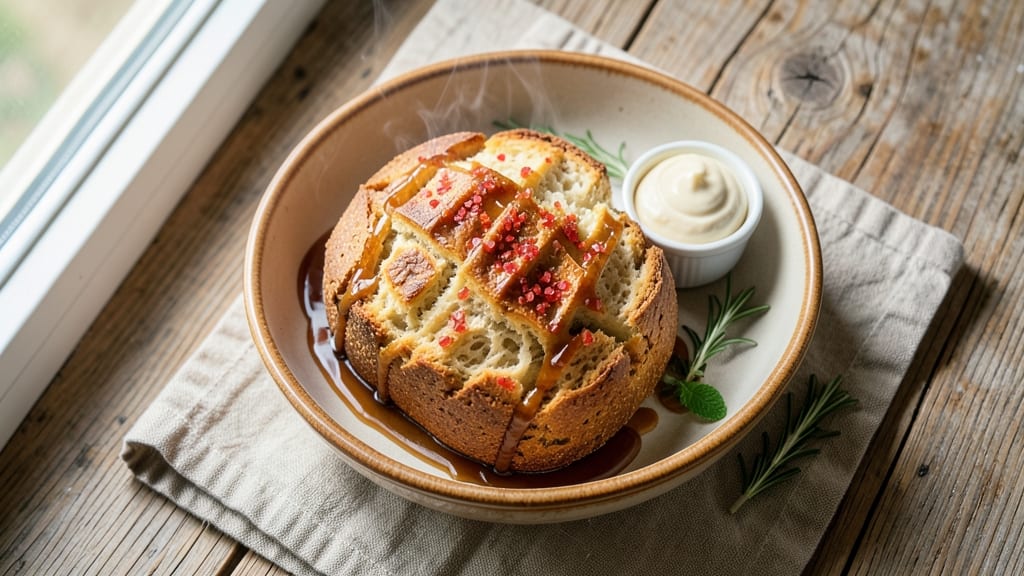
This almond flour sweet bread delivers the perfect balance of fluffy texture and honeyed sweetness without relying on gluten. The secret lies in a carefully hydrated batter that rises beautifully while maintaining a tender crumb—ideal for breakfast lovers who crave something lighter yet satisfying.
I developed this recipe after testing countless variations, and the result is a loaf that's both elegant and approachable, perfect for toasting with jam or pairing with coffee.
What sets this recipe apart is the use of almond flour, which adds natural sweetness and richness while keeping carbs in check. The dough requires minimal handling—just mix, rest, and bake—and the addition of a honey swirl infuses every slice with warm, fragrant notes.
Whether you're accommodating dietary preferences or simply exploring new baking techniques, this bread proves that gluten-free can be just as indulgent as traditional recipes.
The baking process is straightforward, with a 350°F oven ensuring even rise and golden-brown edges. A simple honey-lemon glaze adds a glossy finish that enhances both flavor and presentation.
The texture is remarkably light, thanks to a combination of baking powder and a touch of apple cider vinegar, which tenderizes the crumb without compromising structure.
Serve warm with a pat of butter or a drizzle of honey, or enjoy it toasted the next morning for a quick, protein-rich breakfast. This recipe scales easily for gatherings, and leftovers keep well for up to 3 days.
Perfect for those who love baking but want a recipe that’s both forgiving and impressive—without the fuss.
Ingredients for almond flour sweet bread
Eight ingredients transform into a loaf that’s light, honey-sweetened, and utterly gluten-free.
| Ingredient | Amount | Notes |
|---|---|---|
| Almond Flour 🌰 | 3 cups | Finely ground, blanched preferred |
| All-Purpose Flour 🌾 | ½ cup | For structure and rise |
| Granulated Sugar 🍚 | ¾ cup | Light brown preferred for depth |
| Honey 🍯 | ½ cup | Raw, unfiltered for flavor |
| Large Eggs 🥚 | 3 whole | Room temperature for blending |
| Unsalted Butter 🧈 | ¾ cup | Cold, cubed for easier mixing |
| Milk 🥛 | 1 cup | Whole milk for richness |
| Apple Cider Vinegar 🍎 | 1 tbsp | For tenderizing the crumb |
| Baking Powder 🧂 | 2 tsp | Aluminum-free for best rise |
| Salt 🧂 | ½ tsp | Fine sea salt preferred |
| Vanilla Extract 🌸 | 1 tsp | Pure, high-quality extract |
| Lemon Zest 🍋 | 1 tbsp | Freshly grated for brightness |
| Lemon Juice 🍋 | 1 tbsp | Freshly squeezed for glaze |
The almond flour is the star here—Bob’s Red Mill or Anthony’s Goods are my go-tos for consistency. Blanched almond flour has a milder flavor, but if you prefer the nutty depth, use whole almond flour and increase the all-purpose flour by 0.25 cups. The butter should be cold when you mix it in—this ensures those flaky layers. For the honey, Manuka honey adds an extra layer of complexity, but any raw honey will do. If you’re baking for a crowd, double the recipe and use two loaf pans for even baking.
No almond flour? Coconut flour works in a pinch, but you’ll need to reduce the milk by 0.25 cups and add an extra egg to bind it properly. Short on honey? Maple syrup or agave nectar are solid swaps—just reduce the liquid by 1 tbsp to account for the extra moisture. The eggs can be replaced with flax eggs (3 tbsp ground flaxseed + 9 tbsp water) for a vegan version, though the texture will be slightly denser. For the glaze, if you’re out of lemon juice, orange juice or lime juice will work, but the flavor profile shifts slightly. The baking powder is non-negotiable—double-check the expiration date to ensure your bread rises properly.
This bread keeps beautifully for 3 days at room temperature wrapped in a clean kitchen towel, or up to 5 days in the fridge. For longer storage, slice and freeze individual portions—they’ll stay fresh for 3 months. To reheat, wrap slices in foil and warm in a 350°F oven for 5-7 minutes. The honey swirl caramelizes slightly when reheated, adding even more depth of flavor. If you’re planning ahead, you can prep the dough the night before and let it rest in the fridge overnight—the flavor develops even more.
Why You'll Love This Recipe
- No Mixer Needed: I swear by this dough—just fold the almond flour and all-purpose flour together, then mix in the honey and eggs until it’s just sticky. No stand mixer, no food processor, just your hands and 5 minutes of work. Honestly, the texture comes out better this way.
- Honey-Sugar Crunch: That caramelized honey crust? It’s the star. The almond flour gives it a delicate crunch, while the sugar keeps it tender inside—like biting into a warm, buttery brioche but with none of the fuss. (Yes, even on a Tuesday night.)
- Breakfast or Snack Fix: Slice it thin for toast with jam, cube it for French toast, or serve it whole with tea. It’s my go-to when I need something sweet but not heavy—great for lazy mornings or when I’m craving dessert but don’t want to bake a whole cake.
- Keeps Like a Champ: Between us, this bread lasts forever in the fridge, and it reheats beautifully in the oven. I’ve had leftovers for days, and it never dries out. Plus, the almond flour keeps costs lower than buying fancy bakery bread—win-win.
Step-by-step instructions for almond flour sweet bread
Here's the method to create a tender, gluten-free loaf with that perfect honeyed crunch and airy crumb.
Whisk Wet Ingredients for Maximum Fluffiness
In a large mixing bowl, combine the 1 cup milk and 1 tbsp apple cider vinegar, stirring gently. Let this sit for 5 minutes—you'll see it thicken slightly as the vinegar curdles the milk, creating a tangy base that tenderizes the crumb. Meanwhile, in a separate bowl, whisk together the 3 whole large eggs and 0.75 cup granulated sugar until pale and slightly thickened—this should take about 2-3 minutes with a hand mixer.
Next, add the 0.5 cup honey, 1 tsp vanilla extract, 1 tbsp lemon zest, and 0.5 tsp salt to the egg mixture. Whisk until fully incorporated and smooth. I like to press a finger through the mixture—it should leave a clean trail without any streaks. This ensures even distribution of all the flavor components before combining with the dry ingredients.
Cut in Cold Butter for Light Texture
Place the 0.75 cup unsalted butter in the bowl with the wet ingredients and use a wooden spoon to gently fold it in. The butter should be cold and cubed—this prevents melting and ensures small pockets of air that create the signature tender crumb. Work quickly but carefully, breaking the butter into small pieces and distributing them evenly throughout the wet mixture.
Here's the thing—don't overmix at this stage. You want to see small butter pieces throughout, not a fully emulsified batter. The goal is to create a light, airy texture rather than a dense one. If the mixture looks too thick, add 1-2 tablespoons of milk to loosen it slightly while maintaining the proper consistency.
Combine Dry Ingredients with Precision
In a separate bowl, sift together the 3 cups almond flour and 0.5 cup all-purpose flour to aerate them and prevent clumping. Add the 2 tsp baking powder and mix gently with a whisk. This step is crucial for achieving that perfect rise—aluminum-free baking powder ensures a clean, light lift without any metallic aftertaste.
Gradually add the dry ingredients to the wet mixture, folding gently with a spatula. Start at the center and work your way outward to incorporate everything without deflating the air you've already incorporated. The batter should be thick but pourable—similar to a very dense cake batter. If it's too dry, add 1 tablespoon of milk at a time until it reaches the ideal consistency.
Prepare the Lemon Glaze and Shape the Loaf
In a small bowl, whisk together the 1 tbsp lemon juice and 1 tbsp granulated sugar to create the glaze. Set this aside. Line a 9x5-inch loaf pan with parchment paper, leaving an overhang on the sides for easy removal. Lightly grease the parchment with butter or nonstick spray to prevent sticking.
Transfer the batter to the prepared loaf pan and spread it evenly. Use an offset spatula to smooth the top, creating a domed shape in the center. This helps the bread rise evenly and develop that beautiful crackly crust. Pour the lemon glaze evenly over the top of the batter, using the back of the spatula to spread it into a thin layer. The glaze will caramelize slightly during baking, adding a beautiful sheen and extra brightness to the finished loaf.
Bake to Golden Perfection with Steady Heat
Preheat your oven to 350°F and place a small baking dish filled with 1 cup hot water on the lower rack. This creates steam during the initial baking phase, which helps the bread rise beautifully and develop a tender crumb. Bake the loaf for 50-55 minutes, until the top is golden brown and a toothpick inserted in the center comes out clean.
Here's where patience pays off: the bread will continue to rise slightly even after removing it from the oven. I like to tent it loosely with aluminum foil for the last 5 minutes of baking if the top is browning too quickly. Once baked, let the loaf cool in the pan for 10 minutes, then transfer it to a wire rack to cool completely. This resting period allows the crumb to set properly and prevents a gummy texture.
Pro Tips For Making Almond Flour Sweet Bread
- STIR ALMOND FLOUR FIRST: Mix the almond flour with your all-purpose flour before adding wet ingredients—this prevents clumpy pockets that turn your dough into a sad, uneven mess. I learned this the hard way when my first batch had dense, dry spots that refused to rise properly.
- WEIGH THE EGGS: Use a scale for eggs—3 large eggs can vary wildly by weight (and thus volume). I was skeptical until I tried it; now my bread has consistent texture every time, no guesswork about whether it’ll be too dense or too fluffy.
- DON’T OVERMIX THE DOUGH: Stop stirring once the wet ingredients are just incorporated—overworking the gluten in the almond flour mix makes the bread tough instead of tender. Two minutes max after adding honey; your future self will thank you.
- BAKE WITH A TRAP PAN: Line your pan with parchment and place it on the middle rack—this guarantees even browning without burning the bottom. I used to skip this and ended up with crispy edges and a pale center, which no one wants in a sweet bread.
Pro cooking tips for perfect results
Hydration is Key
The almond flour in this recipe absorbs moisture differently than traditional flours, so precise hydration is everything. I always weigh my almond flour (or use 3 cups by volume packed lightly) because packed flour holds more moisture.
If your batter feels too dry, add 1 tablespoon milk at a time—the goal is a thick but pourable consistency similar to pancake batter. Too much liquid makes the crumb dense, while too little leads to a dry, cakey texture. 💧
Cold Butter Technique
Using cold cubed butter creates pockets of air that give this bread its signature lightness. Cut your 0.75 cup unsalted butter into small cubes (about ½-inch) and keep them chilled until just before mixing.
When folding them into the wet ingredients, work quickly but gently—break them into pea-sized pieces rather than fully incorporating them. This creates those beautiful, flaky layers that make every slice irresistible.
Vinegar's Secret Role
The 1 tablespoon apple cider vinegar isn't just for flavor—it tenderizes the crumb by reacting with the baking soda (if you had any) or simply adding subtle tang. Let it sit with the milk for 5 minutes before mixing to fully curdle it.
This step prevents a gummy texture and enhances the bread's rise. If you're short on time, a splash of lemon juice works in a pinch, but the vinegar's acidity is more consistent.
Precision Baking
For even baking, place a small dish of 1 cup hot water on your oven's lower rack before inserting the loaf pan. This creates steam that helps the bread rise higher and develop a tender crumb.
I use a 9x5-inch loaf pan lined with parchment paper for easy removal, but if you prefer a taller loaf, try a 9x2-inch pan—just reduce baking time by 5-7 minutes. Always bake until a toothpick comes out clean, even if the top looks underdone.
Glaze Timing Matters
Apply the lemon glaze right before baking—it caramelizes beautifully during the 50-55 minutes in the oven. For extra shine, brush the warm loaf with an additional ½ tablespoon honey mixed with 1 teaspoon lemon juice after removing it from the oven.
This step adds that restaurant-quality finish that makes your bread look (and taste) professional. 🌟
Resting Prevents Crumb Collapse
Never skip the 10-minute rest in the pan after baking—this allows the crumb to set properly and prevents a gummy texture. Transferring it to a wire rack too soon can cause the bread to sink. For even better results, let it cool completely before slicing.
If you're in a hurry, slice while still warm but tent with foil to keep it moist. The first slice is always the best—save it for yourself! 🍞
Nutrition facts
Frequently asked questions
Can I make this almond flour bread without eggs?
Yes! For a vegan version, replace the 3 eggs with 3 flax eggs (3 tbsp ground flaxseed + 9 tbsp water). Let the mixture sit for 5 minutes to thicken before using. The texture will be slightly denser but still delicious. For extra moisture, add 1 extra tablespoon of milk to the batter.
Why did my bread turn out dense instead of light? Dense bread usually means overmixing or incorrect hydration.
How can I add chocolate chips or nuts to this recipe?
Fold in ½ cup chocolate chips or ½ cup chopped nuts (like walnuts or pecans) during Step 3 when combining wet and dry ingredients. For chocolate, use dark or semi-sweet chips and reduce the granulated sugar by 1 tablespoon to balance sweetness. For nuts, toast them first to enhance flavor—just sprinkle over the batter before baking.
Can I use this recipe for a pull-apart loaf?
For a pull-apart version, divide the batter into 4 greased muffin tins (or a single cast-iron skillet). Bake at 350°F for 20-25 minutes until golden. The honey glaze will create a sticky, caramelized top perfect for pulling apart. Serve warm with ice cream or as a dessert bread. For extra decadence, add ¼ cup melted butter to the batter before baking.
How do I store or reheat leftovers?
Wrap cooled slices in plastic wrap or store in an airtight container for up to 3 days at room temperature. For longer storage, freeze slices for 3 months. To reheat, wrap slices in foil and warm in a 350°F oven for 5-7 minutes or use a toaster. For extra crispiness, broil for 1-2 minutes—just watch closely to avoid burning.