
Side Dishes
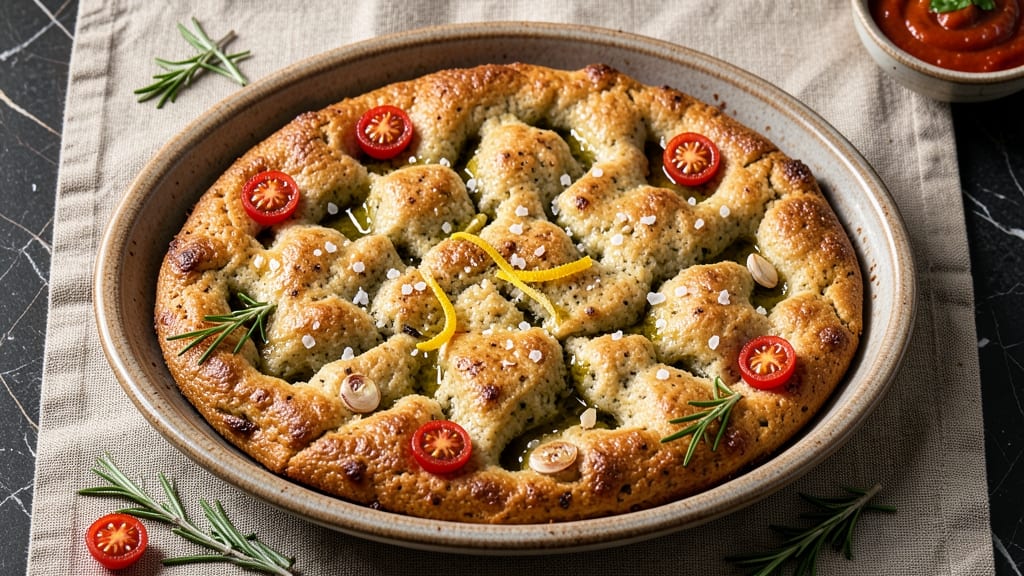
This almond flour focaccia bread recipe delivers a gluten-free, nutty twist on Italian classic that's crispy, golden, and infused with olive oil richness. The secret lies in balancing almond flour's density with yeast activation and proper shaping—creating a bread that's light yet sturdy enough to hold dimples and toppings. I developed this after years of perfecting gluten-free breads that actually rise properly, and the results are worth every minute of prep.
The dough combines almond flour's natural nuttiness with olive oil for moisture and yeast for that signature focaccia poof. Unlike traditional wheat-based versions, this version stays moist longer and has a delicate crumb structure that's surprisingly tender for almond flour.
The key is letting the dough rest before shaping—this allows the gluten-free flour to hydrate properly and develop that signature airy texture.
What you'll end up with is a golden crust with crispy edges and a tender interior, topped with your choice of herbs or garlic.
The olive oil infusion gives it that authentic Italian flavor profile, while the almond flour adds a subtle sweetness that pairs beautifully with dips, soups, or as a side for grilled meats. This isn't just gluten-free—it's a bread that stands on its own merits.
Perfect for meal prep, holiday gatherings, or when you want a dietary-friendly bread that doesn't compromise on texture. The recipe yields enough for a family of four with leftovers that reheat beautifully. Let's get started on creating this nutty, golden masterpiece that's as impressive as it is delicious.
Ingredients for almond flour focaccia bread
Nutty almond flour meets Italian tradition with this gluten-free focaccia masterpiece.
| Ingredient | Amount | Notes |
|---|---|---|
| Almond Flour 🌰 | 3 cups | Finely ground, blanched preferred |
| Extra-Virgin Olive Oil 🫒 | ¾ cup | High quality, fruity variety |
| Instant Yeast 🍞 | 1 ½ tsp | Active dry works at same amount |
| Warm Water 💧 | 1 ¼ cups | 110°F for optimal yeast activation |
| Granulated Sugar 🍚 | 1 tbsp | For yeast feeding |
| Diamond Crystal Kosher Salt 🧂 | 1 ½ tsp | Adjust to taste |
| Fresh Rosemary 🌿 | ¼ cup | Finely chopped, stems removed |
| Fresh Garlic Cloves 🧄 | 4 cloves | Minced for topping |
| Large Eggs 🥚 | 2 whole | Room temperature preferred |
| Baking Powder 🍞 | 1 tsp | For lift in gluten-free dough |
| Xanthan Gum 🌾 | ¼ tsp | Optional, improves texture |
| Fresh Thyme Leaves 🌿 | ⅛ cup | Optional herb variation |
| Coarse Sea Salt 🧂 | ½ tsp | For final sprinkle |
The almond flour is the star here—Bob's Red Mill or Anthony's Goods are my go-tos for consistency. The flour should be finely ground and blanched (no skins) for that silky texture. If you can't find blanched, just pulse unblanched almonds in a food processor until ultra-fine. The olive oil? California Extra Virgin or Colavita brands add that authentic Italian richness. Fresh yeast is ideal, but instant yeast works perfectly here without proofing time. Pro tip: measure your almond flour by weight if possible—it's less dense than wheat flour and scooping leads to inconsistent results.
No fresh rosemary? Dried works at half the amount, but fresh gives that bright, piney aroma. Running short on eggs? Flax eggs (2 tbsp ground flax + 6 tbsp water = 1 egg) keep this vegetarian-friendly. The baking powder is non-negotiable—it's what gives this gluten-free dough that signature focaccia lift. If you're avoiding xanthan gum (common allergy), psyllium husk powder at 0.5 tsp is a great alternative. For the garlic, roasted garlic powder adds sweetness if you're in a hurry. And that coarse sea salt? Maldon or Jacobsen brands flake beautifully for that restaurant-quality finish.
This dough needs at least 1 hour of rest—trust me, it's worth it. Store the shaped dough in an oiled bowl, covered, in the fridge for up to 24 hours if prepping ahead. Baked focaccia keeps well for 3 days at room temperature wrapped in a clean kitchen towel, or 5 days in the fridge. For longer storage, slice and freeze—it reheats beautifully straight from frozen. The crust gets crispier as it sits, so slice just before serving for that perfect crunch.
Why You'll Love This Recipe
- Here’s what sold me: this bread holds up perfectly for days. Toast it fresh for breakfast, pack slices for sandwiches, or even cube it for a snack—it won’t turn stale like regular bread. My kids grab it for school lunches, and I still save the best pieces for myself. (Yes, even on a Tuesday night.)
- I’ll be real: almond flour can feel pricey, but this recipe stretches it far. A single batch feeds my whole family, and the leftovers? They last longer than my willpower to resist seconds. Plus, the olive oil and yeast are pantry staples—no fancy shopping list, just real, satisfying bread that doesn’t break the bank.
Step-by-step instructions for almond flour focaccia bread
Here's how to craft a golden, nutty focaccia with an olive oil-rich crust and airy crumb—no gluten, no regrets.
Bloom the Yeast and Mix the Dough
In a large mixing bowl, whisk together the 1.25 cups warm water, 1 tbsp granulated sugar, and 1.5 tsp instant yeast. Let this sit for 5-7 minutes until it becomes frothy and bubbly—this confirms your yeast is active. If it doesn't bubble, your yeast may be dead, and you'll need to start over.
Next, add the 3 cups almond flour, 1.5 tsp Diamond Crystal kosher salt, 1 tsp baking powder, and 0.25 tsp xanthan gum to the bowl. Mix these dry ingredients together until combined. Then, pour in the 0.75 cup extra-virgin olive oil and stir until the mixture forms a shaggy dough. The texture will be thick and sticky—this is normal with almond flour.
Incorporate Eggs and Herbs for Flavor
Add the 2 whole large eggs to the bowl and mix vigorously with a wooden spoon or silicone spatula. The dough will start to come together as the eggs bind the ingredients. Now, fold in the 0.25 cup finely chopped fresh rosemary and 0.125 cup fresh thyme leaves, ensuring they're evenly distributed throughout the dough. The herbs will infuse the bread with bright, aromatic flavors.
Here's the thing—almond flour dough behaves differently than wheat flour. It won't be as elastic, so don't worry if it doesn't look like traditional focaccia dough. The key is to mix until just combined; overmixing can develop gluten-like proteins in the almond flour, making the final bread tough.
First Rise for Maximum Flavor Development
Transfer the dough to a lightly oiled 9x13-inch baking pan. Spread it evenly using a greased spatula, pressing gently to fill the corners. Cover the pan with a damp kitchen towel and let it rise at room temperature for 1-2 hours until it puffs up noticeably and the edges look slightly domed. This rise is crucial for developing the bread's texture and allowing the yeast to work its magic.
While the dough rises, preheat your oven to 375°F. The dough should nearly double in size—if it doesn't rise much, don't panic. Almond flour bread rises differently than wheat-based bread, but it will still yield a light, airy crumb. If you're in a hurry, you can place the covered pan in a warm oven (200°F) for 20 minutes to speed up the process.
Create the Classic Focaccia Dimples
Once the dough has risen, use your fingertips to gently dimple the surface all over, creating those classic focaccia pockets. This step isn't just for looks—it helps the bread brown more evenly and creates pockets for extra olive oil. Drizzle the entire surface with another 2 tablespoons extra-virgin olive oil, spreading it evenly with your fingers. Sprinkle the 4 cloves minced fresh garlic cloves and 0.5 tsp coarse sea salt evenly over the top.
Real talk: This is where the magic happens. The olive oil will pool in the dimples and create a golden, crispy crust while keeping the interior tender. If you're feeling fancy, you can add a few extra sprigs of rosemary or thyme on top for presentation. Just make sure they're firmly pressed into the dough so they don't burn during baking.
Bake to Golden Perfection
Bake the focaccia in the preheated 375°F oven for 25-30 minutes until the edges are golden brown and the top looks crispy. You'll know it's done when it passes the toothpick test—a toothpick inserted into the center should come out clean, with just a few crumbs clinging to it. The bread should have a beautiful golden crust with pockets of crispy olive oil.
Remove the focaccia from the oven and let it cool in the pan for 10 minutes before transferring it to a wire rack. This resting period is important—it allows the bread to set properly and prevents it from falling apart when you slice it. Once cooled, cut into squares and serve warm. The contrast of the crispy crust with the tender, herby interior makes every bite worth waiting for.
Pro Tips For Making Almond Flour Focaccia Bread
- STIR THE FLOUR FIRST: Almond flour clumps like a stubborn guest at a party. Whisk it in your mixing bowl before adding wet ingredients—this saves you from fighting lumps later. I learned this the hard way when my first batch turned into a dense brick because I skipped it.
- USE WARM (NOT HOT) WATER: Instant yeast wakes up fast, but too-hot water kills it instantly. Test the warm water with your finger—it should feel like bathwater, not a cup of tea. I’ve ruined batches by eyeballing it, so grab a thermometer if you’re unsure (aim for 105–110°F).
- DON’T OVERMIX THE DOUGH: Almond flour dough is delicate. Mix just until combined—overworking it makes the texture dense and chewy. Stop when the ingredients look mostly uniform, even if a few flecks of flour remain. Your focaccia will thank you with a lighter crumb.
- PRESS THE OIL IN LATER: Add the extra-virgin olive oil after shaping the dough, then press it in with your fingers. This creates those coveted pockets and a golden crust. I used to drizzle it on top first, and the bread turned greasy instead of crispy—don’t make my mistake.
Make-ahead tips for leftovers
Dough Prep Ahead
Mix the dough up to 24 hours in advance and store it in an oiled bowl, covered with plastic wrap, in the refrigerator. The cold slows yeast activity, giving you more control over the rise when you're ready to bake.
I like to make the dough the night before—it develops deeper flavors overnight. Just let it sit at room temperature for 30-45 minutes before shaping to bring it to a workable consistency. 💫
Shaped and Ready
Shape the dough in your pan and cover it tightly with plastic wrap. Store in the fridge for up to 12 hours before baking. When you're ready to bake, let it sit at room temperature for 1 hour to rise gently.
This method works perfectly for weekend meal prep—just pop it in the oven when you're ready for dinner. The slow rise enhances the nutty almond flavor.
Baked and Stored
Let your baked focaccia cool completely before storing. Wrap it tightly in a clean kitchen towel and keep it at room temperature for 3 days or in the fridge for 5 days.
The towel prevents sogginess and keeps the crust crisp. For longer storage, slice the focaccia and freeze individual portions on a baking sheet before transferring to a freezer bag. 🌰
Reheating Secrets
For the best texture, reheat focaccia slices in a 350°F oven for 5-7 minutes until warmed through. If you're short on time, use the microwave on 50% power for 20-30 seconds—just add a splash of water to prevent drying.
Freshly baked focaccia reheats beautifully, but I find it's best enjoyed the first day when the crust is at its crispiest.
Freezer-Friendly Slices
Slice the focaccia before freezing for perfect portions. Place slices on a parchment-lined tray and freeze until solid, then transfer to a freezer bag. When ready to eat, toast directly from frozen in a 400°F oven for 8-10 minutes.
This method preserves the crispy crust and tender interior. I keep a stash of these in my freezer for quick breakfasts or snacking—no one will guess it's gluten-free! ⏰
Nutrition facts
Frequently asked questions
Why does almond flour focaccia need extra eggs?
Almond flour lacks gluten, so we use 2 eggs to bind the dough properly and create that signature focaccia structure. The eggs also add moisture and richness that would otherwise be missing. Without them, the bread would crumble or stay dense. Think of them as the "glue" that makes this gluten-free version work!
Can I make this focaccia without xanthan gum?
Yes! If you're avoiding xanthan gum, substitute with 0.5 tsp psyllium husk powder for similar binding properties. The texture will be slightly different but still delicious. For best results, let the dough rest longer (2 hours) to help the alternative binder work its magic. The crust may be a touch denser but still crispy.
What's the secret to getting that perfect focaccia crust?
The golden crust comes from two key steps: olive oil generously drizzled before baking, and creating those classic dimples. The oil pools in the dimples during baking, creating crispy pockets while keeping the interior tender. Bake at 375°F and watch closely after 20 minutes—rotate the pan if needed for even browning.
How do I fix if my dough isn't rising much?
Almond flour dough rises differently than wheat-based dough—expect only 25-50% increase in size. If your dough isn't rising at all, check your yeast first (it may be expired). Try placing the covered pan in a 200°F oven for 15-20 minutes to warm it up, then let it rise at room temperature. The baking powder also helps with lift, so don't skip that!
Can I use this focaccia for sandwiches?
While it's delicious, this focaccia is best enjoyed as an appetizer or side due to its delicate almond flour structure. The crust is crispy but the interior is more tender than traditional focaccia. For sandwiches, try toasting slices and using them with soft fillings like hummus or avocado. The texture holds up better when lightly warmed rather than cold.