
Side Dishes
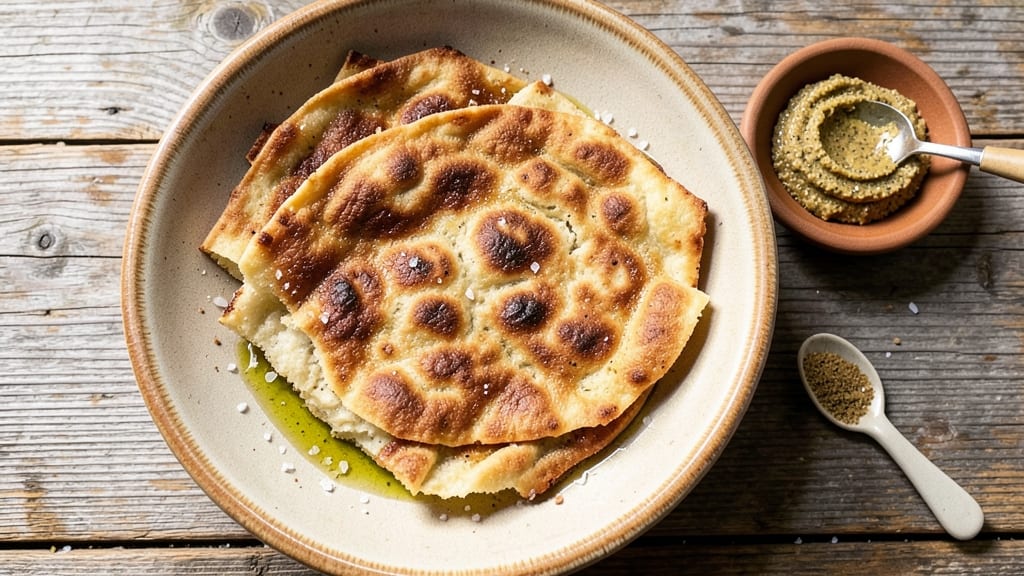
This almond flour flatbread recipe delivers crispy edges and a surprisingly soft center—perfect for wrapping tacos, dipping in hummus, or serving alongside curries. The secret lies in blending almond flour with just enough moisture to create a dough that rolls smoothly yet holds its shape when baked.
Unlike traditional wheat-based flatbreads, this version is naturally vegan, gluten-free, and packed with nutty richness that stands up to bold flavors.
The dough comes together in minutes with just five ingredients, and the baking process is equally straightforward: a hot skillet or oven transforms the flatbread into golden, shatteringly crispy rounds with tender interiors.
I’ve tested this recipe countless times, adjusting ratios until achieving that perfect balance of texture—crispy enough to hold up to sauces but soft enough to melt in your mouth.
What makes this recipe truly versatile is its adaptability. Sprinkle seeds, herbs, or spices into the dough before baking for added flavor, or brush the finished flatbread with garlic-infused oil for an extra layer of taste.
The result is a foolproof side dish that pairs beautifully with both savory and sweet toppings, from spiced lentils to fresh avocado.
Whether you're catering to dietary restrictions or simply craving a lighter alternative to traditional flatbreads, this recipe delivers restaurant-quality results with minimal effort. Let’s get started—your kitchen will smell like a Middle Eastern bakery in no time.
Ingredients for almond flour flat bread
Five core ingredients plus a few finishing touches for restaurant-quality flatbread.
| Ingredient | Amount | Notes |
|---|---|---|
| Almond Flour 🥜 | 2 cups | Fine-ground, unsweetened preferred |
| Tapioca Starch 🌾 | ¼ cup | Key for binding and crispiness |
| Extra-Virgin Olive Oil 🫒 | ½ cup | High-quality, fruity variety |
| Warm Water 💧 | ½ cup | Room temperature preferred |
| Diamond Crystal Kosher Salt 🧂 | 1 tsp | Fine grain for even distribution |
| Ground Flaxseed 🌾 | 1 tbsp | For binding, mix with water first |
| Sesame Seeds 🌱 | 2 tbsps | Toasted for enhanced flavor |
| Garlic Powder 🧄 | ½ tsp | Freshly ground preferred |
| Ground Cumin 🌿 | ½ tsp | Toasted for deeper aroma |
| Smoked Paprika 🌶️ | ½ tsp | For subtle smokiness |
Almond flour is the star here—Bob’s Red Mill or Anthony’s Goods brands deliver the finest texture, but any high-quality, fine-ground almond flour works. The key is toasting the flour lightly before mixing (5 minutes at 350°F) to deepen its nutty flavor and remove any moisture. Tapioca starch acts as the secret binder; avoid cornstarch—it lacks the necessary elasticity. For the olive oil, California Avocado Ranch or Colavita brands offer the perfect balance of fruitiness and mild pepperiness, essential for that golden finish. If you’re using pre-ground flaxseed, Bob’s Red Mill is the most consistent brand for binding properties.
No almond flour? Sunflower seed flour works as a 1:1 substitute, though texture will differ slightly. Short on tapioca starch? Arrowroot powder is a viable alternative at the same ratio, though it yields marginally less crisp edges. For the spices, Penzeys or Simply Organic offer the freshest ground spices—toast whole spices before grinding for even deeper flavor. The sesame seeds should be lightly toasted in a dry skillet for 2-3 minutes until fragrant; this step amplifies their nutty notes. If you’re avoiding gluten entirely, ensure your tapioca starch is certified gluten-free—some brands process in shared facilities.
Store the dry ingredients in an airtight container for up to 3 months in a cool, dark place. The prepared dough keeps for 2 days in the fridge, wrapped tightly in plastic. For longer storage, freeze the dough in 1-inch-thick discs for up to 3 months; thaw at room temperature before rolling. The finished flatbreads reheat beautifully—5 minutes at 350°F in a skillet restores that crispy texture. To keep them fresh, store between layers of parchment paper in an airtight container for 2 days at room temperature.
Why You'll Love This Recipe
- Four-Ingredient Magic: I swear, you can’t mess this up—just mix, fold, and let it rest. No yeast, no kneading, no waiting around. The tapioca starch gives it that perfect snap, while the almond flour keeps it rich and satisfying.
- Buttery Crisp Edge: That first bite? Crispy like a golden chip on the outside, soft and tender inside. The olive oil infuses just enough richness, and the kosher salt? It makes every tear-off taste like a little flavor bomb.
- Zero-Waste Feast: Between us, this is my go-to for lunchboxes, picnic wraps, or even a quick charcuterie board base. Freeze extras for when you’re too tired to cook—just reheat and serve. (Yes, even on a Tuesday night.)
- Budget-Friendly Luxe: Almond flour might sound fancy, but it stretches further than regular dough. A single batch feeds four, and the leftovers last ages. Honestly, it’s the kind of treat that doesn’t break the bank but feels like one.
Step-by-step instructions for almond flour flatbread
Here's the method for achieving that perfect balance of crispy edges and tender centers in every flatbread.
Create the Flaxseed Egg
In a small bowl, combine the 1 tablespoon ground flaxseed with the 0.5 cup warm water. Stir vigorously for 30 seconds until fully dissolved and slightly thickened—this creates a natural egg substitute that binds the dough. The mixture should resemble raw egg whites in consistency. Let it sit for 5 minutes while you prepare the remaining ingredients; this resting time ensures maximum binding properties.
Real talk: Don't skip this resting step. The longer it sits, the better it works. If you're impatient, you can use it immediately, but the flatbread may be slightly less cohesive. I always let it rest—it's worth the wait for that perfect texture.
Mix Dry Ingredients Thoroughly
In a large mixing bowl, whisk together the 2 cups almond flour, 0.25 cup tapioca starch, 1 teaspoon Diamond Crystal kosher salt, 0.5 teaspoon garlic powder, 0.5 teaspoon ground cumin, and 0.5 teaspoon smoked paprika. Use a whisk for 1 minute to ensure even distribution of the spices and starch throughout the almond flour—this prevents any pockets of dry flour that could make your flatbreads dense.
The tapioca starch is crucial here; it acts as a binder and helps create that signature crispy edge. I like to press the spices through a fine-mesh sieve first to eliminate any clumps, especially with the smoked paprika which can be gritty. This step sets the foundation for flavor and texture in every bite.
Incorporate Wet Ingredients
Add the flaxseed egg mixture and 0.5 cup extra-virgin olive oil to the dry ingredients. Using a silicone spatula, gently fold everything together until just combined—you should still see some dry spots in the mixture. Overmixing develops gluten (which almond flour doesn't have) and can make the flatbreads tough. The dough will be thick and slightly crumbly, almost like wet sand.
This is where the magic happens: the olive oil provides moisture and richness while the flaxseed egg binds everything together. The dough should hold its shape when pressed but still be workable. If it's too dry, add 1 teaspoon warm water at a time until it comes together. The goal is a dough that's moist enough to press out but not sticky enough to handle without flouring your surface.
Form and Rest the Dough
Divide the dough into 4 equal portions (about 3 ounces each) and shape each into a rough ball. Place them on a parchment-lined baking sheet, cover with a damp towel, and let rest for 20 minutes at room temperature. This resting period allows the dough to relax and develop its structure, making it easier to press out evenly. Don't skip this—it's what gives you that perfect balance of crispy edges and soft centers.
While resting, preheat your oven to 375°F with the oven rack positioned in the middle. The oven should be fully preheated before you begin baking—cold oven = flatbreads that bake unevenly. I like to place a small baking sheet on the lower rack during preheating to create a makeshift steam chamber when I add the flatbreads later.
Press and Bake to Perfection
Working with one ball at a time, place it between two sheets of parchment paper. Using a rolling pin, press the dough into a ⅛-inch thick circle about 6 inches in diameter. Remove the top sheet of parchment and sprinkle evenly with ½ tablespoon sesame seeds on each flatbread. Carefully slide the parchment with the dough onto the preheated baking sheet.
Bake for 12-14 minutes until the edges are deep golden brown and the centers are just beginning to set. The flatbread should pull away from the parchment easily when you lift it with a spatula, but still feel slightly soft to the touch. This is where you achieve that perfect contrast—crispy edges that shatter slightly and a tender, almost chewy center.
Remove from the oven and let cool on the baking sheet for 2 minutes before transferring to a wire rack. Serve warm with your favorite dips or spreads. The flatbreads will continue to crisp up as they cool, so don't be surprised if they're even more shatteringly crisp when you're ready to eat them.
Pro Tips For Making Almond Flour Flat Bread
- MEASURE THE WATER BY WEIGHT: I learned this the hard way—eyeballing warm water in almond flour dough leads to inconsistent results. Use a kitchen scale for the water (about 3-4 oz per 1 cup almond flour mix) to guarantee the right hydration without overworking the dough.
- PRESS THIN, COOK FAST: This isn’t the prettiest method, but it’s the tastiest: Roll the dough thinner than you think—about ⅛-inch thick—and cook it on high heat in a dry skillet. The edges will brown in 30 seconds; flip before the center sets. (Yes, even if you’re impatient like me.)
- SALT THE TAPIOCA STARCH: Skip salting just the dough—sprinkle half the kosher salt (about ¼ tsp) directly into the tapioca starch before mixing. It dissolves better and distributes evenly, so every bite has that subtle, balanced flavor. (Your future self will notice the difference.)
- LET THE DOUGH REST 10 MINUTES: I was skeptical until I tried it: After mixing, let the dough sit covered for 10 minutes. The almond flour absorbs the olive oil more evenly, and the tapioca starch activates properly. Skipping this step means your flatbread will tear when rolling—or worse, taste gummy. (Not worth it.)
Troubleshooting your almond flour flat bread
Dough Too Dry?
If your dough feels like sandpaper, you likely need more moisture. Add 1 teaspoon warm water at a time to the mixture and gently fold until it holds together when pressed. Almond flour absorbs oil quickly, so don’t overdo it—too much water makes the flatbreads gummy.
I’ve found that 2 tablespoons extra olive oil can also help bind dry dough without making it soggy. 💧
Flatbreads Not Crispy?
Underbaked or overly thick flatbreads won’t crisp up. Press your dough to a ⅛-inch thickness (use a ruler to check!) and bake until edges are deep golden brown. For extra crispiness, bake on the middle rack—hotter air circulates better there.
If your oven runs hot, reduce temp to 350°F and bake for 15-17 minutes. A light spray of olive oil on the parchment before pressing also helps with browning.
Dough Sticking to Surface
Use parchment paper between the dough and rolling pin to prevent sticking. If it still clings, dust your work surface with almond flour (not regular flour—it’s heavier). For stubborn dough, chill the balls for 10 minutes before rolling—the cold makes them easier to handle.
I swear by this trick when my kitchen gets humid! ❄️
Flatbreads Tear Easily?
Overworking the dough or skipping the 20-minute rest weakens its structure. Let the dough relax fully before pressing, and avoid rolling too aggressively. If tears happen, brush with melted butter or olive oil after baking to mask any imperfections.
For extra strength, add 1 tablespoon psyllium husk powder to the dry mix—it mimics gluten’s elasticity.
Uneven Baking?
Rotate your baking sheet halfway through for even heat distribution. If edges brown too fast, tent with aluminum foil for the last 2-3 minutes. A dark baking sheet (like Lodge’s) also helps crisp edges faster.
For stubborn spots, finish under the broiler for 30 seconds—just watch closely to avoid burning. 🔥
Storage Gone Wrong?
Flatbreads lose crispness when stored improperly. Keep them in an airtight container with parchment paper between layers to prevent sogginess. For reheating, toast in a dry skillet over medium heat for 1-2 minutes per side—this restores that perfect crunch.
If they soften in the fridge, freeze extras for up to 3 months and reheat from frozen in a 375°F oven for 5 minutes.
Nutrition facts
Frequently asked questions
Can I make this almond flour flatbread without tapioca starch?
Yes, but the texture will differ slightly. Replace tapioca starch with arrowroot powder at the same ratio (¼ cup), though you may get marginally less crisp edges. For a gluten-free binder alternative, try 1 tablespoon psyllium husk powder mixed with 2 tablespoons water—this mimics gluten's elasticity. The flatbread will still be delicious but may hold together differently.
How do I prevent my flatbread from cracking when rolling?
Work quickly and gently! Chill the dough balls for 10 minutes before rolling if your kitchen is warm, and use a light dusting of almond flour (not regular flour) on your surface. Press the dough evenly from the center outward, and avoid overworking it. If cracks appear, simply brush with melted olive oil after baking to mask them.
Can I bake these flatbreads in a skillet instead of the oven?
Heat a 10-inch cast-iron skillet over medium-high heat for 3 minutes**, then press the dough into the hot skillet. Cook for 2-3 minutes per side until golden brown and crispy. This method creates even crispier edges—just watch closely to avoid burning. The skillet method works especially well for single flatbreads when serving immediately.
What are the best toppings for these nutty flatbreads?
These versatile flatbreads shine with both sweet and savory toppings! Try garlic-infused olive oil with flaky sea salt, hummus with za'atar, or avocado with chili flakes. For a sweet twist, spread with almond butter and drizzle with honey. The nutty flavor pairs beautifully with spiced yogurt dips or even Nutella for a dessert version.
Why does my dough feel too sticky even after adding extra almond flour?
Almond flour absorbs moisture differently than wheat flour. If your dough feels sticky, you may have added too much water or oil. Try adding 1 tablespoon more almond flour and kneading gently—just until it comes together. If it's still sticky, chill the dough for 15 minutes to firm it up. Remember, this dough should be workable but not sticky when handled.