
Desserts
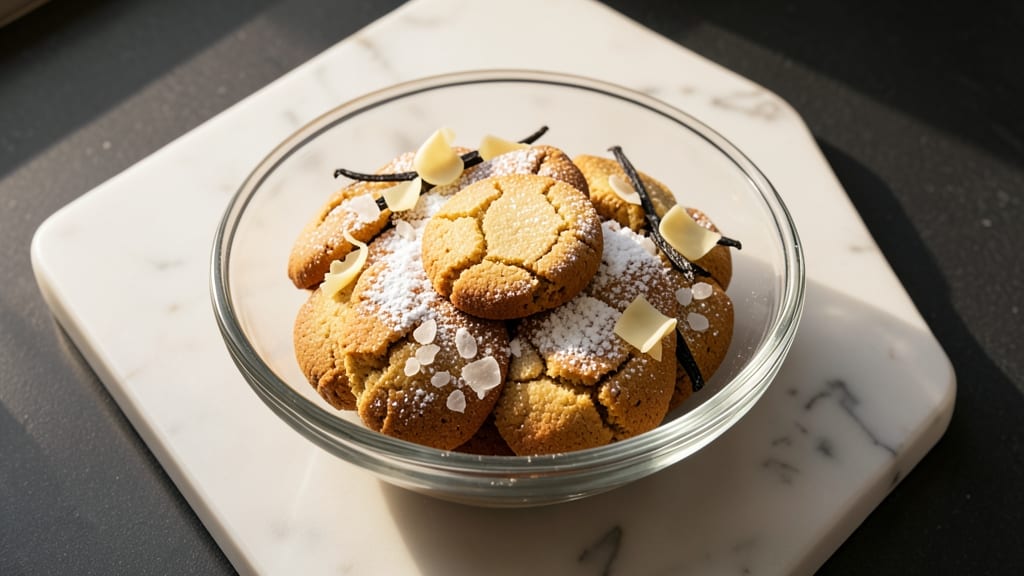
Alison Roman's shortbread cookies recipe delivers the perfect balance of buttery crunch and delicate vanilla sweetness—just like the ones from her beloved restaurant. The secret lies in the cold butter method, which creates those signature tender layers while maintaining that signature melt-in-your-mouth texture.
I've baked these countless times, and they never fail to impress with their golden edges and rich, caramelized flavor. What sets these apart is the vanilla bean infusion, which elevates the flavor beyond basic vanilla extract.
The dough comes together in minutes with just five ingredients, and the baking process is foolproof—350°F for 12-15 minutes ensures perfect results every time. The key is patience during the chilling step, which prevents spreading and guarantees that iconic shortbread texture.
By the time they emerge from the oven, you'll have crispy yet tender cookies with a subtle vanilla aroma that fills your kitchen. The edges develop a beautiful golden hue, while the centers remain soft and buttery.
These cookies are perfect for holidays, gifts, or simply satisfying a sweet tooth—they're worth every bite. For an extra touch, sprinkle with flaky sea salt or a dusting of powdered sugar before serving. The contrast of sweet and salty takes them to the next level. Let's get baking!
Ingredients for alison roman shortbread cookies
Five ingredients, restaurant-quality results—just like Alison Roman's famous shortbread.
| Ingredient | Amount | Notes |
|---|---|---|
| Unsalted Butter 🧈 | 1 cup | Cold, cubed for texture |
| Granulated Sugar 🍚 | ½ cup | Superfine preferred for smoothness |
| Vanilla Bean 🌿 | 1 whole | Seeds scraped for infusion |
| All-Purpose Flour 🌾 | 2 cups | Sifted for light texture |
| Flaky Sea Salt 🧂 | ½ tsp | For finishing touch |
| Powdered Sugar 🍚 | 2 tbsp | Optional for dusting |
The butter is everything here—cold, cubed cubes create those signature tender layers. Grab European-style butter if you can (like Plugrá or Kerrygold), but any good unsalted will work. The vanilla bean? Split it lengthwise, scrape the seeds, and toss them into the dough for that luxurious depth. Flour matters too—King Arthur or Gold Medal are my go-tos for that perfect crumb. Pre-sifted flour saves time, but if you're doing it fresh, give it a good shake in a fine-mesh strainer.
No vanilla bean? Double the vanilla extract—just know it won’t be the same. Short on powdered sugar for dusting? Crushed vanilla wafers add crunch and flavor. Want extra richness? Add 1 tbsp sour cream to the dough. The sea salt? Maldon flakes are ideal, but Diamond Crystal kosher salt works in a pinch—just crush it finely. Pro tip: Chill your dough for at least 2 hours (overnight is best)—this prevents spreading and guarantees that iconic shortbread texture.
Butter stays fresh up to 6 months in the freezer, wrapped tightly. Vanilla beans? Keep them sealed in the fridge for up to a year—they’ll last. Once baked, store cookies in an airtight container for 5-7 days (if they last that long). For gifting, wrap individually in parchment—they’ll stay crisp for 2 weeks. Freeze dough balls for 3 months—just bake straight from frozen, adding 2-3 minutes to the time.
Why You'll Love This Recipe
- Five-Ingredient Magic: I swear, that’s all it takes—just butter, sugar, vanilla, flour, and a pinch of salt. No fancy mixers or last-minute grocery runs; my pantry already has everything. Honestly, the only "work" is letting the dough rest while I make coffee.
- Buttery Vanilla Bliss: That split vanilla bean makes all the difference—no artificial junk here. The cookies have this perfect balance of crispy edges and melt-in-your-mouth centers, with just enough salt to make every bite feel like a little luxury. Between us, I’ve never met a shortbread that didn’t disappear in minutes.
- Gift-Worthy Always: These look so impressive you’d think I spent hours decorating them. Perfect for teacher gifts, holiday parties, or just because—no one will guess they’re basically foolproof. I’ve wrapped them in parchment, tied with twine, and still had leftovers.
- Pantry Goldmine: A batch lasts me weeks—I freeze half for when my coffee cravings hit hard. And since it’s just flour, sugar, and butter, it’s cheaper than takeout. Not the prettiest, but the taste makes up for it, and my wallet thanks me. (Yes, even on a Tuesday night.)
Step-by-step instructions for Alison Roman's shortbread cookies
Here's how to create Alison Roman's signature shortbread—rich, buttery, and infused with vanilla.
Cut and Chill the Butter
Place the 1 cup unsalted butter in a mixing bowl and cut it into ½-inch cubes using a sharp knife. This creates more surface area for the flour to coat, ensuring a tender crumb. Place the bowl in the freezer for 10 minutes—this keeps the butter cold and prevents it from melting during mixing.
I like to press the cubes down gently with a fork to keep them compact. Cold butter is the secret to achieving that signature shortbread crunch. If you skip this step, you'll end up with a cakey texture instead of the delicate, melt-in-your-mouth bite you want.
Mix the Dry Ingredients
In a separate bowl, whisk together the 2 cups all-purpose flour and 0.5 cup granulated sugar. Sift the flour first to aerate it—this creates a lighter, more tender cookie. Add the scraped seeds from the 1 whole vanilla bean and mix until evenly distributed. Set this mixture aside.
The vanilla seeds add depth without overpowering the buttery flavor. If you're using vanilla extract instead, add 1 teaspoon to the dry ingredients now. The sugar helps create the perfect balance of sweetness and crunch, so don't skip this step.
Combine Wet and Dry Ingredients
Remove the cold butter from the freezer and add it to the dry ingredients. Using a pastry cutter, fork, or your fingers, work the butter into the flour mixture until it resembles coarse crumbs with pea-sized butter pieces remaining. This texture is crucial—it ensures a tender cookie with pockets of buttery flavor.
I press the mixture together gently to check for consistency. It should hold when squeezed but still feel slightly crumbly. If it sticks together too much, return it to the freezer for 5 minutes to firm up. Don't overwork the dough—this develops gluten and makes the cookies tough.
Shape and Chill the Dough
Press the dough into a 1-inch thick disc and wrap it tightly in plastic wrap. Chill in the refrigerator for at least 1 hour (or up to 24 hours). This resting period allows the flour to fully hydrate and the butter to firm up, preventing the cookies from spreading too much in the oven.
I like to flatten the dough with my hands before wrapping to ensure even thickness. If you're short on time, you can chill the dough for 30 minutes in the freezer instead. The colder the dough, the less it spreads, and the thicker your shortbread will be.
Bake to Golden Perfection
Preheat your oven to 325°F and line a baking sheet with parchment paper. Roll out the chilled dough to ¼-inch thickness and cut into your desired shapes using a cookie cutter or knife. Place the cutouts on the prepared baking sheet, leaving ½ inch of space between each cookie.
Bake for 25-30 minutes until the edges are light golden brown and the centers still look slightly pale. They should feel firm to the touch but not hard. Remove the cookies from the oven and let them cool on the baking sheet for 10 minutes before transferring to a wire rack.
While still warm, sprinkle the cookies generously with 0.5 teaspoon flaky sea salt and, if using, dust with 2 tablespoons powdered sugar. The salt enhances the buttery sweetness, while the powdered sugar adds a delicate finish. Let the cookies cool completely before serving—this allows the flavors to meld and the texture to set.
Pro Tips For Making Alison Roman Shortbread Cookies
- CHILL THE DOUGH: I used to rush this step and wondered why my cookies spread like pancakes. Wrap the dough in plastic and refrigerate for at least 2 hours—this keeps the butter firm and gives you clean, crisp edges. (Trust me, your future tea-time guests will notice.)
- SCRAPE THE VANILLA: Don’t just eyeball the seeds—split the vanilla bean, scrape out every last bit of pulp, and toss it into the butter with the seeds. That dark, resinous paste is where the real flavor hides. I learned this the hard way after biting into a cookie that tasted like it was missing something.
- PRESS DON’T ROLL: Forget the rolling pin. Press the dough into the pan with your fingers or the bottom of a measuring cup—it’s faster and gives you that perfect, slightly uneven texture Alison Roman’s version is known for. (Yes, even if you’re impatient like me.)
- SALT THE EDGES FIRST: Sprinkle the flaky sea salt on the dough before baking, not after. The heat will make it melt into the edges just enough to give that addictive contrast without turning your cookies into a salt shaker. My grandmother swore by this, and she was right: timing is everything.
Troubleshooting your alison roman shortbread cookies
Butter Too Soft?
If your butter starts melting during mixing, pop the bowl back in the freezer for 5-10 minutes to firm it up. I’ve learned the hard way—once, I rushed and ended up with cookies that spread into sad, flat discs.
For extra insurance, chill your mixing bowl beforehand. European-style butter (like Plugrá) holds its shape better than American brands in warm kitchens. 🧈
Dough Sticking Together
Overworked dough or warm butter can make your mixture too sticky. If it clumps when pressing, return it to the freezer for 10-15 minutes to reset. I’ve also had success adding 1-2 tablespoons of cold rice flour to absorb excess moisture.
Just mix it in gently—you don’t want to change the texture dramatically. The dough should hold together when pressed but still crumble slightly. 💡
Cookies Spreading Too Much
This usually means your dough wasn’t chilled long enough or your oven runs hot. For future batches, chill the dough for at least 2 hours (overnight is best). If your oven runs hot, try baking at 300°F instead of 325°F—just add 2-3 extra minutes to the bake time.
I test my oven with a thermometer and adjust racks to the middle position for even heat. 🌡️
Pale or Cakey Texture
Underbaked cookies will look pale and taste dense. If yours aren’t golden enough, return them to the oven for 2-3 minutes—just watch closely to avoid burning. For a richer flavor, brown the butter before mixing (cool completely first).
This adds a nutty depth that balances the sweetness. The edges should be light golden brown, while the centers stay soft. ✨
Vanilla Flavor Fading
If your cookies taste bland, the vanilla might not have infused properly. For maximum flavor, split the vanilla bean lengthwise, scrape all seeds, and toss them into the dry ingredients. Store-bought extract won’t give the same depth—it’s worth tracking down a Madagascar vanilla bean for that authentic touch.
If using extract, add 1 teaspoon to the dry mix and let the dough rest 30 minutes before baking. 🌿
Nutrition facts
Frequently asked questions
Why does Alison Roman's recipe use cold butter?
The cold butter method is essential for achieving that signature shortbread texture—it creates tender layers that stay crisp at the edges while remaining melt-in-your-mouth soft in the center. When butter melts too quickly, cookies spread flat and lose their delicate crumb. Chilling the butter cubes before mixing ensures they distribute evenly without losing their shape.
Can I make these cookies without a vanilla bean?
Yes, but the flavor won't be as rich. Use 1 teaspoon vanilla extract instead, but add it to the dry ingredients and let the dough rest 30 minutes before baking to help the flavor develop. For a closer match, try Madagascar vanilla beans—they have the deepest flavor profile. The scraped seeds add complexity that extract simply can't replicate.
How do I prevent my cookies from spreading too much?
Proper chilling is key: press the dough into a 1-inch disc and refrigerate for at least 2 hours (overnight is ideal). If your oven runs hot, bake at 300°F instead of 325°F and add 2-3 extra minutes. I also recommend using parchment paper and placing cookies ½ inch apart on the baking sheet. The colder the dough, the less it spreads.
What's the best way to store these cookies?
Keep them in an airtight container at room temperature for 5-7 days—they'll stay crisp. For longer storage, freeze dough balls for 3 months or wrap baked cookies individually in parchment for 2 weeks. The key is preventing moisture buildup, which makes them soggy. I like to dust them lightly with powdered sugar before storing for extra freshness.
Can I add mix-ins like nuts or chocolate chips?
These cookies are best enjoyed in their simple, buttery form—but if you must add mix-ins, keep them minimal. Fold in ¼ cup chopped toasted nuts or small dark chocolate chunks (no more than 2 tablespoons) after mixing the dough. Too many mix-ins will disrupt the delicate texture. For a festive touch, try crushed pistachios or white chocolate shavings after baking.