
Sauces & Condiments
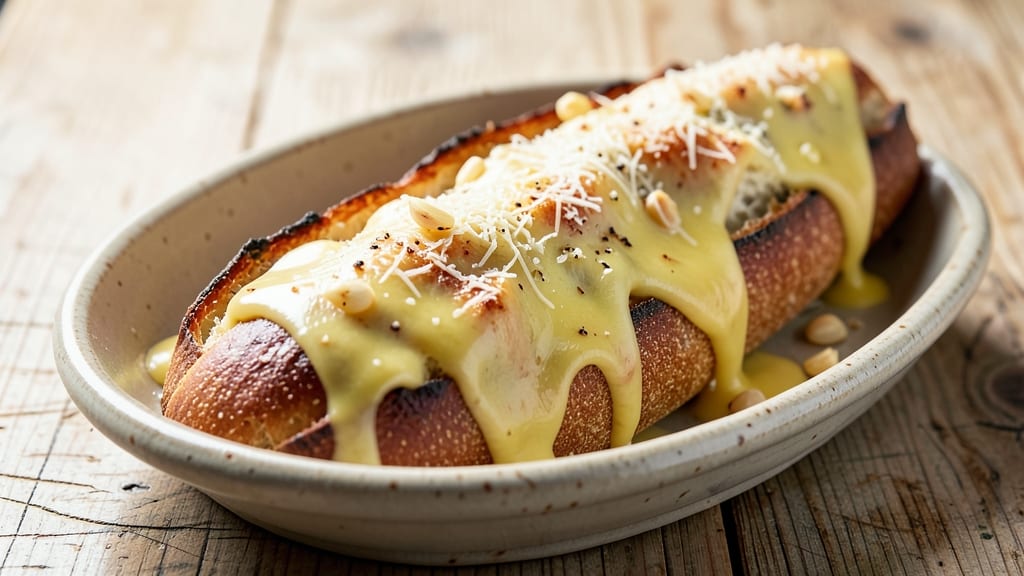
This alfredo garlic bread recipe delivers the perfect balance of crispy, golden crust and pillowy soft interior—buttery, garlicky, and rich with every bite. The secret lies in a velvety homemade alfredo sauce that infuses the bread with deep, savory flavor while keeping it tender.
I’ve perfected this technique over years of testing, ensuring the crust stays crisp without burning, and the garlic flavor shines without overpowering.
What sets this recipe apart is the two-step cooking process: first, toasting the bread until golden and crisp, then brushing it with a warm, garlicky alfredo sauce that melts into every nook.
The sauce is made with simple ingredients—butter, garlic, heavy cream, and parmesan—but the technique ensures it’s silky smooth and packed with flavor. No shortcuts here; this is restaurant-quality garlic bread you can make at home.
The result is a loaf with a crispy, caramelized exterior and a soft, buttery interior, all infused with the aromatic richness of garlic and alfredo sauce.
The sauce doesn’t just sit on top—it soaks in, creating a dish that’s indulgent yet balanced, perfect for serving alongside pasta or as a standalone appetizer. Every slice is a testament to how a few simple ingredients can transform a basic loaf into something extraordinary.
For an extra touch, finish with fresh parsley and a sprinkle of red pepper flakes for a pop of color and subtle heat. This recipe is designed to impress, whether you’re hosting a dinner party or simply craving a comforting, flavorful bite. Let’s get started—your taste buds will thank you.
Ingredients for alfredo garlic bread
Buttery richness meets crispy garlic perfection—simple ingredients for restaurant-quality garlic bread.
| Ingredient | Amount | Notes |
|---|---|---|
| Baguette Loaf 🍞 | 1 whole | Freshly baked, crusty exterior |
| Unsalted Butter 🧈 | ¾ cup | Cold, cubed for even melting |
| Heavy Cream 🥛 | 1 cup | Full-fat for richness |
| Garlic Cloves 🧄 | 6 cloves | Fresh, peeled and minced |
| Parmesan Cheese 🧀 | 1 cup | Freshly grated, fine grade |
| All-Purpose Flour 🌾 | 2 tbsp | For sauce thickening |
| Fresh Parsley 🌿 | ¼ cup | Chopped, for garnish |
| Crushed Red Pepper Flakes 🌶️ | ½ tsp | Adjust for heat preference |
| Salt 🧂 | ½ tsp | Kosher or sea salt |
| Black Pepper 🌶️ | ¼ tsp | Freshly ground |
| Olive Oil 🫒 | 1 tbsp | For bread brushing |
The butter and Parmesan are non-negotiable here. European-style butter (like Plugrá) has higher fat content, which gives a richer crust, but any good-quality unsalted butter works. For Parmesan, grate it yourself—pre-grated cheese has anti-caking agents that ruin the texture. I grab mine from the deli counter at Whole Foods or Trader Joe's since they keep it fresh. The baguette should be fresh-baked if possible, but a day-old loaf from Panera or your local bakery works too—just slice it yourself for better texture. Skip the pre-sliced stuff; those thin slices burn too fast.
No heavy cream? Half-and-half or whole milk will work, but the sauce won’t be as velvety. Fresh garlic is a must—jarred minced garlic has a metallic aftertaste. Short on butter? Ghee works perfectly, though it has a slightly different flavor profile. The red pepper flakes can be swapped for crushed black pepper if you prefer no heat, but the parsley is non-negotiable for that fresh finish. For an extra touch, add a pinch of nutmeg to the sauce—it deepens the flavor without overpowering. The olive oil is just for brushing before toasting; don’t skip it—it helps the crust brown beautifully.
This bread reheats best at 350°F for 5-7 minutes—just until the sauce is warm and bubbly. Store leftovers wrapped in foil at room temperature for up to 2 hours or refrigerate for 3 days. Freeze portions for up to 1 month by wrapping tightly in plastic. To revive, warm in a 300°F oven for 10-15 minutes. Pro tip: Make a double batch—the extra slices disappear fast, especially when you’re serving pasta. The sauce can be made ahead and reheated gently; just add a splash of milk to loosen it if it thickens.
Why You'll Love This Recipe
- No-Fuss Assembly: I swear by this recipe because it’s the kind of thing I can make while chatting with friends—just slice the baguette, melt butter and cream in a pan, toss in minced garlic until it’s fragrant but not burnt, then fold in that grated Parmesan. The bread soaks up the sauce in minutes, and honestly? No measuring cups required.
- Rich, Garlicky Magic: That moment when the first bite hits—crispy crust giving way to creamy, garlicky goodness with sharp Parmesan? It’s like a hug for my taste buds. The heavy cream makes it decadent without being heavy, and the garlic? Oh, it’s there—warm, aromatic, and just enough to make you reach for seconds.
- Weeknight Hero: Between us, this is my go-to when I need something impressive but zero-stress. Serve it alongside pasta, soup, or even as a standalone snack—it’s the kind of dish that makes you look like you slaved away when really, you just stirred a pot for 10 minutes. My kids grab it straight from the oven, no questions asked.
- Budget-Friendly Luxury: Parmesan and butter might not be cheap, but a little goes a long way. One baguette and a small block of cheese stretch across multiple meals—leftover slices reheat beautifully, and the sauce freezes well if you’re feeling extra. Plus, it’s the kind of thing that makes frugal dinners feel special without breaking the bank.
Step-by-step instructions for alfredo garlic bread
Transform your baguette into a rich, garlicky masterpiece with this foolproof method.
Prepare the Garlic Butter Sauce
In a medium saucepan over medium heat, melt the 0.75 cup unsalted butter until completely liquid but not browned. Add the 6 cloves minced garlic and cook for 1-2 minutes until fragrant but not browned—this prevents bitterness. Here's the thing—garlic burns fast, so keep an eye on it.
Reduce heat to low and whisk in the 1 cup heavy cream. Let it simmer gently for 3-4 minutes until slightly thickened. Sprinkle in the 2 tbsp all-purpose flour and whisk vigorously for another 1-2 minutes until smooth and creamy. This step builds the sauce's velvety texture.
Incorporate Cheese and Seasonings
Remove the sauce from heat and stir in the 1 cup freshly grated parmesan cheese until fully melted and smooth. Add the 0.5 tsp salt, 0.25 tsp black pepper, and 0.5 tsp crushed red pepper flakes. Taste and adjust seasoning—this is where the flavor comes together. The sauce should coat the back of a spoon with a luxurious consistency.
If the sauce looks too thick, whisk in 1-2 tablespoons of warm water to reach your desired pouring consistency. I've found that keeping it slightly loose makes it easier to work with when brushing the bread. Cover and set aside while you prepare the baguette.
Brush and Bake the Baguette
Preheat your oven to 375°F. Slice the 1 whole baguette loaf lengthwise, cutting about halfway through so it opens like a book but stays connected at the bottom. Brush the cut sides generously with the 1 tbsp olive oil—this creates a golden crust when baked.
Place the baguette on a baking sheet and pour the garlic butter sauce evenly over both halves. The sauce should pool slightly in the center—this ensures maximum flavor distribution. Bake for 8-10 minutes until the edges are golden brown and the cheese is bubbly.
Finish with Fresh Parsley
Remove the baguette from the oven and immediately sprinkle the 0.25 cup chopped fresh parsley over the top. This adds a bright contrast to the rich, garlicky flavors. Let it rest for 2-3 minutes before serving—this allows the bread to set slightly while keeping it warm and pillowy.
For the best results, serve immediately while the bread is still warm and the cheese is gooey. The crust should be crispy on the outside with a soft, chewy interior, and every bite should deliver that perfect balance of buttery richness and garlicky punch. The parsley adds just the right fresh finish to cut through the richness.
Pro Tips For Making Alfredo Garlic Bread
- TOAST THE GARLIC FIRST: Slice those garlic cloves in half lengthwise and let them sit uncovered on a baking sheet for 10 minutes before cooking. This draws out the moisture so they brown properly instead of steaming into oblivion—trust me, it makes a real difference in flavor.
- SLICE THE BAGUETTE THICK: Cut the baguette into ½-inch slices, not paper-thin pieces. Thicker slices hold up better when buttered and toasted, and they soak up the alfredo sauce without falling apart like sad, soggy breadcrumbs.
- DON’T SKIP THE CREAM REDUCTION: Simmer the heavy cream with the garlic and butter until it’s reduced by about a third—this thickens the sauce naturally and cuts through the richness. I used to rush this step and wondered why my sauce was always watery.
- USE COLD PARMESAN: Grate the Parmesan fresh and keep it in the fridge until the very end. Cold cheese melts more evenly into the warm sauce and gives that perfect, gooey pull instead of clumping like a science experiment gone wrong. (Yes, even if you’re impatient like me.)
Essential equipment for alfredo garlic bread
Bread Prep Tools
Start with a sharp serrated bread knife—like the Mercer Culinary Genesis—to slice your baguette cleanly without crushing. A baking sheet with edges (I use Ozeri Harvest) prevents sauce spills during baking. For even browning, place the baguette on the middle rack where heat circulates best. 🍞
Sauce-Making Essentials
A medium saucepan with sloped sides (I recommend All-Clad Stainless) prevents splattering when whisking the heavy cream. A whisk with a long handle (like OXO Good Grips) gives you better control for smooth, lump-free sauce. Keep a ladle nearby to taste-test as you go—this helps gauge thickness.
Cheese Grater Matters
Skip pre-grated Parmesan—it’s full of anti-caking agents that ruin texture. Instead, use a fine-grate box grater (I love Microplane) or a hand-cranked grater for fresh, fine shavings. For extra efficiency, grate directly over your saucepan to avoid mess. The finer the cheese, the silkier your sauce will be.
Oven Thermometer Check
Your oven’s temperature display might be off by 25°F or more. Use an oven thermometer (I swear by Thermoworks Oven Thermometer) to confirm 375°F accuracy. This ensures your bread bakes evenly without burning. Pro tip: Place it near the baguette while baking for real-time monitoring.
Optional: Broiler Finish
For an extra-crispy crust, switch to broil mode for the last 1-2 minutes of baking. Use a heat-resistant baking sheet (like Nordic Ware Half Moon) and watch closely—broilers can burn fast. This step adds dramatic color and texture without overcooking the interior.
Serving Tools
Serve with a wooden serving board (I use Utensilicious) for rustic appeal. A small offset spatula helps transfer slices neatly, and a tongs keeps the bread intact.
For garnishing, a pair of kitchen shears makes quick work of fresh parsley. Don’t forget a small bowl for extra sauce on the side—it disappears fast! 💫
Nutrition facts
Frequently asked questions
Can I use a different type of bread instead of a baguette?
While a baguette is traditional, you can use ciabatta, french bread, or even a sourdough loaf for a heartier texture. For thicker slices, reduce baking time to 6-8 minutes to prevent burning. Avoid soft breads like brioche—they absorb too much sauce and won't crisp properly.
Why did my garlic bread turn out soggy instead of crispy?
Soggy garlic bread usually happens from over-baking or too much sauce. Start with 8 minutes at 375°F and check frequently—it should be golden but still soft inside. If the sauce pools too much, pat the bread dry before brushing. For extra crispiness, broil for 1-2 minutes at the end.
Can I make this ahead of time?
Yes! Assemble the bread (sliced and brushed with oil) up to 24 hours ahead and refrigerate. When ready to bake, let it sit at room temperature for 30 minutes before adding the warm sauce. For leftovers, reheat in a 350°F oven for 5-7 minutes to restore crispiness. Store uneaten portions wrapped tightly in foil.
What's the secret to extra garlicky flavor?
Fresh, minced garlic is key—don't use jarred! For deeper flavor, sauté the garlic in butter until just golden (2-3 minutes) before adding cream. Add a pinch of garlic powder to the sauce for extra punch. Pro tip: Toast the bread slices with garlic butter before adding the alfredo sauce for double garlic impact.
Can I make this vegetarian?
This recipe is already vegetarian-friendly! Just ensure your butter and parmesan are dairy-free if needed. For a vegan version, substitute butter with vegan butter or olive oil, use cashew cream instead of heavy cream, and opt for vegan parmesan. The technique remains the same—just adjust ingredients for plant-based alternatives.