
Side Dishes
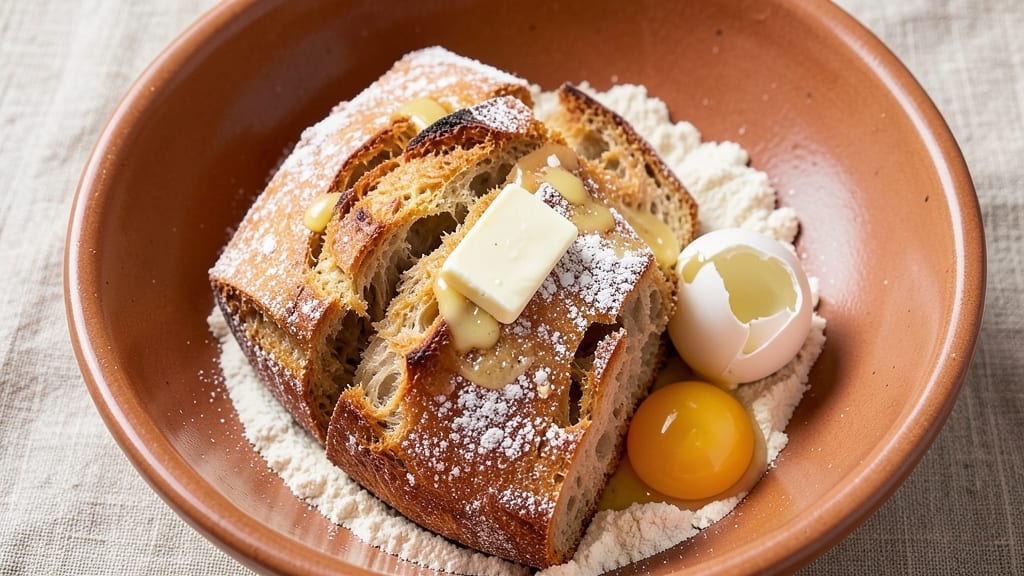
This sourdough bread recipe with added sugar transforms your loaf into a luxurious treat with a crisp, caramelized crust and a tender, pillowy interior. The sugar isn’t just for sweetness—it enhances browning, boosts fermentation, and creates that irresistible golden crust we all crave.
I’ve perfected this method after years of experimenting, and the results are worth every extra step.
The key lies in balancing sugar with your starter’s strength—too much can slow fermentation, but just the right amount (about 5-10% of flour weight) creates a dough that’s both flavorful and easy to shape.
We’ll incorporate it directly into the dough for even sweetness or use it as a topping for a sticky, glaze-like finish. This recipe keeps the artisanal soul of sourdough while adding a touch of indulgence.
What you’ll end up with is a loaf that’s crisp on the outside, soft on the inside, and packed with a subtle sweetness that pairs perfectly with butter, jam, or even savory toppings.
The sugar caramelizes beautifully during baking, giving you that coveted bakery-style crust without sacrificing the open crumb sourdough lovers adore. Ready to elevate your bread game?
Whether you’re making a sweet breakfast loaf or a brioche-style sourdough, this technique works for any variation. We’ll cover everything from starter maintenance to baking tips to ensure your loaf turns out perfectly every time. Let’s get started!
Ingredients for add sugar to sourdough bread
Sweetened sourdough magic starts with these 12 ingredients—flour, sugar, and butter team up for bakery-style perfection.
| Ingredient | Amount | Notes |
|---|---|---|
| Unbleached All-Purpose Flour 🌾 | 5 cups | High-protein for structure (12% protein preferred) |
| Active Sourdough Starter 🍞 | 1 ½ cups | 100% hydration, bubbly and active |
| Granulated White Sugar 🍚 | ½ cup | Fine grain for even distribution |
| Unsalted Butter 🧈 | ½ cup | Cold, cubed for even melting |
| Large Eggs 🥚 | 2 whole | Room temperature for even mixing |
| Instant Yeast 🍄 | ¼ tsp | For consistent fermentation boost |
| Diamond Crystal Kosher Salt 🧂 | 1 ½ tsp | Fine grain for even dissolving |
| Warm Water 💧 | 1 ½ cups | 105°F for optimal yeast activation |
| Cornmeal 🌽 | ¼ cup | For dusting baking surface |
| Coarse Sea Salt 🧂 | 1 tsp | For final crust sprinkle |
| Coarse Turbinado Sugar 🍚 | ¼ cup | For caramelized crust topping |
| Extra-Virgin Olive Oil 🫒 | 2 tbsp | For dough handling and scoring |
The flour is your foundation—King Arthur or Caputo Tipo 00 if you want that artisanal touch, but high-protein all-purpose works beautifully too. Sugar is where the magic happens: that 0.5 cup granulated balances fermentation while the turbinado topping creates the coveted caramelized crust. For the butter, Plugrá or Land O'Lakes cultured adds richness without overpowering. Keep your starter at 75°F for 24 hours before using—it should float in water like a champ. Pro tip: weigh your flour for precision, especially when adjusting sugar ratios.
No turbinado sugar? Brown sugar at 1:1 ratio works in a pinch, though the crust won't caramelize as dramatically. Short on butter? Olive oil at 1:1 substitution keeps the dough tender, though flavor will shift. The eggs are non-negotiable—they're what gives that brioche-like softness. If you're gluten-sensitive, replace 1 cup flour with gluten-free 1:1 blend, but expect a denser crumb. For the yeast, Saf-Instant is foolproof—just make sure it's fresh. The warm water temperature matters: too hot kills yeast, too cold slows fermentation. Aim for 105°F—use a thermometer if you're unsure.
This dough is a beast—it needs 2 hours of cold fermentation for flavor development. Divide it into portions and freeze for up to 3 months if you're prepping ahead. The sugar-topped version keeps 3 days at room temperature wrapped in a towel, but it's best enjoyed fresh. For reheating, wrap in foil and warm at 350°F for 10 minutes. The crust gets crispier the next day, so plan accordingly. Store leftovers in an airtight container to maintain that pillowy texture.
Why You'll Love This Recipe
- Sweet Surprise Twist: This recipe swaps out the usual for a subtle sugar boost—just a handful of granulated white sugar folded into the dough—and suddenly, your sourdough has this unexpected richness. No fancy techniques, just a simple swap that makes every bite taste like a little dessert.
- Kid-Tested Approval: Between us, my kids sniff out "boring" bread in seconds. But this version? They fight over the slices. The sugar mellows that tangy sourdough edge, and the buttery richness from the eggs makes it feel like a treat—not just toast.
- Weeknight Workhorse: I bake a loaf every Sunday because it’s that reliable. Freezes perfectly for toast or French toast later, and the sugar caramelizes beautifully when toasted—so even reheated, it’s still crave-worthy. No sad leftovers here.
- Budget Stretch: Honestly, the sugar is the only "splurge" ingredient, but it makes the whole loaf feel special. A little goes a long way, and the rest of the ingredients—flour, starter, butter—are pantry staples. You’ll make fewer trips to the bakery, I promise.
Step-by-step instructions for sweetened sourdough bread
Transform your sourdough into a sweet, golden loaf with a crisp crust and tender crumb—every bite delivers that perfect balance of sugar caramelization and airy softness.
Mix the Dough with Sugar for Enhanced Flavor
In a large mixing bowl, combine the 5 cups unbleached all-purpose flour, 0.5 cup granulated white sugar, 1.5 tsp diamond crystal kosher salt, and 0.25 tsp instant yeast. Whisk these dry ingredients together until fully incorporated—this ensures even distribution of sugar throughout the dough, which will later contribute to a sweeter flavor and a more caramelized crust.
Create a well in the center of the dry mixture and add the 1.5 cups active sourdough starter, 2 whole large eggs (room temperature), and 1.5 cups warm water (about 105°F). Using a wooden spoon or dough whisk, gradually incorporate the wet ingredients into the dry while stirring vigorously. The dough will begin to clump together as the flour absorbs the liquid and sugar.
Once the dough comes together, switch to your hands and knead it on a lightly floured surface for about 8-10 minutes. The sugar in this dough makes it slightly stickier than traditional sourdough, so add just enough flour to keep it from sticking to your hands. Knead until the dough is smooth, elastic, and slightly tacky—this indicates proper gluten development, which is essential for that pillowy softness we're after.
Incorporate Butter for Richness and Texture
Return the dough to your mixing bowl and add the 0.5 cup cold, cubed unsalted butter. Using your hands, gently work the butter into the dough, pressing and folding it until fully incorporated. The cold butter will create pockets within the dough, which will later melt and create a tender, slightly enriched crumb. If the dough becomes too sticky, wet your hands slightly to help handle it without adding extra flour.
Cover the bowl with a damp kitchen towel or plastic wrap and let the dough rest at room temperature for 30 minutes. This initial rest allows the gluten to relax slightly, making the dough easier to shape later. The sugar in the dough will also begin to dissolve more evenly during this time, enhancing the flavor development.
First Bulk Fermentation with Sugar's Influence
After the 30-minute rest, shape the dough into a loose ball and place it back in the bowl. Cover it again and let it undergo its first bulk fermentation at room temperature for 3-4 hours. During this time, the sugar will feed the yeast slightly differently than in traditional sourdough, resulting in a slightly faster rise and a more pronounced sweetness. You'll know it's ready when the dough has nearly doubled in size and looks puffy with bubbles forming on the surface.
Here's the thing—don't be tempted to rush this step. The sugar in the dough requires a bit more time to fully integrate and allow the gluten to develop properly. If your kitchen is warm, the dough may rise faster, but it shouldn't exceed 4 hours at room temperature. If it's cooler, you might need to extend this to 5 hours—just watch for that visual cue of nearly doubled volume.
Shape and Proof for That Perfect Sweet Crust
Once the dough has risen sufficiently, turn it out onto a lightly floured surface and gently deflate it. Using a bench scraper, divide the dough into 4 equal portions (about 1 pound each) and shape each into a round boule. For a sweeter crust, brush each boule lightly with 1 tablespoon extra-virgin olive oil and sprinkle with a pinch of the coarse sea salt—this will enhance the caramelization later.
Place the shaped boules onto a baking sheet lined with parchment paper, cover them with a damp towel, and let them proof at room temperature for 1-2 hours or until they've risen by about 50%. The sugar in the dough will make the crust slightly stickier during shaping, so work quickly and wet your hands if needed. The proofing stage is crucial—it allows the dough to develop its final structure before baking, ensuring that sweet, pillowy interior we're aiming for.
Bake with Sugar for a Caramelized Crust
Preheat your oven to 375°F with a Dutch oven inside for 30 minutes. This step is critical—it ensures the Dutch oven is hot enough to create that perfect steam environment for a crisp crust. Once preheated, carefully transfer one boule to the hot Dutch oven, sprinkle the top with 1 tablespoon coarse turbinado sugar, and cover tightly with the lid.
Bake for 30 minutes covered, then remove the lid and bake for an additional 15-20 minutes until the crust is deep golden brown and the internal temperature reaches 190-200°F. The turbinado sugar will caramelize beautifully, creating that sweet, crisp crust we love. Rotate the pan halfway through baking if needed for even browning.
Remove the bread from the Dutch oven and transfer it to a wire rack. Immediately brush the top with an additional 1 tablespoon extra-virgin olive oil and sprinkle with the remaining coarse sea salt. Let the bread cool completely before slicing—this allows the crumb to set and prevents a gummy texture. The result? A sweet, golden crust with a tender, slightly sweet interior that's perfect for breakfast or dessert.
Pro Tips For Making Add Sugar To Sourdough Bread
- Weigh Your Sugar: That 1 cup of sugar? It’s not the same as 200 grams—packed sugar weighs more. Use a scale for consistency, especially if you’re adding sugar to sweeten or enrich the dough. I learned this the hard way when my first batch turned out denser than expected—turns out, my "eyeballing" was way off.
- Whisk Butter and Sugar First: Cream the butter and sugar together until light and fluffy before mixing with wet ingredients. This ensures even distribution and prevents clumps in the dough—no one wants sugar pockets that stay dry. (Yes, even if you’re impatient like me, resist the urge to skip this.)
- Let the Dough Rest Longer: Sugar slows fermentation, so give your dough an extra 30–60 minutes of bulk fermentation if it’s sluggish. Check for readiness by doing the poke test: if the dough springs back slowly (not instantly), it’s ready. Rushing this step leads to dense, underproofed bread—trust me, you’ll taste the difference.
- Use Cold Butter for Laminated Layers: If you’re adding butter for a brioche-style texture, chill it first and cut it into small cubes. This prevents the butter from melting too fast during mixing, which keeps those delicate layers intact. I was skeptical until I tried it—now it’s non-negotiable for a tender crumb.
Serving suggestions for add sugar to sourdough bread
Breakfast Pairings
This sweetened sourdough shines at breakfast with buttery lemon curd or whipped honey butter. I love spreading 2 tbsp of local honey on warm slices and topping with fresh figs or sliced almonds for texture.
For a hearty option, pair with scrambled eggs and crispy bacon—the sugar balances the saltiness perfectly. 🍯
Sweet Toppings
Add cinnamon sugar to the dough before baking for a sticky bun-style loaf. Mix 2 tbsp sugar with 1 tsp cinnamon, sprinkle on shaped boules, then bake as directed.
For post-bake toppings, drizzle with warm maple syrup or caramelized bananas—the crust stays crisp while the interior stays soft. 🍌
Savory Contrasts
Surprisingly, this sweetened sourdough works with savory spreads like herb goat cheese or smoked salmon cream cheese. The sugar’s caramelized crust contrasts beautifully with pickled onions or spicy mustard.
I also love pairing it with charcuterie boards—the sweetness cuts through salty meats like prosciutto or aged cheddar. 🧀
Dessert Adaptations
Turn slices into French toast by dipping in an egg-cinnamon batter and pan-frying until golden. For a dessert loaf, fold chocolate chips or dried cherries into the dough before shaping.
Serve with vanilla ice cream or whipped cream for a decadent treat. The sugar’s caramelization makes every bite taste like a bakery special. 🍫
Beverage Pairings
Complement the sweetness with black coffee or chai tea—the warmth enhances the caramelized crust. For a boozy twist, pair with espresso martinis or sparkling wine like Prosecco.
Even a cold glass of milk works beautifully, especially with honey-drizzled slices. The sugar’s depth makes it versatile for any drink. 🍷
Meal Prep Tips
Store slices in an airtight container for up to 5 days—the crust stays crisp, and the interior remains soft. Reheat individual slices in a toaster oven at 350°F for 3-4 minutes to restore freshness.
For make-ahead dough, shape and freeze boules before baking—thaw overnight in the fridge before proofing and baking. 📅
Nutrition facts
Frequently asked questions
How much sugar should I add to my sourdough?
Start with 5-10% of your flour weight—for 5 cups flour, that’s 0.25-0.5 cup granulated sugar. Too much slows fermentation, while this range enhances browning and flavor without overpowering the tangy sourdough taste. Adjust based on your starter’s strength and desired sweetness level.
Can I replace granulated sugar with something else?
Yes! For a 1:1 substitution, try brown sugar (adds moisture) or honey/maple syrup (reduce other liquids by 2 tbsp per 1 cup sugar). Avoid powdered sugar—it dissolves unevenly and can make the dough gummy. For caramelized crusts, turbinado sugar works best as a topping.
Will sugar make my sourdough rise faster or slower?
Sugar feeds yeast slightly, so fermentation may be 10-15% faster than plain sourdough. Monitor the dough closely—it should nearly double in 3-4 hours at room temperature. If your kitchen is warm, reduce fermentation time by 30 minutes to avoid overproofing. Cold fermentation (75°F) slows sugar’s impact.
How do I fix a sticky dough when adding sugar?
Wet your hands with water and work quickly—sugar absorbs moisture, making dough clingy. If needed, add 1 tbsp flour at a time while kneading, but avoid over-flouring. For extra richness, use 1 tbsp olive oil on your hands instead. The dough should be slightly tacky but manageable—this ensures proper texture.
Can I add sugar to a no-knead sourdough?
Mix sugar with the dry ingredients as usual, then follow your no-knead method. The dough will be slightly stickier, so use a wet towel for shaping. Expect 12-16 hours of cold fermentation—sugar may slow the rise slightly. For best results, use 10% sugar (0.5 cup for 5 cups flour) and proof at 75°F.