
Side Dishes
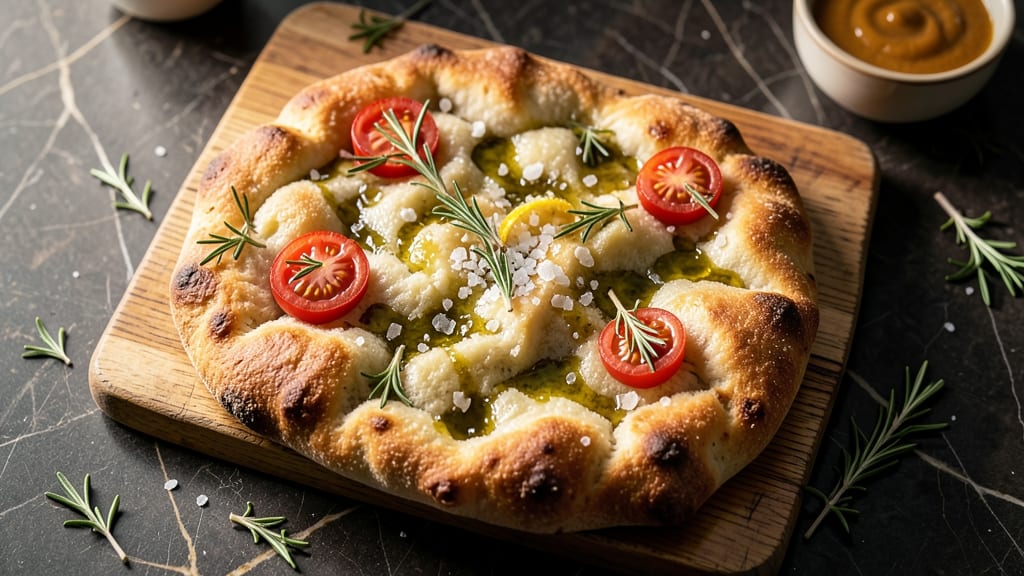
This airy focaccia bread recipe delivers restaurant-quality results with a crispy olive oil crust and impossibly light pillows inside. The secret lies in proper yeast activation and steam during baking—two techniques that transform simple ingredients into golden, pillowy perfection.
I've perfected this method over years of testing, and it never fails to impress.
The process begins with a basic dough of flour, yeast, water, and olive oil, but the magic happens in the shaping and baking. After the dough rises, we create those signature dimples and bake with steam to create a crispy crust while keeping the interior light and airy.
This method ensures every bite has the perfect texture contrast.
What you'll end up with is focaccia that's crispy on the outside, tender yet airy inside, and infused with rich olive oil flavor. The crust has that coveted "poached" look from the steam, while the interior remains soft and pillowy.
This is the kind of focaccia that makes you want to bake bread every weekend.
Serve warm with extra virgin olive oil for dipping, sprinkled with flaky sea salt, or topped with fresh rosemary. The possibilities are endless, but the technique remains the same—simple ingredients transformed into something extraordinary through careful timing and technique.
Ingredients for airy focaccia bread
Simple ingredients elevated by technique: flour, yeast, olive oil, and patience.
| Ingredient | Amount | Notes |
|---|---|---|
| All-Purpose Flour 🌾 | 3 ½ cups | Spooned and leveled for accuracy |
| Active Dry Yeast 🍞 | ¼ oz | Or 2.25 tsp, fresh if possible |
| Granulated Sugar 🍚 | ¼ cup | For yeast activation |
| Extra-Virgin Olive Oil 🫒 | ¾ cup | High-quality, fruity variety |
| Warm Water 💧 | 1 ¼ cups | 110°F for optimal yeast activation |
| Flaky Sea Salt 🧂 | 1 ½ tsp | Diamond Crystal preferred |
| Fresh Rosemary 🌿 | ¼ cup | Chopped, stems removed |
| Large Eggs 🥚 | 2 whole | Room temperature for even mixing |
| Coarse Kosher Salt 🧂 | ½ tsp | For final sprinkle |
| Ice Cubes ❄️ | ½ cup | For dough chilling |
| Semolina Flour 🌾 | ¼ cup | For dusting baking sheet |
The flour is non-negotiable—King Arthur or Caputo Tipo 00 if you can find it, but all-purpose works in a pinch. Yeast loses potency fast, so check the expiration date and store it in the fridge. The olive oil should be extra-virgin with fruity notes—none of that cheap cooking oil. I always grab mine from Trader Joe's or Whole Foods for the best quality. Warm water is key: too hot kills yeast, too cold slows activation. Aim for 110°F—use a thermometer if you're unsure. For rosemary, fresh is best—dried works but lacks that bright flavor. If you can't find it, thyme or oregano are decent substitutes, though rosemary's piney aroma is signature.
No extra-virgin olive oil? Light olive oil or avocado oil will work, but the flavor won't be as rich. Short on rosemary? Fresh thyme or a pinch of dried rosemary (half the amount) keeps things aromatic. The eggs can be omitted entirely if you're making a vegan version, but they add structure. For the salt, Diamond Crystal flakes dissolve beautifully, but any coarse kosher salt works. The ice cubes might seem odd, but chilling the dough slightly before shaping prevents overproofing—trust me on this. If you're baking in a dry climate, add a splash of water to the dough to compensate.
Store the focaccia in an airtight container at room temperature for 2-3 days—it reheats beautifully in a 350°F oven for 5-7 minutes. For longer storage, wrap tightly in plastic and freeze for up to 3 months. To revive, thaw at room temperature, then warm in the oven. The crust stays crispy if you reheat it properly—no soggy bread here. I always bake an extra loaf and freeze half for lazy mornings. The best part? Every slice tastes like you spent all day baking, even if you didn't.
Why You'll Love This Recipe
- No-Knead Magic: That yeast and olive oil combo does all the work—just mix, let it rise, and bake. I swear, my hands stay clean the whole time.
- Olive Oil Bliss: The generous drizzle of extra-virgin olive oil makes this bread ridiculously tender with that golden, crispy dimple. One bite and you’ll forget store-bought ever existed.
- Everyday Star: Tear it for sandwiches, toast it for breakfast, or freeze slices for quick toast later. Honestly, it’s my go-to for anything—no fuss, just flavor.
- Budget-Friendly Staple: Flour, yeast, and olive oil? That’s it. No specialty ingredients, no markup—just pure, satisfying bread that stretches across meals without breaking the bank.
Step-by-step instructions for olive oil poached focaccia
Mastering this technique transforms ordinary focaccia into a golden, pillowy masterpiece with a crisp exterior and airy interior.
Activate the Yeast for Maximum Rise
In a small bowl, combine the 1.25 cups warm water (should feel like bathwater, 110°F) with the 0.25 cup granulated sugar and 0.25 oz active dry yeast. Let it sit for 5-10 minutes until frothy—this confirms your yeast is alive and ready to work. If it doesn't bubble, start over with fresh yeast.
The sugar helps activate the yeast quickly, while the warm water creates the perfect environment. You'll notice tiny bubbles forming at the surface and edges—this is your signal to proceed. I like to give it an extra minute past the initial foam to ensure full activation before mixing with the flour.
Mix the Dough for Optimal Texture
In a large mixing bowl, whisk together the 3.5 cups all-purpose flour and 1.5 tsp flaky sea salt. Create a well in the center and pour in the yeast mixture along with the 0.75 cup extra-virgin olive oil. Using a wooden spoon, gradually incorporate the flour from the edges until a shaggy dough forms.
Once the dough comes together, turn it out onto a lightly floured surface and knead for 5 minutes until smooth and elastic. The dough should be soft but not sticky—if it's too wet, add 1 tablespoon flour at a time. This kneading develops gluten, which gives the focaccia its signature chewy texture while keeping the interior airy.
Incorporate Eggs and Rosemary for Flavor
Return the kneaded dough to the mixing bowl and let it rest for 5 minutes. Add the 2 room-temperature eggs and 0.25 cup chopped fresh rosemary, mixing gently with a spatula until fully incorporated. The eggs add richness, while the rosemary infuses aromatic depth throughout.
Cover the bowl with a damp towel and let the dough rise in a warm place for 1-2 hours, or until it has doubled in size. This slow fermentation allows the gluten to relax and the flavors to meld. I place my bowl in a turned-off oven with a cup of boiling water for consistent warmth—this creates the ideal environment for even rising.
Shape and Poach in Olive Oil
Punch down the risen dough and transfer it to a lightly oiled bowl. Cover again and refrigerate for 30 minutes to firm up slightly. Meanwhile, preheat your oven to 425°F and line a baking sheet with parchment paper.
Press the chilled dough into a 9x13-inch rectangle on the prepared baking sheet, using your fingers to create dimples throughout. Drizzle generously with remaining olive oil (about 2 tablespoons) and sprinkle with 0.5 tsp coarse kosher salt. The oil will pool in the dimples, creating those signature golden pools when baked.
Bake for Crispy Pillows and Airy Interior
Bake the focaccia for 20-25 minutes until the edges are deep golden brown and the top springs back when pressed gently. The interior should be light and airy, almost like a cross between bread and cake—this is the hallmark of successful olive oil poaching.
For extra crispiness, broil for 1-2 minutes at the end, watching closely to prevent burning. Let it cool for 10 minutes before slicing—this resting time allows the structure to set and prevents crumbling. Serve warm with olive oil drizzled over the top for that authentic Italian touch.
Pro Tips For Making Airy Focaccia Bread
- Use Room-Temp Water: DESCRIPTION: I learned this the hard way—yeast hates cold water. Mix your warm water (110°F/43°C) into the flour first, then add yeast last. This keeps the yeast from activating too fast, giving you a smoother rise instead of a rushed, dense loaf. (Yes, even if you’re impatient like me.)
- Oil the Pan Twice: DESCRIPTION: Slather your baking dish with olive oil before shaping the dough, then brush it again right after placing the focaccia in. The first coat prevents sticking; the second ensures that golden, crispy crust you’re after. (Skip this, and you’ll fight a losing battle with dough tears.)
- Skip the Over-Kneading: DESCRIPTION: Focaccia isn’t bread—it’s more like a cross between dough and a cake. Mix just until the flour comes together, then let the yeast do the work. Overwork it, and you’ll end up with a tough, chewy mess instead of that pillowy texture. (Your hands will thank you too.)
- Preheat with a Pan: DESCRIPTION: Place your oiled baking dish in the oven while preheating to 425°F (220°C). The residual heat helps the dough rise faster and gives you that signature blistered crust. (I used to ignore this, and my focaccia always felt underdone—until I tried it.)
Serving suggestions for this airy focaccia bread
Olive Oil Dip
Drizzle warm focaccia with extra-virgin olive oil straight from the jar—this is the classic Italian way to serve it. I like to use a high-quality fruity olive oil (like California Olive Ranch) and let guests dip pieces in.
For extra flair, add a sprinkle of flaky sea salt and a pinch of crushed red pepper flakes to the oil before serving. This simple dip transforms focaccia into a shareable appetizer that feels luxurious. 🫒
Breakfast Companion
Serve warm focaccia alongside scrambled eggs or avocado toast for a hearty breakfast. The crispy crust soaks up egg yolks beautifully, while the airy interior balances the richness.
I often top my plate with crumbled feta cheese and sliced cherry tomatoes for a Mediterranean-inspired morning meal. This combo is perfect for weekend brunch gatherings.
Pasta Pairing
Focaccia makes an excellent side for pasta dishes like spaghetti aglio e olio or creamy risotto. The pillowy texture contrasts perfectly with al dente noodles, while the olive oil pools complement the garlic and chili flakes in aglio e olio.
For risotto, tear the focaccia into chunks and serve alongside—it absorbs any leftover sauce beautifully. 🍝
Charcuterie Board Star
Add focaccia to your next charcuterie board as the perfect base for cured meats, cheeses, and fruit. Its neutral flavor lets the other ingredients shine, while the crispy crust provides a satisfying crunch.
I arrange slices in a circular pattern and top with prosciutto, aged cheddar, fig jam, and walnuts for a showstopping spread. The olive oil pools make it irresistible.
Soup Sidekick
Pair focaccia with warm soups like minestrone or tomato basil for a comforting meal. The bread soaks up broth beautifully, and the airy texture balances hearty soups. For extra flavor, brush slices with garlic-infused olive oil before serving.
I also love serving it with creamy butternut squash soup—the contrast of textures makes every bite satisfying. ❄️
Dessert Twist
For a sweet variation, drizzle warm focaccia with honey and cinnamon, then top with whipped mascarpone cheese and fresh berries. This dessert-style focaccia is perfect for after-dinner indulgence.
I also make a cinnamon sugar focaccia by mixing 2 tablespoons cinnamon and ¼ cup sugar before baking—it’s a crowd-pleaser at holiday gatherings.
Nutrition facts
Frequently asked questions
Why does my focaccia turn out dense instead of airy?
The most common culprits are over-kneading or underproofing. Knead just until the dough is smooth (5 minutes max) and let it rise until it doubles in size—this creates those light, pillowy pockets. Also, ensure your yeast is fresh and the water is 110°F (not hotter). If your kitchen is cold, use a warm oven with a bowl of hot water to help the dough rise properly.
Can I make focaccia without eggs?
Eggs add richness but aren't essential. For a vegan version, simply omit them and use 2 tablespoons olive oil or 1 tablespoon ground flaxseed mixed with 3 tablespoons water as a binder. The texture will be slightly less tender, but still delicious—just expect a marginally denser crumb.
How do I get those perfect golden pools of olive oil?
Timing and technique are everything! After shaping, press your fingers into the dough to create dimples, then drizzle with olive oil—about 2 tablespoons—and sprinkle with salt. Bake at 425°F for 20-25 minutes until the edges are golden. For extra shine, add 0.5 cup ice cubes to the oven before baking to create steam, which helps the oil pool beautifully.
What's the best way to store focaccia?
Keep it fresh by storing in an airtight container at room temperature for 2-3 days. For longer storage, wrap tightly in plastic and freeze for up to 3 months. To reheat, bake at 350°F for 5-7 minutes until crispy again. The key is preventing moisture loss—never store it in the fridge unless you plan to eat it within 24 hours.
Can I use whole wheat flour instead of all-purpose?
You can, but expect a denser texture. For best results, replace 1 cup all-purpose flour with whole wheat and add 1 extra tablespoon olive oil to compensate for the dryness. Whole wheat absorbs more moisture, so you may need to adjust the water slightly. Also, reduce the rise time by 20-30 minutes since whole wheat ferments faster.