
Side Dishes
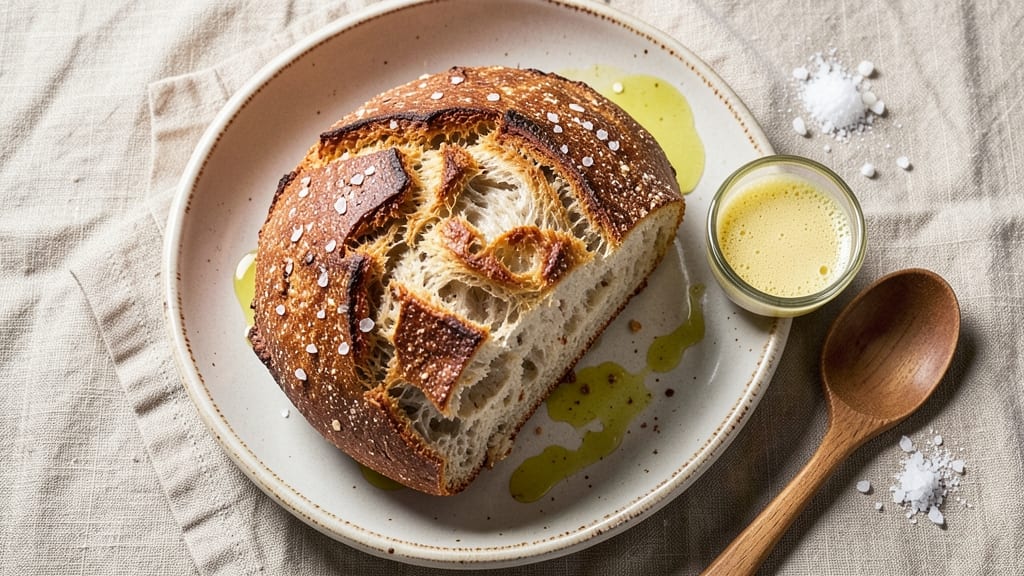
Adelle Davis' whole wheat bread recipe brings the wisdom of a nutrition pioneer to your kitchen with a no-knead method that preserves whole grains while delivering a crisp herb-infused crust. This recipe honors her philosophy of minimal processing and maximum nutrition—no refined flour, no artificial additives, just wholesome ingredients that transform into artisanal bread with minimal effort. The secret lies in a long fermentation period that develops deep flavor and improves digestibility, exactly as Davis advocated in her groundbreaking work.
What sets this recipe apart is the combination of whole wheat flour with a touch of white flour for structure, creating a bread that's both nutritious and satisfying. The herb-infused crust adds aromatic complexity without complicating the process—just sprinkle fresh herbs on the dough before baking for that signature flavor.
This method requires only 15 minutes of active prep time, followed by an overnight rise in the refrigerator, making it perfect for modern home bakers who value both health and convenience.
The result is a beautifully domed loaf with a crisp, golden crust infused with herbs and a tender, slightly dense crumb that's rich in fiber and nutrients. Davis' approach to breadmaking focused on preserving the natural goodness of whole grains while making them approachable for everyday eating.
This recipe delivers on that promise—no special equipment needed, just patience and a few simple ingredients. The bread freezes beautifully, so you can bake a batch and enjoy it all week.
Whether you're following Davis' nutritional principles or simply seeking a wholesome whole wheat bread, this recipe delivers restaurant-quality results with minimal effort. The long fermentation not only enhances flavor but also improves the bread's digestibility, making it a healthier choice without sacrificing taste.
Let's get started on creating this nourishing staple for your kitchen.
Ingredients for adelle davis bread
Whole grains and fresh herbs combine in this nourishing no-knead loaf, honoring Davis' principles of nutrition and simplicity.
| Ingredient | Amount | Notes |
|---|---|---|
| Organic Whole Wheat Flour 🌾 | 4 cups | Stone-ground for optimal nutrition |
| All-Purpose Flour 🌾 | 1 cup | For structural balance |
| Active Dry Yeast 🍞 | ½ tsp | Ensure freshness with expiration check |
| Granulated Sugar 🍚 | 1 tbsp | Feeds yeast fermentation |
| Diamond Crystal Kosher Salt 🧂 | 1 ½ tsp | Adjusts to taste after baking |
| Extra-Virgin Olive Oil 🫒 | ½ cup | High-quality for flavor |
| Warm Water 💧 | 1 ½ cups | 110°F for optimal yeast activation |
| Fresh Rosemary 🌿 | ¼ cup | Finely chopped for crust infusion |
| Fresh Thyme 🌿 | ¼ cup | Finely chopped for herbal notes |
| Fresh Garlic Cloves 🧄 | 2 cloves | Minced for subtle depth |
| Cornmeal 🌽 | ¼ cup | For dusting baking surface |
| Sesame Seeds 🌻 | 1 tbsp | Optional for decorative finish |
The foundation begins with organic whole wheat flour—seek King Arthur or Bob's Red Mill for optimal protein content and texture. Stone-ground varieties preserve more nutrients, though regular whole wheat works in a pinch. Pairing it with unbleached all-purpose flour creates the perfect balance of structure and nutrition Davis advocated. For yeast, Saf-Instant is ideal—it activates without proofing time—but active dry yeast works if you're willing to wait five minutes. The olive oil should be extra-virgin (look for Italian or Spanish varieties at Whole Foods or Trader Joe's)—its fruity notes complement the herbs beautifully. Fresh herbs are non-negotiable here; dried will never replicate the aromatic complexity, though you could use half the amount if absolutely necessary.
No rosemary? Fresh thyme or oregano work equally well, though the flavor profile shifts slightly. The garlic can be omitted entirely if you prefer a milder loaf, but I recommend keeping it—it rounds out the herbal notes beautifully. For those watching gluten sensitivity, this recipe uses 100% whole wheat flour, which naturally contains gluten; for a lower-gluten option, consider substituting half the whole wheat with white whole wheat flour. The sesame seeds are purely decorative but add a delightful crunch—skip them if you're avoiding seeds. Storage-wise, the dough can ferment in the refrigerator for up to 24 hours before baking, which actually enhances flavor development. This flexibility makes it perfect for busy schedules.
Baked loaves keep well at room temperature for 3-4 days when wrapped in a clean kitchen towel, though they're best enjoyed fresh. For longer storage, freeze the cooled loaf in slices wrapped individually—they'll stay fresh for up to 3 months. The crust remains crisp even after reheating; a quick 30-second toast in the toaster or 10 seconds in the oven restores its golden crunch. Davis would approve of this bread's ability to feed a family while nourishing them—no refined ingredients, just wholesome nutrition delivered with minimal effort. The herb-infused crust isn't just decorative; it's a testament to how simple ingredients can elevate everyday baking.
Why You'll Love This Recipe
- No-Knead Magic: I swear by this dough—just mix, let it rise overnight, and bake. The yeast does all the work while you sleep, and that whole wheat blend gives it a hearty, satisfying chew without tasting heavy.
- Sweet-Savory Crust: That touch of granulated sugar caramelizes just enough to give the crust a subtle sweetness, while the kosher salt cuts through for a bright, balanced bite. It’s the kind of bread that makes toast taste like a treat.
- Weeknight Workhorse: I keep a loaf in the freezer at all times—perfect for quick sandwiches, toast, or even crusty bread for soups. The mix of whole wheat and all-purpose means it’s sturdy enough for grilled cheese but still soft enough for jam.
- Budget-Friendly Staple: Organic whole wheat flour might sound pricey, but a little goes a long way, and this recipe stretches to feed four for days. Plus, the yeast and sugar are cheap staples that make every loaf feel like a splurge.
Step-by-step instructions for adelle Davis' whole wheat bread
This no-knead method delivers a rustic, herb-infused crust with tender crumb—perfect for beginners and whole-grain enthusiasts alike.
Activate the Yeast and Prepare the Dough
In a small bowl, combine the 1.5 cups warm water (tested at 110°F—too hot kills yeast, too cool slows fermentation) with the 1 tbsp granulated sugar and 0.5 tsp active dry yeast. Let sit for 5-10 minutes until frothy. This step ensures your yeast is alive and ready to work—if no bubbles form, your yeast may be expired.
In a large bowl, whisk together the 4 cups organic whole wheat flour, 1 cup all-purpose flour, 1.5 tsp diamond crystal kosher salt, and the 0.25 cup fresh rosemary and 0.25 cup fresh thyme (finely chopped). Add the yeast mixture and 0.5 cup extra-virgin olive oil to the bowl, then stir with a wooden spoon until combined. The dough will be shaggy but cohesive—don't worry, no kneading required here.
Rest and Shape for Optimal Texture
Cover the bowl with a damp kitchen towel and let the dough rest at room temperature for 1 hour. This initial rest allows the gluten to relax and the flour to fully hydrate, which prevents a dense crumb. I like to place the bowl in a warm spot, like near the oven with the light on, to encourage gentle fermentation.
After resting, turn the dough onto a lightly floured surface and gently shape it into a round loaf. The dough should feel slightly tacky but not sticky—if it sticks too much, wet your hands and smooth the surface. Place the shaped dough seam-side up in a 9x5-inch loaf pan that's been lightly greased with olive oil. Cover again and let rise for 1-2 hours, or until the dough has puffed about 50% above the pan rim. A gentle poke should leave a slight indentation that slowly springs back.
Preheat and Prepare for Baking
Preheat your oven to 375°F. While it heats, prepare a baking sheet by sprinkling 0.25 cup cornmeal evenly across the surface. This creates a crispy base and prevents sticking. Line a second baking sheet with parchment paper for later use.
Once the oven is preheated, carefully remove the risen dough from the loaf pan and transfer it to the cornmeal-dusted baking sheet. Score the top of the loaf with a sharp serrated knife in a crosshatch pattern—this helps control expansion and creates a beautiful crust. Brush the dough lightly with additional olive oil and sprinkle the 1 tbsp sesame seeds evenly over the top for a decorative finish and extra crunch.
Bake to Golden Perfection
Bake the bread for 35-40 minutes until the crust is deep golden brown and sounds hollow when tapped on the bottom. The internal temperature should reach 190-200°F when measured with an instant-read thermometer. If the top browns too quickly, tent the bread loosely with aluminum foil to prevent over-browning while ensuring the interior cooks through.
Remove the bread from the oven and transfer it immediately to a wire rack to cool completely. The bread will continue to firm up as it cools, and the crust will develop even more depth. For best flavor, let it cool for at least 30 minutes before slicing—this ensures clean cuts and prevents a gummy crumb. The aroma of fresh-baked herb-infused bread will fill your kitchen, making the wait worthwhile.
Pro Tips For Making Adelle Davis Bread
- Bloom the Yeast Properly: Skip the guesswork—mix your yeast with warm water (110°F) and a pinch of sugar first, then wait 5-10 minutes for frothy bubbles before adding dry ingredients. Cold water kills it; hot water cooks it. I learned this the hard way when my loaves took forever to rise.
- Measure Salt Precisely: Diamond Crystal kosher salt is less dense than table salt—use the recipe’s exact weight (not volume). One extra teaspoon throws off the whole balance, making your bread taste flat or harsh. My grandmother’s trick: spoon it into the measuring cup, then level it with a knife.
- Knead Until Smooth: Stop when the dough passes the "windowpane test"—stretch a piece thin enough to see light through it. Over-kneading glues whole wheat flour into a tough mess. I used to overdo it, but now I know: 8-10 minutes by hand (or 5-6 in a mixer) is plenty for this recipe.
- Use a Dutch Oven: No fancy equipment? Wrap a heavy pot in foil and place a baking sheet on top—it mimics a Dutch oven’s steam trap. The crust will still crackle golden, not dry. (Yes, even if you’re impatient like me.) Skip this, and you’ll end up with a sad, dense loaf.
Best sauces and condiments for these flavors
Herb Butter Spread
Whip together ½ cup softened butter with 1 tbsp finely chopped fresh rosemary, 1 tbsp fresh thyme, and 1 minced garlic clove. Spread generously on warm slices for a rich, aromatic complement to the bread's earthy whole wheat flavor.
Store leftovers in an airtight container in the fridge for up to 5 days. 🌿
Garlic-Herb Olive Oil
Combine ½ cup extra-virgin olive oil with 2 minced garlic cloves, 1 tbsp chopped rosemary, and a pinch of Diamond Crystal kosher salt. Let sit for 10 minutes to infuse, then drizzle over sliced bread or use as a dip for soups.
This oil keeps well in the refrigerator for 1 week—shake before using.
Whole Grain Mustard Sauce
Mix ¼ cup whole grain mustard with 2 tbsp honey and 1 tbsp apple cider vinegar. Thin with 2 tbsp water if needed, then drizzle over sliced bread with a sprinkle of sesame seeds. The sweet-tangy contrast balances the bread's hearty texture perfectly.
Spiced Honey Glaze
Simmer ¼ cup honey with ½ tsp ground cinnamon and ¼ tsp cayenne pepper until slightly thickened. Brush warm glaze over the crust of freshly baked bread for a sweet-spicy finish.
The cinnamon enhances the bread's herbal notes while adding warmth. Store extra glaze in a sealed jar for 2 weeks.
Cheese Pairings
This bread pairs beautifully with aged cheddar or goat cheese. For a quick appetizer, layer slices with herb butter and sharp cheddar, then broil for 3 minutes until bubbly. For a lighter option, spread whipped goat cheese with a drizzle of garlic-herb oil and fresh cracked pepper.
Savory Compote
Sauté 1 cup diced tomatoes, ½ cup chopped onions, and 1 minced garlic clove in 1 tbsp olive oil until softened. Add 1 tsp balsamic vinegar and ½ tsp dried oregano, then simmer for 10 minutes.
Serve warm over toasted bread slices for a rustic, savory topping. This compote keeps in the fridge for 5 days.
Nutrition facts
Frequently asked questions
Why does Adelle Davis' bread use both whole wheat and all-purpose flour?
This combination creates the perfect balance Davis advocated for—nutrient-rich whole wheat provides fiber and vitamins, while all-purpose flour adds structure and prevents a dense crumb. The ratio of 4 cups whole wheat to 1 cup all-purpose ensures the bread stays moist and easy to slice without losing the wholesome benefits of whole grains. This approach aligns with her philosophy of making healthy foods accessible and enjoyable.
Can I make this bread without a loaf pan?
Shape the dough into a round boule or oval instead of a loaf. Place it directly on a parchment-lined baking sheet dusted with cornmeal, then score the top with a crosshatch pattern. Bake at 375°F for 30-35 minutes until golden. The crust will be even crispier without the pan's confinement, and you'll get that classic artisanal shape Davis-style bakers love.
What if my dough doesn't rise properly?
Check your yeast first—it must be fresh and activated (test by mixing with warm water and sugar). If the dough stays flat, try these fixes: place the bowl in a warmer spot (like your oven with the light on), cover tightly with plastic wrap, or let it rise longer (up to 3 hours). Cold weather slows fermentation, so you may need to extend rising time in winter. For extra insurance, use 1 tsp more sugar to feed the yeast.
How can I make this bread more nutritious?
Boost nutrition by adding 2 tbsp ground flaxseed or 1 tbsp chia seeds to the dough for omega-3s, or replace ½ cup of the whole wheat flour with spelt flour for extra protein. For a seed topping, sprinkle 1 tbsp pumpkin seeds or sunflower seeds on the crust before baking. Davis would approve of these simple, whole-food upgrades that pack even more nutritional punch.
Can I freeze the dough before baking?
Yes! Shape the dough and place it in a greased loaf pan, then cover tightly with plastic wrap and aluminum foil. Freeze for up to 3 days. When ready to bake, thaw in the refrigerator overnight, then proceed with the baking instructions. The long fermentation in the freezer actually enhances flavor development—just add 15-30 minutes to your baking time since frozen dough takes longer to cook through.