
Side Dishes
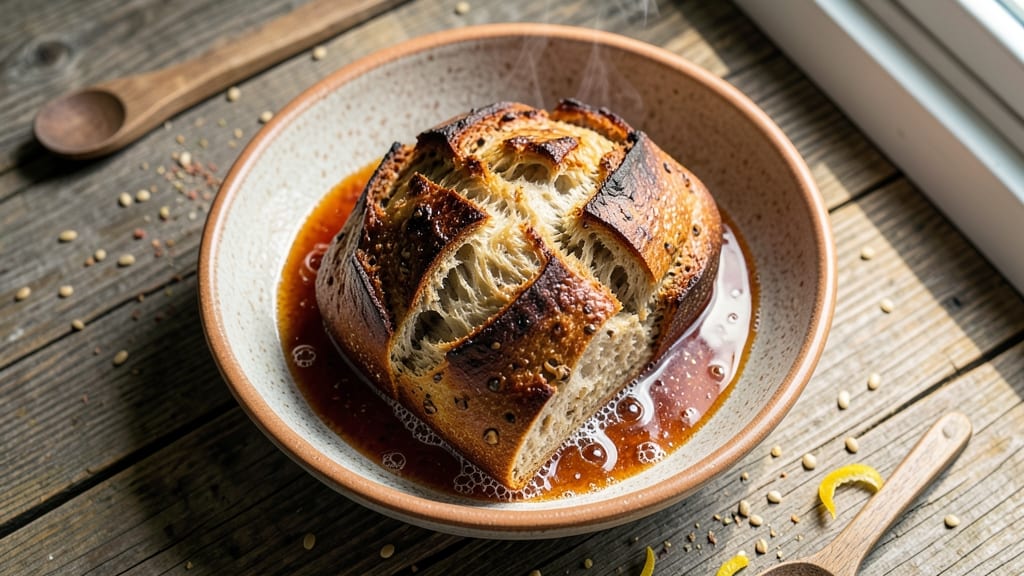
This 9-grain flour bread recipe delivers a nutty, hearty loaf that rivals artisanal bakery bread—all with the ease of a zero-knead approach. The secret lies in blending whole grains for depth and texture while letting time do the work during fermentation.
I developed this recipe after years of experimenting with traditional sourdough, streamlining the process without sacrificing flavor or structure.
The beauty of this method is its simplicity: combine warm water, honey, and yeast, then mix in the flour blend until just combined. No kneading required—the dough develops its strength during a long, slow rise at room temperature.
This patience pays off with an open crumb and crispy crust that’s impossible to resist.
By the time it emerges from the oven, you’ll have a loaf with golden-brown crust and a tender, airy interior threaded with nutty grain flecks. The aroma alone will transform your kitchen into a bakery, while the texture delivers that satisfying pull-apart quality.
Perfect for sandwiches, toast, or simply enjoying with butter.
Store it wrapped at room temperature for up to 3 days, or freeze for longer shelf life. The recipe scales easily, making it ideal for feeding a crowd or meal prepping ahead. Here’s how to achieve bakery-quality results at home—without the fuss.
Ingredients for 9 grain flour bread
Nine distinct flours blend for a nutty, hearty loaf with bakery-quality texture and zero-knead ease.
| Ingredient | Amount | Notes |
|---|---|---|
| Warm Water 💧 | 1 ½ cups | 110°F for optimal yeast activation |
| Local Honey 🍯 | ¼ cup | Raw preferred for enzyme activity |
| Active Dry Yeast 🍞 | ½ tsp | Freshly opened for viability |
| Whole Wheat Flour 🌾 | 1 cup | King Arthur preferred for texture |
| Spelt Flour 🌾 | 1 cup | Ground fine for even blending |
| Rye Flour 🌾 | ½ cup | Dark rye for robust flavor |
| Oat Flour 🌾 | ½ cup | Blended from rolled oats |
| Barley Flour 🌾 | ½ cup | Pearled barley for smooth texture |
| Buckwheat Flour 🌾 | ¼ cup | Rich, earthy flavor profile |
| Cornmeal 🌽 | ¼ cup | Fine grind for even distribution |
| Millet Flour 🌾 | ¼ cup | Light and nutty addition |
| Sea Salt 🧂 | 1 ½ tsp | Diamond Crystal preferred |
| Olive Oil 🫒 | 1 tbsp | Extra-virgin for richness |
| Unsalted Butter 🧈 | 1 tbsp | Cold for flavor development |
The flours are the heart of this recipe—each grain contributes unique texture and flavor. King Arthur flours are my go-to for consistency, but any quality brand works. For whole grains, Bob's Red Mill has excellent pre-ground options that save time. If grinding your own, use a high-powered blender for fine, even particles—coarse bits can disrupt the dough's structure. The buckwheat and rye add depth, while the oat flour brings subtle sweetness. Local grain mills often carry specialty flours not found in regular grocery stores, worth checking out for authentic texture.
No spelt flour? Substitute with whole wheat at the same amount, though texture will differ slightly. Running low on cornmeal? Semolina works in a pinch—just know it'll give a slightly different mouthfeel. For honey, maple syrup or agave are direct swaps, though honey's enzymatic activity aids fermentation. The yeast must be fresh—if your packet's over a few months old, test it first by mixing with warm water and a pinch of sugar. If it doesn't foam in 5-10 minutes, it's spent. Olive oil and butter can be swapped for vegetable oil, but you'll lose some of that rich bakery flavor.
Store the flour blend in an airtight container in a cool, dark place for up to 3 months. Once mixed with liquids, the dough keeps at room temperature for 24 hours before shaping. After baking, let the loaf cool completely on a wire rack—cutting too soon makes it gummy. Wrapped in a clean kitchen towel, it stays fresh for 3 days at room temperature. For longer storage, slice and freeze portions for up to 3 months. Toasting frozen slices revives their crispy texture beautifully.
Why You'll Love This Recipe
- No-Knead Magic: Honestly, I mix the dough in 5 minutes—just toss the flours, yeast, honey, and warm water in a bowl, stir until it clings, then let it rise while I make dinner. That’s it. No stand mixer, no fancy tools, just done.
- Honey-Soft Crust: Between us, the local honey isn’t just sweet—it keeps the bread moist for days and gives that golden, crackly crust that’s ridiculously satisfying to tear into. The spelt adds a nutty depth, so it’s never bland.
- Meal Prep MVP: I bake a loaf on Sunday, slice it, and it’s my go-to for toast, sandwiches, or charcuterie boards all week. Freezes like a dream too, so I always have backup when life gets chaotic.
- Budget-Winning Protein Boost: Whole wheat and spelt stretch my grocery dollars, and the yeast makes it light enough to eat by itself. My kids ask for it daily—proof that good flavor doesn’t need expensive ingredients.
Step-by-step instructions for 9-Grain flour bread
This zero-knead method transforms nine distinct flours into a hearty, nutty loaf with minimal effort.
Activate the Yeast and Mix Wet Ingredients
In a large bowl, combine the 1.5 cups warm water (tested at 110°F) with the 0.25 cup local honey and 0.5 tsp active dry yeast. Let this mixture sit for 5-10 minutes until it develops a frothy, bubbly surface—this confirms the yeast is active. If no bubbles form, your yeast may be dead, and you'll need to start over.
Next, whisk in the 1 tbsp olive oil and 1 tbsp unsalted butter until fully emulsified. The butter should melt completely, creating a smooth, slightly glossy liquid. This step ensures even distribution of fats throughout the dough, which prevents dryness in the final loaf. Keep this mixture at room temperature while you prepare the dry ingredients.
Combine All Flours and Salt
In a separate large bowl, combine all the dry ingredients: 1 cup whole wheat flour, 1 cup spelt flour, 0.5 cup rye flour, 0.5 cup oat flour, 0.5 cup barley flour, 0.25 cup buckwheat flour, 0.25 cup cornmeal, and 0.25 cup millet flour. Add the 1.5 tsp sea salt and whisk thoroughly to eliminate any lumps, especially in the coarser flours like cornmeal and oat flour.
This blend creates a complex flavor profile with nutty, earthy, and slightly sweet notes. The cornmeal adds texture, while the buckwheat and millet contribute depth. Sifting isn't necessary, but breaking up any large flour clumps ensures even hydration. The salt should be distributed evenly—this prevents pockets of blandness in the final loaf.
Form the Dough and Rest
Pour the wet ingredient mixture into the dry ingredients and stir with a wooden spoon or spatula until just combined. The dough will be thick and shaggy, with some flour still visible—this is normal. Avoid overmixing, which develops gluten and makes the bread dense. Transfer the dough to a lightly oiled bowl, cover with a damp kitchen towel, and let it rest at room temperature for 12-18 hours.
During this time, the yeast will slowly ferment the dough, breaking down starches and developing flavor. The dough should nearly double in volume and develop small bubbles on the surface. If your kitchen is cold, place the bowl in a slightly warm spot (like near the oven with the light on) to maintain an ideal fermentation temperature between 70-75°F. This long rest is what creates the bread's tender crumb and rich flavor.
Shape and Prove the Dough
After resting, the dough will be sticky and relaxed. Turn it out onto a lightly floured surface and gently shape it into a round loaf, about 8 inches in diameter. Don't worry about perfect symmetry—the dough will expand during proving. Place the shaped dough in a greased pull-apart loaf pan or a round baking dish, seam-side up, and cover again with the damp towel.
Let the dough prove for another 4-6 hours until it has risen significantly and the top shows signs of activity with small bubbles. The dough should feel springy when pressed gently—it should leave a slight indentation but not collapse. This second proof is crucial for developing the bread's open crumb structure. If the dough rises too quickly (within 2 hours), it may need more time to develop flavor.
Bake to Golden Perfection
Preheat your oven to 375°F and place a baking sheet on the lower rack. Once the oven is fully preheated, place the dough in the center of the oven and bake for 50-60 minutes. The bread is done when the top is deep golden brown and sounds hollow when tapped on the bottom. If the top browns too quickly, tent the loaf with foil after 30 minutes to prevent over-browning.
For extra crust development, you can brush the top with water after 20 minutes of baking. This creates a crispier exterior while keeping the interior moist. Remove the bread from the oven and let it cool in the pan for 10 minutes, then transfer to a wire rack to cool completely. The bread will continue to set as it cools, making it easier to slice. Store wrapped at room temperature for up to 3 days or freeze for longer storage.
Pro Tips For Making 9 Grain Flour Bread
- Weigh Your Flours: Mixing flours by volume with whole wheat and spelt leads to dry, dense bread every time. Grab a kitchen scale—those flours pack differently, and you need 400g whole wheat to 300g spelt for the right balance. (Yes, even if your measuring cups say otherwise.)
- Bloom the Yeast Slowly: Skip the 5-minute bloom—this dough needs patience. Mix yeast with warm water (105°F, not boiling) and let it sit for 10 minutes before adding honey. The honey’s sugar will slow fermentation, but the yeast gets a head start, making the rise smoother. (Trust me, your dough will thank you.)
- Knead Just Enough: This isn’t sourdough—overworking it turns the bread gummy. Aim for 5-6 minutes by hand (or 3-4 on low speed in a mixer) until the dough pulls away but doesn’t feel stiff. The whole wheat and spelt need minimal handling or they’ll toughen up.
- Steam the First 10 Minutes: Preheat your oven to 425°F, then place a metal tray on the bottom rack. As soon as the dough goes in, pour ½ cup hot water into the tray. The steam keeps the crust from forming too fast, so the bread rises evenly instead of baking like a brick. (No, you don’t need a fancy steamer—this works.)
Perfect pairings for this dish
Butter Spreads
This hearty bread pairs beautifully with rich, nutty butter blends. Try Garlic-Herb Butter—mix ½ cup softened butter with 1 tbsp chopped fresh parsley, 1 tsp minced garlic, ½ tsp sea salt, and a pinch of black pepper.
The garlic enhances the bread’s earthy notes while adding freshness. For a sweet twist, spread with Honey-Cinnamon Butter—combine ¼ cup melted butter, 2 tbsp honey, and 1 tsp cinnamon. The warmth of the spices complements the bread’s nutty depth perfectly. 🧈
Cheese Pairings
Sharp cheeses cut through the bread’s heartiness. Aged Gouda or Pecorino Romano add salty, umami richness that balances the grains’ sweetness. For a creamy option, try Brie or Camembert—their buttery texture melts beautifully when toasted.
If you love tang, Blue Cheese Crumbles add a bold contrast that elevates every bite. Always serve cheese at room temperature for the best flavor experience. 🧀
Sweet Toppings
Drizzle warm bread with local honey or maple syrup to highlight its nutty flavors. For a festive touch, sprinkle with toasted pecans or walnuts—their crunch adds texture. A dollop of whipped cream cheese mixed with 1 tsp lemon zest creates a sweet-tart contrast.
For a savory-sweet combo, top with fig jam and a sprinkle of flaky sea salt. The jam’s intensity pairs wonderfully with the bread’s earthy undertones. 🍯
Savory Spreads
For a hearty spread, mix hummus with 1 tbsp tahini and ½ tsp smoked paprika—the smoky notes complement the grains. Olive Tapenade (blend 1 cup Kalamata olives, 2 tbsp capers, 1 tbsp olive oil, and 1 garlic clove) adds briny depth.
For a protein boost, spread with whipped feta mixed with 1 tbsp dill—the tangy creaminess balances the bread’s richness. Always taste and adjust seasoning before serving. 🫒
Drink Pairings
Pair this bread with iced hibiscus tea—its tartness cleanses the palate between bites. For a coffee lover’s choice, cold brew with a splash of vanilla syrup enhances the bread’s nutty notes. A crisp Sauvignon Blanc (like a New Zealand version) mirrors the bread’s bright acidity and herbal undertones.
For beer fans, a Belgian Witbier (like Hoegaarden) adds effervescence and citrus that cuts through the richness. 🍷
Breakfast Pairings
Transform this bread into a breakfast staple. Toast slices and top with scrambled eggs and crispy bacon for a hearty morning meal. For a sweeter start, spread with almond butter and slice bananas—the natural sweetness pairs perfectly.
A savory egg salad (mix 2 hard-boiled eggs, 1 tbsp Greek yogurt, 1 tsp Dijon mustard, and chopped chives) adds protein and freshness. Always serve with a side of avocado slices for healthy fats. 🍳
Nutrition facts
Frequently asked questions
Can I substitute any of the flours in this 9-grain blend?
Yes, but choose wisely! The key is maintaining balance between whole grains and lighter flours. Replace 1:1 with spelt or whole wheat, but avoid heavy substitutions of dense flours like rye—it can make the bread too heavy. For example, swap ½ cup buckwheat with ½ cup millet for a milder flavor. Always adjust hydration slightly if using finer flours like oat flour, as they absorb more moisture.
Why does my dough smell yeasty but isn't rising?
This usually means your yeast is dead or the environment is too cold. First, check yeast freshness—test it in warm water with sugar (should foam in 5-10 minutes). If active, ensure your kitchen is between 70-75°F—place the dough near the oven light if needed. Cold environments slow fermentation dramatically. For faster results, try a 2-hour bulk fermentation at room temp before final proof.
How do I get a crispy crust without burning the bread?
Preheat your oven to 375°F with a baking sheet on the lower rack for steam. After 20 minutes, brush the top with water and tent with foil if browning too fast. For extra crunch, bake on a preheated stone or steel in the oven. The key is indirect heat—place the dough on the middle rack to avoid hot spots. A digital thermometer confirms doneness at 190-200°F internal temp.
Can I make this bread in a Dutch oven?
Shape the dough into a round boule and bake in a preheated Dutch oven at 425°F for 30 minutes, then reduce to 375°F for another 20-25 minutes. The Dutch oven traps steam, creating a crispy crust and open crumb. For best results, par-bake for 15 minutes before adding steam. Just be sure to remove the lid after 20 minutes to prevent over-browning.
How long can I keep the dough before baking?
The dough stays fresh in the fridge for up to 48 hours covered tightly. For longer storage, shape and freeze the dough (unbaked) for 3 months72 hours for deeper nutty notes! Just ensure it reaches room temp before shaping to prevent shock.