
Side Dishes
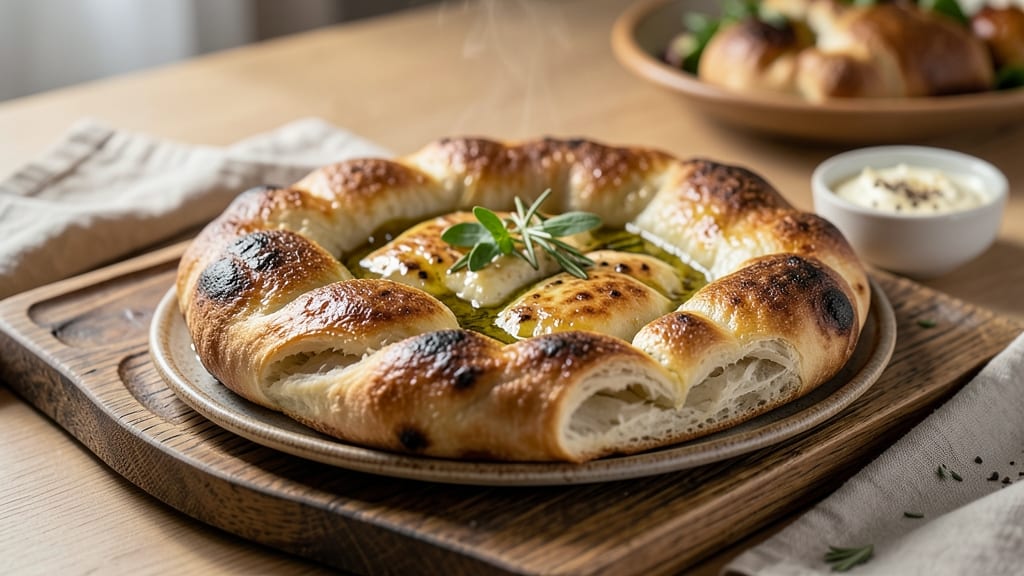
This authentic Turkish pide bread recipe brings the smoky aroma of Turkish bakeries straight to your kitchen, with its signature flaky layers and crispy crust. 🌟 Unlike its flatbread cousin lahmacun, pide stands tall with generous stuffings—think melted kaşar cheese, spiced minced meat, or fresh herbs—all baked to golden perfection in a wood-fired oven (or your home oven with a few clever tricks).
I’ve perfected this recipe over years of testing, ensuring the dough develops just enough elasticity for easy shaping while staying tender inside.
The secret to flaky layers lies in the dough’s high-fat content—using a mix of olive oil and melted butter creates those signature air pockets when baked.
For stuffing, traditional pide often features kaşar cheese (though mozzarella works in a pinch), but don’t hesitate to experiment with spinach, potatoes, or even lamb. The dough is rolled out thin, stuffed generously, and baked until the crust turns a deep golden brown, with edges that crisp up beautifully.
What makes pide truly special is its versatility—serve it as a main dish with a side of yogurt and pickles, or cut into wedges for a casual meal.
The contrast of crispy crust and soft, cheesy filling is pure comfort food, and the aroma alone will have everyone gathered around your table. Whether you’re hosting a dinner or treating yourself to a taste of Turkey, this recipe delivers restaurant-quality results at home.
For those without a wood-fired oven, I’ll share my go-to home oven method—preheating with a baking stone and using a Dutch oven to mimic the smoky heat. The key is patience: let the dough rest, shape it carefully, and bake until the crust is crisp enough to hold its shape.
Trust me, the first bite will make it all worth it.
Ingredients for authentic turkish pide bread
Flaky crust, rich filling, and that signature Turkish aroma—just these ingredients transform your kitchen into a bakery.
| Ingredient | Amount | Notes |
|---|---|---|
| All-Purpose Flour 🌾 | 4 cups | High protein for elasticity |
| Instant Yeast 🍞 | ½ tsp | Active dry works too |
| Granulated Sugar 🍚 | 1 tbsp | Feeds yeast for rise |
| Salt 🧂 | 1 ½ tsp | Kosher or sea salt |
| Extra-Virgin Olive Oil 🫒 | ½ cup | For flaky layers |
| Unsalted Butter 🧈 | ¼ cup | Melted, full-fat preferred |
| Warm Water 💧 | 1 ½ cups | 110°F for yeast activation |
| Kaşar Cheese 🧀 | 1 ½ cups | Shredded, mozzarella substitute |
| Ground Lamb 🐑 | ¾ lb | 80/20 fat ratio ideal |
| Onion 🧅 | 1 whole | Finely chopped, yellow or red |
| Garlic Cloves 🧄 | 3 cloves | Minced for lamb filling |
| Ground Cumin 🌿 | 1 tsp | Toasted for depth |
| Paprika 🌶️ | ½ tsp | Smoked for color |
| Fresh Parsley 🌿 | ¼ cup | Chopped for garnish |
The dough's magic comes from that olive oil and butter combo—don't skip either. I grab store-brand butter (it's cheaper and melts beautifully) and Kirkland olive oil from Costco for the best value. For the lamb filling, ground lamb is traditional, but ground beef works too if you're in a pinch. The key is 80/20 fat ratio—it keeps the meat juicy. Fresh herbs matter here, so grab parsley from the grocery store's refrigerated section (it's usually fresher than the dried stuff). The kaşar cheese is the star—find it at Middle Eastern markets or use sharp white cheddar if you can't locate it.
No kaşar? Mozzarella or provolone melt beautifully, though the flavor won't be quite the same. Running low on lamb? Ground turkey or beef works, but increase the spices slightly. The paprika should be smoked for that authentic flavor—Penzeys has great options if you want to splurge. For the dough, high-protein flour (like King Arthur) gives better elasticity, but all-purpose works fine. Pro tip: Toast your cumin seeds in a dry pan for 30 seconds before grinding—it adds a whole new level of flavor. If you're making this ahead, shape the dough balls and refrigerate them for up to 2 days before baking.
Dough keeps 3 days in the fridge wrapped tightly in plastic, or 3 months frozen. The filling can be prepped 1 day ahead and stored in the fridge. For best results, bring all ingredients to room temperature before shaping—cold butter makes the crust tough. If you're making a big batch, double the dough recipe and freeze half the balls for later. The filling reheats beautifully—just microwave for 30 seconds before stuffing. And trust me, the smell alone will have everyone rushing to the kitchen.
Why You'll Love This Recipe
- No-Knead Magic: I’ll be real—this dough takes zero effort. Just mix flour, yeast, sugar, and olive oil, let it rise while you sip tea, then stretch it thin. That’s it. No standing at the counter, no overworking the gluten—just smooth, elastic perfection every time.
- Olive Oil Luxury: Between us, that extra-virgin olive oil isn’t just a binder—it’s what makes this pide sing. The dough gets this golden, crispy edge while staying tender inside, with a subtle herbal richness that pairs with anything. (Yes, even on a Tuesday night.)
- Weeknight Workhorse: This bread is my secret weapon for lazy dinners. Stuff it with cheese and spinach for breakfast, use it as a pizza crust for date night, or tear it into pieces for sandwiches. The same dough, endless possibilities—no waste, no stress.
- Budget-Friendly Staple: Five ingredients, zero fancy substitutions. A single batch feeds four, reheats beautifully, and costs pennies. I’ve made this for potlucks, family dinners, and even packed it for lunch—always comes back empty. Practical? Absolutely. Delicious? Ridiculously so.
Step-by-step instructions for authentic Turkish pide bread
Here's how to create that signature flaky crust and rich lamb-cheese filling.
👨🍳 Step 1: Prepare the Dough for Maximum Flakiness
In a large bowl, combine the 4 cups all-purpose flour, 1.5 tsp salt, and 0.5 tsp instant yeast. Make a well in the center and add the 0.5 cup extra-virgin olive oil and 0.25 cup melted unsalted butter. The oil and butter should create pockets in the flour - this is where your flaky layers will form.
Gradually add the 1.5 cups warm water (about 110°F) while mixing with a wooden spoon until a shaggy dough forms. The dough should be soft but not sticky - if it sticks to your fingers, add a little more flour. Cover with a damp towel and let rest for 30 minutes at room temperature. This initial rest helps develop gluten for that signature pide texture.
🍳 Step 2: Create the Lamb-Cheese Filling
In a skillet over medium heat, cook the 0.75 lb ground lamb until no longer pink. Drain excess fat, then add the 1 whole finely chopped onion and cook for 5 minutes until softened. Stir in the 3 minced garlic cloves, 1 tsp ground cumin, and 0.5 tsp paprika, cooking for another 2 minutes until fragrant.
Remove from heat and let cool slightly. In a separate bowl, mix in the 1.5 cups shredded kaşar cheese and 0.25 cup chopped fresh parsley. The cheese should be warm but not melted - this ensures it binds properly with the lamb mixture. Cover and set aside while you prepare the dough.
🥘 Step 3: Roll and Assemble the Pide
Divide the rested dough into 4 equal portions (about 1 cup each). On a lightly floured surface, roll each portion into a 12-inch circle about ⅛-inch thick. The thinner you roll, the more layers you'll get when folded. Keep the remaining dough covered to prevent drying.
Spread ¼ of the lamb-cheese mixture evenly over each rolled dough circle, leaving a 1-inch border around the edges. This border is crucial - it prevents filling from leaking during baking. Fold each circle in half, then fold again into quarters to create a square shape. Seal the edges by pinching firmly with your fingers.
🔥 Step 4: Bake to Golden Perfection
Preheat your oven to 375°F. Place the assembled pide on a baking sheet lined with parchment paper. Bake for 25-30 minutes until the crust turns deep golden brown and sounds hollow when tapped. The cheese should be melted and bubbly, with the lamb filling hot throughout.
For extra crispiness, I like to finish under the broiler for 2-3 minutes - watch closely to prevent burning. The edges should be golden and slightly charred, while the center remains soft and pillowy. Let rest for 5 minutes before slicing to allow the filling to set slightly.
🍽️ Step 5: Slice and Serve Traditionally
Using a sharp serrated knife, cut the pide into 8 equal wedges. The layers should separate cleanly, revealing those beautiful flaky textures we worked so hard to create. The crust should be crispy on the outside while remaining soft inside, with the lamb-cheese filling hot and gooey.
Serve immediately with a side of garlic yogurt sauce or spicy tomato salad for that authentic Turkish experience. The contrast of warm pide with cool yogurt sauce is what makes this dish truly special. Each bite should deliver that perfect combination of crispy crust, tender lamb, and melted kaşar cheese.
Pro Tips For Making Authentic Turkish Pide Bread
- Dissolve Yeast in Warm Oil: Skip the water—mix instant yeast with ¼ cup warm olive oil first. It activates faster and blends seamlessly into the dough, avoiding that weird "yeast taste" if you add it dry. (Yes, even if you're impatient like me.)
- Stretch, Don’t Roll: Turkish pide needs a thin, even base—no rolling pin. Press the dough with your knuckles or a bottle, then stretch it by hand while rotating the pan. Resist the urge to pull too hard; it tears easily when cold. I learned this the hard way after patching three holes in a row.
- Preheat Pan with Oil: Coat your cast-iron or heavy skillet with 1–2 tablespoons olive oil before adding the dough. Heat it until it shimmers—this guarantees a crisp crust without sticking. Cold oil = sad, soggy edges. (Your future self will thank you.)
- Rest Dough in Fridge: After kneading, let the dough rise twice—first at room temp, then 30 minutes in the fridge. The cold slows fermentation, tightens the gluten, and makes stretching easier. I was skeptical until I tried it; now it’s non-negotiable.
Perfect pairings for this dish
Traditional Turkish Sides
Serve your pide with garlic yogurt sauce—mix 1 cup plain yogurt with 2 minced garlic cloves, 1 tbsp olive oil, and a pinch of salt. This creamy, tangy sauce balances the rich flavors of the pide perfectly. 🧈
For a refreshing contrast, add spicy tomato salad—toss 3 cups diced tomatoes with ½ cup chopped red onion, 2 tbsp olive oil, 1 tbsp red wine vinegar, and a pinch of red pepper flakes. The acidity cuts through the richness of the lamb and cheese.
Beverage Pairings
Pair your pide with Turkish tea—a strong, black tea served in small glasses with sugar cubes. The warmth and slight bitterness complement the savory flavors beautifully. I love brewing Çaykur black tea for that authentic taste.
For a non-alcoholic option, try ayran—a refreshing yogurt drink made with 1 cup yogurt, 1 cup cold water, and a pinch of salt. The coolness and creaminess make it a perfect match for the hot, crispy pide.
Wine and Beer Options
If you prefer wine, go for a light red like Öküzgözü—its bright acidity and red fruit notes pair wonderfully with the lamb and cheese. For a white option, Narince from Turkey offers a crisp, floral profile that balances the richness of the pide.
For beer lovers, a Turkish lager such as Efes Pilsen works well. Its clean, crisp taste won’t overpower the flavors, allowing the pide to shine. If you're feeling adventurous, try a Turkish raki—a traditional anise-flavored spirit—served chilled with ice.
Garnish and Finishing Touches
Before serving, sprinkle each wedge with fresh parsley and a pinch of smoked paprika for a pop of color and extra flavor. The parsley adds freshness, while the paprika enhances the smoky notes from the filling.
For a showstopping presentation, drizzle each slice with a little olive oil right before serving. This not only adds a glossy finish but also enhances the crust’s crispiness. Trust me, this small touch makes all the difference! 🌟
Nutrition facts
Frequently asked questions
Can I make pide without lamb? What are good vegetarian alternatives?
For a vegetarian version, replace the lamb with sautéed mushrooms or crumbled feta and spinach. You can also use roasted eggplant or potatoes for heartier fillings. The key is keeping the filling moist—add a little olive oil or tomato paste to help it bind. Traditional pide often uses kaşar cheese, but mozzarella or provolone work well too.
How do I get that signature flaky crust like in Turkish bakeries?
The secret lies in the dough's fat content! Use a mix of olive oil and melted butter—the oil creates flaky layers while the butter adds richness. Roll the dough ⅛-inch thick and fold it into quarters before baking. For extra crispiness, bake on a preheated baking stone or in a Dutch oven to mimic wood-fired oven heat.
Can I prepare the dough ahead of time? How long will it keep?
Yes! Shape the dough into balls and refrigerate them for up to 3 days or freeze for 3 months. Let them sit at room temperature for 1 hour before rolling. The filling can also be prepped 1 day ahead and stored in the fridge. Just reheat it gently before stuffing to keep the cheese from getting rubbery.
What’s the difference between pide and lahmacun?
Pide is a stuffed flatbread with layers of dough and filling, while lahmacun is a thin, open-faced flatbread topped with ingredients. Pide has a crispy crust and soft interior, while lahmacun is more like a giant cracker. Both are delicious, but pide’s height and flaky texture make it perfect for hearty fillings like cheese or meat.
Why did my pide turn out dense instead of flaky?
Dense pide usually means the dough didn’t rest long enough or was overworked. Let the dough rest for 30 minutes after mixing, and avoid kneading too much. Also, make sure your oven is fully preheated—cold temperatures can cause uneven baking. If the crust isn’t crispy, try baking it for 5-10 minutes longer or finishing under the broiler.