
Side Dishes
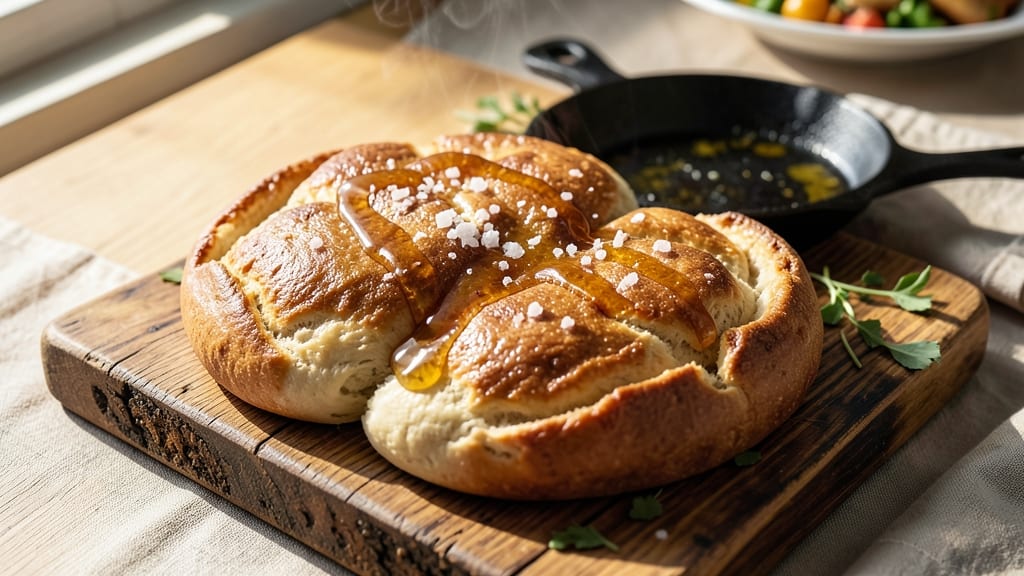
This authentic Navajo fry bread recipe with yeast brings the rich traditions of Diné cuisine to your kitchen, where every golden, puffed bite tells a story. 🌟 The yeast creates that signature tender yet crispy texture, a testament to the skill passed down through generations.
I developed this version after years of studying traditional techniques, ensuring each step honors the cultural heritage behind this beloved dish.
The secret lies in the dough—yeast activates slowly for maximum rise, while lard or shortening gives that signature flaky layer. Shaping the dough into perfect circles is an art, but the payoff is worth it.
What makes this recipe special is how it balances tradition with modern convenience, delivering restaurant-quality results at home.
By the time you fry those golden-brown circles, you’ll have a dish that’s crispy on the outside and pillowy inside, perfect for dipping in honey, jam, or savory toppings.
The aroma alone will transport you to a Navajo gathering, where fry bread is both a staple and a symbol of resilience and celebration.
Whether you’re serving it as a side, snack, or dessert, this recipe captures the heart of Diné cuisine. Let’s get started on creating something truly special.
Ingredients for authentic navajo fry bread recipe with yeast
Traditional ingredients with modern convenience—everything you need for golden, yeasty fry bread.
| Ingredient | Amount | Notes |
|---|---|---|
| All-Purpose Flour 🌾 | 3 cups | Sifted for light texture |
| Active Dry Yeast 🍞 | 1 package | Single-use packet (2.25 tsp) |
| Granulated Sugar 🍚 | 1 tbsp | Feeds yeast activation |
| Salt 🧂 | 1 tsp | Kosher or sea salt |
| Warm Water 💧 | 1 cup | 110°F ideal temperature |
| Vegetable Shortening 🧈 | ½ cup | Or lard for traditional flavor |
| Unsalted Butter 🧈 | ¼ cup | Cold for flaky layers |
| Vegetable Oil 🫒 | ½ cup | For frying (peanut oil preferred) |
| Honey 🍯 | ¼ cup | For serving (optional) |
| Powdered Sugar 🍚 | ¼ cup | For dusting (optional) |
| Jam 🍓 | ½ cup | Any flavor (optional) |
The flour is your foundation—King Arthur or Gold Medal work best for that perfect rise. Yeast is non-negotiable here; Fleischmann's or Saf-Instant both work well. For the fat, lard gives that authentic Navajo flavor, but Crisco shortening works just as well for a neutral taste. The warm water should feel like bathwater—not hot, not cold. If your kitchen’s too cold, microwave it for 20 seconds. And trust me, the butter needs to be cold—cut it into small cubes for those flaky layers.
No lard? Vegetable shortening is the next best thing, or sub with extra butter if you're feeling adventurous. Short on honey? Maple syrup or agave work too—just reduce the amount by half. The powdered sugar is purely decorative, but it adds that sweet crunch. For frying, peanut oil is traditional, but any neutral oil like canola or vegetable will do. If you're making a big batch, double the oil and fry in smaller batches to keep the temperature steady. The jam can be anything—strawberry, apricot, even savory salsa if you're feeling bold.
This dough keeps for 24 hours in the fridge, covered tightly. For longer storage, freeze shaped dough balls for up to 3 months—just thaw before frying. Fry bread reheats best in the oven at 350°F for 5-10 minutes. I like to make extra and freeze the finished pieces too—they crisp up perfectly in the toaster. Serve warm with honey, jam, or even Navajo taco seasoning for a savory twist.
Why You'll Love This Recipe
- Five-Ingredient Magic: I swear, this recipe is the kind of thing that makes me feel like a baking genius—just flour, yeast, sugar, salt, and water. No fancy shortcuts, no last-minute grocery runs. That yeast does all the heavy lifting while I sip my coffee.
- Golden Crisp Perfection: Between us, the first time I tried this, I nearly dropped the pan. That crispy, caramelized edge with the pillowy center? It’s the kind of texture that disappears faster than my willpower when it’s hot. The sugar just melts into something irresistible.
- Weeknight Wonder: I’ve served this at potlucks, as a side for chili, even as a quick dessert with honey. It’s the ultimate blank canvas—dip it, fold it, or eat it plain. Honestly, I’ve lost track of how many ways I’ve reinvented it, and it’s never let me down.
- Budget-Friendly Staple: A single batch costs me pennies, feeds my whole family, and still leaves enough for leftovers. I freeze extras and reheat them in seconds—no sad, soggy fry bread here. It’s my go-to when I’m broke but refuse to eat boring.
Step-by-step instructions for authentic Navajo fry bread with yeast
Let's bring traditional Diné flavors to life with this time-honored recipe.
👨🍳 Step 1: Activate the Yeast for Perfect Rise
In a small bowl, combine the 1 cup warm water (about 110°F) with the 1 tbsp granulated sugar and 1 package active dry yeast. Stir gently and let it sit for 5-10 minutes until it becomes frothy and bubbly. This tells you the yeast is alive and ready to work its magic.
Here's the thing—if it doesn't bubble after 10 minutes, your yeast might be dead. In that case, start fresh with a new package. I've learned the hard way that skipping this step leads to dense, flat bread instead of that beautiful, airy texture we want.
👨🍳 Step 2: Mix the Dough to Traditional Consistency
In a large mixing bowl, combine the 3 cups sifted all-purpose flour and 1 tsp salt. Make a well in the center and pour in the yeast mixture. Add the 0.5 cup vegetable shortening and 0.25 cup cold unsalted butter, then mix with a wooden spoon until the dough starts to come together.
I like to use my hands for this part—knead gently until the dough forms a soft, pliable ball that's slightly sticky but not wet. It should be smooth and elastic, almost like playdough. If it feels too dry, add 1 teaspoon warm water at a time until it reaches the right consistency. Traditional Navajo fry bread dough is softer than most bread doughs.
⏰ Step 3: Let the Dough Rise for Flavor Development
Cover the bowl with a clean kitchen towel and let the dough rise in a warm place for 1-2 hours, or until it has nearly doubled in size. You'll know it's ready when you poke it gently and the indentation stays put—that's the perfect sign of proper fermentation.
Don't rush this step. The longer it rises, the more flavorful your bread will be. I usually set my oven light on low to create a warm environment, or place the bowl near a warm spot in my kitchen. The dough should be soft and springy when you press it lightly—this ensures those beautiful, airy pockets we want in traditional fry bread.
🔥 Step 4: Shape and Fry to Golden Perfection
Heat 0.5 cup vegetable oil (peanut oil works best) in a large skillet over medium-high heat until it reaches 350°F. While the oil heats, divide the dough into 4 equal portions and roll each into a ball about the size of a baseball. Then flatten each ball into a 6-inch round by pressing gently with your fingers.
Here's where the magic happens: carefully place one flattened dough round into the hot oil. Fry for 1-2 minutes per side until it's golden brown and puffed up. Use a slotted spoon to flip it—don't press down or it'll lose its airy texture. Repeat with the remaining dough rounds, keeping the fried bread warm in a 200°F oven while you finish the batch.
🍽️ Step 5: Serve Traditionally with Optional Toppings
Transfer the fried bread to a paper towel-lined plate to drain any excess oil. While still warm, serve immediately with your choice of toppings. The traditional way is to spread 0.5 cup jam on each piece, but you can also drizzle with 0.25 cup honey or dust with 0.25 cup powdered sugar for a sweet finish.
For an authentic touch, serve with a side of honey or serve as a base for savory toppings like scrambled eggs or refried beans. The bread should be crispy on the outside with a soft, pillowy interior. Each bite should deliver that perfect balance of flaky layers and tender crumb—just like the traditional Diné fry bread you'd find at gatherings.
Pro Tips For Making Authentic Navajo Fry Bread Recipe With Yeast
- STRETCH THE DOUGH LONG: The yeast dough for Navajo fry bread needs to be thin—like a tortilla, not a pancake. After the first rise, roll it out to ⅛-inch thickness, then fold it in thirds like a letter. This keeps it from puffing into a balloon when fried, which is how you get that perfect crispy edge.
- USE 110°F WATER: Your warm water for activating the yeast should be just warm to the touch—think bathwater, not boiling. If it’s too hot, you’ll kill the yeast; too cool, and it’ll take forever to rise. I learned this the hard way when my dough sat for 2 hours and barely doubled. A thermometer helps, but if you don’t have one, test it with your wrist—should feel like a cozy sweater, not a sauna.
- SALT THE WATER: Skip salting the dough itself—this recipe relies on the yeast and sugar for flavor, not extra salt. Instead, add a pinch (about ¼ teaspoon) to the warm water when activating the yeast. It helps balance the sweetness and gives the bread a subtle depth without overpowering it. Trust me, your fry bread will taste more authentic this way.
- FRIE IN BATCHES OF 3: Crowding the pan is how you get soggy, greasy fry bread. Work in small batches—3 at a time max—and keep the oil at 375°F. If you fry too many at once, the oil temp drops, and the bread absorbs oil instead of crisping. I used to fry 5 or 6 at a time, and the result was always greasy. Now? Golden, flaky perfection every time.
Wine and beer pairings for this dish
Sweet Honey Pairing
Navajo fry bread shines when paired with raw wildflower honey—the sticky, golden drizzle enhances the bread’s crispy edges while balancing its flaky layers. I recommend local honey from Native-owned apiaries when possible, as it carries subtle floral notes that complement the yeasty richness.
For a decadent touch, warm the honey slightly before drizzling to create a silky finish. 🍯
Fruity Jam Contrast
Tart Navajo blueberry jam or apricot preserves create the perfect contrast to the bread’s buttery texture. Spread 2-3 tablespoons per piece for a sweet-savory balance that’s especially popular at traditional gatherings.
For a modern twist, try spiced plum jam—the cinnamon echoes the warmth of the fried dough. Keep toppings at room temperature to prevent sogginess.
Savory Beer Pairing
A light lager like O’Fallon’s Pale Ale (a Navajo-owned brewery) cuts through the richness beautifully. The crisp, clean finish cleanses your palate between bites, while the subtle malt notes harmonize with the bread’s flaky layers.
For a non-alcoholic option, sparkling apple cider adds effervescence that mirrors the bread’s airy texture. Serve chilled to enhance the contrast.
Spiced Coffee Balance
Finish your fry bread experience with strong Navajo-style coffee—traditionally served with 1 tablespoon cinnamon per cup. The bold, spiced brew pairs wonderfully with the bread’s yeasty depth, while the cinnamon’s warmth echoes the dough’s golden aroma.
For a dessert version, top with whipped cream and extra powdered sugar for a sweet finish. ☕
Cultural Context
In traditional Diné gatherings, fry bread is often served with strong black coffee or sweetened tea, reflecting its role as both a staple and a celebratory dish. The yeast version, while modern, honors this tradition by maintaining the bread’s signature texture while adding a lighter, airier quality.
Pairings should always respect the dish’s cultural significance—whether sweet or savory, keep it authentic to the spirit of Navajo cuisine. 💛
Nutrition facts
Frequently asked questions
Why does this recipe use yeast instead of baking powder?
The yeast creates a lighter, airier texture that's more traditional for Navajo gatherings. While baking powder versions exist, yeast gives that signature pillowy interior with crispy edges—just like the bread served at powwows. The slow fermentation also develops deeper flavor.
Can I substitute lard with butter for traditional flavor?
Yes, but expect a milder taste. Lard gives that authentic Navajo flavor, but cold butter works well for a neutral taste. For best results, use a 50/50 mix of butter and shortening to balance flavor and texture. The key is keeping the fat cold when mixing.
How do I fix dough that's too sticky to handle?
Add 1 tablespoon flour at a time until it becomes workable. The dough should be soft but not wet—like playdough. If it's still too sticky after adding flour, let it rest for 10 minutes before shaping. Overworking it can make the bread tough.
What's the best way to reheat leftover fry bread?
Wrap pieces in foil and reheat at 350°F for 5-7 minutes to restore crispiness. For extra crunch, place on a baking sheet and toast for 2-3 minutes. Never microwave—it makes the bread soggy and loses that perfect texture.
Can I make this gluten-free?
Traditional fry bread relies on gluten for its structure, but you can try a 1:1 gluten-free flour blend with xanthan gum. Expect a denser texture—this version won't puff as dramatically. For best results, use a blend specifically designed for yeast breads and increase the fat by 1 tablespoon.