
Side Dishes
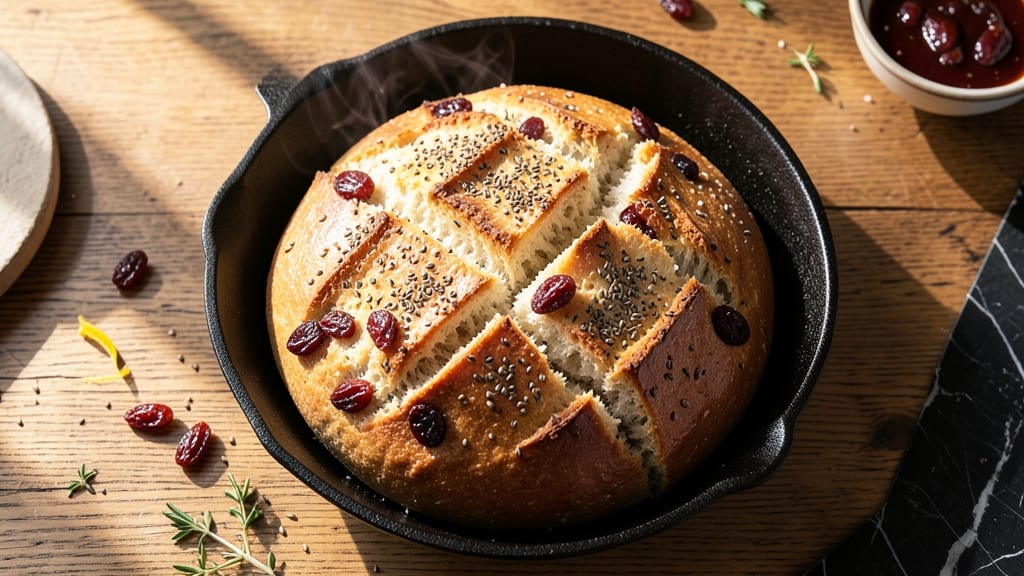
This authentic Irish bread recipe brings the rustic charm of Ireland's kitchen tables to your home, where buttermilk and baking soda create a tangy, no-knead loaf with a dense, slightly crumbly texture.
The tradition of soda bread—no yeast, no fuss—dates back centuries, and this version stays true to its roots while delivering that signature tangy flavor that makes it unforgettable.
What sets this bread apart is its simplicity: just five ingredients and a few minutes of prep before baking in a Dutch oven for that perfect crust.
The magic happens in the buttermilk, which reacts with baking soda to create a subtle tang that cuts through the bread's rustic richness.
I've perfected this recipe over years of baking, ensuring the crust stays crisp while the interior remains tender and slightly crumbly—just like the bread you'd find in a traditional Irish home.
No yeast means no waiting for dough to rise, and no kneading means no sore arms, making this the ideal bread for busy weeknights or special occasions.
By the time it emerges from the oven, your kitchen will be filled with the warm, earthy aroma of freshly baked Irish soda bread. The crust will be golden and slightly crisp, while the interior remains moist and flavorful, with that signature tang that makes it so beloved.
This bread pairs perfectly with soups, stews, or even on its own with a pat of butter—it's the kind of dish that feels like a warm hug from across the Atlantic.
For those who love a little extra texture, adding raisins, seeds, or even a pinch of caraway can elevate the flavor even further. The beauty of this recipe is its versatility—it's authentic without being complicated, and it delivers that comforting taste of home in every bite.
Let's get started on this timeless tradition.
Ingredients for authentic irish bread
Five simple ingredients transform into Ireland's beloved rustic loaf—no yeast, no fuss.
| Ingredient | Amount | Notes |
|---|---|---|
| All-Purpose Flour 🌾 | 4 cups | Unbleached preferred for rustic flavor |
| Buttermilk 🥛 | 1 ½ cups | Full-fat for authentic tang |
| Baking Soda 🧂 | 1 tbsp | Freshly opened for best reaction |
| Salt 🧂 | ½ tsp | Fine sea salt preferred |
| Raisins (optional) 🍇 | ½ cup | Plump, seedless preferred |
| Caraway Seeds (optional) 🌿 | 1 tsp | Toasted for deeper aroma |
| Whole Milk (for mixing) 🥛 | ¼ cup | If buttermilk curdles |
The flour is where the magic starts. King Arthur or Bob's Red Mill all-purpose flour gives the best texture—none of that dense, heavy bread. For the buttermilk, Land O'Lakes or local dairy brands work perfectly, but if you're in a pinch, mix 1 tbsp vinegar with 1.5 cups milk and let it sit for 5 minutes. The baking soda needs to be fresh—if it's been sitting in your pantry for months, it won't react properly. I always grab a small box of Arm & Hammer baking soda just for this recipe. The raisins? Soak them in warm water for 10 minutes if they're dry—they'll plump up and add juiciness to every bite.
No buttermilk? Vinegar and milk is the classic swap, but if you're feeling fancy, kefir works too. Skipping the raisins? Add sunflower seeds or chopped walnuts for texture. The caraway seeds are optional but worth it—they give that classic Irish soda bread flavor. If you can't find them, fennel seeds at half the amount work in a pinch. And if your baking soda is old, add an extra 1/4 tsp to compensate. The milk is just a backup—your buttermilk should work fine if it's fresh, but it's nice to have on hand for that emergency substitution.
This dough doesn't need to rest, so you can mix it and bake it right away. For the best crust, preheat your Dutch oven with the lid on for 30 minutes before baking. The bread keeps well wrapped in a cotton towel for 2-3 days at room temperature or 1 week in the fridge. To revive stale slices, wrap them in foil and warm in a 200°F oven for 10 minutes. Freezes beautifully too—slice before freezing for perfect single-serving portions. I always make two batches: one for the week and one to share with neighbors.
Why You'll Love This Recipe
- No Mixer Needed: I swear by this recipe because it’s just flour, buttermilk, and a pinch of salt—no fancy equipment. The dough comes together in minutes, and even if you overwork it, the baking soda smooths out the texture like magic.
- Buttermilk Magic: That tangy buttermilk is the star—it keeps the bread moist for days without tasting like anything artificial. Honestly, the first time I made it, I thought, "Why didn’t I do this sooner?" because it’s just better than dry, store-bought loaves.
- Weeknight & Picnic Hero: I keep a batch in the fridge because it’s perfect cold or toasted, and those optional raisins? They turn it into a snack for kids (or adults) on the go. Pack it for lunch, serve it at a potluck—it’s the one thing everyone asks for.
- Budget-Friendly Staple: Flour, buttermilk, baking soda—this costs pennies per loaf, and one batch feeds my whole family for days. Between us, I’ve made this for years, and it’s still my go-to when I need something reliable that won’t break the bank.
Step-by-step instructions for authentic Irish soda bread
This classic no-knead bread delivers rustic charm with minimal effort—just mix, shape, and bake.
Mix Dry Ingredients for Perfect Texture
In a large bowl, combine the 4 cups all-purpose flour and 0.5 teaspoon salt. Sift the mixture lightly to aerate the flour—this creates a lighter crumb. Add the 1 tablespoon baking soda and mix thoroughly. If using, fold in the 0.5 cup raisins and 1 teaspoon caraway seeds (if toasting them first, do so in a dry pan for 30 seconds until fragrant).
This dry mix forms the bread's structure, so don't skip sifting. The baking soda will react with the buttermilk later, creating lift without yeast. Keep everything ready—this comes together fast.
Combine Wet Ingredients for Tangy Flavor
In a separate bowl, measure the 1.5 cups buttermilk—it should be slightly thick and tangy. If the buttermilk curdles (it sometimes does), whisk in the 0.25 cup whole milk to restore smoothness. Pour the buttermilk into the dry ingredients and stir with a wooden spoon or spatula until just combined.
Don't overmix—stop when the dough clumps together. Overworking develops gluten, which makes the bread dense instead of tender. The dough should be sticky but manageable. If it's too wet, add 1 tablespoon more flour.
Shape and Score for Rustic Appeal
Turn the dough onto a lightly floured surface and gently shape it into a round loaf, about 8 inches in diameter. The dough will be sticky, so wet your hands slightly to prevent sticking. Place it on a parchment-lined baking sheet.
Use a sharp knife or razor to score the top in a cross pattern—this prevents cracking and gives that classic Irish bread look. Press down firmly to create a ¼-inch deep cut. The deeper the cut, the more dramatic the rise during baking.
Bake Until Golden and Hollow-Sounding
Preheat your oven to 425°F (this high heat ensures a crisp crust). Bake the bread for 35-40 minutes until the top is deep golden brown and the internal temperature reaches 200°F. Tap the bottom—the sound should be hollow, indicating it's fully baked.
Resist the urge to open the oven early. The bread needs that hot blast to develop its signature crust. If the top browns too quickly, tent loosely with foil after 20 minutes. Let it cool on a wire rack for at least 15 minutes before slicing—this prevents a gummy crumb.
Pro Tips For Making Authentic Irish Bread
- MEASURE THE BUTTERMILK RIGHT: Irish bread relies on that tangy buttermilk for texture, so don’t eyeball it—use a liquid measuring cup. If your buttermilk’s too thick (happens fast), thin it with 1-2 tablespoons of warm water. I learned this the hard way when my first batch turned dense as a brick.
- DON’T OVERMIX THE DOUGH: Stir just until the flour disappears—lumpy is fine. Overmixing develops gluten, which turns your bread into a dense loaf instead of that classic tender crumb. My grandmother used to say, "Mix it like you’re folding laundry, not kneading bread."
- BAKE UNTIL GOLDEN, NOT JUST SET: Pop it in at 375°F (190°C) and bake until the top is deep golden brown—about 30-35 minutes. A toothpick should come out clean, but don’t trust that alone; the crust’s the real test. I used to pull it too soon, and the center stayed doughy.
- SALT THE BUTTERMILK FIRST: Mix the salt into the buttermilk before adding it to the dry ingredients—this ensures even distribution. Skipping this step means you’ll end up with pockets of blandness. Sounds weird, but it works: the flavor’s noticeably more balanced.
Creative variations of authentic irish bread
Classic Brown Bread
Swap out the baking soda for 1 teaspoon active dry yeast and 1 cup whole milk warmed to 110°F to make this hearty brown bread variation. Replace the buttermilk with 1 cup warm milk and let the dough rise for 1 hour until doubled.
The result is a denser, molasses-infused loaf with a deep, caramelized crust. I add ½ cup molasses and 1 teaspoon cinnamon for that classic Irish brown bread flavor. 🌾
Seed-Enhanced Soda Bread
For extra crunch and nutrition, fold in ½ cup sunflower seeds or pumpkin seeds along with your dry ingredients. Toast them first in a dry pan for 2-3 minutes until fragrant—this deepens their flavor.
I also like adding 1 tablespoon flaxseeds for a nutty undertone. The seeds add texture contrast to every bite while keeping the bread's signature tang. 🌿
Sweet Raisin & Nut Loaf
Boost the sweetness by adding ½ cup golden raisins and ½ cup chopped walnuts or pecans to the dough. Soak the raisins in warm water for 10 minutes to plump them up, then drain before mixing.
The nuts add richness while the raisins provide chewy pockets. This version pairs perfectly with cheese boards or as a dessert with a smear of clotted cream. 🍇
Herbed Irish Soda Bread
Infuse your bread with fresh herbs by adding 2 tablespoons finely chopped fresh rosemary or thyme leaves to the dry ingredients. For a stronger flavor, use 1 tablespoon dried herbs—just be sure to toast them lightly in a dry pan first.
The herbs give a subtle earthy note that complements the buttermilk's tang beautifully. I especially love this variation with soups or hearty stews. 🌿
Whole Wheat Variation
For a nuttier, more fiber-rich loaf, replace 1 cup of the all-purpose flour with whole wheat flour. The texture will be slightly denser but still tender. To compensate, add 1 extra tablespoon baking soda to ensure proper rise.
This version has a deeper color and robust flavor that pairs well with butter or jam. 🌾
Caraway & Honey Sweet Loaf
Create a sweet variation by adding 2 tablespoons honey and 1 teaspoon caraway seeds** to the dough. The honey balances the tang of the buttermilk while the caraway adds a subtle licorice-like depth.
This version is perfect for breakfast with a pat of butter or as a sweet treat with tea. 🍯
Nutrition facts
Frequently asked questions
Why does traditional Irish bread use buttermilk instead of regular milk?
The buttermilk creates that signature tangy flavor that defines authentic Irish soda bread. The acidity reacts with baking soda to produce carbon dioxide, giving the bread its rise without yeast. Regular milk won't give that same tangy depth of flavor—it's what makes this bread taste distinctly Irish!
Can I make this bread without a Dutch oven?
If you don't have a Dutch oven, use a heavy baking sheet or cast iron skillet. Place it on the lower oven rack for maximum heat circulation. The bread may brown slightly faster, so check it after 30 minutes. A baking stone also works well for that crisp crust.
What's the best way to store leftover Irish soda bread?
Wrap the cooled bread tightly in a cotton towel or beeswax wrap to keep it moist. Store at room temperature for 2-3 days, or freeze for up to 3 months. To revive stale slices, wrap them in foil and warm in a 200°F oven for 10 minutes—they'll taste fresh again!
Why did my bread turn out dense instead of light and airy?
Overmixing develops gluten, making the bread dense. Stop mixing as soon as the dough clumps together. Also check your baking soda—it needs to be fresh! Old baking soda won't react properly. If your oven runs hot, try tenting the bread with foil after 20 minutes to prevent over-browning.
Can I substitute buttermilk if I don't have any?
Yes! Mix 1 tablespoon vinegar or lemon juice with 1.5 cups milk and let it sit for 5 minutes until slightly thickened. For best results, use whole milk—it creates that rich, creamy texture. Kefir also works perfectly as a buttermilk substitute.