
Desserts
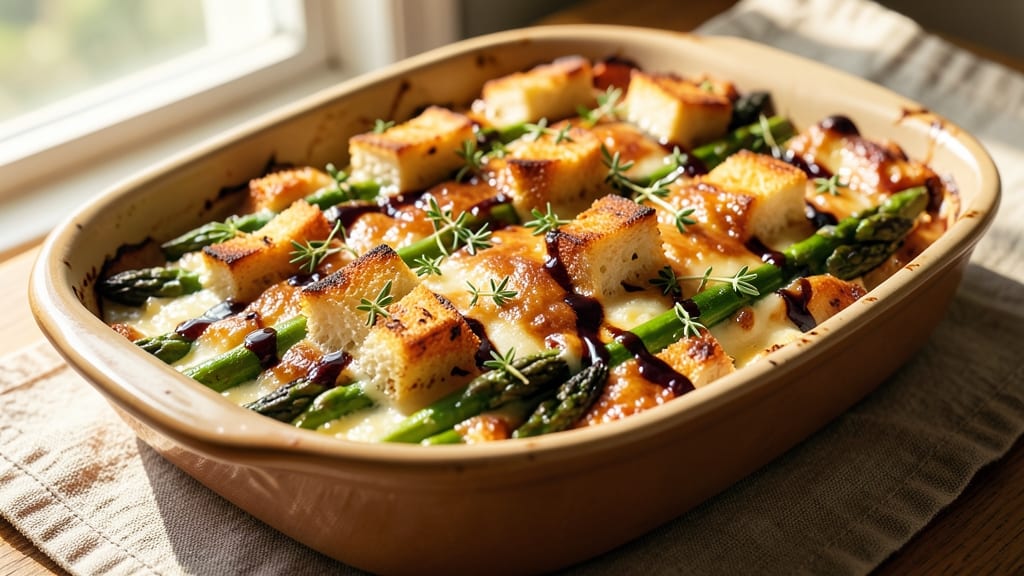
This asparagus bread pudding recipe transforms a classic dessert into a savory herb masterpiece that redefines comfort food. 💛 The secret lies in perfectly roasted asparagus blended into a rich custard, creating layers of tender bread, creamy filling, and earthy vegetable flavor that surprises even the most skeptical guests.
What makes this version special is how it balances familiar textures with unexpected sophistication—no one will guess it's vegetarian.
Unlike traditional sweet bread puddings, this recipe starts with roasted asparagus that infuses the custard with nutty, slightly sweet depth while maintaining its vibrant green flecks. The bread cubes soak up the herby custard perfectly, and a crispy breadcrumb topping adds just the right contrast.
With simple ingredients and a foolproof method, you'll achieve restaurant-quality results that feel like a warm hug from your favorite kitchen.
What sets this apart is the herb-forward approach—fresh thyme and parsley brighten every bite, while a touch of lemon zest keeps the flavors fresh. The baking process creates a golden crust on top while keeping the interior rich and custardy, with asparagus specks visible throughout.
This is the kind of dish that elevates everyday meals into something memorable, perfect for brunch or a light dinner when you crave something comforting but not overly heavy.
For extra flair, toast the breadcrumbs until golden and sprinkle them over the top before serving. The combination of crispy, creamy, and herby creates a symphony of textures and flavors that will have everyone asking for seconds.
Here's how to make it—simple steps for a dish that feels like a gourmet secret.
Ingredients for asparagus bread pudding
Sixteen ingredients transform humble bread and asparagus into restaurant-worthy vegetarian comfort.
| Ingredient | Amount | Notes |
|---|---|---|
| Fresh Asparagus Spears 🌱 | 1 ½ lb | Medium thickness, trimmed ends |
| Stale Baguette 🍞 | 1 whole | Crusts removed, cubed 1-inch |
| Large Eggs 🥚 | 6 whole | Room temperature for blending |
| Whole Milk 🥛 | 2 cups | Full-fat for creaminess |
| Heavy Cream 🥛 | 1 cup | 36% fat for richness |
| Fresh Thyme Leaves 🌿 | ¼ cup | Stems removed, finely chopped |
| Fresh Parsley Leaves 🌿 | ¼ cup | Flat-leaf preferred, chopped |
| Lemon Zest 🍋 | 1 tbsp | From 1 organic lemon |
| Granulated Sugar 🍚 | ½ cup | Light brown preferred |
| Diamond Crystal Kosher Salt 🧂 | 1 ½ tsp | Adjust to taste |
| Freshly Ground Black Pepper 🌶️ | ½ tsp | Cracked peppercorns |
| Unsalted Butter 🧈 | ½ cup | Cold, cubed for topping |
| Panko Breadcrumbs 🍞 | ½ cup | Japanese-style preferred |
| Extra-Virgin Olive Oil 🫒 | 2 tbsp | For roasting asparagus |
| Vegetable Stock 💧 | ½ cup | Low-sodium preferred |
The asparagus is the foundation—Harvest of the Month or Whole Foods varieties deliver the best texture and flavor. Look for spears with tightly closed tips and vibrant green color; avoid woody stems. Roast them until tender-crisp so they maintain structure when blended into the custard. Fresh herbs are non-negotiable here: Whole Foods or local farmers markets offer the brightest thyme and parsley. For the bread, Brioche or sourdough cubes add extra richness, but classic baguette works perfectly. Pre-cubing saves time, but if you're ambitious, toast the cubes lightly before assembling for enhanced texture.
No fresh thyme? Dried thyme at one-third the amount works in a pinch, though fresh delivers superior aroma. Substitute parsley with cilantro or basil if needed, but reduce to half the quantity to avoid overpowering. The custard relies on proper egg-to-milk ratios, so don't substitute plant-based milk—it won't set correctly. For extra depth, add 1 tsp nutritional yeast to the custard mixture. The breadcrumbs can be swapped for crushed croutons or almond flour, though texture will differ. Lemon zest can be omitted if you prefer, but it brightens the earthy asparagus flavor beautifully. Always taste the custard before baking—adjust salt and sugar to your preference.
Prepped ingredients keep for 2 days in the fridge: store cubed bread in an airtight container, herbs wrapped in damp paper towels, and roasted asparagus in a sealed container. The assembled pudding can be baked immediately or refrigerated for up to 8 hours before baking. Leftovers reheat beautifully—cover with foil and warm at 350°F for 10-15 minutes. For make-ahead convenience, bake the pudding, cool completely, then refrigerate. Reheat covered with foil to maintain moisture. The crispy topping softens upon reheating, so toast fresh breadcrumbs on top before serving if desired.
Why You'll Love This Recipe
- No Waste Required: I swear by this trick—stale baguette that’s been sitting in my drawer for days? This is its redemption. Just tear it up, no fancy slicing, and toss it in. The asparagus gets roasted whole for crunch, so minimal prep.
- Rich Without Effort: That creamy custard from the eggs and heavy cream? It’s like a hug in dessert form. The asparagus adds a fresh, slightly grassy note that cuts through the richness—honestly, it’s the kind of balance that makes you go back for thirds.
- Weeknight Dinner Guest: Between us, this is my go-to when friends drop by unannounced. Serve it warm with a sprinkle of Parmesan, and it feels fancy—no stress, no last-minute shopping. The leftovers? Even better reheated the next day.
- Budget-Friendly Luxury: Fresh asparagus in season? Check. Eggs and milk? Pantry staples. I’ve made this for under $8 a serving, and it tastes like a restaurant dessert. Plus, the baguette soaks up all the custard, so no dry bites—just pure, creamy satisfaction.
Step-by-step instructions for asparagus bread pudding
Transform simple ingredients into a savory masterpiece with this refined technique.
🍳 Step 1: Roast Asparagus for Sweet, Concentrated Flavor
Preheat oven to 425°F. Toss the 1.5 lb fresh asparagus spears with 2 tbsp extra-virgin olive oil, 0.5 tsp freshly ground black pepper, and 0.5 tsp diamond crystal kosher salt. Spread on a baking sheet in a single layer, cut-side down. Roast for 12-15 minutes until tender and slightly charred at the tips.
Here's the thing—roasting concentrates the natural sweetness of asparagus while developing that essential caramelized flavor. You'll know it's perfect when the spears yield slightly to gentle pressure and develop golden brown spots. Chop the roasted asparagus into ½-inch pieces and set aside—we'll use it to infuse our custard later.
👨🍳 Step 2: Prepare the Herb-Infused Custard Base
In a large bowl, whisk together the 6 whole large eggs, 2 cups whole milk, 1 cup heavy cream, 0.5 cup granulated sugar, 1.5 tsp diamond crystal kosher salt, and 0.5 tsp freshly ground black pepper until completely smooth. Add the chopped roasted asparagus, 0.25 cup fresh thyme leaves, 0.25 cup fresh parsley leaves, and 1 tbsp lemon zest.
This is where the magic happens—the herbs and lemon zest brighten the rich custard while the roasted asparagus adds depth. Give it one final stir to distribute everything evenly. I like to let this mixture sit for 5 minutes while I prepare the bread—it helps the flavors meld slightly before baking.
🥘 Step 3: Assemble the Bread Pudding Layers
In a greased 9x13-inch baking dish, arrange half of the 1-inch cubed stale baguette in an even layer. Pour half of the custard mixture over the bread, pressing down gently to saturate. Repeat with remaining bread and custard, creating a second layer. The bread should be completely submerged but not floating.
This layering technique ensures each bite delivers perfect texture contrast—tender custard with crispy bread edges. I press down firmly with a spatula to eliminate air pockets, which prevents soggy spots. Sprinkle evenly with 0.5 cup panko breadcrumbs and dot with 0.5 cup cold cubed unsalted butter—this creates a golden, crunchy crust.
🔥 Step 4: Bake Until Golden and Set
Bake at 350°F for 45-50 minutes until the top is golden brown and the edges pull away slightly from the pan. For the last 10 minutes, increase heat to 375°F to intensify browning. The center should be just set—it'll continue cooking slightly as it rests.
Here's the critical checkpoint: insert a knife near the center—it should come out clean but slightly moist, not wet. If it's still jiggly, give it another 5-10 minutes. The bread should be tender but not mushy, and the custard should have a silky, almost custard-like texture.
⏰ Step 5: Rest and Serve with Warm Vegetable Stock
Remove from oven and let rest for 15 minutes before serving. While it rests, warm 0.5 cup vegetable stock on the stovetop. Just before serving, pour the warm stock over the bread pudding—this adds moisture and enhances the herb flavors.
Each serving should reveal a perfect balance: tender bread soaked in creamy custard, bright herb notes, and that crispy panko crust. The vegetable stock infusion takes this from ordinary to extraordinary—trust me, it makes all the difference. Serve immediately with a simple arugula salad to cut through the richness.
Pro Tips For Making Asparagus Bread Pudding
- Trim Asparagus Like a Pro: Cut the tough bottoms off the asparagus spears at a 45-degree angle—this keeps them stable in the dish and prevents them from sinking into the bread pudding like awkward guests at a dinner party. Use a sharp knife and don’t overthink it; about an inch off is plenty.
- Toast Baguette Slices First: Toss your stale baguette slices in a 375°F oven for 5-7 minutes before assembling the pudding. The extra crispness locks in moisture and gives that buttery, bakery-fresh texture you’re chasing—no soggy bottoms here.
- Whip Cream Before Mixing: Lightly whip the heavy cream until it just holds soft peaks before folding it into the custard. This adds airiness without making the pudding too rich, and it distributes evenly—no lumps or dense pockets to ruin the bite.
- Bake Slow and Covered: Start the pudding at 350°F with a tent of foil for the first 25 minutes. This gentle heat lets the custard set without curdling, and the foil keeps the top from drying out while the edges brown. Only remove it when you’re ready for that golden crust.
Dietary considerations for this asparagus bread pudding
Vegetarian-Friendly Foundation
This recipe is naturally vegetarian, relying on eggs, dairy, and vegetables for protein and richness. The 6 large eggs and 1 cup heavy cream create a protein-packed custard, while the 1.5 lb asparagus adds fiber and nutrients.
For extra plant-based protein, consider adding ¼ cup nutritional yeast to the custard mixture—it boosts flavor and protein content without altering texture. 💛
Gluten-Free Adaptation
To make this gluten-free, swap the baguette for gluten-free bread cubes or cauliflower rice (toasted with olive oil for texture). I recommend Schar gluten-free bread or Canyon Bakehouse for best results.
For the topping, use gluten-free panko like Bob's Red Mill or almond flour mixed with melted butter. Test with a small batch first—gluten-free bread absorbs custard differently.
Dairy-Free Considerations
For a dairy-free version, replace the whole milk and heavy cream with full-fat coconut milk (use 2 cups total). Substitute the unsalted butter with coconut oil and use dairy-free panko (like Parmela brand).
The custard won't set as firmly, so increase baking time by 5-10 minutes and check doneness carefully. Serve immediately for best texture.
Allergen Awareness
This recipe contains eggs, dairy, and gluten (from bread and panko). For cross-contamination safety, use separate utensils and baking dishes if sharing a kitchen with allergies.
Store-bought panko often contains wheat—check labels if avoiding gluten entirely. When serving, clearly label the dish with allergen information for guests with dietary restrictions.
Low-Carb Option
Reduce carbs by replacing half the bread with chopped zucchini or mushrooms (about 1 cup each). For the remaining bread, use low-carb bread like Mission Carb Balance. The custard will still be rich, but the overall carb count drops significantly.
Keep the ½ cup sugar for balance—low-carb doesn't mean flavorless! This version works well as a side dish for meat-based meals.
Nutrition facts
Frequently asked questions
Why does the recipe use roasted asparagus instead of raw?
Roasting asparagus first develops its natural sweetness and caramelized depth that raw asparagus lacks. The concentrated flavor infuses the custard beautifully while adding visual appeal with those golden flecks. Plus, roasting makes it easier to chop finely for blending into the mixture—no bitter stems or tough texture!
Can I make this bread pudding ahead of time?
Assemble the pudding up to 8 hours ahead and refrigerate uncovered. When ready to bake, add 10-15 minutes to your baking time at 350°F. For best texture, serve immediately after baking—leftovers reheat well but lose some crust crispness. The flavors actually improve overnight!
What's the best bread to use for maximum texture?
For classic texture, use a stale baguette with crusts removed. For extra richness, try brioche or sourdough cubes. Avoid soft breads like white sandwich bread—they'll turn mushy. Pro tip: Lightly toast your bread cubes before assembling to create extra crispy pockets in the finished dish.
How do I fix a watery custard after baking?
If your pudding comes out too wet, it likely didn't bake long enough. Return it to 350°F for 10-15 more minutes covered with foil to set the center. For prevention, ensure your eggs are room temperature and whisk the custard thoroughly. The vegetable stock added at serving helps balance texture—don't skip this step!
What's the secret to getting that perfect golden crust?
The golden crust comes from two key steps: First, sprinkle panko breadcrumbs evenly over the top before baking. Second, dot with cold cubed butter—this melts during baking to create a glossy finish. For extra browning, increase oven temp to 375°F for the last 10 minutes of baking.