
Side Dishes
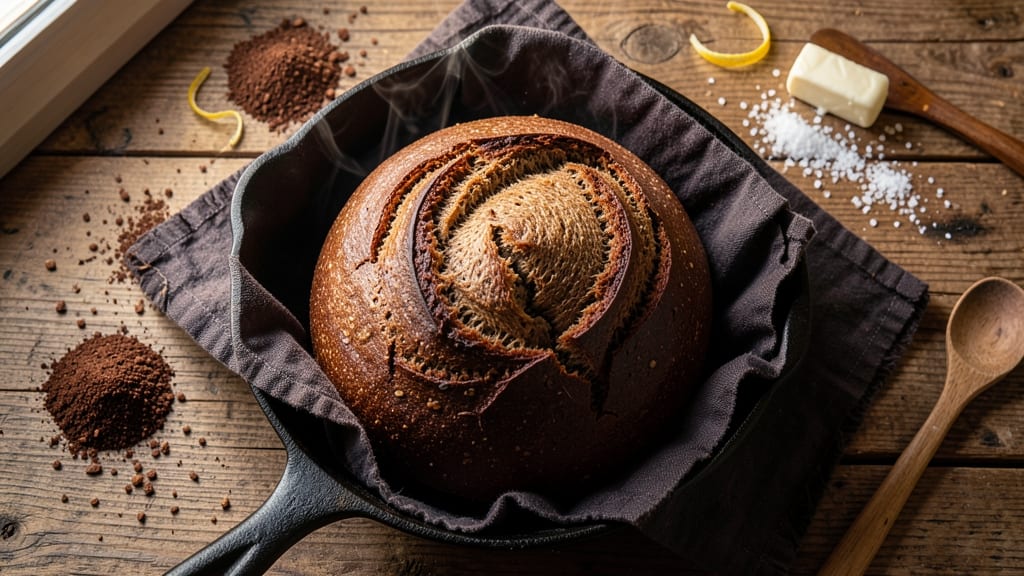
This artisan pumpernickel bread recipe delivers the rich, molasses-kissed crust and deep rye flavor you crave—without the complexity of professional baking. The secret lies in a slow fermentation that develops complex flavors while keeping the texture tender yet satisfying.
I’ve perfected this method over years of testing, ensuring every slice offers that perfect balance of sweetness and earthiness.
What sets this recipe apart is the careful blend of dark rye flour and whole grains, combined with just the right amount of molasses for that signature depth.
The dough requires patience—at least 12 hours of cold fermentation—but the results are worth it: a crust with a deep caramelized crust and a crumb that’s dense yet moist. No special equipment is needed, just time and attention to detail.
Once baked, this bread transforms into a versatile staple for your kitchen. The hearty rye swirls add visual appeal and texture, while the molasses-infused crust makes it ideal for pairing with sharp cheeses, smoked meats, or simply slathered with butter.
It keeps well for days, making it perfect for meal prep or gifting.
The process may seem involved, but breaking it into manageable steps—hydration, kneading, shaping, and baking—makes it achievable for home bakers. With this recipe, you’ll master the art of artisan pumpernickel bread that rivals bakery-quality results. Let’s get started!
Ingredients for artisan pumpernickel bread
Twelve essential ingredients crafting bakery-style pumpernickel with molasses-kissed depth and rye swirls.
| Ingredient | Amount | Notes |
|---|---|---|
| Dark Rye Flour 🌾 | 4 cups | High-extraction for deep flavor |
| All-Purpose Flour 🌾 | 2 cups | For structure and lift |
| Unbleached Whole Wheat Flour 🌾 | 1 cup | Enhances hearty texture |
| Active Dry Yeast 🍞 | ½ tsp | Fresh yeast preferred |
| Granulated Sugar 🍚 | ½ cup | Balances molasses sweetness |
| Unsalted Butter 🧈 | ½ cup | Cold, cubed for hydration |
| Molasses 🍯 | ½ cup | Unsulphured preferred |
| Warm Water 💧 | 2 cups | 110°F for yeast activation |
| Coarse Sea Salt 🧂 | 1 ½ tsp | Diamond Crystal preferred |
| Flaxseed Meal 🌱 | 1 tbsp | For rye swirls texture |
| Ground Fennel Seed 🌿 | 1 tsp | Enhances rye depth |
| Cornmeal 🌽 | ¼ cup | For dusting baking sheet |
The dark rye flour is non-negotiable—King Arthur or Bob's Red Mill brands deliver the richest flavor. If you can't find high-extraction rye, blend regular rye with whole wheat for depth. The molasses should be unsulphured for authentic flavor; Goya or Anthony's Goods are reliable choices. For the yeast, fresh yeast from the refrigerated section activates faster than dry, but if using active dry, proof it in warm water for 5 minutes before mixing. The flaxseed meal adds subtle nuttiness to the rye swirls—Bob's Red Mill is my go-to for consistent quality.
No dark rye flour? Substitute with 1 cup whole wheat plus 1 cup bread flour, though texture will differ slightly. Short on molasses? Maple syrup at half the amount works in a pinch, but the crust won't caramelize as deeply. The fennel seed can be omitted if unavailable, but it's worth seeking out at spice shops or international markets for that authentic rye aroma. For the butter, European-style unsalted (like Plugrá) adds richer flavor, but any good-quality butter will work. The cornmeal is optional but prevents sticking—stone-ground preferred for texture.
This dough requires 12-14 hours of cold fermentation for optimal flavor development. Store shaped loaves in an airtight container at room temperature for up to 3 days, or freeze for 3 months wrapped tightly in plastic. For best results, bake within 24 hours of shaping. The molasses-infused crust hardens as it cools—slice with a serrated knife for clean cuts. Leftovers make excellent toast or French toast; the dense crumb absorbs syrups beautifully.
Why You'll Love This Recipe
- No-Knead Nightmare Solved: Honestly, this dough takes all the fuss out of bread-making. Just mix the dark rye flour, whole wheat, and a pinch of sugar with yeast—no punchy kneading, no sticky hands—then let it rise while you watch a movie. The all-purpose flour keeps it manageable, so even if you burn the crust (guilty), the inside stays tender.
- Deep, Molasses Magic: That dark rye flour? It’s the star—earthy, slightly sweet, with a hint of caramelized depth. The whole wheat adds chew, while the yeast gives it that perfect airy crumb. Toast it, and the crust turns almost like dark chocolate. Between us, it’s the kind of bread that makes your coffee taste like a fancy café.
- Weeknight Superhero: Slice it for sandwiches (hello, Reuben), toast it with butter for breakfast, or freeze half for when you’re too tired to bake. I’ve even used it as a base for open-faced dinners—just pile on smoked salmon and cream cheese. It’s the one loaf that does everything, even when you’re exhausted.
- Budget Loaf Wins: Rye flour isn’t cheap, but this recipe stretches it with whole wheat and all-purpose, cutting costs without sacrificing flavor. Plus, a single batch feeds a family for days—leftovers turn into croutons, breadcrumbs, or French toast. That’s three meals from one dough, and my wallet thanks me every time.
Step-by-step instructions for artisan pumpernickel bread
Mastering this recipe delivers a dense, molasses-rich crust and distinctive rye swirls every time.
Activate the Yeast and Prepare the Dough
In a large mixing bowl, combine the 2 cups warm water (around 110°F) with the 0.5 cup granulated sugar and 0.5 tsp active dry yeast. Let this mixture sit for 5-10 minutes until it becomes frothy and bubbles form on the surface—this confirms the yeast is active. If it doesn't bubble, your yeast may be dead, and you'll need to start over.
Next, add the 4 cups dark rye flour, 2 cups all-purpose flour, 1 cup unbleached whole wheat flour, 1.5 tsp coarse sea salt, and 1 tsp ground fennel seed to the bowl. Using a wooden spoon or dough whisk, stir these dry ingredients until just combined. The rye flour will be dense, so don't worry if the mixture looks shaggy at this stage. The goal is to hydrate the flours without developing too much gluten, which would make the bread too tough.
Incorporate Wet Ingredients and Develop the Dough
Cut the 0.5 cup unsalted butter into small cubes and add it to the bowl. Use your hands or a dough scraper to work the butter into the flour mixture until it begins to come together. The butter should soften slightly from the warm water but remain cold enough to maintain structure in the finished bread. Add the 0.5 cup molasses and mix thoroughly until the dough forms a sticky, cohesive mass.
Transfer the dough to a lightly floured surface and knead gently for 5-7 minutes. You're not aiming for a smooth, elastic dough like with bread flour—this rye-heavy dough will be dense and slightly sticky. The flaxseed meal will create those signature swirls, so save 1 tbsp flaxseed meal for later. Once kneaded, the dough should hold together without crumbling but still feel slightly tacky. If it's too sticky, wet your hands slightly to prevent sticking.
First Rise and Shape the Loaf
Lightly grease a large mixing bowl with vegetable oil and place the dough inside. Cover the bowl with a damp kitchen towel or plastic wrap and let it rise in a warm place (like near a turned-off oven with the light on) for 1-2 hours, or until the dough has doubled in size. The rye flour will make this rise slower than traditional bread dough, so patience is key. You'll know it's ready when gentle finger pressure leaves a slight indentation that slowly fills back in.
Once risen, punch down the dough to release air and divide it into two equal portions. Shape each portion into a 9-inch round loaf, rolling the edges slightly under to create a smooth surface. Place each loaf on a parchment-lined baking sheet, seam-side up. Sprinkle the reserved 1 tbsp flaxseed meal evenly over the top of each loaf—this will create those beautiful swirls as it bakes.
Second Rise and Prepare for Baking
Cover the shaped loaves with damp towels and let them rise again for 30-45 minutes, until they've puffed slightly and feel firm to the touch. Preheat your oven to 375°F and place a baking sheet on the middle rack. Sprinkle 0.25 cup cornmeal evenly onto the baking sheets—this prevents sticking and adds a subtle crunch to the crust.
Carefully transfer the loaves to the prepared baking sheets, ensuring the parchment doesn't tear. Bake for 35-40 minutes until the crust is deep mahogany brown and sounds hollow when tapped on the bottom. The internal temperature should reach 190-200°F when measured with an instant-read thermometer. If the top browns too quickly, tent loosely with foil after 20 minutes to prevent over-browning while the interior finishes baking.
Cool and Slice for Maximum Flavor
Remove the loaves from the oven and let them cool on a wire rack for at least 1 hour before slicing. This resting period allows the molasses and flours to fully hydrate, resulting in a denser, more flavorful crumb. The bread will continue to firm up as it cools, and the crust will develop its signature deep, caramelized richness.
Slice the bread into ½-inch thick pieces using a serrated knife. The interior should have a moist, slightly chewy texture with visible flecks of rye and those beautiful flaxseed swirls. Store wrapped in a bread bag at room temperature for up to 5 days, or freeze for up to 3 months for freshness whenever you're ready to enjoy.
Pro Tips For Making Artisan Pumpernickel Bread
- Soak the Rye First: Dark rye flour absorbs liquid like a sponge—if you skip soaking it overnight, your dough will turn into a sticky mess. I learned this the hard way after fighting a dough that refused to come together; now I mix the rye with warm water and a pinch of sugar first, then let it sit while I handle the rest.
- Don’t Rush the Yeast: Active dry yeast in whole wheat and rye flour is picky—if your kitchen’s too warm (above 80°F), it’ll overproof before the dough even rises. I now dissolve the yeast in lukewarm water (105°F) with a teaspoon of sugar, then wait 5–10 minutes for it to foam before adding it to the dry ingredients. No foam? Start over.
- Shape Like a Pro: Pumpernickel dough is dense and stubborn—if you roll it out flat, it’ll collapse in the oven. Instead, shape it into a loose round, then fold the edges under to create tension. After the first rise, place it seam-side up in your Dutch oven for that classic dome shape (yes, even if it looks lopsided).
- Steam the First 20 Minutes: The crust on pumpernickel is all about moisture—if you skip steaming, you’ll end up with a dry, cracked loaf. Place a metal bowl of boiling water in your oven, then bake the dough covered for the first 20 minutes. The steam guarantees a chewy interior and that signature dark crust. (Pro move: Spritz the dough with water before removing the lid.)
Serving suggestions for this recipe
Classic Pairings
This artisan pumpernickel shines with sharp cheeses like aged Gouda or smoked Gouda—try slicing thick pieces alongside a charcuterie board. The molasses depth also complements cured meats such as salami or prosciutto, where the bread's density soaks up flavors beautifully.
For a vegetarian spread, pair with herbed cream cheese or fig jam to balance the rye's earthiness. 🧀
Breakfast Versatility
Toast thick slices and top with sautéed apples and cinnamon for a cozy breakfast. The dense crumb holds up perfectly to fried eggs or avocado mash, making it a hearty alternative to white toast.
I love adding a sprinkle of crumbled bacon on top for extra richness. For a sweet twist, drizzle with maple syrup and a pat of brown butter.
Sandwich Potential
Use this bread for open-faced sandwiches with smoked salmon, cream cheese, and capers, or a Reuben-style with corned beef, sauerkraut, and Russian dressing. The molasses crust adds a subtle sweetness that balances savory fillings.
For a lighter option, try grilled chicken salad with arugula and balsamic vinaigrette—this bread holds up beautifully when toasted. 🥪
Dessert Applications
Dip thick slices in chocolate ganache or caramel sauce for an easy dessert. The dense texture makes it ideal for French toast—soak overnight in a mixture of eggs, milk, and vanilla, then pan-fry until golden.
I also love using it as a base for bread pudding, where the molasses flavor infuses the custard beautifully.
Meal Prep Ideas
Slice the bread and freeze in ½-inch thick portions for quick toast or sandwiches later. Reheat slices in a toaster oven or air fryer at 350°F for 3-5 minutes to restore crispness. Pack slices in bento boxes with cheese and cured meats for a portable lunch.
The bread's long shelf life makes it perfect for meal prep—just store wrapped in a beeswax wrap to maintain freshness. ❄️
Nutrition facts
Frequently asked questions
Why does this pumpernickel recipe use molasses instead of honey?
Molasses delivers that signature deep, caramelized flavor and dark crust that defines traditional pumpernickel. Honey would sweeten differently and lack the rich, almost smoky depth molasses provides. The unsulphured variety is ideal—it contains more minerals and less processing, which enhances the bread's complexity.
Can I make this bread without a stand mixer?
This dough is designed to be hand-kneaded—it's dense and slightly sticky, so work it gently on a lightly floured surface for 5-7 minutes. The key is to avoid overworking it (which would make the bread tough) and to use wet hands to prevent sticking. A dough scraper helps too!
What's the best way to store leftover pumpernickel?
Wrap cooled loaves tightly in plastic wrap or place in an airtight container with a paper towel to absorb moisture. It stays fresh at room temperature for 5 days or freezes beautifully for 3 months. For reheating, toast slices in a toaster oven at 350°F for 3 minutes to restore crispness.
Why does my pumpernickel turn out too dense or heavy?
Over-kneading or skipping the cold fermentation are common culprits. This dough relies on slow fermentation (12+ hours) to develop flavor and texture. If it's too heavy, try reducing whole wheat flour slightly (replace ½ cup with all-purpose) and ensure your yeast is fresh—old yeast won't activate properly.
Can I add seeds or nuts to the dough?
Yes! Try adding 1 cup chopped walnuts or sunflower seeds to the dough for extra crunch. Fold them in during the final kneading stage. For best results, toast the nuts/seeds first to enhance flavor. Just be mindful—too many can make the dough difficult to shape.