
Side Dishes
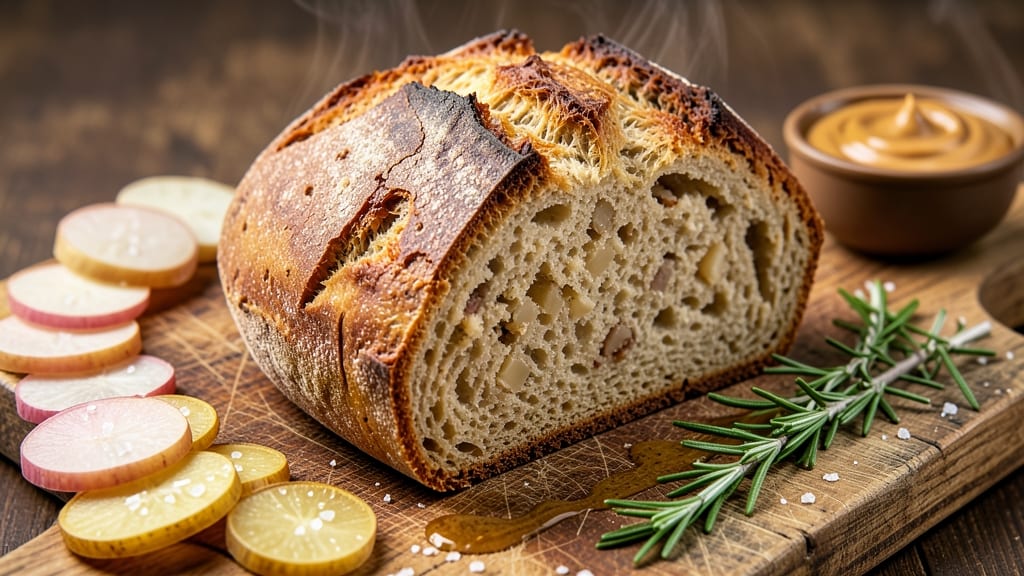
This artisan potato bread recipe delivers the perfect balance of a crispy golden crust and tender, fluffy interior—transforming simple ingredients into a rustic loaf that rivals bakery favorites.
The secret lies in incorporating mashed potatoes into the dough, which adds moisture and a subtle earthy sweetness while creating that signature artisan texture. I developed this recipe after years of perfecting the knead, proof, and bake process to ensure every slice has that satisfying contrast between crust and crumb.
The process begins with a simple dough enriched with potatoes, yeast, and a touch of sugar for activation. Unlike dense breads, this recipe focuses on creating an open crumb structure with a crackly crust, achieved through careful kneading and a controlled rise.
The potatoes not only enhance texture but also contribute to a naturally moist loaf that stays fresh for days. Whether you're a beginner or an experienced baker, this method is designed to yield consistent, professional-quality results every time.
By the time your bread emerges from the oven, you’ll have a loaf with a crispy, caramelized crust that gives way to a soft, airy interior—perfect for slathering with butter or pairing with soups and charcuterie.
The aroma alone will have everyone gathering around the table, and the taste? A perfect blend of rustic charm and homey comfort. This recipe is your gateway to bakery-quality bread without the fuss.
For those eager to elevate their baking, I’ve included tips for scoring the loaf and steaming for an even crispier crust, along with variations like adding herbs or cheese for extra flavor. Let’s get started on creating bread that’s as beautiful as it is delicious.
Ingredients for artisan potato bread
Pantry staples meet rustic charm in this golden-crusted potato bread—simple but spectacular.
| Ingredient | Amount | Notes |
|---|---|---|
| Russet Potatoes 🥔 | 2 cups | Mashed, hot, unsalted |
| All-Purpose Flour 🌾 | 4 cups | Plus 2 tbsp for dusting |
| Instant Yeast 🍞 | 2 ½ tsp | Or 1 packet active dry |
| Granulated Sugar 🍚 | 1 tbsp | For yeast activation |
| Large Eggs 🥚 | 1 whole | Room temperature |
| Unsalted Butter 🧈 | ½ cup | Cold, cubed |
| Whole Milk 🥛 | ½ cup | Warm, not hot |
| Diamond Crystal Kosher Salt 🧂 | 1 ½ tsp | Adjust to taste |
| Cornmeal 🌽 | 1 tbsp | For dusting |
| Water 💧 | ¼ cup | Warm, not hot |
| Olive Oil 🫒 | 1 tbsp | For greasing |
| Fresh Rosemary 🌿 | 1 tbsp | Chopped, optional |
The potatoes are the game-changer here. Russets give you that fluffy texture, but any starchy potato works. King Soopers or Walmart usually have them pre-peeled and bagged for convenience. I always mash them hot—no need to cool them first—and keep them unsalted since we're controlling the salt separately. For the flour, King Arthur or Gold Medal are my go-tos; they give that perfect balance of structure and tenderness. The yeast is non-negotiable—freshness matters, so check the date on that packet. If it's been sitting in your pantry for months, grab a new one. And trust me on the cold butter—it's what creates those flaky layers in the crust.
No instant yeast? Active dry works too, just let it proof longer. Short on butter? Coconut oil or more olive oil keeps things moist, though butter gives that unmatched flavor. The milk can be any kind, but whole milk adds richness that skim can't match. No rosemary? Fresh thyme or parsley works just as well. For the dough, if it feels sticky, add a splash more flour—but don't overdo it, or you'll lose that tender crumb. And if you're baking at high altitude, reduce the yeast by 25% to prevent an overproofed loaf.
This dough is a keeper—it tastes even better the next day. Wrap it tightly in plastic and store at room temperature for 1 day, or freeze for 3 months for fresh-baked goodness anytime. For the crust, steam is your friend: Place a metal tray in the oven while preheating, then pour hot water in when baking to create that perfect caramelized top. And if you're feeling fancy, brush the warm loaf with melted butter—game-changer for extra crispiness. Slice while still warm for that pull-apart texture everyone loves.
Why You'll Love This Recipe
- No Boil, No Fuss: I swear by this recipe because it skips the whole boiling-potato mess. Just grate those Russets raw, toss them in the dough, and let the oven work its magic—no extra pots, no sticky countertops.
- Crust That Cracks: That golden, shatter-hard crust? Pure reward. The sugar and egg in the dough caramelize just right, while the inside stays soft—like a hug from a bakery, but with way less guilt.
- Leftovers? More Like Lifesavers: This bread stays fresh for days, so I bake a loaf on Sunday and slice it for toast, sandwiches, or even croutons all week. (Yes, I’ve turned stale slices into crispy garlic bites—no waste here.)
- Budget Baked Magic: Russets are cheap, flour’s a pantry staple, and a single egg stretches the dough perfectly. For under $3, you get bread that tastes like it cost $10—my wallet and my taste buds agree.
Step-by-step instructions for artisan potato bread
Here's how to create that perfect golden crust and airy crumb—every time.
Prepare the Potato Filling
Start by boiling the 2 cups Russet Potatoes in salted water until fork-tender, about 15-20 minutes. Drain them completely, then mash until completely smooth—no lumps! I like to press the potatoes through a fine-mesh sieve to ensure an ultra-silky texture. Let them cool slightly before using.
While the potatoes cool, mix together the 0.5 cup Unsalted Butter and 0.5 cup Whole Milk in a small saucepan over low heat until the butter melts completely. Stir this into the mashed potatoes along with 1 tbsp Granulated Sugar and 1.5 tsp Diamond Crystal Kosher Salt. The mixture should be warm but not hot—just enough to blend everything smoothly. This warm filling will help activate the yeast later.
Mix the Dough
In a large bowl, whisk together the 4 cups All-Purpose Flour, 2.5 tsp Instant Yeast, and the remaining 0.5 tsp Diamond Crystal Kosher Salt (since we already used most of it in the potato mixture). Make a well in the center and pour in the potato mixture, 1 whole Large Eggs (room temperature), and 0.25 cup Water.
Mix with a wooden spoon until a shaggy dough forms, then turn it out onto a lightly floured surface. Knead for about 8-10 minutes until smooth and elastic. The dough should be slightly tacky but not sticky—if it's too dry, add 1 tsp Water at a time until it reaches the right consistency. This kneading develops the gluten, which gives that perfect chewy texture we want in artisan bread.
First Rise and Shape
Lightly grease a large bowl with 1 tbsp Olive Oil, place the dough inside, and cover with a damp towel. Let it rise in a warm place for 1-1.5 hours until it doubles in size. I like to place my oven light on for a few minutes to create a warm environment—this helps the yeast work faster.
Once the dough has risen, punch it down gently to release air bubbles. Divide it into 4 equal pieces (about 8 ounces each) and shape each into a round loaf. For that classic artisan look, I like to roll each piece into a log shape and tuck the ends under slightly. Place them on a baking sheet dusted with 1 tbsp Cornmeal to prevent sticking.
Second Rise and Score
Cover the shaped loaves with a damp towel and let them rise for another 30-45 minutes until they've puffed up noticeably. The dough should feel springy when pressed gently—this is your signal that it's ready for the oven. Preheat your oven to 375°F while the bread rises.
Just before baking, use a sharp knife or razor to score the tops of the loaves in a crosshatch pattern. This allows the bread to expand properly and creates that beautiful, crispy crust. I make three or four diagonal cuts on each loaf—deep enough to go through the outer layer but not all the way through. The steam from the potatoes will make these cuts rise beautifully as they bake.
Bake to Golden Perfection
Bake the loaves in the preheated oven for 25-30 minutes until they're deep golden brown and sound hollow when tapped on the bottom. The crust should be crispy and crackly, while the interior should be light and airy. If the tops brown too quickly, tent them loosely with foil to prevent over-browning.
For that extra-artisan touch, I like to brush the tops with a little melted butter while they're still warm. This adds shine and richness to the crust. Let the bread cool on a wire rack for 10 minutes before slicing—this helps the crumb set properly. The result? A crust that's crispy enough to stand up to soup but gives way beautifully to butter, and a crumb that's light, fluffy, and packed with that delicious potato flavor.
Pro Tips For Making Artisan Potato Bread
- Boil Potatoes Until Fork-Tender: I used to pull them out when they looked "done," but Russets need to collapse like overcooked mashed potatoes—no resistance when pierced. Drain immediately and let them steam-dry for 2 minutes; this prevents a gummy dough later.
- Use Cold Eggs Straight From Fridge: Warm eggs mix into the dough unevenly, creating weak spots. Crack them into an ice bath first, then mix—your dough will hold its shape better during shaping, and the bread won’t deflate as it bakes.
- Skip the Over-Kneading: This dough is delicate. Once the flour and potato purée come together, knead just until smooth—about 30 seconds. Overwork it, and the gluten tightens, making the bread dense instead of light and airy.
- Proof in a Warm Drawer: Your oven’s lightbulb creates a cozier environment than the fridge. Turn it on low (70°F), place a bowl of hot water inside, and proof the dough there. It’ll rise twice as fast and develop better flavor—no waiting hours in the kitchen.
Serving suggestions for leftovers
Butter Slather
Nothing elevates this potato bread like a generous spread of cold European-style butter—I love Plugrá or Kerrygold for their rich, creamy texture. Brush the warm loaf with melted butter while still on the baking sheet, then let it set for 5 minutes before slicing.
This creates a golden, glossy crust that’s irresistible. For extra decadence, mix in 1 tsp honey or maple syrup with the melted butter. 🧈
Soup Pairings
This bread is the perfect companion for hearty soups. A creamy potato-leek soup lets the bread soak up every last drop of broth, while a tomato basil soup benefits from the bread’s crispy crust.
I also love serving it with chicken noodle soup—the bread’s soft interior contrasts beautifully with the broth. For a lighter option, pair it with gazpacho to balance the cool, fresh flavors. 🥘
Charcuterie Board
Transform your artisan potato bread into the star of a charcuterie spread. Tear warm slices into rustic chunks and arrange them alongside aged cheddar, prosciutto, and marinated olives.
The bread’s subtle sweetness complements salty meats and sharp cheeses perfectly. Add a drizzle of balsamic glaze or fig jam for a touch of sweetness that ties everything together. 🧀
Breakfast Spread
Start your day with this bread as a toast base—it’s sturdy enough to hold toppings like scrambled eggs, avocado slices, or smoked salmon. For a sweet twist, spread with cream cheese and top with sliced strawberries or cinnamon sugar.
The bread’s moisture keeps toast from becoming dry, making it ideal for breakfast lovers. 🍳
Sandwich Potential
Use thick slices of this bread for gourmet sandwiches. The sturdy crust holds up to fillings like grilled chicken, turkey, and Swiss cheese with a touch of Dijon mustard.
For a vegetarian option, pile on roasted red peppers, hummus, and fresh spinach. The bread’s slight sweetness balances savory flavors beautifully. 🥪
Dessert Twist
For a sweet finish, dip warm slices into melted chocolate or caramel sauce, then sprinkle with crushed nuts or sea salt. The bread’s texture makes it perfect for French toast—simmer slices in an egg-milk mixture until golden, then top with powdered sugar or berries.
It’s a dessert-worthy upgrade to a classic bread. 🍫
Nutrition facts
Frequently asked questions
Why does your recipe use mashed potatoes instead of grated?
Mashed potatoes create a smoother, more uniform texture in the dough compared to grated potatoes, which can add unwanted grittiness. The smooth mash also blends seamlessly with the flour and butter, ensuring that every bite has that signature tender crumb without potato chunks. Plus, mashing removes excess starch that could make the dough gummy.
Can I make this bread without a stand mixer?
This dough only requires 8-10 minutes of hand-kneading on a lightly floured surface. Use the "fold and press" method: stretch one side of the dough toward the center, then fold it over, turn the dough 90 degrees, and repeat. The goal is to develop gluten for that perfect chewy texture—no mixer needed!
What's the best way to store leftover potato bread?
Wrap the cooled loaf tightly in plastic wrap or place it in an airtight container. It stays fresh at room temperature for 2-3 days, or freeze for up to 3 months for fresh-baked results anytime. To revive frozen bread, thaw at room temperature for 1 hour before warming in a 350°F oven for 5-10 minutes to restore crispiness.
My crust didn't get crispy—what went wrong?
This usually happens when the oven isn't hot enough or the bread lacks steam. Preheat your oven to 375°F for at least 20 minutes, then place a metal tray on the bottom rack. When baking, pour 1 cup hot water into the tray to create steam—this helps develop that crackly crust. Also ensure your dough has risen properly before baking.
Can I add cheese or herbs to this recipe?
Yes! For extra flavor, try adding 1/2 cup shredded cheddar or 1 tbsp chopped rosemary to the dough after mixing. If using cheese, reduce the milk by 2 tbsp to maintain the right consistency. For herbs, add them during the final kneading stage so they're evenly distributed. The potatoes will still be the star, but these additions add wonderful depth.