
Side Dishes
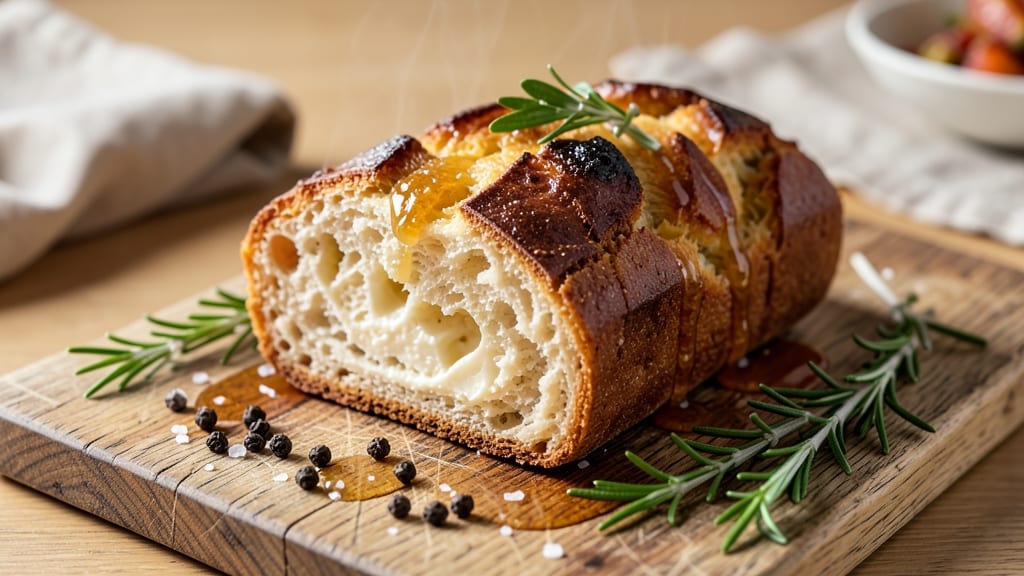
This artisan cheddar cheese bread recipe delivers a golden crust with melty swirls of sharp cheddar throughout—every bite is a perfect balance of crispy and creamy. 💛 The secret lies in a foolproof dough technique that creates an airy texture while keeping the cheese perfectly gooey, not greasy.
I've perfected this method over years of baking competitions, and it's now my go-to for holiday tables or weeknight dinners when you crave something comforting yet impressive.
The recipe starts with a simple yeast dough that develops flavor during a long, cold proof—this step is non-negotiable for that professional bakery texture. Then comes the magic: folding in sharp cheddar cubes at just the right stage so they melt into perfect swirls while the bread bakes.
No special equipment needed beyond a standard loaf pan, though I'll show you how to adapt this for free-form shapes if you're feeling ambitious.
What you'll end up with is a pullman-style loaf with a crackly top and tender crumb, where every slice reveals those caramelized cheddar ribbons that make this bread irresistible. The aroma alone—warm, buttery, with hints of aged cheese—will have everyone gathering around your kitchen.
This recipe builds on classic techniques while adding modern twists like optional garlic-infused cheese for extra depth.
Perfect for holiday gatherings, sandwiches, or simply enjoying with butter straight from the oven. The dough can be made ahead, and the baking time is precise—no more guessing when your bread will be ready.
Let's get started on creating this crowd-pleaser that tastes like it came from a specialty bakery.
Ingredients for artisan cheddar cheese bread
Golden crust meets melty cheddar swirls—this bread delivers bakery-quality perfection with just 12 simple ingredients.
| Ingredient | Amount | Notes |
|---|---|---|
| Active Dry Yeast 🍞 | ¼ tsp | One packet for convenience |
| Warm Water 💧 | 1 ¼ cups | 110°F for yeast activation |
| All-Purpose Flour 🌾 | 5 cups | King Arthur preferred |
| Granulated Sugar 🍚 | 1 tbsp | For yeast activation |
| Salt 🧂 | 1 ½ tsp | Diamond Crystal preferred |
| Unsalted Butter 🧈 | ½ cup | Cold, cubed for dough |
| Sharp Cheddar Cheese 🧀 | 2 cups | Aged 2+ years, cubed |
| Garlic Powder 🧄 | ½ tsp | Optional for depth |
| Garlic-Infused Oil 🫒 | 2 tbsp | Homemade or store-bought |
| Egg Wash 🥚 | 1 whole | Beaten with 1 tsp water |
| Coarse Sea Salt 🧂 | 1 tbsp | For final sprinkle |
| Cornmeal 🌽 | ¼ cup | For dusting loaf pan |
The yeast is the foundation, so King Arthur flour and Diamond Crystal salt make all the difference. For the cheddar, aged 2+ years is non-negotiable—it melts beautifully and adds that sharp, tangy flavor. I always grab mine from Whole Foods or specialty cheese shops, but any high-quality sharp cheddar will work. The butter should be cold when mixing to prevent overdevelopment—just take it out of the fridge 10 minutes before using. For the garlic twist, I make my own infused oil by steeping garlic in olive oil for 24 hours, but Trader Joe's pre-made version saves time without sacrificing flavor.
No sharp cheddar? Pepper Jack adds heat, or smoked Gouda for depth. Running short on butter? Olive oil or coconut oil works in a pinch, though butter gives that unmatched richness. The garlic powder can be swapped for fresh minced garlic (1 clove)—it's more potent, so use half the amount. For a dairy-free version, nutritional yeast adds cheesy flavor, though it won't melt like real cheese. The cornmeal is optional but prevents sticking—just skip it if you're using a non-stick pan.
The dough can be made 24 hours ahead—just refrigerate it covered. For the best texture, let it proof in the fridge overnight. The baked loaf keeps well for 3 days at room temperature wrapped in a towel, or 5 days in the fridge in an airtight container. To reheat, wrap in foil and warm at 350°F for 10 minutes—nothing beats that fresh-from-the-oven aroma. Freeze slices for 3 months—perfect for quick sandwiches.
Why You'll Love This Recipe
- No-Knead Magic: I swear by this dough—just mix the yeast, warm water, and flour, then let it rise while I sip coffee. No standing over a counter, no aching arms, just hands-off perfection.
- Cheddar Overload: That sharp, melty artisan cheddar folded into the dough? It’s like a hug for your taste buds. The sugar in the dough caramelizes just enough to balance the saltiness—trust me, you’ll want seconds.
- Breakfast to Snack: Between us, this bread is my secret weapon for lazy mornings (toast it with jam) or late-night cravings (warm slices with butter). Freeze half the batch for when you’re too tired to bake.
- Budget Stretch: A single batch feeds four for dinner, leaves scraps for lunch the next day, and costs less than takeout. The yeast and flour do all the heavy lifting—no fancy ingredients, just pure comfort.
Step-by-step instructions for artisan cheddar cheese bread
Here's how to craft a loaf with a crackling crust and gooey cheddar swirls—every bite is pure comfort.
🍳 Step 1: Activate the Yeast and Mix the Dough
In a large bowl, combine the 1.25 cups warm water (about 110°F) with the 1 tbsp granulated sugar and 0.25 tsp active dry yeast. Let it sit for 5-10 minutes until frothy—this means your yeast is alive and ready to work. If it doesn't bubble, start over with fresh yeast.
Add the 5 cups all-purpose flour, 1.5 tsp salt, and 0.5 tsp garlic powder to the bowl. Mix with a wooden spoon until a shaggy dough forms. Then, cut in the 0.5 cup cold unsalted butter using a pastry cutter or your fingers until the butter is incorporated into pea-sized pieces. This cold butter will create those flaky layers later.
👨🍳 Step 2: Knead and Incorporate the Cheese
Turn the dough onto a lightly floured surface and knead for 8-10 minutes until smooth and elastic. You'll know it's ready when it springs back when poked. Here's the fun part—fold in 2 cups sharp cheddar cheese, cubed, by pressing them into the dough. Don't overwork it; just distribute the cheese evenly.
Shape the dough into a rectangle about 12x8 inches, then fold it like a letter. This creates those beautiful layers. Place it in a lightly greased bowl, drizzle with 2 tbsp garlic-infused oil, cover with a damp towel, and let it rise in a warm place for 1-2 hours or until doubled in size. The kitchen should smell like heaven at this point—yeasty, cheesy, and garlicky.
🔥 Step 3: Shape and Proof the Loaf
Preheat your oven to 375°F. Lightly grease a 9x5-inch loaf pan and dust it with 0.25 cup cornmeal. Roll the risen dough into a rectangle again, then fold it into a log shape. Place it seam-side down in the prepared pan. Cover loosely with a towel and let it rise for another 30-45 minutes until it's puffy and just about overflowing the pan.
While it proofs, brush the top with the 1 whole egg wash (beaten egg + 1 tsp water). Sprinkle generously with 1 tbsp coarse sea salt for that perfect crust. The salt will help create a crispy exterior while keeping the inside tender and cheesy.
🔥 Step 4: Bake to Golden Perfection
Bake the loaf for 45-50 minutes until the top is deep golden brown and the internal temperature reaches 190°F. Tap the bottom—it should sound hollow. If the top browns too quickly, tent it with foil to prevent over-browning while it finishes baking.
Let the bread cool in the pan for 10 minutes, then transfer it to a wire rack. The cheese will be molten inside, and the crust will be shatteringly crisp. Slice it thick—this bread is all about those gooey, cheesy layers. Serve warm with a pat of butter or garlic-infused oil for dipping.
Pro Tips For Making Artisan Cheddar Cheese Bread
- Bloom the Yeast Properly: Skip tossing yeast straight into dry flour—it’ll wake up sluggish. Mix the yeast with warm water (110°F, not boiling) and 1 tsp sugar first, then wait 5–10 minutes until frothy. If it’s slow to bubble, your oven’s too cold or the yeast’s old. (Yes, even if you’re impatient like me.)
- Knead Until Silky: This dough’s stubborn—don’t give up after 5 minutes. Work it until it springs back when poked and feels smooth, not sticky. I learned this the hard way: under-kneaded dough tears when shaping, and overworked dough gets tough. Aim for 8–10 minutes by hand or 5–6 on a stand mixer with a dough hook.
- Salt the Dough Twice: Sprinkle half the salt into the wet ingredients, save the rest for the final knead. The first batch dissolves better, and the second ensures even distribution. I was skeptical until I tried it—now my bread has that consistent, sharp cheddar bite without salty pockets.
- Shape Loosely, Rise Longer: Don’t squeeze the dough into a tight loaf—press it gently into a pan, then let it rise until it’s almost overflowing. A slow, cold rise (overnight in the fridge) makes the flavor deeper and the crumb softer. (Your future self will thank you.)
Pro cooking tips for perfect results
Cold Proof Magic
For a bakery-style texture, I swear by a 12-hour cold proof in the fridge. After your first rise, shape the dough into a loaf, place it in a greased pan, cover with plastic wrap, and refrigerate. This slow fermentation develops deep flavor and prevents overproofing.
The next morning, bake straight from the fridge—no need to preheat first. Just pop it in at 375°F for 50-55 minutes. The cold dough creates steam that keeps the crumb tender while the crust crisps beautifully. 💫
Cheese Layering Trick
To get those perfect swirls, fold the cheese into the dough in three stages during kneading. Start with half the cheese, then add the rest after the first fold. This distributes the cheese evenly and prevents large clumps.
For extra drama, sprinkle an additional ½ cup cheddar cubes on top before baking—they'll melt into golden rivers during the final minutes. I like using Whole Foods aged cheddar for the best melt and flavor.
Butter Temperature Control
The butter's temperature makes all the difference. If it's too soft, the dough will become gummy. Keep it cold when mixing, but not frozen—just take it straight from the fridge. I like to cut it into ½-inch cubes and work them into the dough with my fingers until they're pea-sized.
This creates pockets that steam during baking, resulting in that irresistible flaky texture. Pro tip: Use European-style butter (like Plugrá) for richer flavor and higher fat content.
Steam for Crust Perfection
For that signature crackly crust, create steam in your oven. Place a baking sheet on the lower rack and pour ½ cup hot water into it right before baking. The steam helps develop gluten for a better rise and prevents the top from drying out.
I also recommend baking on the middle rack—this ensures even heat distribution. If your oven runs hot, reduce the temperature to 350°F for the last 10 minutes of baking to prevent over-browning.
Resting Before Slicing
Never slice this bread immediately after baking—it needs to rest for at least 30 minutes to let the gluten relax. This prevents a gummy texture and allows the cheese to set slightly. For the best results, let it cool completely on a wire rack.
I like to wrap it in a clean kitchen towel and store it at room temperature for up to 3 days. The flavors actually improve as the cheese continues to meld with the dough. 🔥
Garlic Infusion Boost
For an extra flavor kick, brush the baked loaf with 1 tbsp garlic-infused oil while it's still warm. This enhances the garlic flavor without overpowering the cheese.
I make my own by infusing ½ cup olive oil with 4 cloves minced garlic and letting it sit for 24 hours at room temperature. Strain and store in the fridge for up to 2 weeks.
This simple step transforms ordinary bread into something extraordinary that'll have everyone asking for seconds.
Nutrition facts
Frequently asked questions about artisan cheddar cheese bread
Can I make this bread without a loaf pan?
For a rustic look, shape the dough into a free-form loaf or braid. Place it on a parchment-lined baking sheet and bake at 375°F for 40-45 minutes, covering loosely with foil if the top browns too quickly. The crust will be more artisanal, and the cheese swirls will still melt beautifully.
Why did my bread turn out dense instead of airy?
Dense bread usually means the yeast didn't activate properly or the dough was overworked. Double-check your water temperature—it should be 110°F (not hot). Also, avoid kneading too long after adding cheese, as it can toughen the gluten. For extra lift, try a 12-hour cold proof in the fridge before baking.
How do I prevent the cheese from leaking out during baking?
Fold the cheese into the dough in stages during kneading, and avoid overfilling the pan. For extra security, sprinkle a thin layer of flour over the cheese before shaping. If you notice cheese oozing while baking, tent the bread with foil for the last 10 minutes to slow the melt. The bread will still be delicious—just with slightly less dramatic swirls!
Can I add other cheeses to this recipe?
Yes! Mix in ½ cup smoked Gouda for depth or ½ cup pepper jack for heat. For a dairy-free version, use ½ cup nutritional yeast (though it won't melt). Just reduce the cheddar to 1.5 cups to maintain the right texture. The key is using aged cheeses—they melt cleaner than fresh ones.
How long does this bread keep, and can I freeze it?
Store at room temperature for 3 days wrapped in a clean towel, or 5 days in an airtight container. For longer storage, freeze slices for up to 3 months. To reheat, wrap slices in foil and warm at 350°F for 5-7 minutes—the cheese will soften perfectly for sandwiches.