
Side Dishes
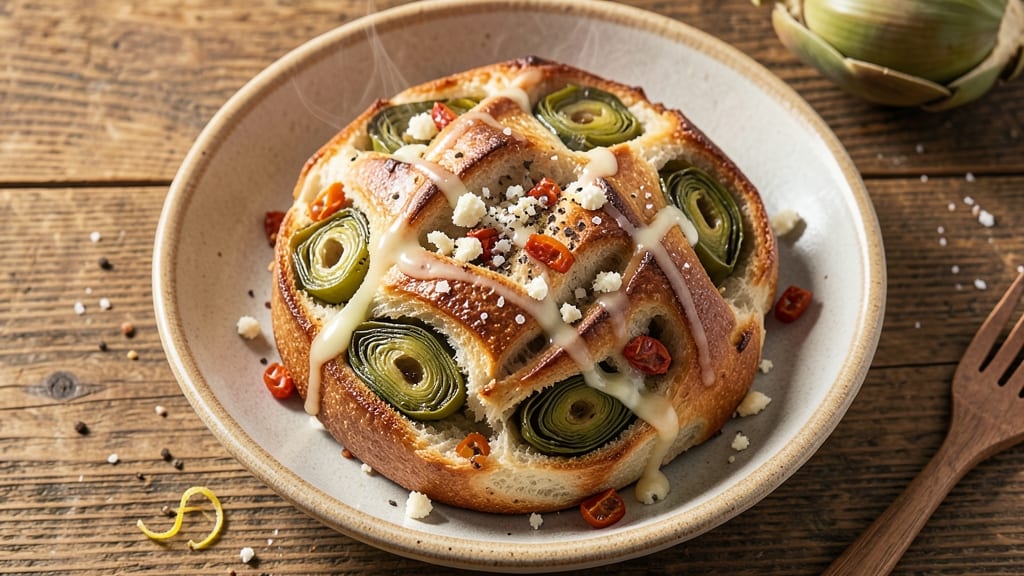
This artichoke stuffed bread recipe transforms simple dough into savory, herb-filled bites that disappear faster than you can pull them from the oven.
The secret lies in marinated artichoke hearts and a blend of sharp cheddar and mozzarella that melts into creamy perfection, while fresh parsley and garlic add bright, aromatic notes.
I developed this recipe after craving something hearty yet elegant—something that feels like a restaurant appetizer but comes together in just 30 minutes.
The dough is straightforward—flour, yeast, olive oil, and a touch of salt—while the filling balances earthy artichokes with tangy cheese and fresh herbs.
What makes this recipe special is how the filling stays gooey and flavorful without overpowering the bread's crust, which develops a golden, slightly crisp exterior while staying soft inside. The combination of textures and flavors creates a dish that's equally satisfying as a side or a light main.
By the time these golden bites emerge from the oven, you'll have a tray of artichoke-stuffed bread with caramelized edges and pockets of melted cheese oozing from every bite. The aroma alone will have everyone gathering around the table, and the first taste guarantees they'll be back for seconds.
This recipe is perfect for game day, holiday appetizers, or a cozy weeknight dinner when you want something special without the fuss.
Serve warm with a drizzle of olive oil or a sprinkle of flaky sea salt for extra flavor, and pair with a crisp white wine or a light salad.
The versatility of this dish means it works equally well as an appetizer or a hearty snack—ideal for feeding a crowd or satisfying a craving for something comforting and delicious.
Ingredients for artichoke stuffed bread
Twelve ingredients for golden, cheesy bites that vanish in minutes—no fancy skills needed.
| Ingredient | Amount | Notes |
|---|---|---|
| All-Purpose Flour 🌾 | 4 cups | Spooned and leveled, not packed |
| Active Dry Yeast 🍞 | ¼ oz | 1 packet, or 2.25 tsp |
| Extra-Virgin Olive Oil 🫒 | ¼ cup | Plus extra for brushing |
| Granulated Sugar 🍬 | 1 tbsp | For yeast activation |
| Warm Water 💧 | ¾ cup | 110°F for yeast activation |
| Kosher Salt 🧂 | 1 ½ tsp | Divided for dough and filling |
| Marinated Artichoke Hearts 🍃 | 14 oz | Chopped, drained well |
| Sharp Cheddar Cheese 🧀 | 1 cup | Shredded, full-fat preferred |
| Mozzarella Cheese 🧀 | 1 cup | Part-skim or whole milk |
| Fresh Parsley 🌿 | ¼ cup | Chopped, stems removed |
| Garlic Cloves 🧄 | 3 cloves | Minced, fresh preferred |
| Flaky Sea Salt 🧂 | 1 tbsp | For sprinkling on top |
| Egg Wash 🥚 | 1 whole | 1 egg beaten with 1 tbsp water |
The artichoke hearts make this recipe shine. Look for marinated hearts in olive oil—the ones packed in water taste bland. Trader Joe's and Whole Foods carry the best brands, but any jarred artichokes work in a pinch. For the cheeses, sharp cheddar like Cabot adds tang while mozzarella melts perfectly. Fresh parsley is ideal, but dried oregano at half the amount works if you're short. The dough is simple: flour, yeast, olive oil, and salt—nothing exotic, just good basics.
No marinated artichokes? Water-packed hearts work too—just drain and pat them dry. Pepper jack cheese can replace cheddar for extra kick, and feta crumbles add briny depth. Short on parsley? Fresh basil or chives give a similar bright note. The garlic can be pre-minced from a jar, but fresh tastes better. For the dough, whole wheat flour can replace half the all-purpose if you prefer. And if you're making a big batch, double the recipe—these disappear fast.
The dough keeps for 2 days in the fridge wrapped in plastic, but the filling is best made fresh. Shape and stuff the bread just before baking. These reheat beautifully—5 minutes at 350°F brings back the golden crust. Store leftovers in an airtight container for 3 days. Freeze unbaked stuffed bread for up to 2 months—bake straight from frozen, adding 5-7 minutes to the time. The aroma alone will have everyone gathering around the table.
Why You'll Love This Recipe
- No-Knead Magic: I swear by this dough—just mix the flour, yeast, olive oil, and warm water, let it rest while you prep the filling. No roller, no fuss, just a soft, pillowy base that’s actually foolproof.
- Umami Bomb: That artichoke filling—tender hearts, briny capers, and a hit of garlic—turns this into something special. The contrast of crispy bread and creamy filling? My family fights over the last slice.
- Party-Ready Side: Serve it warm at dinner, slice it cold for sandwiches, or pack it for lunch. The dough’s neutral flavor lets the artichokes shine, so it’s just as happy alongside pasta as it is on a charcuterie board.
- Budget Stretch: A single batch feeds four, and leftovers toast up beautifully the next day. Olive oil and yeast are cheap staples, so you’re getting restaurant-quality flavor without the price tag. (Yes, even on a Tuesday night.)
Step-by-step instructions for artichoke stuffed bread
Here's how to make these savory, cheesy bites—simple steps for perfect texture every time.
Activate the Yeast and Mix the Dough
In a small bowl, combine the 0.75 cup warm water (about 110°F) with the 1 tbsp granulated sugar and 0.25 oz active dry yeast. Let it sit for 5-10 minutes until foamy—this tells you the yeast is alive and ready to work. If it doesn't foam, your yeast might be dead, and you'll need to start over.
In a large bowl, whisk together the 4 cups all-purpose flour and 1 tsp kosher salt. Make a well in the center and pour in the yeast mixture along with the 0.25 cup extra-virgin olive oil. Mix with a wooden spoon until a shaggy dough forms, then turn it out onto a lightly floured surface. Knead for 8-10 minutes until smooth and elastic. The dough should be slightly tacky but not sticky—add a little more flour if needed.
Prepare the Artichoke Filling
While the dough rests, drain and chop the 14 oz marinated artichoke hearts into small, even pieces. In a separate bowl, combine the chopped artichokes with the 1 cup shredded sharp cheddar cheese, 1 cup shredded mozzarella cheese, 0.25 cup chopped fresh parsley, and 3 minced garlic cloves. Mix well—this filling should be moist but not soupy. If it's too dry, add a teaspoon of the artichoke marinade to help bind everything together.
Taste the filling and adjust the seasoning if needed. I usually add a pinch more salt or a crack of black pepper here to make sure the flavors pop. Set the filling aside while you shape the dough.
Shape the Dough and Fill the Bites
Divide the dough into 12 equal pieces (about 2 oz each). Roll each piece into a ball and flatten it into a 4-inch circle on a floured surface. Place about 1 tablespoon of the artichoke filling in the center of each circle. Gather the edges of the dough around the filling, pinching them together to seal tightly. Roll the sealed dough into a smooth ball, ensuring no filling escapes.
Place the stuffed dough balls on a parchment-lined baking sheet, leaving 2 inches between them. Cover the baking sheet with a clean kitchen towel and let the dough rise in a warm place for 30-45 minutes until puffy. The dough should nearly double in size—this is your cue that it's ready for the oven.
Bake to Golden Perfection
Preheat your oven to 375°F. Brush the tops of the dough balls with the egg wash (1 egg beaten with 1 tbsp water) for a golden finish. Sprinkle each bite with a pinch of flaky sea salt and bake for 20-25 minutes until they're golden brown and sound hollow when tapped on the bottom.
For extra crispiness, broil for 1-2 minutes at the end, keeping a close eye to avoid burning. Let the bites cool for 5 minutes before serving—this helps them set and makes slicing easier. Serve warm with marinara sauce or a simple balsamic glaze for dipping.
Pro Tips For Making Artichoke Stuffed Bread
- Proof the Yeast Slowly: Skip the rush—let that yeast activate in warm water for 5 minutes before adding flour. I used to dump everything in at once, and the dough always fought me. A lazy 5-minute wait means smoother mixing and a lighter rise.
- Use Room-Temp Olive Oil: Cold oil from the fridge won’t emulsify properly, and your dough will turn out dense. Keep that extra-virgin olive oil out for 30 minutes before mixing—trust me, it makes a real difference in texture.
- Don’t Overstuff the Artichokes: Pack those artichoke hearts tightly, but leave a little room for expansion. I learned this after watching my first batch split open like overstuffed pillows. A snug but not bursting fit keeps the bread intact.
- Brush with Olive Oil Twice: Coat the dough once before shaping, then again right before baking. The first layer seals the surface, while the second adds that golden crust. (Yes, even if you’re impatient like me—wait for the oven to preheat.)
Pro cooking tips for perfect results
Dough Consistency
The dough should be soft but not sticky—think of it like playdough that holds its shape when rolled. If it feels too dry, add 1 tablespoon water at a time while kneading. Too sticky? Sprinkle in ½ cup flour gradually.
I find using a digital kitchen scale (like the OXO Good Grips) helps measure dough pieces more accurately than eyeballing. Overworking the dough can make it tough, so stop kneading once it springs back slowly when poked. 💫
Filling Balance
Too much filling can burst the dough during baking, while too little makes the bites feel hollow. Aim for 1 tablespoon filling per dough piece—about 12 total tablespoons for 12 bites. For extra moisture, mix 1 teaspoon artichoke marinade into the filling.
If your artichokes are very dry, add a splash of heavy cream (just 1 tablespoon) to keep the filling cohesive. Taste before sealing—seasoning matters most here! 🧂
Sealing Technique
Pinch the dough edges firmly around the filling to create an airtight seal. I press with my thumb while rotating the dough ball to ensure no gaps. For extra security, dip your fingers in water before pinching—this helps the dough stick together.
If filling leaks during rising, pat it back inside and reshape. The goal is a smooth, uniform ball with no visible cracks. This prevents cheese from oozing out during baking. ✨
Rising Secrets
Place the dough balls in a warm spot—like a turned-off oven with a bowl of hot water inside—to rise. They should double in size in 30-45 minutes. If your kitchen is cold, use a proofing box (like the Breville) set to 85°F.
Overproofed dough collapses when baked, so check them at 30 minutes and reshape if needed. The dough is ready when it springs back slowly when poked. 🌡️
Baking Precision
Use an oven thermometer to confirm your oven hits 375°F—many run hot or cold. Place the baking sheet on the middle rack for even heat. Rotate the pan halfway through baking if your oven has hot spots.
For extra browning, broil for 1-2 minutes at the end, but watch closely to avoid burning. The internal temperature should reach 190°F for perfect doneness. 🔥
Post-Bake Handling
Let the bread cool for 5 minutes before serving—this helps the cheese set and makes slicing cleaner. Store leftovers in an airtight container for 3 days or freeze unbaked dough balls for 2 months.
To reheat, bake at 350°F for 5 minutes until golden. For serving, slice with a serrated knife for crisp edges. A drizzle of olive oil or balsamic glaze elevates the dish instantly. 💡
Nutrition facts
Frequently asked questions
Can I make this recipe without marinated artichokes?
Yes! You can use water-packed artichoke hearts—just drain them well and pat dry. For extra flavor, toss them in 1 tablespoon olive oil and ½ teaspoon garlic powder before chopping. If you can't find artichokes at all, try sun-dried tomatoes or roasted red peppers for a similar texture and tangy bite.
How do I prevent the dough from sticking while shaping?
Lightly flour your work surface and your hands, but don't overdo it—too much flour makes the dough tough. For extra insurance, use a light dusting of cornmeal instead of flour, as it adds texture without drying out the dough. Keep the dough balls small (2 oz each) to ensure even baking and easy handling.
Can I bake these ahead of time or freeze them?
For best results, freeze the unbaked stuffed dough balls on a tray for 1 hour, then transfer to an airtight bag for up to 2 months. Bake straight from frozen, adding 5-7 extra minutes at 375°F. You can also bake them ahead and reheat at 350°F for 5 minutes to restore crispiness. The aroma alone will make your kitchen smell amazing!
What if my dough doesn't rise properly?
Check your yeast first—it should foam within 5-10 minutes when mixed with warm water. If not, your yeast may be dead. For a second attempt, use 1 packet fresh yeast and ensure your water is 110°F (not hot). If the dough rises but collapses, it may be overproofed. Shape again and let rise for 20-30 minutes in a warm spot before baking.
Can I make this recipe gluten-free?
Yes! Use a 1:1 gluten-free flour blend (like Bob's Red Mill) and add ½ teaspoon xanthan gum to improve texture. You may need to adjust the liquid slightly—start with 0.65 cup warm water and add more as needed. Let the dough rest for 10 minutes after mixing to hydrate fully. The filling and baking steps remain the same.