
Side Dishes
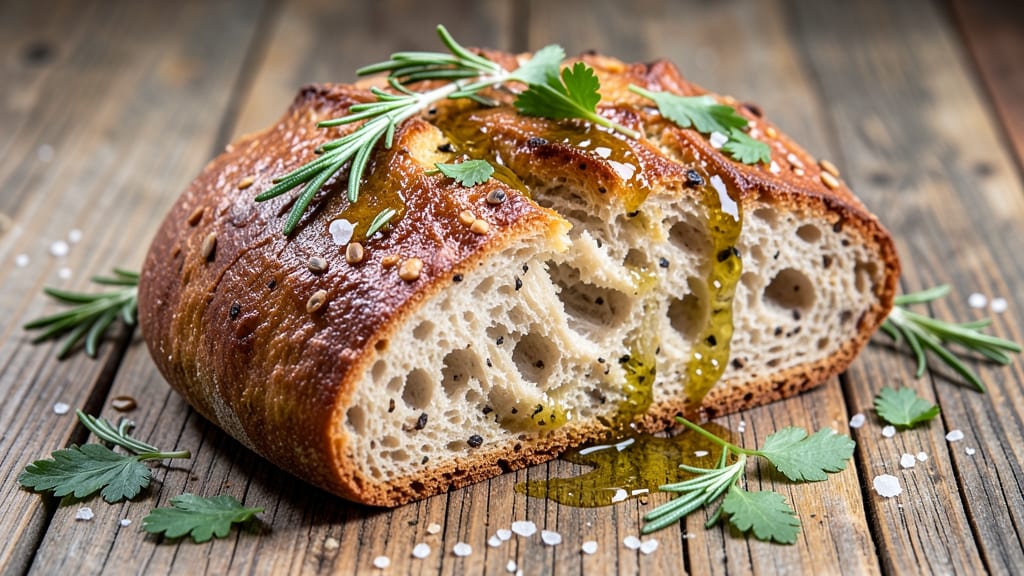
This Argentinian bread recipe brings the soul of Buenos Aires to your kitchen with a crusty, chimichurri-infused focaccia that’s as aromatic as it is satisfying. 🌟 The secret lies in the dough’s tender crumb and the bold, herby chimichurri that infuses every bite—perfect for pairing with mate or a hearty asado.
Unlike traditional Italian focaccia, this version incorporates a touch of anise and a hint of citrus, inspired by the flavors of the Pampas.
What sets this recipe apart is its simplicity: just five core ingredients—flour, yeast, olive oil, salt, and water—elevated by the chimichurri’s vibrant blend of parsley, garlic, and red wine vinegar.
The dough is kneaded by hand (no mixer needed) and proofed slowly to develop a light, airy texture, while the chimichurri is worked into the surface before baking for that signature tangy crust. No special tools required—just patience and a hot oven.
By the time it emerges from the oven, you’ll have a golden, crackling focaccia with pockets of chimichurri-infused oil and a chewy interior that’s impossible to resist.
It’s the kind of bread that disappears faster than you can say "¡Qué rico!"—ideal for sharing with friends or saving for a solo snack with a cup of coffee. The aroma alone will transport you to the streets of Córdoba.
This recipe works equally well as a side for grilled meats, a base for sandwiches, or a standalone treat with olive oil and sea salt. The chimichurri doesn’t just flavor the bread—it transforms it into something extraordinary. Let’s get started on this taste of Argentina.
Ingredients for argentinian bread
Five core ingredients meet bold chimichurri flavors for Argentina's aromatic focaccia magic.
| Ingredient | Amount | Notes |
|---|---|---|
| All-Purpose Flour 🌾 | 4 cups | Plus extra for dusting |
| Active Dry Yeast 🍞 | ¼ tsp | Or 1 packet instant yeast |
| Extra-Virgin Olive Oil 🫒 | 1 ½ cups | High-quality, fruity variety |
| Fine Sea Salt 🧂 | 1 ½ tsp | Diamond Crystal preferred |
| Warm Water 💧 | 1 ½ cups | 110°F (43°C) ideal |
| Fresh Parsley Leaves 🌿 | 1 ½ cups | Packed, stems removed |
| Garlic Cloves 🧄 | 6 cloves | Peeled, roughly chopped |
| Red Wine Vinegar 🍷 | ¼ cup | Substitute white vinegar |
| Ground Anise Seeds 🌿 | ½ tsp | Or 1 whole anise seed crushed |
| Orange Zest 🍊 | 1 tsp | From 1 large orange |
| Coarse Sea Salt 🧂 | 2 tbsp | For topping after baking |
| Fresh Lemon Juice 🍋 | 1 tbsp | Optional, for brightness |
The flour is non-negotiable here—King Arthur or Caputo bread flour work best for that signature chewy texture. If you can't find either, all-purpose flour will do, but the crumb won't be quite as open. Yeast quality matters too—Fresh yeast from the refrigerated section (like Saf-Instant) keeps longer than active dry. For the olive oil, Spanish or Italian varieties (like Corona Extra or Bertolli) have the right fruity notes. The warm water temperature is crucial—too hot kills the yeast, too cold slows it down. I always test it by touching the water—it should feel like a warm bath, not scalding.
No fresh parsley? Dried parsley at half the amount works in a pinch, but the flavor won't be the same. The garlic can be roasted for a sweeter chimichurri—just wrap the cloves in foil and roast at 400°F for 10 minutes. Red wine vinegar substitutes like balsamic vinegar add depth, though the acidity will be slightly different. The anise seeds are key for that Argentinian touch—if you can't find ground, crush whole seeds in a mortar and pestle. For the orange zest, avoid the white pith—it's bitter. And if you're short on time, skip the lemon juice—the chimichurri will still shine.
Store the focaccia dough in the fridge for up to 24 hours before baking—this actually improves the flavor. The chimichurri keeps for 5 days in an airtight jar in the fridge, though it's best used within 3 days for maximum freshness. For longer storage, freeze the chimichurri in ice cube trays—just thaw and stir before using. The baked focaccia reheats beautifully—wrap in foil and warm at 350°F for 10 minutes. I always make extra chimichurri to drizzle over grilled meats or toss with pasta—it's that good.
Why You'll Love This Recipe
- No-Knead Magic: I swear by this dough—just mix, let it rise, and bake. No stand mixer, no arm workout, just five ingredients and a little patience. That olive oil pull? It’s what makes it actually tender, not dry like store-bought.
- Crusty Yet Crumbly: The secret’s in the salt and olive oil combo—crispy edges that shatter like a dream, but a soft, airy inside that’s dangerously good with butter. Honestly, I’ve tried fancier breads, but this one wins every time.
- Lunchbox Legend: Between us, this bread is my go-to for sandwiches, toast, or even just tearing into with cheese. It holds up for days in the fridge, and those leftovers? Still fresh enough to eat by Thursday—no sad, stale ends here.
- Pantry Staple: Four ingredients, zero guilt. The yeast is cheap, the flour lasts forever, and that olive oil? You’re probably already using it. It’s the kind of bread that makes you feel like you’ve earned a win, even on a Tuesday.
Step-by-step instructions for chimichurri-infused focaccia
Here's how to craft this Argentinean-inspired bread with a fragrant chimichurri twist.
👨🍳 Step 1: Activate the Yeast and Prepare the Dough
In a large bowl, combine the 1.5 cups warm water (about 110°F) with the 0.25 tsp active dry yeast and let it sit for 5-10 minutes until frothy. This tells you your yeast is alive and ready to work. If it doesn't bubble, your yeast is dead—start over with fresh yeast.
To the yeast mixture, add the 1.5 cups extra-virgin olive oil, 1.5 tsp fine sea salt, and the 4 cups all-purpose flour. Using a wooden spoon or dough whisk, mix until a shaggy dough forms. The dough will be sticky—this is normal with high-fat focaccia. Wet your hands slightly and knead just until the dough comes together, about 2-3 minutes.
🥘 Step 2: First Rise and Chimichurri Infusion
Lightly oil a large bowl, place the dough inside, and cover with a damp kitchen towel. Let it rise in a warm place for 1-2 hours or until doubled in size. While it rises, prepare the chimichurri infusion by blending the 1.5 cups fresh parsley leaves, 6 cloves garlic, 0.25 cup red wine vinegar, 0.5 tsp ground anise seeds, 1 tsp orange zest, and 1 tbsp fresh lemon juice until finely chopped.
Once the dough has risen, transfer it to a generously oiled 9x13-inch baking pan. Using your fingers, press the dough evenly into the pan, stretching it to the edges. The dough should be about ½-inch thick. Sprinkle half of the chimichurri mixture evenly over the dough, pressing lightly so it adheres.
🔥 Step 3: Second Rise and Dimple the Dough
Cover the focaccia with a damp towel and let it rise for another 45-60 minutes until puffy. Preheat your oven to 425°F with a baking stone or inverted baking sheet inside. While the oven heats, use your fingertips to dimple the dough all over, creating small indentations about 1-inch apart. This creates those signature air pockets.
Drizzle the remaining chimichurri mixture evenly over the dimpled dough, then sprinkle with the 2 tbsp coarse sea salt. Drizzle the remaining 2 tablespoons extra-virgin olive oil over the top and gently press it into the dough with your fingertips. The focaccia is now ready for the oven.
🔥 Step 4: Bake to Golden Perfection
Carefully transfer the focaccia to the preheated oven and bake for 25-30 minutes until the edges are deep golden brown and the top is crispy. You'll know it's done when it sounds hollow when tapped on the bottom. If the top browns too quickly, tent loosely with foil to prevent over-browning.
Remove from the oven and let it cool in the pan for 5 minutes before transferring to a wire rack. The focaccia will continue to crisp up as it cools. Serve warm or at room temperature, cutting into squares for that perfect focaccia experience.
Pro Tips For Making Argentinian Bread
- Bloom the Yeast First: Skip mixing yeast straight into the flour—dissolve it in warm water (about 110°F) with a pinch of sugar first. This guarantees it’s active before it hits the dough, or you’ll end up with a brick instead of bread. (Yes, I’ve done that. Twice.)
- Oil the Bowl Properly: Don’t just drizzle olive oil in the mixing bowl—coat the sides and bottom with about 2 tablespoons. The dough will stick less, and you’ll save yourself from scraping it off later. Trust me, your hands will thank you.
- Avoid Over-Kneading: The dough should be smooth but still slightly tacky after 8–10 minutes by hand. Overwork it, and you’ll develop too much gluten, making the bread dense. I learned this the hard way when my first attempt turned out like a hockey puck.
- Let It Rise Twice: The first rise is obvious, but the second—after shaping—is where most people cut corners. Give it 1–2 hours until nearly doubled. Skimp here, and your bread will collapse in the oven. (Your future self will notice.)
Wine and beer pairings for this dish
Malbec Wine Pairing
Argentinian Malbec is the perfect partner for this chimichurri-infused focaccia, mirroring the bold, fruity notes of the chimichurri while balancing its herby brightness. I recommend a Mendoza Malbec like Catena Zapata or Trapiche—their dark berry flavors and velvety texture complement the focaccia's crusty exterior and soft interior.
The wine's slight tannins also cut through the richness of the olive oil, cleansing your palate between bites. 🍷
Torrontés White Wine
For a lighter option, try an Argentinian Torrontés, particularly a crisp Salta Torrontés like Alamos or Bodega Colome. The wine's floral and citrus notes harmonize beautifully with the anise and orange zest in the chimichurri, while its acidity brightens the focaccia's flavors.
This pairing works especially well if you're serving the focaccia with a fresh salad or grilled vegetables.
Argentinian Craft Beer
If you prefer beer, an Argentinian amber ale or IPA bridges the gap between the focaccia's herby and savory elements. Look for Quilmes Super Premium for a balanced, slightly malty option, or Cerveza Patagonia for a crisp, hop-forward choice.
The beer's caramel notes echo the focaccia's golden crust, while its bitterness contrasts the chimichurri's richness. Serve both slightly chilled for the best experience.
Traditional Yerba Mate
For a truly Argentinian touch, pair your focaccia with a cup of yerba mate, the country's beloved herbal tea. The bitter, earthy notes of the mate balance the focaccia's sweet and savory flavors, creating a classic media mañana (afternoon snack) combination.
Brew it in a calabash gourd with a bombilla (metal straw) for the authentic experience. The mate's caffeine kick also makes this pairing perfect for a midday energy boost.
Non-Alcoholic Options
Skip the alcohol and still enjoy the flavors with a sparkling hibiscus tea (like jamaica) or a citrus-infused sparkling water. The acidity in both drinks enhances the chimichurri's brightness, while the effervescence cleanses the palate.
For a more substantial pairing, try a dulce de leche-drizzled affogato with vanilla ice cream—it might sound unusual, but the sweetness contrasts the focaccia's savory notes beautifully. 💛
Nutrition facts
Frequently asked questions
Can I make this Argentinian bread without chimichurri?
The chimichurri is what makes this recipe special, but you can still bake a delicious focaccia by simply using extra olive oil and coarse sea salt on top. The anise and orange zest can be omitted too, though they add that classic Argentinian touch. For a different flavor profile, try sprinkling dried oregano or rosemary instead.
How do I know when the dough is fully proofed?
Look for the dough to double in size and feel light and airy when pressed gently with a finger. It should spring back slowly rather than immediately. For this recipe, the dough should rise about 1-2 hours for the first proof and 45-60 minutes for the second. If your kitchen is cold, place the bowl near a warm oven (turned off) or use a proofing box.
What’s the best way to store leftover Argentinian focaccia?
Wrap it tightly in plastic wrap or foil and store at room temperature for 1-2 days. For longer storage, freeze slices in a sealed bag for up to 3 months. To reheat, wrap in foil and warm in a 350°F oven for 5-10 minutes until crispy. The chimichurri flavor actually improves slightly after a day or two!
Why did my focaccia turn out dense instead of light and airy?
Dense focaccia usually means the yeast didn’t activate properly or the dough didn’t rise enough. Check your yeast first—it should bubble within 5-10 minutes in warm water. Also, ensure your oven is fully preheated with a baking stone or sheet inside. If the dough wasn’t proofed long enough, give it extra time next time—patience is key for that signature open crumb!
Can I use this dough for other Argentinian breads?
This versatile dough works well for pan amasado (a rustic Argentinian bread) or even facturas (sweet pastries). For pan amasado, shape the dough into a round loaf and bake at 375°F for 30-35 minutes. For sweet versions, add 1/4 cup sugar and 1 tsp cinnamon to the dough before proofing. The chimichurri can also be used as a topping for grilled meats!