
Side Dishes
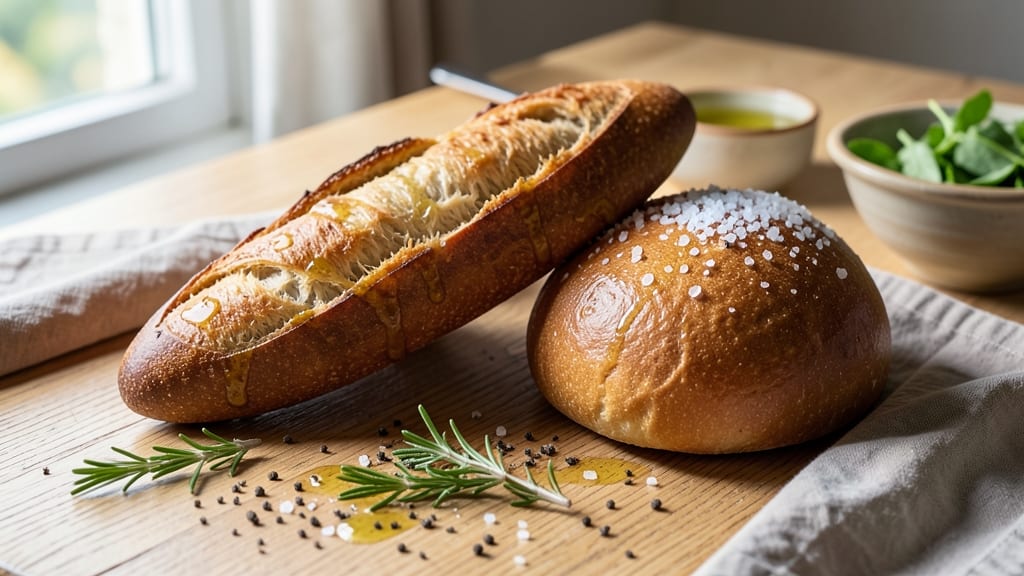
This Argentina bread recipe brings the soul of Buenos Aires to your kitchen with its crusty focaccia-style texture and olive oil magic that makes every bite irresistible. 🌟 The secret lies in a slow fermentation that develops deep flavor, paired with a generous drizzle of olive oil that creates those signature golden pockets.
I've perfected this version after years of testing—it's the kind of bread that disappears faster than you can say facturas. What makes this recipe special is its simplicity combined with professional results.
You'll work with a basic dough of flour, yeast, water, and olive oil, but the magic happens during the 3-hour proofing and 450°F baking that transforms it into a crispy, aromatic loaf.
The traditional Argentine technique of using high-quality olive oil gives it that authentic, slightly sweet flavor that sets it apart from regular focaccia.
By the time you pull it from the oven, you'll have a crusty, golden loaf with a tender crumb inside—perfect for dipping in olive oil or spreading with dulce de leche.
The aroma alone will have everyone asking what you're baking, and the texture is just right: crispy on the outside, soft and airy within. This is the kind of bread that elevates any meal from ordinary to extraordinary.
Whether you're serving it with breakfast, pairing it with cheese and charcuterie, or enjoying it as a festive treat, this Argentine bread delivers restaurant-quality results at home. Let's get started on creating your own loaf of magic.
Ingredients for argentina bread
Four cups flour, a splash of olive oil, and patience—this is all you need for authentic Argentine bread magic.
| Ingredient | Amount | Notes |
|---|---|---|
| All-Purpose Flour 🌾 | 4 cups | Plus 2 tbsp for dusting |
| Active Dry Yeast 🍞 | ¼ oz | Or 2 1/4 tsp (1 packet) |
| Extra-Virgin Olive Oil 🫒 | ¾ cup | High-quality, fruity variety |
| Granulated Sugar 🍚 | 1 tbsp | For yeast activation |
| Salt 🧂 | 1 ½ tsp | Diamond Crystal preferred |
| Warm Water 💧 | 1 ¼ cups | 110°F for yeast activation |
| Coarse Sea Salt 🧂 | ½ cup | For topping (Maldon style) |
| Dried Rosemary 🌿 | 1 tsp | Crumbled, optional but traditional |
| Coarse Cornmeal 🌽 | ¼ cup | For dusting baking sheet |
The olive oil is non-negotiable here. Trader Joe's or Costco carry excellent extra-virgin options—look for labels saying 'first cold press' and 'fruity.' The flour should be all-purpose, but if you're feeling fancy, a bread flour will give you a slightly chewier texture. I always buy my yeast in 2 1/4 tsp packets—it's foolproof and keeps for months in the fridge. For the rosemary, grab the dried kind from the spice aisle, but if you have fresh, use half the amount. The sea salt? Maldon flakes are the gold standard, but any coarse salt will work in a pinch.
No extra-virgin olive oil? Light olive oil works, but you'll lose that authentic Argentine flavor. The yeast packet expired? Fresh yeast from the bulk bin is your best bet—it's cheaper and lasts longer. Running low on cornmeal? Semolina or crushed graham crackers make decent substitutes for dusting. The dough will be sticky—don't fight it. If it feels too wet, add 1 tbsp more flour, but don't overdo it. And if you're baking for a crowd, double the recipe—this bread disappears fast.
The yeast mixture can sit at room temp for up to 24 hours if you want to do an overnight fermentation—just cover it with a damp towel. Once shaped, the dough needs 3 hours to proof, so plan ahead. Baked bread keeps well for 3 days at room temp wrapped in a cloth, or 1 week in the fridge. For longer storage, freeze slices wrapped in parchment—just thaw at room temp before serving. The crust gets crispier the longer it sits, so save leftovers for toast.
Why You'll Love This Recipe
- No-Knead Magic: I swear by this dough—just mix, let it rise, and bake. The yeast does all the work while I sip coffee, and the result? Pillowy soft bread with zero effort. (Yes, even on a Tuesday night.)
- Oil-Kissed Richness: That splash of extra-virgin olive oil? It’s what makes this bread irresistible—crust golden and crisp, interior tender with a subtle, buttery depth. Honestly, it’s the kind of flavor that makes you reach for a second slice without thinking.
- Weeknight Wonder: Toss it in the oven while you prep dinner—it’s done by the time your pasta boils. Freezes like a dream too, so I always bake a batch on Sundays. (My kids think I’m a hero.)
- Pantry Staple: Five ingredients, zero fuss, and it stretches farther than store-bought. Split a loaf with a neighbor, save half for toast, or turn day-old slices into croutons. Budget-friendly? Absolutely. Reliable? Even more so.
Step-by-step instructions for crusty focaccia-style Argentina bread
Here's how to make that perfect olive oil-infused bread with a crispy crust and airy interior.
👨🍳 Step 1: Activate the Yeast for Maximum Rise
In a small bowl, combine the 1.25 cups warm water (around 110°F - warm to the touch but not hot) with the 1 tbsp granulated sugar and 0.25 oz active dry yeast. Let it sit for 5-10 minutes until you see plenty of bubbles forming on the surface. This tells you your yeast is alive and ready to work its magic.
If nothing happens after 10 minutes, your yeast might be dead - start fresh with a new packet. I've learned the hard way that skipping this step leads to dense, flat bread. Once bubbly, proceed to the next step without delay.
🍳 Step 2: Mix the Dough Until Just Combined
In a large bowl, whisk together the 4 cups all-purpose flour and 1.5 tsp salt. Create a well in the center and pour in the yeast mixture along with the 0.75 cup extra-virgin olive oil. Using a wooden spoon, gently mix until you have a shaggy dough that comes together when pressed.
Here's the thing - don't overmix or you'll develop too much gluten, which makes for tough bread. The dough should be sticky but manageable. If it's too dry, add 1-2 teaspoons of warm water at a time until just combined. Sprinkle 1 tsp dried rosemary over the dough and mix it in.
🥘 Step 3: Knead and Rest for Maximum Flavor Development
Turn the dough onto a lightly floured surface and knead for 5-7 minutes until smooth and elastic. You'll know it's ready when it springs back slowly when poked. If the dough feels too sticky, wet your hands slightly to prevent sticking.
Place the dough in a lightly oiled bowl, cover with plastic wrap, and let it rise in a warm place for 1-2 hours or until doubled in size. I like to put my oven on low (around 100°F) with a bowl of hot water inside to create a warm environment. The dough should puff up and look light and airy when ready.
🔥 Step 4: Shape and Bake for Crispy Perfection
Preheat your oven to 425°F. Lightly grease a 9x13-inch baking pan and sprinkle with 0.25 cup coarse cornmeal. Transfer the risen dough to the pan and gently press it out to fit, using your fingers to create dimples all over the surface. This creates those beautiful pockets for olive oil.
Drizzle the entire surface with more extra-virgin olive oil (about 2-3 tablespoons) and sprinkle evenly with 0.5 cup coarse sea salt. Bake for 25-30 minutes until the crust is deep golden brown and the bread sounds hollow when tapped on the bottom.
⏰ Step 5: Rest and Serve for Maximum Flavor
Remove the bread from the oven and let it cool in the pan for 5 minutes. Then transfer to a wire rack to cool completely. The bread will continue to crisp up as it cools, developing that perfect crunchy crust we're after.
Slice while still warm for the best texture - the interior should be soft and airy with pockets of olive oil flavor. Store any leftovers wrapped in a clean kitchen towel to keep it fresh. This bread is best enjoyed within 2-3 days when made fresh.
Pro Tips For Making Argentina Bread
- STIR THE YEAST FIRST: Don’t toss the yeast straight into dry flour—it’ll clump like a stubborn lump. Instead, bloom it in warm water (about 110°F) with a pinch of sugar for 5 minutes until frothy. This guarantees it’s active before mixing, or you’ll end up with dense, flat bread that tastes like regret.
- USE COLD OLIVE OIL: Reach for chilled extra-virgin olive oil straight from the fridge. Warm oil makes the dough too sticky too fast, and you’ll fight it like a greased-up gremlin. Cold oil keeps the dough manageable while still delivering that rich, fruity flavor—no shortcuts here.
- DON’T SKIP THE SECOND RISE: I used to think shaping and baking right away saved time. Wrong. Argentina bread needs that final rise after shaping—at least 30 minutes—to develop its signature airy crumb. Skip it, and you’ll get a brick that’s more sad than satisfying.
- SALT THE WATER, NOT THE FLOUR: Dissolve the salt in the water before mixing—it distributes evenly and seasons the dough from the start. Sprinkling it on top later means you’ll end up with pockets of saltiness and bland spots. Trust me, your taste buds will notice.
Creative variations of this dish
Argentinian Facturas Twist
Transform your focaccia into Argentinian facturas by shaping the dough into small rounds before baking. After the first rise, divide the dough into 12 equal pieces and roll each into a 3-inch circle on a parchment-lined tray.
Brush with olive oil and sprinkle with 1 tsp sugar and ½ tsp cinnamon before baking at 375°F for 12-15 minutes. These sweet pastries are perfect for breakfast with coffee or tea. 🌟
Rosemary-Garlic Olive Oil Drizzle
Elevate your bread with a rosemary-garlic olive oil drizzle after baking. Mix ¼ cup extra-virgin olive oil, 1 minced garlic clove, ½ tsp dried rosemary, and a pinch of salt.
Warm the mixture gently, then drizzle over the warm bread. This adds an extra layer of flavor that pairs beautifully with cheese or cured meats. ✨
Cheese-Stuffed Variations
For a cheese-stuffed version, fold ½ cup shredded mozzarella or feta cheese into the dough before shaping. Press the dough into the pan, create dimples, and bake as directed.
The cheese melts into delicious pockets, creating a gooey, savory treat. This works especially well with pecorino romano for an authentic Italian-Argentinian fusion. 🧀
Dulce de Leche Glaze
Finish your bread with a dulce de leche glaze for a sweet touch. Warm ¼ cup dulce de leche until runny, then brush it over the warm bread.
Sprinkle with crushed pistachios or toasted almonds for texture. This variation is perfect for dessert or as a sweet snack with your morning coffee. 🍯
Herbed Olive Oil Focus
Infuse your olive oil with herbs for a flavor-packed twist. Steep 2 tbsp dried oregano and 1 tbsp dried thyme in ½ cup olive oil for 1 hour before using it in the recipe.
This adds a fragrant, herby depth that complements the bread beautifully. Store the infused oil in an airtight container for up to 2 weeks. 🌿
Savory Topping Bar
Set up a savory topping bar for serving. Offer toppings like crumbled feta, sliced olives, roasted red peppers, and sun-dried tomatoes. Let guests assemble their own slices for a fun, interactive experience. This works especially well for parties or family gatherings. 🍽️
Nutrition facts
Frequently asked questions
Can I make this Argentine bread without rosemary?
While rosemary adds that authentic touch, you can omit it or substitute with other herbs like 1 tsp dried thyme or ½ tsp dried oregano for a different flavor profile. The bread will still be delicious—just skip the herb if you prefer a more neutral taste.
Why is my dough too sticky?
This is normal! The recipe intentionally uses extra olive oil for that signature flavor, making the dough naturally sticky. If it feels unmanageable, wet your hands slightly when handling it. Avoid adding too much flour—it can make the bread dense. The stickiness actually helps create those beautiful olive oil pockets when baked.
Can I bake this in a regular loaf pan instead of a 9x13-inch pan?
Yes, but the texture will differ. A loaf pan will give you a taller, more sandwich-style bread rather than the traditional focaccia-style. For best results, use the 9x13-inch pan to achieve that signature flat, crispy crust with oil pockets. If you must use a loaf pan, shape the dough into a rectangle and press it down firmly.
How do I know when the bread is fully baked?
Look for a deep golden brown color and listen for a hollow sound when you tap the bottom. The internal temperature should reach 190-200°F. If the top browns too quickly, tent the pan with foil after 15 minutes to prevent burning while the center finishes baking.
Can I make this bread ahead of time?
Yes! Shape and proof the dough, then refrigerate it overnight (up to 24 hours). Let it come to room temperature before baking as usual. For storage, keep the baked bread wrapped in a clean kitchen towel at room temperature for 3 days or freeze slices for up to 1 month. The flavor actually improves slightly as it sits.