
Side Dishes
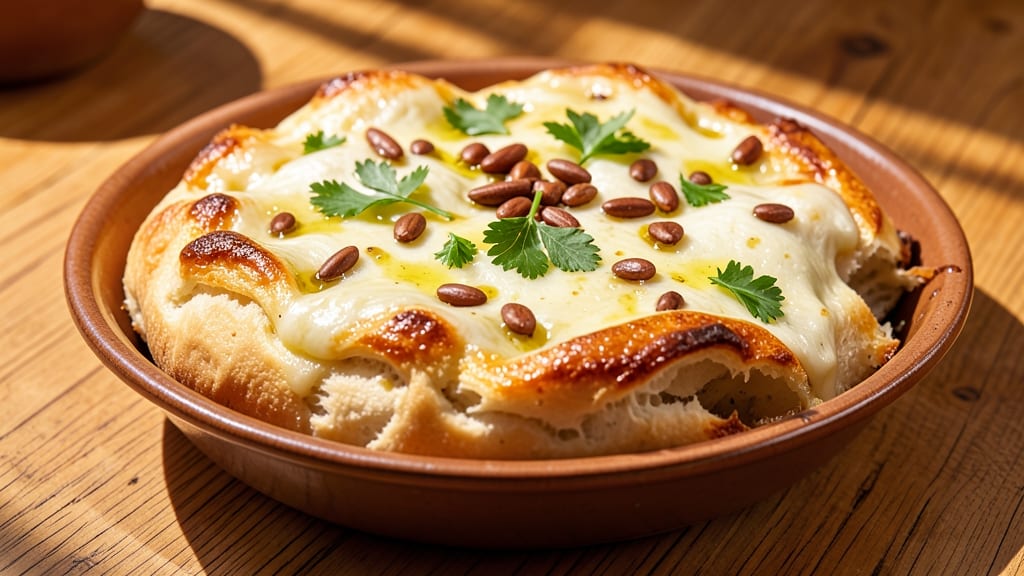
This Arabic cheese bread recipe delivers the perfect balance of crispy, za'atar-spiced crust and melty feta layers that steal every meal. 💛 The dough combines simple ingredients—flour, yeast, and warm water—while the filling transforms ordinary cheese into a rich, savory center.
What sets this apart is the traditional rolling technique, ensuring even layers and that signature golden-brown crust.
The beauty of this dish lies in its versatility—whether you're serving it as a side for grilled meats or as a standalone appetizer with hummus and tahini. The za'atar seasoning adds an aromatic depth that pairs beautifully with the creamy feta, creating a texture that's both satisfying and elegant.
No special equipment is needed, just patience for the dough to rise and a hot skillet or oven for baking.
What you'll end up with is a dish that feels like a taste of the Middle East—crispy on the outside, tender and cheesy inside, with every bite bursting with flavor. The aroma alone will have everyone gathering around the table, and the process is simpler than it looks.
This recipe is designed to impress without stress, making it perfect for weeknight dinners or special occasions.
Serve it warm with a side of fresh salad or grilled vegetables for a complete meal. The combination of textures and flavors makes this bread a standout, whether you're cooking for family or hosting a dinner party. Let's get started!
Ingredients for arabic cheese bread
Simple dough meets bold za'atar and creamy feta for a bread that steals every bite.
| Ingredient | Amount | Notes |
|---|---|---|
| All-Purpose Flour 🌾 | 4 cups | Sifted for light texture |
| Active Dry Yeast 🍞 | ¼ tsp | Or 1 packet instant yeast |
| Granulated Sugar 🍚 | 1 tbsp | Feeds yeast activation |
| Warm Water 💧 | 1 ¼ cups | 110°F for optimal yeast |
| Unsalted Butter 🧈 | ¼ cup | Cold, cubed for dough |
| Extra-Virgin Olive Oil 🫒 | 2 tbsp | For dough elasticity |
| Diamond Crystal Kosher Salt 🧂 | 1 tsp | Adjust to taste |
| Block Feta Cheese 🧀 | 8 oz | Crumbled, not pre-shredded |
| Za'atar Seasoning 🌿 | 2 tbsp | For authentic flavor |
| Garlic Cloves 🧄 | 2 cloves | Minced for filling |
| Fresh Parsley 🌿 | ¼ cup | Chopped, for freshness |
| Sesame Seeds 🌰 | 1 tbsp | For crunchy topping |
| Vegetable Oil 🫒 | 2 tbsp | For skillet or baking |
The flour is your foundation—King Arthur or Gold Medal brands work best for that tender yet sturdy texture. Za'atar is non-negotiable here; look for the Middle Eastern blend with sumac and sesame at specialty stores like Whole Foods or Middle Eastern markets. If you can't find za'atar, mix 1 tbsp sesame seeds, 1 tsp dried thyme, 1 tsp sumac, and ½ tsp cumin as a substitute. The feta needs to be block-style, not pre-shredded—it melts better and won't dry out the bread. For the yeast, check the expiration date—old yeast won't activate properly, and you'll end up with flat dough.
No za'atar? A blend of dried oregano, thyme, and sesame seeds works in a pinch, though it won't be as complex. Fresh parsley can be swapped for dried parsley at half the amount, but fresh adds that bright pop. The garlic can be roasted for a milder flavor if you're sensitive to raw garlic's bite. For the dough, don't over-knead—just mix until combined. If your kitchen is cold, warm the butter slightly before mixing for easier incorporation. The sesame seeds? Toast them in a dry pan for 30 seconds before sprinkling for extra crunch.
Dough keeps best in the fridge for up to 2 days—let it come to room temp before rolling. The assembled bread can be prepped ahead and refrigerated overnight, then baked straight from the fridge for even cooking. For storage, cool completely before wrapping in foil or a bread bag to prevent sogginess. Leftovers reheat beautifully—wrap in foil and warm in a 350°F oven for 5-10 minutes to restore crispiness. Freeze uncooked dough balls for up to 3 months; thaw and proceed with the recipe as written.
Why You'll Love This Recipe
- No Yeast Hassle: Mixing the dough takes two minutes—just flour, yeast, sugar, and warm water. No kneading, no waiting for hours, just a quick stir and let it rise while you prep dinner. Honestly, my lazy nights thank me every time.
- Buttery Cheese Magic: That pull-apart, golden crust with gooey melted cheese inside? It’s the butter and sugar working together—simple ingredients, but the combo is ridiculously good. My kids fight over the last piece before it even hits the table.
- Weeknight Hero: Throw it in the oven while you grill kebabs or simmer a stew. It’s ready in under an hour, feeds a crowd, and pairs with everything—hummus, soups, even just on its own. Between us, it’s my go-to when I don’t want to think too hard.
- Budget Stretch: Flour, yeast, butter—these are pantry staples you already own. A single batch stretches to leftovers for days, and the dough doubles if you’re feeding extras. Not the prettiest, but the taste makes up for it every time.
Step-by-step instructions for za'atar-spiced cheese bread
Here's the method that delivers crispy crusts and melty feta layers every time.
👨🍳 Step 1: Activate the Yeast and Mix the Dough
In a large bowl, combine the 1.25 cups warm water (about 110°F) with the 1 tbsp granulated sugar and 0.25 tsp active dry yeast. Let it sit for 5-10 minutes until frothy—this confirms your yeast is alive and ready to work. If it doesn't bubble, your yeast is dead and you'll need to start over.
In a separate bowl, whisk together the 4 cups all-purpose flour (sifted), 1 tsp kosher salt, and 2 tbsp za'atar seasoning. Create a well in the center and pour in the yeast mixture along with the 0.25 cup cold cubed butter and 2 tbsp extra-virgin olive oil. Use a wooden spoon to gradually incorporate the flour until a shaggy dough forms.
🥘 Step 2: Knead Until Elastic and Smooth
Turn the dough onto a lightly floured surface and knead for 8-10 minutes until smooth and elastic. You'll know it's ready when it springs back slowly when poked and leaves the surface clean. This kneading develops gluten, which gives the bread its signature chewy texture.
Divide the dough into 4 equal portions (about 1 pound each) and shape each into a smooth ball. Place them in a lightly oiled bowl, cover with a damp towel, and let rise in a warm place for 1-2 hours or until doubled in size. The dough should feel light and airy when pressed gently.
🔪 Step 3: Prepare the Feta-Garlic Filling
While the dough rises, prepare the filling by crumbling the 8 oz block feta cheese into small, uneven pieces (don't over-process it—you want visible chunks). In a small bowl, mix the crumbled feta with the 2 minced garlic cloves, 2 tbsp za'atar seasoning, and 2 tbsp chopped fresh parsley. Set aside until ready to use.
Here's the thing—using block feta instead of pre-shredded is crucial. Pre-shredded cheese contains anti-caking agents that prevent proper melting. The za'atar adds that signature Middle Eastern flavor while the parsley keeps the filling fresh and vibrant.
🔥 Step 4: Shape and Proof the Dough
Punch down each risen dough ball to release air, then roll each into a 12-inch circle about ¼-inch thick. Spread about ¼ of the feta mixture evenly over each circle, leaving a ½-inch border around the edges. Gently fold the dough over the filling to create a half-moon shape, sealing the edges by pinching with your fingers.
Place each shaped bread on a parchment-lined baking sheet, seam-side down. Cover loosely with a towel and let proof for another 30-45 minutes until the dough has risen noticeably and feels spongy to the touch. The edges should pull away slightly from the filling when gently pressed.
🔥 Step 5: Bake Until Golden and Crispy
Preheat your oven to 375°F. Brush the tops of the breads with a little water or 2 tbsp vegetable oil to help them brown beautifully. Bake for 25-30 minutes until the crust is deep golden brown and the internal temperature reaches 190°F. You'll smell that irresistible combination of toasted za'atar and melting cheese—don't walk away during the last 10 minutes or you'll miss the perfect moment.
Remove from the oven and immediately sprinkle with 1 tbsp sesame seeds for that final crunchy texture. Let cool for 5 minutes before serving—this resting time allows the filling to set slightly so it doesn't ooze out when you slice. Serve warm with a side of garlic yogurt or spicy harissa for dipping.
Pro Tips For Making Arabic Cheese Bread
- STRETCH THE DOUGH LONG: The bread’s signature flaky layers come from kneading until the dough is smooth and slightly tacky—not stiff, not sticky, but just past the point where it springs back when poked. I used to rush this, and my bread turned out dense. Give it 8-10 minutes by hand or 5-6 on low speed in a mixer.
- USE COLD BUTTER: Cut that unsalted butter into small cubes and freeze it for 10 minutes first. When you fold it into the dough, those cold chunks will create pockets of steam during baking, making the bread light and airy instead of greasy. Trust me, your bread will thank you—even if your kitchen smells like a bakery for a minute.
- LET THE YEAST PROOF PROPERLY: Skip the microwave shortcut—yeast needs warm water (105-110°F) and 10 minutes to activate fully. If it’s foamy but sluggish, give it another 5. A slow, steady rise means better flavor and texture. I learned this the hard way when my first batch tasted flat—turns out, "warm" isn’t the same as "hot."
- BAKE UNTIL GOLDEN, NOT JUST SET: The bread’s done when the top is deep golden brown, not pale beige. If you pull it out too early, it’ll taste undercooked and gummy. Crank the oven to 375°F (not 350°F) and bake for 20-25 minutes—watch it closely after 15. The cheese should pull away from the edges, and the crust should crackle when tapped.
Troubleshooting perfect results
Dough Too Sticky
If your dough feels too sticky after kneading, resist the urge to add more flour—it can make the crust tough. Instead, wet your hands slightly and knead for another 2-3 minutes to develop gluten. The dough should feel smooth but not dry.
If it's still sticky, place it back in the bowl, cover with a damp towel, and let it rest for 10 minutes before shaping. This helps the gluten relax and makes handling easier. 💛
Filling Oozing Out
When the feta filling escapes during baking, it's usually because the dough wasn't sealed properly. Press the edges firmly together before proofing, and pinch them tightly when shaping.
For extra security, use a little water to dampen the dough edges—this creates a better seal. Also, avoid overfilling; stick to the ½-inch border recommendation to prevent leaks.
Uneven Baking
If your bread turns out pale in spots, rotate the baking sheet halfway through baking to ensure even heat distribution. For extra browning, brush the tops with more oil or water before placing in the oven.
If using a skillet, preheat it over medium-high heat for 2 minutes before adding the bread to create a crispier crust. A dark-colored skillet (like cast iron) will give you better browning than stainless steel.
Dense or Heavy Texture
Over-kneading or under-proofing are the most common causes of dense bread. Knead just until the dough is smooth and elastic (8-10 minutes), and don't rush the proofing—let the dough rise until it's doubled in size.
If your kitchen is cold, place the dough in a warm spot (like a turned-off oven with the light on) to help it rise properly. Also, ensure your yeast is fresh and active.
Cheese Not Melty
Pre-shredded cheese is the #1 culprit for dry, unmelted filling. Always use block feta and crumble it yourself for the best results. For extra meltiness, add 1 tbsp heavy cream to the filling mixture.
If your oven runs hot, reduce the temperature to 350°F and bake for 35-40 minutes to allow the cheese to melt gently rather than cook too quickly.
Nutrition facts
Frequently asked questions
What's the difference between this Arabic cheese bread and manakeesh?
While both are Middle Eastern cheese breads, manakeesh is typically a flatbread topped with cheese and baked until crispy—no yeast involved. This recipe uses a yeasted dough for a softer, chewier texture with za'atar-spiced layers. Manakeesh is more like a pizza crust, while this is closer to a stuffed bread pocket.
Can I make this bread without za'atar?
If you can't find za'atar, substitute with 1 tbsp sesame seeds + 1 tsp dried thyme + ½ tsp cumin. For a simpler version, just use 1 tsp dried oregano + ½ tsp garlic powder. The key is balancing earthy and savory flavors to complement the feta. The bread will still taste delicious—just slightly less aromatic.
How do I store leftovers to keep them crispy?
Cool completely, then wrap tightly in foil or place in an airtight container. For reheating, wrap in foil and warm at 350°F for 5-10 minutes. The foil traps moisture while the oven's heat reactivates the crust. For extra crispiness, toast slices in a dry skillet over medium heat for 1-2 minutes per side. Store in the fridge for 3 days or freeze for 3 months.
What's the best cheese alternative if I don't have feta?
For authentic flavor, use akkawi cheese (a Middle Eastern soft cheese) if available. Other good options: mozzarella (for meltiness) or halloumi (for a firmer texture). Avoid pre-shredded cheeses—they contain anti-caking agents that prevent proper melting. If using halloumi, reduce baking time by 5 minutes as it doesn't melt as easily.
Can I make this bread in a skillet instead of the oven?
Yes! For a restaurant-style crust, heat 2 tbsp oil in a cast-iron skillet over medium-high heat until shimmering. Carefully place the shaped bread in the skillet, cover, and cook for 4-5 minutes per side until golden brown. Flip carefully using a plate—cast iron gives that perfect crispy crust while keeping the inside tender.