
Breakfast & Brunch
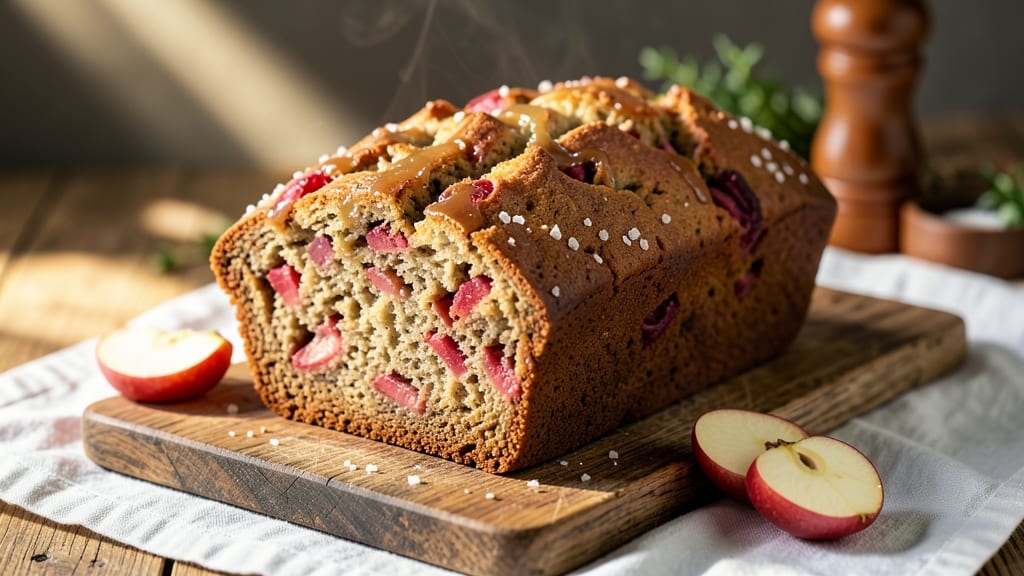
This apple bread recipe with buttermilk delivers moist crumb and caramelized apple bursts that make every slice feel like a warm hug. 💛 The secret lies in buttermilk’s tangy richness, which tenderizes the dough while balancing the sweetness of diced apples and brown sugar.
I’ve perfected this version over years of baking—it’s the kind of bread that disappears from the counter faster than you can say "second slice."
The dough comes together with simple ingredients but yields restaurant-quality texture: a tender crumb with pockets of buttery swirls and juicy apple pieces that stay moist even days later.
Unlike quick breads, this yeast-leavened version develops deeper flavor during the slow rise, while the apples caramelize beautifully in the oven for that perfect balance of sweet and tart.
What makes this recipe stand out is the foolproof technique that ensures success every time: proper dough hydration, a gentle knead, and precise baking at 350°F for golden perfection. The buttermilk doesn’t just add moisture—it creates that signature tangy depth that elevates the bread beyond basic apple loaves.
Serve warm with butter, drizzle with honey, or pair with coffee for a breakfast that feels like a celebration. The leftovers? Even better the next day. Let’s bake this bread!
Ingredients for apple bread recipe with buttermilk
Simple ingredients that transform into restaurant-quality apple bread with buttery swirls and caramelized apple bursts.
| Ingredient | Amount | Notes |
|---|---|---|
| All-Purpose Flour 🌾 | 4 cups | Sifted for lighter texture |
| Granulated Sugar 🍚 | 1 ½ cups | White or light brown |
| Packed Brown Sugar 🍚 | ½ cup | Light or dark variety |
| Buttermilk 🥛 | 1 cup | Room temperature preferred |
| Large Eggs 🥚 | 1 whole | Room temperature for even baking |
| Unsalted Butter 🧈 | ½ cup | Cold, cubed for dough |
| Active Dry Yeast 🍄 | ¼ oz | 1 packet, fresh preferred |
| Granny Smith Apples 🍎 | 2 medium | Peeled, diced into 1/2-inch pieces |
| Salt 🧂 | 1 tsp | Kosher or sea salt |
| Ground Cinnamon 🌿 | 1 ½ tsp | Freshly ground preferred |
| Ground Nutmeg 🌿 | ½ tsp | Freshly grated nutmeg |
| Vanilla Extract 💧 | 1 tsp | Pure vanilla preferred |
| Vegetable Oil 🫒 | ¼ cup | For greasing loaf pan |
The buttermilk is non-negotiable here—it creates that signature tangy depth that sets this bread apart. Store-bought buttermilk works fine, but if you need to substitute, mix 1 cup milk with 1 tablespoon lemon juice and let sit 5 minutes. For the apples, Granny Smiths are ideal—they hold their shape while baking and add a nice tartness to balance the sweetness. Most grocery stores carry them year-round, but check the produce section near the regular apples. If you can't find Granny Smiths, Fuji or Honeycrisp work too, though they'll get softer faster during baking. The yeast should be fresh—if it's old, it'll take longer to activate or may not work at all.
No buttermilk? Plain yogurt thinned with milk is a solid swap, though the flavor won't be identical. Running out of vanilla? Almond extract at half the amount gives a different but still pleasant note. The cinnamon and nutmeg are where the magic happens—don't skimp. Penzeys or Spicewalla have excellent whole spices if you want to grind your own for deeper flavor. The brown sugar adds moisture and caramelization, so don't substitute with white sugar only. For the dough, King Arthur or Gold Medal flour are my go-tos—they give the best rise and texture. If you're at Whole Foods, their organic flour works beautifully too.
This dough needs time to rise properly—at least 1 hour, up to 2 hours in a warm spot. The apples can be prepped ahead and stored in the fridge for 1 day before baking. For best results, bake immediately after shaping. The bread keeps well at room temperature for 2 days wrapped in a clean kitchen towel, or 5 days in the fridge. For longer storage, freeze the baked loaf—it reheats beautifully in a 350°F oven for 10 minutes or at 30-second intervals in the microwave. Slice and toast for that perfect crunch every time.
Why You'll Love This Recipe
- No-Fuss Mix-In: The dough comes together in one bowl—no yeast, no kneading, just fold in your chopped apples right into the flour, sugar, and buttermilk. Honestly, I’ve made bread that took twice the effort and tasted half as good.
- Buttermilk Magic: That tangy buttermilk cuts through the sweetness of the brown sugar and apples, giving the crumb a tender, slightly tangy bite. Between us, it’s the secret weapon that keeps this from being just another basic loaf.
- Breakfast to Brunch: Slice it warm with butter for a lazy morning, or pack it for lunch—it’s just as good cold the next day. I’ve even used it as a base for French toast (yes, even on a Tuesday night).
- Budget-Friendly Staples: Flour, sugar, and eggs are pantry basics, and a few apples stretch the recipe further than you’d think. My kids fight over the leftovers, and I’ve never once regretted baking an extra loaf.
Step-by-step instructions for apple bread with buttermilk
Here's how to craft a tender loaf with perfect apple bursts and a buttery swirl that melts in your mouth.
👨🍳 Step 1: Prepare the Apple Filling and Yeast Mixture
In a small bowl, combine the diced 2 medium Granny Smith Apples with 1.5 teaspoons Ground Cinnamon, 0.5 teaspoon Ground Nutmeg, and 1 tablespoon of the 1.5 cups Granulated Sugar. Set aside—this will be your filling. The apples should soak up the spices and sweetness, softening slightly as they wait.
In the bowl of a stand mixer fitted with the dough hook, whisk together 0.25 oz Active Dry Yeast with ¼ cup of the 1 cup Buttermilk and 1 tablespoon of the 1.5 cups Granulated Sugar. Let this sit for 5 minutes until frothy. This activates the yeast—you'll see tiny bubbles forming, signaling it's ready to work. If it doesn't bubble, your yeast may be old; start over with fresh yeast.
👨🍳 Step 2: Mix the Dough to a Smooth, Elastic Texture
Add the remaining 1 cup Buttermilk, 1 whole Large Eggs, 1 teaspoon Vanilla Extract, and 1 teaspoon Salt to the yeast mixture. Mix on low speed until combined, then gradually add 4 cups All-Purpose Flour and 0.5 cup Packed Brown Sugar while mixing on low. Increase speed to medium and knead for 5 minutes until the dough pulls away from the sides of the bowl and forms a smooth, elastic ball.
Here's the thing—you want to avoid overworking the dough. It should be soft but not sticky (add more flour if needed) and spring back when poked. If it feels too tough, you've kneaded too long. The goal is tender crumb, not dense bread. Once it passes the "windowpane test" (stretch a piece—it should be thin enough to see light through without tearing), you're ready for the next step.
🥘 Step 3: Create the Buttery Swirl and Shape the Loaf
Remove the dough from the mixer and place it on a lightly floured surface. Roll it into a 12x18-inch rectangle about ¼-inch thick. Cut the 0.5 cup Unsalted Butter into 8 equal pieces and arrange them in a line down the center of the dough, spaced about 2 inches apart. Fold the sides of the dough over the butter, then carefully roll the dough into a log, sealing the seam.
Now for the filling: Gently press the apple mixture into the center of the rolled dough, distributing it evenly. Fold the dough over the apples and roll it again into a tight log, sealing the seam. This creates those signature apple bursts when sliced. Place the loaf seam-side down in a greased 9x5-inch loaf pan that's been lightly brushed with 0.25 cup Vegetable Oil. The oil prevents sticking and ensures easy release.
🔥 Step 4: Proof and Bake to Golden Perfection
Cover the loaf pan with a clean kitchen towel and let it rise in a warm place for 1-1.5 hours or until the dough has doubled in size and reaches just above the rim of the pan. A good test is to gently press your finger into the dough—if it springs back slowly (not immediately), it's ready. Overproofing leads to a dense loaf, so keep an eye on it.
Preheat your oven to 350°F. Once the dough has proofed, bake for 50-60 minutes until the top is deep golden brown and a toothpick inserted in the center comes out clean. The bread should have a beautiful crack on top and smell like warm apples and cinnamon. If the top browns too quickly, tent it loosely with foil after 30 minutes to prevent over-browning while the center finishes baking.
⏰ Step 5: Cool and Slice for Maximum Flavor
Remove the loaf from the oven and transfer it to a wire rack to cool for at least 15 minutes. The bread will be warm and tempting, but cutting it too soon causes it to crumble. This resting period allows the crumb to set and the flavors to meld. For the best texture, let it cool completely before slicing—this ensures clean cuts and prevents a gummy interior.
Once cooled, slice into ¼-inch thick pieces to reveal those buttery swirls and apple bursts. Serve warm with a pat of butter or a smear of cream cheese. The contrast of tender crumb, sweet apples, and rich butter makes this bread irresistible. Store leftovers wrapped in plastic at room temperature for up to 3 days, or freeze for longer storage.
Pro Tips For Making Apple Bread Recipe With Buttermilk
- MEASURE BUTTERMILK PRECISELY: The recipe calls for buttermilk, but store-bought versions often vary in thickness. Use a liquid measuring cup and give it a gentle shake before measuring—thicker buttermilk makes a denser batter, while thin buttermilk creates a lighter crumb. If you’re making your own (milk + vinegar), let it sit for 10 minutes to curdle fully.
- STIR DRY INGREDIENTS FIRST: Before adding wet ingredients, whisk the flour, sugars, and spices together in the bowl. This prevents lumps when you pour in the buttermilk and eggs, especially with brown sugar. I used to skip this and ended up with a gummy, uneven texture—now I always mix dry first.
- DON’T OVERMIX THE BATTER: Once you add the wet ingredients, stir just until combined—maybe 15-20 strokes max. Overmixing develops gluten, which turns your tender apple bread into a chewy loaf. The batter should look shaggy, not smooth.
- USE COLD APPLES (IF ADDING): If the recipe includes chopped apples, toss them in cold water first to prevent browning, then pat dry. Cold apples also release less juice into the batter, keeping your bread from getting soggy. (Yes, even if the recipe doesn’t mention it—trust me on this.)
Perfect pairings for this dish
Morning Coffee Pairings
This apple bread shines brightest with a strong brew of freshly ground coffee. I recommend a medium-roast dark coffee like Peet’s Major Dickason’s Blend—its caramel notes complement the bread’s buttery swirls beautifully. For a lighter option, try a light-roast Ethiopian with floral notes that contrast the apples’ tartness. ☕
If you prefer tea, an Earl Grey with its bergamot citrus adds an elegant touch. The tea’s floral aroma enhances the cinnamon and nutmeg in the bread, creating a sophisticated pairing. For a caffeine-free option, chamomile tea with a hint of honey balances the bread’s richness perfectly.
Buttery Spreads
Nothing beats this bread with a generous smear of cultured butter like Plugrá or Kerrygold. The saltiness of the butter cuts through the sweetness, while the fat keeps each bite moist.
For a gourmet twist, try brown butter—its nutty depth elevates the apple flavors to new heights. 🧈
Cream cheese lovers will adore this bread with a dollop of whipped cream cheese mixed with a touch of vanilla extract. The tangy cream cheese softens the bread’s texture while adding a luxurious mouthfeel. For a sweet variation, mix in ½ tsp cinnamon—it’s like dessert for breakfast.
Sweet Toppings
Drizzle warm slices with local honey—I love Buckwheat Honey for its robust flavor. The honey’s floral notes harmonize with the apples, while its viscosity coats each bite. For a fruity twist, top with thinly sliced strawberries—the acidity brightens the bread’s richness.
Caramel lovers shouldn’t miss the homemade salted caramel sauce—just heat ½ cup granulated sugar in a saucepan until melted, then pour into ½ cup heavy cream while stirring. Finish with a pinch of flaky sea salt—the contrast of sweet, salty, and buttery is pure magic.
Savory Contrasts
For a breakfast that surprises, pair this sweet bread with crispy bacon—the smoky saltiness balances the fruit’s sweetness. I like applewood-smoked bacon—its deep flavor complements the apples beautifully. For a lighter option, try turkey bacon—it’s leaner but still delivers great flavor.
Scrambled eggs with sharp cheddar cheese—like Cabot Clothbound Cheddar—add a savory element that rounds out the meal. The cheese’s tang cuts through the bread’s sweetness, while the eggs provide protein for a satisfying start to the day. 🍳
Nutrition facts
Frequently asked questions
Why does this recipe use buttermilk instead of regular milk?
The buttermilk adds tangy richness that tenderizes the dough and balances the sweetness of the apples. It also creates a lighter crumb compared to milk, plus the acidity helps activate the yeast for a better rise. For a quick swap, mix 1 cup milk with 1 tablespoon lemon juice and let sit for 5 minutes.
Can I make this bread without yeast? What's the difference?
Yes, but the texture will be denser. Use 1 teaspoon baking powder and ½ teaspoon baking soda instead of yeast, and reduce baking time to 40-45 minutes. The yeast version develops deeper flavor during the 1-1.5 hour rise, while quick breads bake faster but have a coarser crumb.
How do I know when the dough is ready to bake?
The dough is ready when it’s doubled in size and springs back slowly when poked (not immediately). For visual confirmation, the top should reach just above the loaf pan rim. If it doesn’t rise enough, your kitchen may be too cold—try placing the pan on a preheated oven with the light on for 10 minutes to warm it.
What if my bread turns out too dense?
Over-kneading or underproofing usually causes this. For next time, knead only until the dough passes the "windowpane test" (5 minutes max in mixer). Also ensure your yeast is fresh—it should bubble within 5 minutes when mixed with warm buttermilk. If the problem persists, try replacing ½ cup flour with cake flour for a lighter texture.
Can I use frozen apples instead of fresh?
Thaw and drain the apples first, then pat them completely dry with a paper towel. Frozen apples work well, but they’ll release more moisture during baking, so reduce the baking time by 5-10 minutes and check for doneness at 45 minutes. Avoid using canned apples—they’re too mushy and lack the fresh flavor.