
Side Dishes
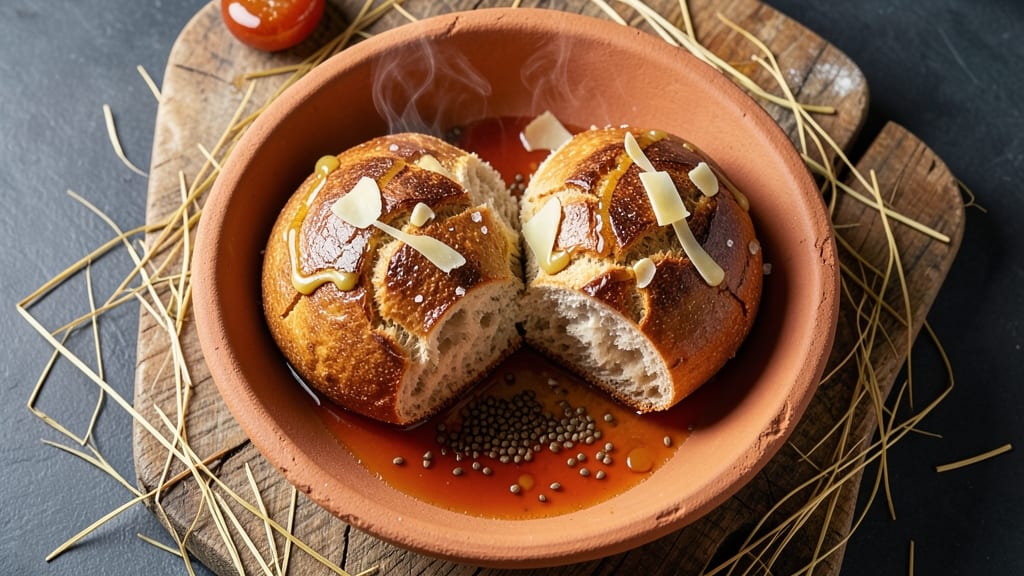
This ancient Egypt bread recipe brings the flavors of the Nile to your kitchen with its crispy, golden edges and tender interior—just like the flatbreads baked over 3,000 years ago.
The secret lies in emmer wheat flour, a grain cultivated along the Nile, combined with a touch of honey and earthy spices that were staples in pharaonic kitchens.
What makes this recipe special is its simplicity: no yeast required, just a few ingredients and a hot skillet to recreate the traditional baking method.
The bread’s crispy texture comes from a quick, high-heat cook that mimics the clay ovens of ancient Egypt, while the honeyed spice blend adds a subtle sweetness that balances the earthy grain. This recipe stays true to historical techniques while adapting for modern kitchens—no special equipment needed.
The result is a bread that’s both rustic and elegant, perfect for dipping in olive oil or pairing with stews, just as it was in ancient times.
By the time you pull the last flatbread from the skillet, you’ll have a dish that transports you to the banks of the Nile—crispy on the outside, soft and fragrant on the inside, with a hint of honey that ties it all together.
The aroma alone will remind you why this bread was a cornerstone of Egyptian cuisine for millennia. Ready to bake history into your kitchen?
Whether you’re recreating an ancient meal or simply craving something unique, this bread delivers crispy, authentic results with minimal effort. The technique is foolproof, and the ingredients are easy to find—just emmer wheat flour, water, honey, and a pinch of salt. Let’s bring this piece of history to life.
Ingredients for ancient egypt bread
Four ingredients plus spices bring ancient Egyptian flatbreads to your kitchen table.
| Ingredient | Amount | Notes |
|---|---|---|
| Emmer Wheat Flour 🌾 | 2 cups | Unbleached for authentic texture |
| Warm Water 💧 | 1 ¼ cups | 105°F, not boiling |
| Raw Honey 🍯 | 2 tbsp | Local preferred for flavor |
| Ground Cumin 🌿 | ½ tsp | Toasted for depth |
| Sea Salt 🧂 | ½ tsp | Fine grain preferred |
| Olive Oil 🫒 | 2 tbsp | Extra-virgin for richness |
| Ground Coriander 🌿 | ¼ tsp | Freshly ground preferred |
| Sesame Seeds 🌰 | 1 tbsp | Toasted for crunch |
Emmer wheat flour is the heart of this recipe—Bob's Red Mill or King Arthur brands work best for their fine grind. If you can't find emmer, whole wheat flour is a decent substitute, though the texture will differ slightly. Warm water is critical: too hot and the dough will overdevelop; too cold and it won't activate properly. The honey should be raw and unprocessed—Manuka or clover work beautifully. For the spices, Penzeys sells toasted cumin and coriander that elevate this dish from good to extraordinary. If you're feeling adventurous, toast the spices yourself in a dry skillet for 30 seconds before mixing—the aroma alone transports you to ancient Egypt.
No emmer flour? Whole wheat or spelt flour can stand in, though the texture will be denser. Honey can be swapped for date syrup or maple syrup, though the flavor profile shifts slightly. Sesame seeds are optional but add that authentic crunch—toasted poppy seeds work if you're out. The olive oil matters here: use something with good fruity notes, like California Extra Virgin. For a gluten-free version, substitute almond flour or a gluten-free 1:1 blend, though the crispiness will be less pronounced. The key is balancing the honey's sweetness with the earthy spices—don't skimp on either.
This dough keeps well in the fridge for 3 days wrapped tightly in plastic. For longer storage, freeze portions in 1-inch thick discs for up to 3 months. To reheat, warm in a dry skillet over medium heat for 2-3 minutes per side. The bread freezes best before shaping—roll out after thawing. For serving, keep the flatbreads wrapped in a clean kitchen towel to maintain crispiness. These reheat beautifully and taste even better the second day, making them perfect for meal prep. The sesame seeds will lose their crunch if stored too long, so toast fresh before serving if possible.
Why You'll Love This Recipe
- Four-Ingredient Magic: I swear, this bread requires nothing but flour, water, honey, and a pinch of cumin—no yeast, no kneading, no waiting. Just mix, shape, and bake. That’s it.
- Earthy-Sweet Crunch: The raw honey caramelizes into a sticky glaze while the cumin adds this warm, toasty depth—like a cross between sourdough and a spiced flatbread. Honestly, I reach for this over store-bought every time.
- Breakfast to Dinner Star: Toast it for breakfast with olive oil and honey, tear it into stews for heartiness, or pack slices for lunch. My kids even eat it plain—no judgment here.
- Zero-Waste Pantry Hero: Emmer flour is cheap, lasts forever, and this recipe uses what you’ve got. A single batch stretches into days, and the leftovers? Even better reheated with a sprinkle of salt. Budget win.
Step-by-step instructions for ancient Egyptian flatbread
Recreate the golden, crispy flatbreads of pharaonic kitchens using only eight ingredients and a hot skillet.
Mix the Dough with Warm Water and Honey
In a large bowl, combine the 2 cups Emmer Wheat Flour with the 0.5 tsp Sea Salt and 0.5 tsp Ground Cumin. Create a well in the center and pour in the 1.25 cups Warm Water (about 105°F) and 2 tbsp Raw Honey. The honey will help create a slightly sweet, tender crumb—just like the breads baked in ancient ovens.
Using a wooden spoon or your hands, mix the ingredients until a shaggy dough forms. The dough should be slightly sticky but not wet. If it feels too dry, add 1 teaspoon of warm water at a time until it comes together. Let the dough rest for 10 minutes—this allows the flour to fully hydrate and the gluten to relax, making rolling easier later.
Knead and Incorporate Olive Oil and Spices
Transfer the dough to a lightly floured surface and knead for 5-7 minutes until smooth and elastic. The dough should feel firm but still slightly tacky. Add the 2 tbsp Olive Oil and 0.25 tsp Ground Coriander to the dough and knead for another 2 minutes until fully incorporated. The olive oil adds richness and helps create that signature crispy texture.
Divide the dough into 4 equal portions (about 6 ounces each). Cover two portions with a damp towel and set aside while you work with the first two. This keeps the dough from drying out, which is crucial for handling. The coriander and cumin will infuse subtle warmth into each bite, just as spices did in ancient Egyptian cuisine.
Shape and Rest the Dough Balls
Take one portion of dough and roll it into a ball, then flatten it slightly into a disc about ½-inch thick. Repeat with the second portion. Place both discs on a floured surface and let them rest for 5 minutes. This resting period relaxes the gluten, preventing the bread from shrinking or tearing when rolled out.
While the dough rests, lightly toast the 1 tbsp Sesame Seeds in a dry skillet over medium heat for 1-2 minutes until fragrant. This enhances their nutty flavor and adds a delightful crunch to the finished bread. Set the toasted seeds aside for later.
Roll and Cook the Flatbreads
Heat a 10-inch skillet over medium-high heat until it’s hot but not smoking. Roll out one dough disc into a ¼-inch thick circle, about 6 inches in diameter. You’ll feel resistance at first, but keep pressing gently—this ensures even thickness for crispy edges.
Place the rolled flatbread in the hot skillet and cook for 1-2 minutes per side, until golden brown and crispy spots appear. The edges should puff slightly and develop a deep, caramelized color. Flip carefully using a thin spatula—if it releases easily, it’s ready. Transfer to a wire rack to keep warm while you cook the remaining flatbreads.
Serve with Toasted Sesame Seeds
Once all flatbreads are cooked, sprinkle each with the toasted sesame seeds while still warm. The seeds should stick to the crispy surface, adding texture and a nutty contrast to the soft interior. Serve immediately—these flatbreads are best enjoyed while still warm and crispy.
For an authentic touch, drizzle with a little extra raw honey or serve with a side of olive oil and fresh figs, just as they did in ancient Egypt. Each bite should deliver a perfect balance of crispy exterior, tender crumb, and subtle spice—just like the breads baked in the ovens of the Nile Valley.
Pro Tips For Making Ancient Egypt Bread
- STIR UNTIL STICKY: Emmer wheat flour is clingy—don’t just eyeball the water. Mix until the dough pulls away from the bowl in a thick, glossy sheet. Too dry? Add a splash more warm water. Too wet? Sprinkle in a pinch of flour. The goal is a dough that’s cohesive but still slightly tacky, not crumbly like regular bread dough.
- SALT THE HONEY: Skip salting the water and dissolve the sea salt directly into the honey before mixing. This ensures even distribution—no pockets of blandness. I learned this the hard way after biting into a piece with a weirdly unsalted center.
- REST THE DOUGH LONG: Ancient Egyptian bread wasn’t rushed. Let the dough sit covered for at least 2 hours (overnight is better) before shaping. This develops flavor and prevents it from crumbling when you try to flatten it. Yes, it’s an effort, but the texture makes up for it.
- FLATTEN WITH A ROLLING PIN: No ancient Egyptian tools? Use a rolling pin—but press firmly in one direction to create thin, even layers. Resist the urge to rotate mid-flattening, or you’ll end up with a lumpy mess. Aim for ¼-inch thickness for that classic flatbread crisp.
Essential equipment for ancient egypt bread
Skillet Essentials
Your 10-inch cast iron skillet is the star of this recipe—it retains heat perfectly and creates those signature crispy edges. I recommend a Lodge Pre-Seasoned Cast Iron Skillet for its even heating and durability.
If you don’t have cast iron, a well-seasoned stainless steel skillet works too, though you may need to adjust heat slightly. Preheat your skillet over medium-high heat until it’s hot enough to sizzle when you sprinkle water—this ensures proper browning. 🔥
Dough Tools
A wooden dough scraper and rolling pin make shaping this dough effortless. The scraper helps divide portions cleanly, while a lightweight rolling pin prevents flattening the dough too much. For extra authenticity, use a flat stone or slab if you have one—ancient Egyptians often used heated stones for baking.
If rolling feels tricky, press the dough gently with your hands instead for a rustic texture.
Measuring Accuracy
Precision matters for this recipe, especially with the warm water and honey. Use a thermometer to check water temperature—it should be 105°F, not boiling. For honey, a small kitchen scale ensures consistency, but a measuring spoon works fine too.
The dough’s stickiness is intentional—resist the urge to add extra flour, as it can make the bread tough. A light dusting of flour on your work surface is enough.
Spice Toasting
Toast your sesame seeds and spices in the same skillet you’ll cook the bread in—this infuses their flavors directly into the pan. Use a fine-mesh strainer to catch any stray seeds or spices that might burn.
For extra depth, lightly toast the cumin and coriander in the dry skillet for 30 seconds before mixing into the dough. This step transforms ordinary spices into aromatic highlights. 🌿
Resting and Storage
A damp kitchen towel keeps dough from drying out while you work. For storage, wrap leftover flatbreads in parchment paper and place them in an airtight container to maintain crispiness. If reheating, use the same skillet over medium heat for 1-2 minutes per side—no microwave needed.
The dough itself can be refrigerated for 3 days or frozen for 3 months in a ziplock bag with parchment between layers.
Nutrition facts
Frequently asked questions
Can I substitute emmer wheat flour if I can't find it?
Yes, you can use whole wheat flour or spelt flour as substitutes, though the texture will be slightly denser. For the closest experience, try a 1:1 blend of whole wheat and all-purpose flour. The honey and spices will still shine through, but expect a slightly chewier bite instead of the light, crispy texture of traditional emmer wheat bread.
Why does my dough feel too sticky?
The dough should be slightly sticky but manageable—this is normal for ancient Egyptian-style flatbreads! If it's too wet, add 1 tablespoon of flour at a time until it forms a cohesive ball. Overworking the dough can make it tough, so handle it gently. The stickiness helps create that signature tender crumb and crispy exterior.
How do I get the bread extra crispy like in ancient recipes?
For maximum crispiness, use a very hot skillet (test with a drop of water—it should sizzle immediately) and cook each side for 1-2 minutes until golden brown. Press the dough gently with a spatula while cooking to encourage even browning. The honey in the dough also helps create a slightly crispy edge, just like breads baked in ancient clay ovens.
Can I make this bread without a rolling pin?
Ancient Egyptians didn't have rolling pins—just use the flat of your hand or a wooden pestle to press the dough into shape. For extra authenticity, try using a hot stone or heavy plate to flatten the dough by placing it on the dough and pressing down. The bread will have a rustic texture but still be delicious.
What if I don't have sesame seeds?
No problem! Skip them or substitute with toasted poppy seeds or crushed nuts like almonds or pistachios for texture. The bread will still taste amazing—sesame seeds just add that extra crunch and nutty flavor that was common in ancient Egyptian cuisine. A sprinkle of flaky sea salt can also enhance the flavor if you're missing the seeds.