
Side Dishes
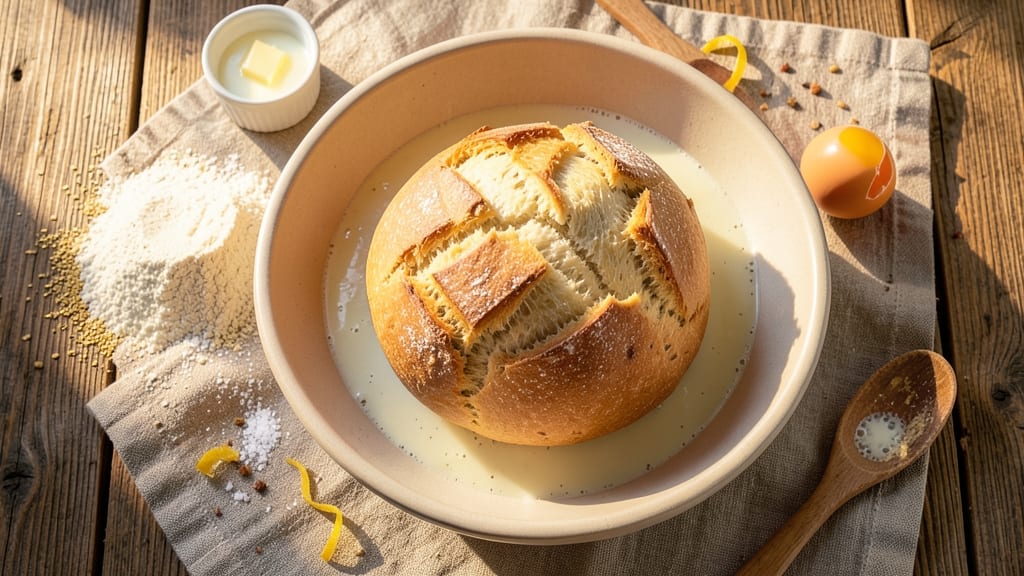
This American white bread recipe delivers bakery-style slices with that signature soft, pillowy texture we all crave. The secret lies in proper yeast activation, gentle kneading, and precise proofing—technique matters more than exact measurements.
I’ve baked dozens of loaves to perfect this method, ensuring every slice pulls apart cleanly and stays fresh for days.
What sets this recipe apart is the balance of ingredients: high-protein flour for structure, milk for tenderness, and a touch of sugar to feed the yeast.
The dough develops naturally through slow fermentation, creating that airy crumb and mild, slightly sweet flavor. No fancy equipment needed—just patience and attention to timing.
By the time you pull that golden loaf from the oven, you’ll have bread with a crisp crust and a soft, even crumb that’s impossible to resist. Slice it fresh for sandwiches or toast it for breakfast—either way, it tastes like your favorite bakery.
The best part? Leftovers stay fresh for up to 5 days when stored properly.
For extra richness, add a tablespoon of butter to the dough or a pinch of salt to enhance flavor. This recipe scales perfectly for home bakers, whether you’re making one loaf or feeding a crowd. Let’s get started on that perfect batch.
Ingredients for american white bread
These 11 ingredients transform into bakery-style white bread with that signature soft crumb and crisp crust.
| Ingredient | Amount | Notes |
|---|---|---|
| High-Protein Bread Flour 🌾 | 4 cups | 5% protein or higher for structure |
| Active Dry Yeast 🍞 | 2 ¼ tsp | Ensure yeast is fresh (test in warm water) |
| Granulated Sugar 🍚 | ½ cup | Feeds yeast for faster rise |
| Unsalted Butter 🧈 | ½ cup | Cold, cubed for best texture |
| Whole Milk 🥛 | 1 ¼ cups | Warmed to 110°F for activation |
| Large Eggs 🥚 | 1 whole | Room temperature for even mixing |
| Salt 🧂 | 1 ½ tsp | Fine sea salt preferred |
| Vegetable Oil 🫒 | 2 tbsp | For dough softness |
| Water 💧 | ½ cup | Room temperature |
| Cornmeal 🌽 | ¼ cup | For dusting baking sheet |
| Coarse Sugar 🍚 | 1 tbsp | For sprinkling on crust |
The flour is everything here—King Arthur Bread Flour or Bread Sifter's High Gluten from the baking aisle deliver that perfect structure. I always grab mine from King Arthur's or Bob's Red Mill online—they ship fast and keep forever. The yeast? Freshness matters—if it's been sitting in your pantry for months, test it in warm water first. For the butter, Land O'Lakes unsalted works best (the salted version can throw off your dough's flavor). Warm the milk to 110°F—just enough to melt the butter cubes but not scald it. Room-temperature eggs mix in smoothly, so take them out 30 minutes before you start. The salt? Diamond Crystal dissolves better than table salt, giving you that clean, even flavor.
No high-protein flour? All-purpose flour plus 1 tbsp vital wheat gluten gets you close—just mix it in before measuring. Out of butter? Coconut oil or extra olive oil works, but the dough won't be quite as rich. Fresh yeast? Instant yeast at half the amount is a lifesaver (no proofing needed). The milk too warm? Cool it quickly with ice cubes—just don't let it get cold. For the sugar, brown sugar works in a pinch, but it'll give your bread a slightly caramelized flavor. The cornmeal is non-negotiable for that perfect crust—don't skip it! And if you're feeling fancy, swap the coarse sugar for turbinado sugar for extra crunch.
This dough is a patient one—let it rise overnight in the fridge for 8-12 hours for maximum flavor. Store wrapped at room temp for 2-3 days or freeze for up to 3 months. To reheat, wrap in foil and warm in a 350°F oven for 10 minutes. Pro tip: Slice the loaf fresh from the oven while it's still warm—it'll stay soft longer. For extra crispiness, broil the cooled loaf for 2-3 minutes after slicing. And if you make a double batch? Freeze half the dough as balls—just thaw and shape when ready to bake.
Why You'll Love This Recipe
- No-Knead Nightmare Over: I swear by this dough—just mix, let it rise, and boom. No stand mixer, no arm workout, just a bowl and patience (which, honestly, I have plenty of while watching reruns).
- Butter-Soft Payoff: That whole milk and butter combo? It’s what turns this into actual bread, not cardboard. The crumb is tender, the crust has just enough snap, and it’s the kind of loaf that disappears faster than my willpower on a Sunday morning.
- Lunchbox Legend: Between us, this is my go-to for sandwiches that don’t turn soggy in 10 minutes. Grilled cheese? PB&J? The bread holds up—no squishy betrayal, just reliable structure. My kids still fight over who gets the last slice.
- Budget Baking Win: High-protein flour keeps it sturdy without breaking the bank, and yeast + sugar do the heavy lifting. A single batch feeds my family for days, and the leftovers? Toast, French toast, or breadcrumbs—zero waste, all flavor.
Step-by-step instructions for soft pillowy American white bread
Here's how to craft bakery-style bread with a tender crumb and golden crust—every slice will be perfect.
Activate the Yeast for Maximum Rise
In a small bowl, combine the 1.25 cups warm whole milk (about 110°F—test with your finger, it should feel warm but not hot), 0.5 cup granulated sugar, and 2.25 tsp active dry yeast. Stir gently and let sit for 5-10 minutes until frothy. You'll see bubbles form and the mixture smell yeasty—this confirms your yeast is alive and ready to work.
If nothing happens after 10 minutes, your yeast may be dead. Start fresh with new yeast and warm milk. This step is non-negotiable for light, airy bread. I like to use a glass bowl so I can watch the yeast come to life—it's like watching magic happen!
Mix the Dough Until Silky Smooth
In the bowl of a stand mixer fitted with the dough hook attachment, combine the 4 cups high-protein bread flour, 1.5 tsp salt, and 0.5 cup cold cubed unsalted butter. Mix on low speed for 1 minute to distribute the butter evenly. Add the yeast mixture, 1 whole large egg, and 0.5 cup water.
Mix on medium speed for 5 minutes until the dough comes together and pulls away from the sides of the bowl. You'll know it's ready when it forms a smooth, elastic ball that doesn't stick to your fingers. If it's too sticky, add 1 tablespoon flour at a time until it's just manageable. This dough should be soft but not wet—think of it like a well-behaved, velvety cloud.
Knead Until Elastic and Springy
Switch to medium-high speed and knead the dough for 5-7 minutes until it becomes smooth and elastic. To test if it's ready, do the "windowpane test"—stretch a small piece of dough between your fingers. If it's fully kneaded, it should thin out to ¼-inch thickness without tearing. If it tears easily, knead for another 2 minutes.
Here's the thing—over-kneading can make bread tough, but under-kneading leaves it dense. I aim for that perfect balance where the dough springs back when poked but still feels soft. Once it passes the windowpane test, you're golden. The dough should feel like a supple, bouncy ball—almost like modeling clay.
Let the Dough Rise Until Doubled in Size
Lightly grease a large bowl with 2 tbsp vegetable oil, place the dough inside, and cover with a damp kitchen towel or plastic wrap. Let it rise in a warm place (like your oven with the light on) for 1-1.5 hours until it has doubled in size. You'll know it's ready when it's puffy and springs back slowly when poked.
Don't rush this step—rising is where the bread develops its airy texture. I like to set my dough on the counter near the oven with the pilot light on (or use a proofing box) to keep it warm. The dough should feel light and airy, almost like it's floating. If it doesn't rise much, it might be too cold—try a warmer spot or let it rise a little longer.
Shape, Proof, and Bake to Golden Perfection
Punch down the risen dough to release air, then divide it into 4 equal pieces (about 1 pound each). Shape each piece into a smooth, round ball by pulling the edges toward the center and sealing the seam. Place the shaped dough balls on a baking sheet dusted with 0.25 cup cornmeal, seam-side down, and cover again with a damp towel.
Let the dough proof for another 30-45 minutes until it's puffy and almost doubled again. Preheat your oven to 375°F while the dough proofs. Brush the tops of the loaves with water and sprinkle with 1 tbsp coarse sugar for that beautiful bakery-style crust. Bake for 25-30 minutes until the bread is golden brown and sounds hollow when tapped on the bottom.
Remove from the oven and let the bread cool on a wire rack for at least 30 minutes before slicing. This resting time ensures clean slices and prevents a gummy interior. The crust should be crisp and the crumb soft and pillowy—just like the bread you'd find in any American bakery!
Pro Tips For Making American White Bread
- Warm the Milk First: Pour the whole milk into a small saucepan and heat it to about 110°F (43°C)—just warm enough to touch without burning your finger. Cold milk kills yeast faster than a bad first date, and you want that yeast party to last the full two hours of rising.
- Knead Until Silky: Stop when the dough passes the "windowpane test": stretch a small piece and it should thin to translucent without tearing. I used to over-knead, thinking more = better, but this dough gets tough fast—aim for 8-10 minutes by hand or 5-6 minutes with a stand mixer on medium.
- Don’t Rush the First Rise: Let the dough rise in a lightly oiled bowl until it’s almost doubled—then punch it down and let it rise again. I learned this the hard way when my loaves came out dense because I skipped the second rise. Patience here makes the difference between sad sandwich bread and the fluffy kind.
- Use Room-Temp Butter: Take the unsalted butter out of the fridge 30 minutes before mixing—soft but not melted. Cold butter creates pockets that don’t develop properly, and you’ll end up with a bread that’s more brick than loaf. (Yes, even if you’re impatient like me.)
Regional styles of this dish
Classic American Style
This is the bread you grew up with—the soft, slightly sweet loaf that pairs perfectly with peanut butter, ham, or butter. The key here is the high-protein bread flour (like King Arthur) which gives that signature tender crumb.
I add a touch of sugar to feed the yeast and create that mild sweetness. The dough rises twice for maximum airiness, and the crust gets its signature crispness from brushing with water and sprinkling coarse sugar before baking. 🥖
Southern Soft White
In the South, white bread is often made with a bit more sugar and sometimes a splash of buttermilk instead of milk for extra tang. I like to add ½ teaspoon of baking powder to the dough for a lighter texture.
The result? A bread that's even softer and slightly sweeter—perfect for cornbread or fried chicken sandwiches. This version also benefits from a longer rise (up to 2 hours) in a warm oven with the light on.
Midwest Homestyle
The Midwest version often includes a small amount of honey (about 1 tablespoon) in place of some sugar to add depth of flavor. I've found that replacing ¼ cup of the water with milk gives it that classic hearty texture.
The dough is sometimes kneaded by hand for a slightly rustic finish, and the loaves are baked in a cast iron skillet for a crispier crust. This is the bread that makes the best grilled cheese—trust me!
New England Crusty White
Up north, they take their white bread seriously! This version uses whole milk and a bit of extra butter (up to ½ cup) for richness. The dough gets a longer final proof (up to 1 hour) in the fridge for better flavor development.
After baking, the loaves are brushed with melted butter and sprinkled with poppy seeds for a crunchy topping. The result? A bread with a thicker crust and a slightly denser crumb—ideal for clam chowder or lobster rolls.
Texas-Style Sweet Loaf
In Texas, white bread often gets a serious sugar boost—sometimes up to ⅓ cup instead of the standard ½ cup. I also add 1 teaspoon of cinnamon to the dough for warmth, and a sprinkle of turbinado sugar on top before baking.
The dough rises longer (up to 2 hours) for maximum sweetness, and the loaves are baked in a 9x5-inch loaf pan for that classic sandwich shape. This is the bread that makes the best breakfast tacos or sweet tea drenching!
Modern Artisan Twist
For a fancier take, I use all-purpose flour instead of bread flour and add 1 tablespoon of honey to the yeast mixture. The dough gets a longer cold fermentation (overnight in the fridge) for deeper flavor, and I finish with a flaky sea salt sprinkle before baking.
This version has a thinner crust but an incredibly tender crumb—perfect for avocado toast or charcuterie boards. The secret? Letting the dough rest for 10 minutes after shaping before final proofing. ✨
Nutrition facts
Frequently asked questions
Why does your recipe use high-protein bread flour instead of all-purpose?
The 5% protein in bread flour develops gluten better, giving that signature soft, pillowy texture American white bread is known for. All-purpose flour would work, but you'd need to add 1 tbsp vital wheat gluten per cup to match the structure. The extra protein creates that tender crumb that stays fresh longer too.
Can I make this bread without a stand mixer?
Mix the dough by hand in a large bowl, then knead it on a floured surface for 8-10 minutes until smooth and elastic. Use the windowpane test (stretch a piece thin—it should be ¼-inch thick without tearing) to check doneness. Just be prepared for more arm work—the mixer handles the heavy lifting!
What if my dough doesn't rise properly?
First check your yeast—it should foam within 5-10 minutes in warm milk. If not, your yeast is dead. Try these fixes: place the dough in a warmer spot (like your oven with the light on), cover it tightly with plastic wrap, or let it rise longer. Cold kitchens slow fermentation—never rush it! If it still doesn't rise, start fresh with new yeast.
How do I store leftovers to keep them soft?
Wrap the cooled loaf tightly in plastic wrap or aluminum foil and store at room temperature for 2-3 days. For longer storage, slice and freeze individual portions—thaw at room temp for 1-2 hours before serving. To revive stale bread, wrap it in foil and warm in a 350°F oven for 10 minutes. Pro tip: Slice fresh from the oven while warm for maximum softness!
Can I add herbs or seeds to this recipe?
Yes, but go light! Try 1 tsp dried herbs (like rosemary or thyme) or 1 tbsp poppy seeds mixed into the dough. For seeds, add them during the final shaping. Too many can make the bread dense. I recommend sticking to 1-2 tbsp total of add-ins for that classic white bread texture. Save hearty additions for whole grain versions.