
Side Dishes
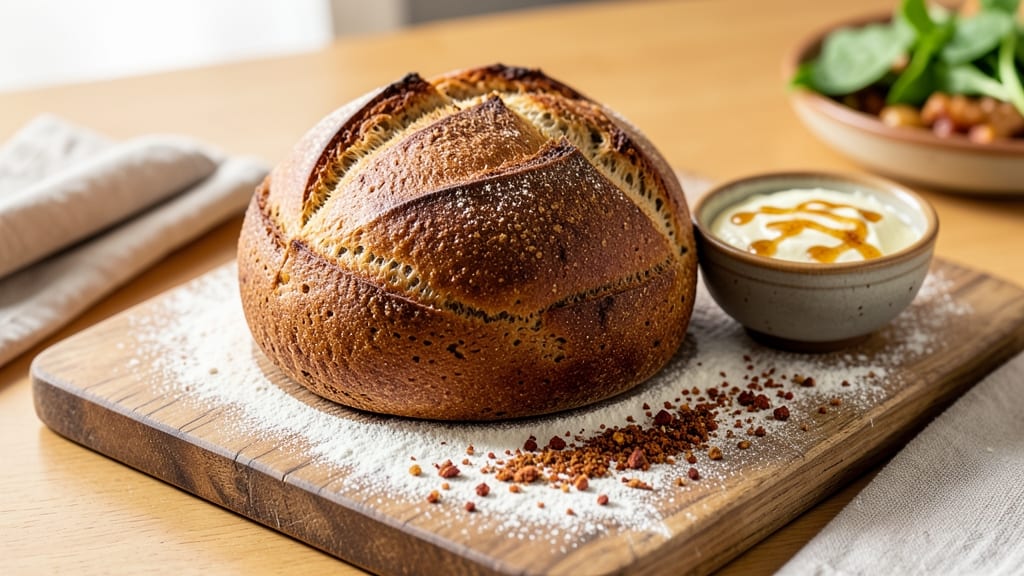
This Ambasha bread recipe brings the rich flavors of Ethiopia to your kitchen with its signature spice-infused flatbread. 🌟 Unlike traditional injera, Ambasha incorporates warm spices like cardamom and cinnamon into a slightly sweet, tender dough that pairs perfectly with stews and curries.
The secret lies in the dough's texture—soft yet sturdy enough to hold up to bold Ethiopian dishes.
What sets Ambasha apart is its aromatic blend of spices that infuse the dough while baking, creating a subtle warmth that complements the earthy taste of teff flour. This recipe delivers a perfect balance of tenderness and slight crispness, with a golden-brown finish that's impossible to resist.
The dough requires patience—kneading and resting are key to achieving that ideal texture.
By the time you pull these spiced flatbreads from the oven, you'll have a batch that's ready to serve alongside your favorite Ethiopian dishes.
The spices create a fragrant aroma that fills your kitchen, while the bread's soft yet sturdy structure makes it ideal for scooping up stews or wrapping around meats. This is comfort food at its finest, with a cultural twist.
Whether you're hosting a dinner or simply craving a taste of Ethiopia, Ambasha bread elevates any meal. The recipe scales easily, so you can make a small batch for two or a large one for a crowd.
Let's get started on creating this traditional flatbread that's as delicious as it is impressive.
Ingredients for ambasha bread
Six aromatic ingredients transform simple flours into Ethiopia's beloved spiced flatbread.
| Ingredient | Amount | Notes |
|---|---|---|
| Teff Flour 🌾 | 3 cups | Brown or ivory variety preferred |
| All-Purpose Flour 🌾 | 1 cup | For structure and texture |
| Active Dry Yeast 🍞 | ¼ oz | Or 2 packets (2.25g each) |
| Granulated Sugar 🍚 | ½ cup | For yeast activation |
| Warm Water 💧 | 1 ¼ cups | 110°F (43°C) ideal |
| Unsalted Butter 🧈 | ½ cup | Softened, full-fat preferred |
| Ground Cardamom 🌿 | 1 tbsp | Freshly ground for aroma |
| Ground Cinnamon 🌶️ | 1 tsp | Warm, not sweet |
| Ground Ginger 🌿 | ½ tsp | Freshly grated preferred |
| Salt 🧂 | 1 tsp | Kosher or sea salt |
| Extra-Virgin Olive Oil 🫒 | ¼ cup | For dough elasticity |
| Honey 🍯 | 2 tbsp | For subtle sweetness |
Teff flour is the heart of Ambasha—Ethiopian specialty stores or online retailers like Bob's Red Mill carry it in brown or ivory varieties. The brown has a nuttier flavor, while ivory is milder. If you can't find teff, buckwheat flour at half the amount works in a pinch (texture won't be identical, but it'll still taste amazing). For the spices, Penzeys Spices sells pre-ground cardamom and cinnamon blends perfect for this. Freshly grinding your own spices? Toast the whole spices in a dry pan for 30 seconds first—releases their oils and deepens the flavor. The butter should be soft but not melted; if it's too firm, microwave it for 20 seconds to just melt it.
No cardamom? Allspice at half the amount mimics its warmth, though the flavor won't be exact. Running low on honey? Maple syrup works 1:1, but it has a stronger flavor so use sparingly. The olive oil matters here—skip the cheap stuff. California Avocado Ranch or Bertolli brands have that fruity punch that carries through baking. For the yeast, if it's old or your kitchen is cold, proof it in warm water for 5 minutes before mixing. The dough will feel sticky—that's normal! Don't over-knead; teff flour releases gluten differently than wheat. If your dough cracks while shaping, brush it with a little water before baking.
Teff flour absorbs moisture fast, so mix your dry ingredients first. Store any extra teff in an airtight container in a cool, dark place—it keeps for up to 1 year. The dough can be refrigerated for 24 hours if wrapped tightly in plastic wrap. For best results, bake fresh and serve warm. These reheat beautifully in a 350°F (175°C) oven for 5-10 minutes—just wrap them in foil to keep them soft. Freeze unbaked portions between parchment paper for up to 3 months; bake straight from frozen, adding 2-3 extra minutes. The spices intensify as they cool, so let them rest for 5 minutes before serving.
Why You'll Love This Recipe
- Teff Magic Simplicity: I swear by this—just mix, knead, let rise. No fancy techniques, no measuring cups of butter, just teff flour’s earthy kick and yeast doing the heavy lifting.
- Earthy Sweet Crunch: That first bite? Warm, slightly sweet from the sugar, with a crust so crisp it snaps. The teff gives it a nutty depth you won’t find in regular bread.
- Weeknight Hero: Toss it in a basket with stew, tear it over salads, or just eat it straight. Honestly, I’ve had it for breakfast, lunch, and dinner—no judgment here.
- Budget-Friendly Staple: Teff flour’s pricey, but a little goes far. This dough stretches for days, freezes like a dream, and costs less than half what store-bought bread rings up.
Step-by-step instructions for Ethiopian spice-infused flatbread
Let's create this fragrant, golden ambasha bread with a perfect balance of spice and texture.
👨🍳 Step 1: Activate the Yeast and Mix Wet Ingredients
In a small bowl, combine the 1.25 cups warm water (around 110°F) with the 0.5 cup granulated sugar and 0.25 oz active dry yeast. Let it sit for 5-10 minutes until it becomes frothy—this confirms your yeast is active. If it doesn't bubble, your yeast might be dead, and you'll need to start over.
In a separate large mixing bowl, cream together the 0.5 cup softened unsalted butter and 2 tbsp honey until light and fluffy. This step ensures your bread will have that perfect tender crumb. I like to use a hand mixer for this part—it's quicker than doing it by hand and gives you that silky texture.
👨🍳 Step 2: Combine Dry Ingredients and Build the Dough
In the same large bowl, whisk together the 3 cups teff flour, 1 cup all-purpose flour, 1 tbsp ground cardamom, 1 tsp ground cinnamon, 0.5 tsp ground ginger, and 1 tsp salt. The cardamom and cinnamon will give your bread that distinctive Ethiopian aroma—trust me, it smells amazing. Sift the dry ingredients if you have a sifter, but whisking works too.
Gradually add the yeast mixture to the dry ingredients while mixing on low speed. Then, drizzle in the 0.25 cup extra-virgin olive oil and mix until just combined. The dough will be sticky—this is normal with teff flour. Scrape down the sides of the bowl and mix for another 2-3 minutes until everything comes together into a shaggy dough ball.
🥘 Step 3: Knead and Rest the Dough
Turn the dough out onto a lightly floured surface and knead for 5-7 minutes until smooth and elastic. I know it feels like a lot of work, but this step develops the gluten that gives ambasha its perfect texture. If the dough feels too sticky, wet your hands slightly—don't add more flour or it'll make your bread dense.
Place the dough in a lightly oiled bowl, cover it with a damp towel, and let it rise in a warm place for 1-2 hours or until it has doubled in size. I like to put my oven on its lowest setting with a cup of boiling water to create a warm, humid environment—this helps the dough rise evenly. Poke the dough gently with your finger; if it springs back slowly, it's ready.
🔥 Step 4: Shape and Proof the Dough
Punch down the risen dough to release any air bubbles, then divide it into 6 equal pieces (about 6 ounces each). Roll each piece into a ball, cover with the damp towel, and let them rest for 15-20 minutes. This final proofing step ensures your bread will have that perfect rise and texture.
After resting, roll each ball into a 6-inch circle about ¼-inch thick. I use a rolling pin, but you can also press them down gently with your hands if you prefer. Arrange the circles on a parchment-lined baking sheet, cover with the towel, and let them proof for another 30-45 minutes until they've puffed up slightly. The edges should look a bit puffy and the centers slightly domed.
🔥 Step 5: Bake to Golden Perfection
Preheat your oven to 375°F while the dough proofs. Once the oven is hot, bake the bread for 15-18 minutes until the edges are deep golden brown and the tops are slightly crispy. You'll smell that wonderful spice aroma filling your kitchen—it's worth the wait!
For extra crispiness, I like to transfer the baked bread to a wire rack and let it cool for 5 minutes before serving. The bread will be soft and pillowy inside with a slightly crisp exterior—perfect for serving with Ethiopian stews or as a delicious snack on its own. Store any leftovers in an airtight container for up to 3 days, or freeze for longer storage.
Pro Tips For Making Ambasha Bread
- Sift the Teff: Teff flour is heavy—don’t just dump it in. Lightly sift it with the all-purpose flour before mixing, or you’ll end up with a dense, brick-like dough. I learned this the hard way after kneading what felt like wet cement for 20 minutes.
- Proof at Room Temp: Skip the fridge—ambasha dough rises best at a steady 75–80°F. If your kitchen’s too cold, proof it near an oven with the light on (yes, it’s weird, but it works). Cold proofing slows the yeast and weakens the gluten you worked so hard to build.
- Wet Hands Only: Teff flour sticks like glue. Wet your hands before handling the dough, or you’ll spend more time scrubbing flour off your fingers than shaping bread. A spray bottle by the counter saves time—trust me, you’ll use it.
- Steam the First 10: Ambasha bread’s crust needs help. Boil a kettle and pour ½ cup hot water into a tray under the baking sheet for the first 10 minutes. This mimics a steamed bun and keeps the crumb tender while the crust crisps—no sad, dry edges here.
Flavor customization for these flavors
Spice Level Boost
For an extra kick, add ½ tsp cayenne pepper or 1 tsp smoked paprika to the dry ingredients. This creates a subtle heat that pairs beautifully with spicy Ethiopian dishes like doro wat.
I like to toast the spices in a dry pan for 30 seconds first to deepen their flavor—just be careful not to burn them! 🌶️
Sweet Variations
Craving something sweeter? Replace 1 tbsp of the honey with 1 tsp vanilla extract and add ¼ tsp nutmeg to the dry ingredients. This creates a dessert-like bread perfect for breakfast or as a sweet treat with tea. The vanilla adds depth while the nutmeg complements the cardamom beautifully.
Herb-Infused Twist
Fresh herbs elevate this bread to restaurant-quality. Add 1 tbsp finely chopped fresh mint or rosemary to the dough after mixing the wet ingredients. The mint creates a refreshing contrast to the warm spices, while rosemary adds an earthy depth.
I recommend using organic herbs from the grocery store for the best flavor.
Savory Garlic Option
For a savory twist, mix 2 minced garlic cloves into the butter-honey mixture. This creates a subtle garlic aroma that pairs perfectly with rich stews. Let the garlic infuse the butter for 5 minutes before mixing with the other wet ingredients.
The heat from the oven will mellow the garlic's intensity, leaving just a delicate flavor.
Nutty Crunch Addition
Add texture with ¼ cup chopped walnuts or pistachios folded into the dough during the final kneading. Toast the nuts in a dry pan for 2-3 minutes first to enhance their flavor.
The nuts provide a delightful crunch that contrasts with the soft bread. I recommend using unsalted nuts to avoid overpowering the delicate spices.
Citrus Zest Brightener
Brighten the flavor profile with 1 tsp lemon or orange zest mixed into the butter-honey mixture. This adds a refreshing citrus note that cuts through the richness of the spices.
Be sure to use finely grated zest—no pith! The citrus pairs especially well with the cardamom, creating a balanced flavor that's both aromatic and vibrant. 💛
Nutrition facts
Frequently asked questions
Why does my Ambasha dough feel too sticky?
Teff flour absorbs moisture differently than wheat flour, so the dough will naturally be stickier. Instead of adding extra flour (which makes bread dense), wet your hands slightly when handling it. If needed, dust your surface with a tiny bit of rice flour—it's less dense than wheat flour and won't affect the texture.
Can I make Ambasha without teff flour?
Yes! For a close substitute, replace 2 cups of the teff flour with 1.5 cups all-purpose flour and add ½ cup millet flour for a similar earthy note. The flavor won't be identical, but the spiced dough will still taste delicious. For best results, use 100% teff flour if possible—it's what gives Ambasha its signature taste.
How do I store leftover Ambasha?
Store baked Ambasha in an airtight container at room temperature for 2-3 days—it stays soft and fresh. For longer storage, freeze unbaked portions between parchment paper for up to 3 months. To reheat, bake frozen bread at 350°F (175°C) for 10-12 minutes until warmed through. Wrap in foil to prevent drying.
What's the best way to serve Ambasha?
Ambasha shines as a side for Ethiopian dishes like doro wat or misir wat, but it's also great for breakfast with honey and butter. For extra flair, brush warm bread with melted butter and sprinkle with flaky sea salt before serving. Its soft texture makes it perfect for scooping up stews or wrapping around grilled meats.
Can I make Ambasha gluten-free?
Yes! Use a 1:1 gluten-free flour blend (like Bob's Red Mill or King Arthur) and add ½ tsp xanthan gum to the dry ingredients. The texture will be slightly denser, but the spiced flavor remains intact. For best results, let the dough rest 10 minutes longer before shaping to help the gluten-free flour hydrate properly.