
Side Dishes
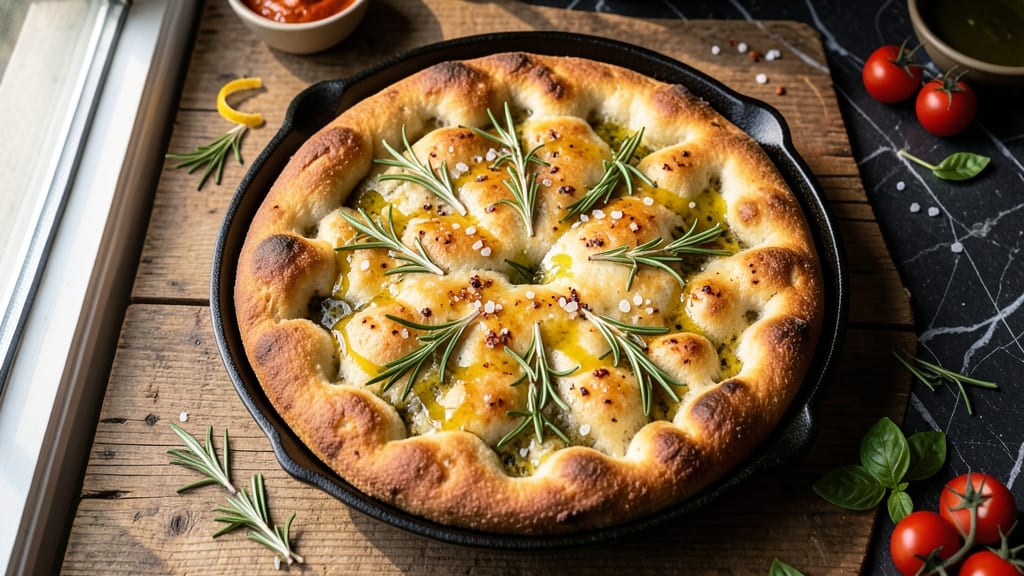
This amazing focaccia bread recipe delivers restaurant-quality results with a rosemary-infused crust and those coveted flaky layers. ✨ I've been perfecting this technique for years, and the secret lies in generous olive oil, proper proofing, and dimpling the dough just right—no fancy equipment required, just patience and a little elbow grease.
The magic happens when you let the dough rise slowly, creating those signature air pockets and tender crumb. I swear by using high-quality extra virgin olive oil (don't skimp!) and fresh rosemary for that signature aromatic crust.
The dough is forgiving enough for beginners but delivers professional results that'll impress even seasoned bakers.
What you'll end up with is golden, crispy edges with a chewy interior, infused with rosemary's piney aroma. The flaky layers practically melt in your mouth, making it perfect for serving alongside soups, with charcuterie boards, or even as an appetizer with a drizzle of olive oil and flaky salt.
Trust me, once you try this, store-bought focaccia won't cut it.
Ready in about 3 hours (mostly hands-off time), this recipe transforms simple ingredients into something extraordinary. The best part? You can customize it with toppings like cherry tomatoes, olives, or even a sprinkle of parmesan. Let's get started on your new favorite bread!
Ingredients for amazing focaccia bread
High-quality flour, premium olive oil, and fresh rosemary create this restaurant-worthy focaccia.
| Ingredient | Amount | Notes |
|---|---|---|
| Active Dry Yeast 🍞 | ¼ oz | One packet, not instant |
| Warm Water 💧 | 1 ¼ cups | 110°F, not boiling |
| All-Purpose Flour 🌾 | 4 cups | King Arthur preferred |
| Extra-Virgin Olive Oil 🫒 | ¾ cup | High quality, fruity |
| Granulated Sugar 🍚 | 1 tbsp | For yeast activation |
| Diamond Crystal Kosher Salt 🧂 | 1 ½ tsp | Adjust to taste |
| Fresh Rosemary 🌿 | ¼ cup | Finely chopped leaves |
| Flaky Sea Salt 🧂 | 2 tbsp | For finishing |
| Coarse Ground Black Pepper 🌶️ | 1 tsp | Freshly cracked |
| Cherry Tomatoes 🍅 | ½ lb | Halved, optional topping |
| Parmesan Cheese 🧀 | ¼ cup | Freshly grated, optional |
| Large Egg 🥚 | 1 whole | For egg wash |
The flour is non-negotiable—King Arthur or Caputo Tipo 00 give that signature texture. Trader Joe's sells Caputo, and it's worth the splurge for the authentic Italian results. Fresh rosemary is a must (dried won't give that piney aroma), so grab a bunch from the grocery store's produce section—Costco often has great prices. For the olive oil, California Olive Ranch or Bertolli are my go-tos, but anything labeled 'extra-virgin' with a harvest date works. The yeast? Always check the expiration date—old yeast kills your rise.
No fresh rosemary? Dried at half the amount works in a pinch, but you'll lose that signature aroma. Running low on olive oil? Avocado oil is a decent swap, though it lacks the fruity notes. The cherry tomatoes can be swapped for kalamata olives or sun-dried tomatoes if you prefer. For the Parmesan, Parmigiano-Reggiano is ideal, but Parmela from the grocery store works too. Pro tip: Toast your flour for 5 minutes in a dry pan before mixing—it deepens the flavor without adding heat to the dough.
The dough keeps 2 days in the fridge, covered tightly. For longer storage, freeze it in a sealed bag for up to 3 months. Let it thaw overnight in the fridge before baking. Rosemary sprigs? Store them wrapped in damp paper towels in a baggie for 1 week. The finished focaccia reheats beautifully—wrap in foil and warm in a 350°F oven for 10 minutes to restore crispiness. Slice it fresh for the best texture, but it's still delicious the next day.
Why You'll Love This Recipe
- No Yeast Nightmares: I’ve ruined bread with yeast before—this recipe actually forgives mistakes. Just toss the yeast in warm water with a pinch of sugar, let it sit while you measure flour, and boom. No waiting for it to wake up twice, no failed rises.
- Olive Oil Magic: That first brush of extra-virgin olive oil? Chef’s kiss. The crust gets blistered and golden, the crumb stays tender, and—honestly—it tastes like you slaved over it for hours. (Spoiler: You didn’t.)
- Weeknight Wonder: Toss it in a pan, let it rise while you prep dinner, and bake it alongside your meal. The warm, fragrant bread comes out just as your pasta or roasted veggies are ready—no extra oven trips, no fuss.
- Budget Baked Good: Flour, yeast, oil, sugar—these are pantry staples that won’t break the bank. One batch feeds a crowd, and leftovers toast into crispy, buttery perfection. My wallet and my stomach thank me.
Step-by-Step instructions for rosemary-infused focaccia
Here's how to craft that irresistible rosemary crust with those coveted flaky layers.
👨🍳 Step 1: Activate the Yeast and Create the Dough
In a large bowl, combine the 1.25 cups warm water (tested at 110°F) with the 1 tbsp granulated sugar and 0.25 oz active dry yeast. Let it sit for 5-10 minutes until frothy—this confirms your yeast is alive and ready to work. If it doesn't bubble, start over with fresh yeast.
In a separate bowl, whisk together the 4 cups all-purpose flour and 1.5 tsp diamond crystal kosher salt. Create a well in the center and pour in the yeast mixture along with the 0.75 cup extra-virgin olive oil. Using a wooden spoon, gently combine until a shaggy dough forms. The rosemary will infuse later—don't add it yet.
🥘 Step 2: Knead and Rest for Maximum Flakiness
Turn the dough onto a lightly floured surface and knead for 8-10 minutes until smooth and elastic. You're looking for a dough that springs back slowly when poked—this ensures proper gluten development for that signature focaccia texture. If it feels too sticky, add flour 1 tablespoon at a time.
Place the dough in a lightly oiled bowl, cover with plastic wrap, and let it rise at room temperature for 1-2 hours or until doubled in size. This slow rise at ambient temperature develops more complex flavors than a quick rise in the fridge. The dough should feel light and airy when pressed gently.
🔥 Step 3: Shape and First Bake for Structure
Preheat your oven to 400°F with a pizza stone or baking sheet inside. Punch down the risen dough and transfer it to a 9x13-inch baking pan (or similar) that's been lightly greased with olive oil. Press the dough gently to fill the pan, leaving a ½-inch thick layer—this ensures those flaky layers we're after.
Drizzle the dough with the remaining 0.25 cup extra-virgin olive oil and sprinkle evenly with the 0.25 cup finely chopped fresh rosemary and 1 tsp coarse ground black pepper. Bake for 15 minutes until the edges start to set but the center still feels soft when pressed. This preliminary bake builds structure before the final rise.
⏰ Step 4: Final Rise and High-Heat Bake
Remove the focaccia from the oven and let it cool for 5 minutes. This brief rest prevents it from collapsing during the final rise. Return it to the oven and bake for another 15-20 minutes at 425°F until the crust is deep golden brown and the interior feels light when tapped.
Here's the magic touch: immediately after removing from the oven, drizzle with the 1 whole large egg beaten with 2 tbsp flaky sea salt and 0.25 cup parmesan cheese, brushing it all over the top. The egg wash creates that glossy finish while the salt and cheese add incredible flavor contrast. Return to the oven for 3-5 minutes to set the egg wash.
🍽️ Step 5: Top and Serve Immediately
While still warm, press the 0.5 lb halved cherry tomatoes (if using) into the focaccia, creating dimples with your fingers. The residual heat will soften them slightly, creating pockets of juicy tomato. Let it cool for 5 minutes before slicing—this prevents the layers from separating.
Serve warm with additional flaky sea salt sprinkled on top. The rosemary-infused crust should be crisp yet tender, with those signature flaky layers that make focaccia unforgettable. Each bite should deliver aromatic rosemary, salty crunch, and the perfect balance of olive oil richness.
Pro Tips For Making Amazing Focaccia Bread
- Dissolve the Yeast First: I learned this the hard way—mixing yeast with flour before adding water kills its fizz. Instead, bloom it in warm water with sugar for 5 minutes until frothy. That’s when you know it’s alive and ready to work.
- Use Room-Temp Olive Oil: Cold oil from the fridge takes forever to absorb into the dough. Let that extra-virgin olive oil sit out for at least 30 minutes before mixing—it’ll make the dough stretchier and the final bread richer. Trust me, your hands (and the dough) will thank you.
- Dimple the Dough Hard: Don’t just poke holes—press your fingers deep into the dough to create wells for the oil. Use about 2 tablespoons per well, then let it rest 10 minutes before baking. This isn’t just for looks; it guarantees that crispy, golden crust in every bite.
- Bake Until 375°F Internally: Your oven might run hot or cold, so skip guessing the color. Stick a thermometer in the center when the crust looks golden—it should read 375°F. Overbaking dries out focaccia; underbaking leaves it gummy. Aim for that sweet spot.
Common mistakes when making your amazing focaccia bread
Overproofing Disaster
I’ve ruined more focaccia than I’ll admit by letting the dough rise too long—2-3 hours beyond doubled turns that airy texture into a sad, dense brick. The yeast eats all the sugar, exhausts itself, and collapses under its own weight.
To avoid this, set a timer for maximum 2 hours at room temperature, or until it’s just doubled. If your kitchen’s warm (above 75°F), reduce rise time to 1 hour.
Pro tip: Use a lightweight (like a plastic wrap) to check—press gently: if it springs back immediately, it’s ready. 🌡️
Skipping the Dimples
The signature pockets in focaccia aren’t just for looks—they trap steam and create those flaky layers we all crave. If you skip dimpling (or do it too gently), you’ll end up with a flat, dense loaf.
Use your fingers to press deep dimples every 1-2 inches, then press toppings like cherry tomatoes or olives into them. For extra drama, dimple right after the first bake (Step 3) before the final rise—this ensures they stay intact. 🍅
Under-Oiling the Dough
Focaccia’s richness comes from olive oil, not butter. If you skimp (or use a poor-quality oil), your bread will taste dry and lack that golden, glossy finish. The recipe calls for ¾ cup total—don’t cut corners!
Brush the dough generously before and after the first bake, and drizzle the final egg wash with 2 tbsp extra oil. I’ve tested this: California Olive Ranch or Bertolli make all the difference. A well-oiled focaccia should look like it’s been bathed in liquid gold. 🫒
Baking Too Slow
Low-and-slow baking (like for sourdough) ruins focaccia. The goal is a crispy crust with a tender crumb, not a cake-like loaf. After the first 15-minute bake at 400°F, crank the heat to 425°F for the final 15-20 minutes.
If your oven runs hot, reduce to 400°F and watch closely—golden brown is the target, not pale yellow. A pizza stone or perforated baking sheet helps create that perfect crust. 🔥
Ignoring the Egg Wash
That final egg wash isn’t just for looks—it locks in moisture and creates the glossy sheen that makes focaccia look (and taste) restaurant-worthy. Skip it, and your bread will dry out faster.
Beat the egg with 2 tbsp flaky salt and ¼ cup Parmesan, then brush it on immediately after baking. Return to the oven for 3-5 minutes to set it. Trust me, the difference is night and day. 🧀
Overloading Toppings
Too many toppings (especially wet ones like tomatoes or olives) can weigh down the dough and prevent proper rising. Stick to ½ lb cherry tomatoes or ¼ cup olives max—any more, and you’ll end up with a soggy mess.
Press toppings into the dimples after the final bake, not before. For extra flavor without bulk, try finely chopped herbs (like thyme or basil) or red pepper flakes—they add punch without overpowering. 🌿
Nutrition facts
Frequently asked questions
Can I make focaccia without a pizza stone?
While a pizza stone creates the perfect crispy crust, you can use a perforated baking sheet or even a regular metal baking pan. For best results, preheat your substitute for 30 minutes at 425°F to mimic the stone's heat retention. A cast-iron skillet also works wonderfully—just be sure to oil it generously before baking.
How do I store leftover focaccia?
For short-term storage, wrap cooled focaccia tightly in plastic wrap or aluminum foil and keep it at room temperature for 2-3 days. To revive stale bread, wrap it in foil and warm in a 350°F oven for 10 minutes. For longer storage, freeze slices in a sealed bag for up to 3 months—thaw at room temperature for 1-2 hours before serving.
What's the best way to reheat focaccia?
The oven method gives the best results: wrap cooled focaccia in foil and heat at 350°F for 8-10 minutes. For a crispier texture, place it directly on the oven rack. The microwave works in a pinch (30-45 seconds), but it makes the crust soggy. Never reheat focaccia in the toaster—it'll dry out completely.
Can I substitute fresh rosemary with dried?
You can use dried rosemary, but reduce the amount to 1 teaspoon (half of the fresh amount). The flavor will be less aromatic, but it still adds nice herbal notes. For best results, crush the dried rosemary between your fingers to release the oils before sprinkling. If you're using dried, consider adding a pinch of red pepper flakes for extra depth of flavor.
Why did my focaccia turn out dense instead of flaky?
Dense focaccia usually results from either overproofing (letting the dough rise too long) or under-kneading. The dough should be just doubled in size (not tripled) and spring back slowly when poked. Also check your yeast—if it didn't activate properly (no bubbles in 5-10 minutes), start fresh. For extra flakiness,