
Side Dishes
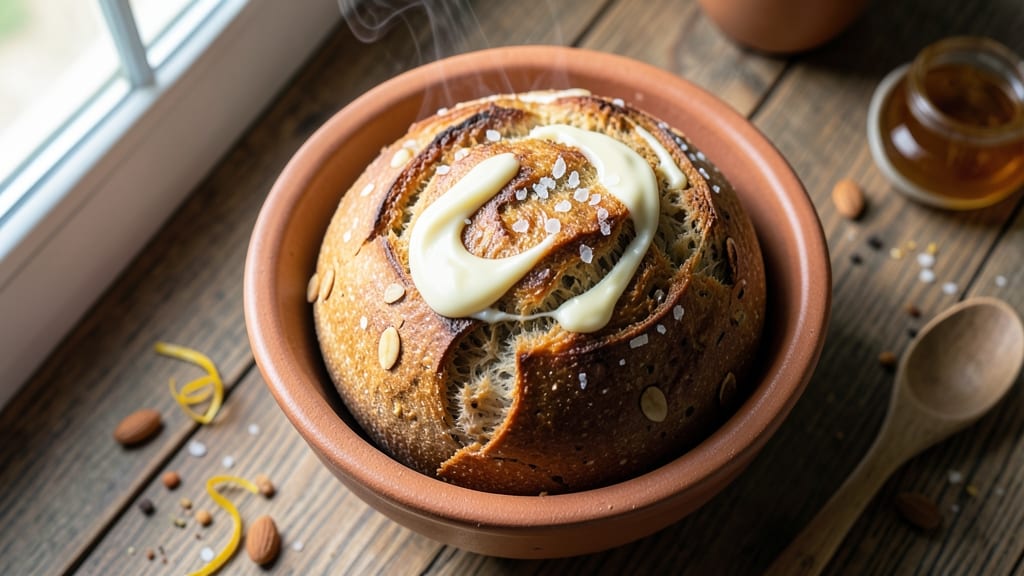
This almond sourdough bread recipe transforms your kitchen into a bakery with its perfect balance of nutty crunch and airy, pillowy softness. The secret lies in blending toasted almond flour with traditional sourdough fermentation, creating a loaf that's both rustic and refined.
I've perfected this method over years of baking, ensuring every slice delivers that satisfying contrast of textures and flavors.
The recipe begins with a robust sourdough starter, which develops depth of flavor during a 24-hour cold ferment. This slow process allows the dough to develop its signature tang while maintaining a tender crumb.
Almond flour replaces a portion of the all-purpose flour, adding richness and a subtle crunch that disappears slightly with each bite. The dough is shaped into a classic boules, giving you that beautiful, rustic appearance.
What makes this recipe stand out is how the almond flour integrates seamlessly with the sourdough's natural sweetness, creating a loaf that's both hearty and delicate. The crust develops a beautiful golden-brown color during baking, while the interior remains soft and open.
Whether you're serving it with butter, jam, or as a side to soups, this bread will elevate any meal.
With precise instructions for each stage—from starter prep to final baking—this recipe is designed to help you achieve bakery-quality results at home. The key is patience and attention to detail, but the reward is a loaf of bread that tastes like it came from a French bakery.
Let's get started on creating your perfect almond sourdough.
Ingredients for almond sourdough bread
Nine ingredients blend rustic tradition with nutty sophistication for bakery-style almond sourdough.
| Ingredient | Amount | Notes |
|---|---|---|
| Active Sourdough Starter 🍞 | ½ cup | Unfed, bubbly starter |
| All-Purpose Flour 🌾 | 3 cups | White or bread flour preferred |
| Almond Flour 🥜 | 1 cup | Toasted for enhanced flavor |
| Granulated Sugar 🍚 | ½ cup | White or brown sugar |
| Unsalted Butter 🧈 | ½ cup | Cold, cubed for easier handling |
| Large Eggs 🥚 | 2 whole | Room temperature |
| Instant Yeast 🍄 | ¼ tsp | Active dry works too |
| Salt 🧂 | 1 ½ tsp | Fine sea salt preferred |
| Milk 🥛 | ¼ cup | Warm, any variety |
| Water 💧 | ¼ cup | Room temperature |
| Honey 🍯 | 1 tbsp | For starter feeding |
| Cornmeal 🌽 | ¼ cup | For dusting baking sheet |
| Ice Water ❄️ | ½ cup | For final shaping |
The almond flour is the star here—Bob’s Red Mill or King Arthur are my go-tos for consistency. Toast it in a dry pan for 5 minutes until golden and fragrant (that nutty aroma means it's ready). The sourdough starter needs to be active and bubbly—feed it 12 hours before baking with equal parts flour and water. For the flour, King Arthur Bread Flour gives the best oven spring, but all-purpose works in a pinch. Just don’t skip the toasted almond flour—it’s what makes this bread special. Store-bought starters? Bubba’s or San Francisco Sourdough from the fridge section are decent shortcuts.
No almond flour? Ground walnuts or cashews work in a bind, but texture will differ slightly. Running low on butter? Coconut oil or vegan butter keeps it vegetarian. The honey can be swapped for maple syrup if you prefer. For the yeast, if your package is older than 4 months, toast it in the oven for 5 minutes to revive it. The milk can be any kind—dairy, almond, or oat—but warm it up first. And if you’re feeling fancy, add a pinch of cardamom to the dough for a subtle floral note that pairs beautifully with the almonds.
Prep the dough the night before and let it cold-proof for 24 hours—this is non-negotiable for that bakery-style flavor. Store any unused almond flour in an airtight container for up to 6 months, and keep your starter in the fridge for 1 week between uses. The baked loaf keeps well wrapped at room temperature for 3 days, or freeze slices for up to 3 months. Pro tip: Brush warm bread with melted butter and sprinkle with flaky salt right out of the oven—worth the extra minute.
Why You'll Love This Recipe
- No-Knead Magic: I swear by this—just mix, let the starter do the work, and wake up to bread that’s actually risen. The almond flour gives it this light, nutty crunch that’s way more interesting than plain sourdough.
- Buttery Nutty Crunch: That combo of warm butter and toasted almond flour? It’s like a hug for your taste buds. The sugar caramelizes just enough to make every bite feel special—no fancy ingredients, just pure satisfaction.
- Weeknight & Weekend Star: Toss a slice in a panini for lunch or serve it with jam for breakfast. Honestly, I’ve even used the extra dough to make garlic knots—because why not? It’s the one loaf that works for everything.
- Leftovers That Last: A single batch feeds my family for days—sandwiches, toast, even crumbs for meatballs. And since almond flour is pricey, stretching it with regular flour makes this budget-friendly without sacrificing flavor. Win-win.
Step-by-step instructions for almond sourdough bread
Here's how to transform your bubbly starter into a loaf with perfect nutty crunch and tender crumb.
Feed and Prepare the Sourdough Starter
In a small bowl, mix the 0.5 cup Active Sourdough Starter with 1 tbsp Honey and 0.25 cup Water. Stir until completely combined, then let it sit at room temperature for 4-6 hours until it's doubled in size and bubbly. This feeding jumpstarts your bread's fermentation and ensures maximum rise.
I like to check it after 4 hours—if it's not quite active, give it another hour. The starter should look puffy and have visible bubbles throughout. If it smells slightly sweet and tangy, you're good to go. Once it's ready, gently stir it down to deflate before using in your dough.
Mix the Wet and Dry Ingredients
In a stand mixer fitted with the dough hook, combine the 0.5 cup Unsalted Butter (cold, cubed), 0.5 cup Granulated Sugar, 2 whole Large Eggs, 0.25 cup Milk, and the 0.5 cup Active Sourdough Starter you just fed. Mix on low speed until the butter begins to soften and the mixture looks creamy, about 2-3 minutes.
In a separate bowl, whisk together the 3 cups All-Purpose Flour, 1 cup Almond Flour, 0.25 tsp Instant Yeast, and 1.5 tsp Salt. With the mixer running on low, gradually add the dry ingredients to the wet mixture. Mix for another 5 minutes until the dough comes together and pulls away from the sides of the bowl. The dough should be soft but not sticky—if it's too wet, add 1 tablespoon more all-purpose flour.
Knead and Develop the Dough
Continue mixing on medium speed for 8-10 minutes until the dough is smooth, elastic, and passes the "windowpane test." To test, stretch a small piece of dough between your fingers—if it's ready, it should thin out to a translucent membrane without tearing. This kneading develops gluten, which gives your bread its structure and chew.
Once the dough is properly kneaded, transfer it to a lightly oiled bowl. Cover with a damp towel and let it rise at room temperature for 1-2 hours, or until it has doubled in size. You'll know it's ready when you poke it gently and the indentation stays put. The almond flour adds richness but can make the dough slightly denser, so don't rush this step—patience ensures a light, airy texture.
Shape and Final Proof
Turn the dough out onto a lightly floured surface and gently shape it into a loaf. I like to use a bench scraper to help guide the dough into a neat rectangle, then fold one of the long sides toward the center. Roll it up tightly, tucking the seam underneath, and pinch the ends to seal. This creates a beautiful, rustic shape with a crispy crust.
Place the shaped loaf on a baking sheet dusted with 0.25 cup Cornmeal to prevent sticking. Cover it loosely with plastic wrap and let it proof for another 30-45 minutes at room temperature. The dough should rise noticeably but not double in size—it just needs to plump up and become slightly puffy. The cornmeal adds texture and helps create that perfect crust.
Bake to Golden Perfection
Preheat your oven to 375°F with a baking stone or inverted baking sheet inside—this helps create steam for a better rise. Once the oven is fully preheated, brush the top of the loaf with a little ice water (using the 0.5 cup Ice Water from your ingredients). This creates a beautiful, glossy crust.
Bake for 35-40 minutes until the bread is golden brown on top and the internal temperature reaches 190-200°F. Tap the bottom of the loaf—it should sound hollow. If the top browns too quickly, tent it loosely with aluminum foil to prevent over-browning while it finishes baking. Let the bread cool on a wire rack for at least 30 minutes before slicing—this allows the crumb to set and prevents a gummy texture.
Pro Tips For Making Almond Sourdough Bread
- Toast Your Almond Flour: Pulse it in a dry skillet over medium heat for 3-4 minutes until it smells nutty and fragrant. I learned this the hard way—raw almond flour can taste bitter, and toasting deepens the flavor without adding extra fat.
- Weigh Your Starter: Use a kitchen scale for the sourdough starter—aim for 100g of active starter (bubbly, doubled in volume) to avoid dense bread. I used to eyeball it, and the texture always suffered.
- Shape Tightly, Rest Long: Roll the dough into a tight log, then let it rest in the fridge overnight—yes, even if you’re eager. This relaxes the gluten and makes slicing clean, not crumbly.
- Butter Matters: Use cold, unsalted butter (cut into small cubes) and fold it in last—just before shaping. Warm butter melts too fast, turning your bread greasy instead of rich.
Flavor customization for these flavors
Sweet Almond Twist
Swap ½ cup granulated sugar for brown sugar and add 1 tsp cinnamon to the dough for a warm, caramelized flavor. Toast ¼ cup sliced almonds> with 1 tbsp maple syrup and sprinkle them on top before baking for extra crunch.
This version pairs beautifully with peanut butter or apple butter. 🍯
Herbal Almond Infusion
Boost the flavor profile by adding 1 tbsp fresh rosemary> or thyme to the dough. For a Mediterranean twist, mix 1 tsp dried oregano> with the almond flour before incorporating it.
The herbs complement the nutty richness perfectly and add an earthy depth. Try this variation with olive oil instead of butter for a lighter texture.
Spiced Chai Almond
Create a cozy chai-inspired loaf by adding ½ tsp ground cardamom>, ¼ tsp ground ginger>, and ¼ tsp cloves> to the dry ingredients. Toast 1 tsp coriander seeds> lightly and grind them into the almond flour for an aromatic kick.
This spiced version is ideal for morning toast with chai tea or as a dessert bread with a drizzle of honey.
Dark Chocolate Almond
For a decadent twist, fold ½ cup dark chocolate chunks> (60-70% cocoa) into the dough during the final mixing stage. The chocolate melts slightly during baking, creating pockets of rich flavor in every bite.
Pair this version with raspberry jam or a dusting of powdered sugar for a dessert-style bread. 🍫
Citrus Zest Almond
Brighten up your loaf by adding 1 tbsp lemon zest> or orange zest to the dough. The citrus cuts through the richness of the almond flour, creating a refreshing contrast.
For extra zing, brush the baked loaf with a lemon glaze (mix 2 tbsp powdered sugar> with 1 tbsp lemon juice>). This variation is perfect for breakfast with fresh berries or as a side to seafood dishes.
Everything Bagel Almond
Transform your almond sourdough into a savory loaf by adding 1 tbsp sesame seeds>, 1 tbsp poppy seeds>, 1 tbsp dried garlic flakes>, and 1 tsp onion flakes> to the dough.
Sprinkle these seeds on top before baking for a flavorful, crunchy crust. This version is fantastic with cream cheese or smoked salmon** for a brunch spread. 🧅
Nutrition facts
Frequently asked questions
Can I make this almond sourdough without a stand mixer?
Use a large mixing bowl and a wooden spoon or dough whisk. Mix the wet ingredients first, then gradually incorporate the dry ingredients. After combining, turn the dough onto a floured surface and knead by hand for 10-12 minutes until smooth and elastic. The almond flour makes the dough slightly denser, so you may need to add 1 extra tablespoon of flour if it's too sticky.
Why does my almond sourdough taste bitter?
Bitterness usually comes from over-toasted almond flour or over-fermented dough. Toast your almond flour for only 5 minutes (until golden) and avoid burning it. For fermentation, don't exceed the 24-hour cold proof—longer times can develop harsh flavors. If it's too bitter, try adding ½ tsp vanilla extract or 1 tbsp honey to the dough next time.
How do I store almond sourdough to keep it fresh?
Wrap the cooled loaf tightly in plastic wrap or place it in an airtight container. Store at room temperature for up to 3 days, or freeze slices for 3 months. For extra freshness, brush warm bread with melted butter and sprinkle with flaky salt. The almond flour helps preserve moisture, but the crust will dry out faster than regular sourdough.
Can I substitute almond flour with other nut flours?
Yes! Try walnut flour (1:1 ratio) for a richer taste or cashew flour (1:1 ratio) for a milder flavor. Hazelnut flour works too but has a stronger aroma. Keep in mind that each nut flour has different moisture absorption—you may need to adjust your water content by 1-2 tablespoons depending on the flour's dryness.
What's the best way to reheat sliced almond sourdough?
For crispy crust and soft interior, wrap slices in aluminum foil and warm in a 350°F oven for 5-8 minutes. For quick reheating, use a toaster set to low-medium heat for 2-3 minutes. Avoid microwaving—it makes the bread gummy. The almond flour gives the bread a lovely texture that reheats beautifully when done properly.