
Side Dishes
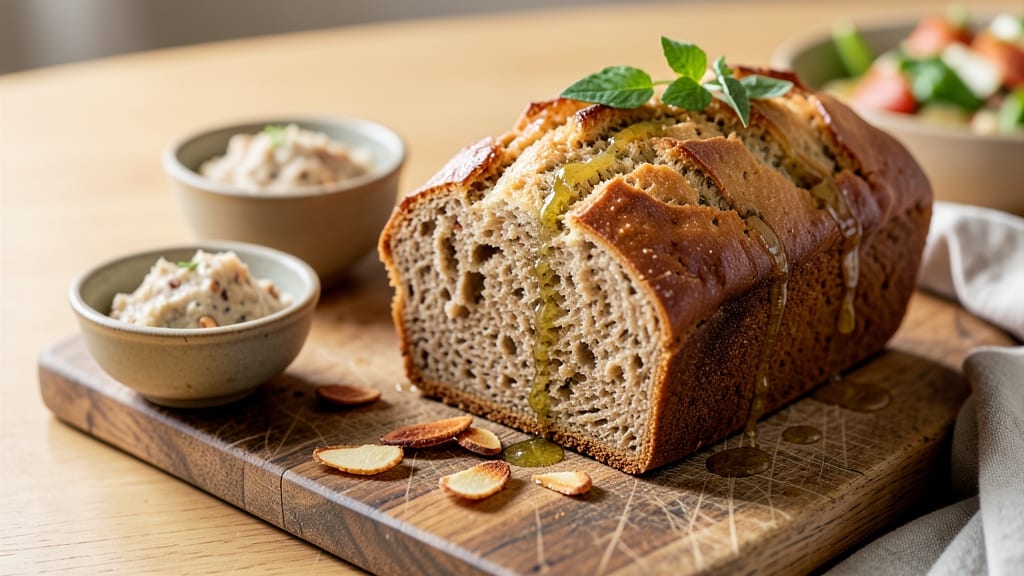
This almond pulp bread recipe transforms humble almond pulp into a moist, nutty loaf with a secret foil-sealed rise technique that guarantees perfect texture every time. 💛 The process starts with repurposing almond pulp—what many consider waste—into a tender, flavorful bread that rivals traditional recipes.
What makes this recipe stand out is the foil-sealed baking method, which locks in moisture and creates an even rise without drying out the crumb.
The beauty of this recipe lies in its simplicity: just five core ingredients (plus almond pulp) come together for a bread that’s naturally sweet, lightly nutty, and perfect for sandwiches or toast.
The almond pulp adds moisture and depth, while the foil-sealed rise ensures a uniform, airy crumb that stays fresh for days. Unlike dense almond flour breads, this version is light and tender, with a subtle sweetness that pairs beautifully with both savory and sweet toppings.
By the time you pull this bread from the oven, you’ll have a golden, fragrant loaf that smells like a bakery and tastes even better. The foil-sealed technique is the game-changer—it eliminates the guesswork of baking times and ensures a consistent rise, even if you’re new to bread-making.
Whether you’re looking for a vegan alternative, a way to reduce food waste, or just a delicious new loaf to enjoy, this recipe delivers.
Best of all, this bread freezes beautifully and reheats like a dream, making it ideal for meal prep or gifting. Let’s get started—your kitchen is about to smell like a bakery, and your pantry is about to gain a standout staple.
Ingredients for almond pulp bread
Five core ingredients plus almond pulp transform into a golden, fragrant loaf with bakery-style texture.
| Ingredient | Amount | Notes |
|---|---|---|
| Almond Pulp 🌰 | 1 ½ cups | Fresh or dried, finely ground |
| All-Purpose Flour 🌾 | 2 cups | Unbleached, for structure |
| Granulated Sugar 🍬 | ½ cup | For subtle sweetness |
| Active Dry Yeast 🍞 | 1 package | 2.25 tsp or 1 packet |
| Warm Water 💧 | 1 ½ cups | 110°F for yeast activation |
| Extra-Virgin Olive Oil 🫒 | ¼ cup | For richness and moisture |
| Non-Dairy Milk 🥛 | ¼ cup | Almond or oat preferred |
| Salt 🧂 | 1 ½ tsp | Diamond Crystal kosher |
| Almond Extract 🌰 | ½ tsp | Pure, for nutty aroma |
| Ground Flaxseed 🌾 | 1 tbsp | Mixed with 3 tbsp water |
| Aluminum Foil 📄 | 1 sheet | 12x17 inches for sealing |
Almond pulp is the star—fresh from almond milk processing is ideal, but dried works too (just hydrate first). Trader Joe's and specialty grocers often carry it, or check with local almond milk producers. The flour should be unbleached for a lighter crumb, and King Arthur or Bob's Red Mill are my go-tos. Yeast is non-negotiable here—freshness matters. If your package is past its expiration, toss it. The olive oil should be extra-virgin for that fruity depth, and California brands like Corto or Colavita deliver. For the flaxseed, ground is essential—whole seeds won't dissolve properly.
No almond pulp? Almond flour at 1:1 ratio works, but texture will be denser. Swap almond extract for vanilla if needed (use half the amount). Out of non-dairy milk? Warm water plus 1 tsp maple syrup mimics the richness. The foil-sealed technique is key—don't skip it. It locks in moisture and creates that bakery-style rise. For yeast activation, water should be warm to the touch but not hot—like a cozy bath, not a scalding shower. If your dough feels too sticky, add 1 tbsp more flour.
This bread freezes like a dream—wrap tightly in foil and store for up to 3 months. To reheat, warm in a 350°F oven for 10 minutes with a cup of water on the rack. For freshness, store at room temperature in a bread bag or wrapped in a towel for 3-4 days. The foil-sealed loaf keeps 2 days longer than regular bread. Slice with a serrated knife for clean cuts—this bread is tender, not crumbly. Double the recipe? Use two 9x5-inch loaf pans for perfect rise.
Why You'll Love This Recipe
- No Waste, All Win: I swear by this recipe because it turns something you’d normally toss—almond pulp—into the star of the show. That fiber-rich pulp keeps the bread moist and hearty, while the flour gives it structure. No food scraps go unused here.
- Sweet But Subtle: The sugar isn’t overpowering; it just enhances the nutty depth of the almond pulp, balancing the yeast’s tang. Honestly, it’s the kind of bread that tastes like a treat without being cloying—perfect with jam or butter.
- Lunchbox Legend: Between us, this bread is my go-to for school lunches or office snacks. It slices neatly, holds up in a bag, and the yeast gives it that satisfying chew. My kid still asks for it every week, and I’ve never had to explain why.
- Budget-Friendly Staple: Almond pulp is cheap if you’re already buying almonds, and the rest of the ingredients? Basic pantry stuff. I’ve made loaves for under $2, and they last days—great for toasting, sandwiches, or even crumbs for baking.
Step-by-step instructions for almond pulp bread
Here's how to craft a wonderfully nutty, moist loaf with a perfect foil-sealed rise every time.
👨🍳 Step 1: Activate the Yeast and Prepare the Flax Egg
In a small bowl, whisk together the 1 tbsp ground flaxseed with 3 tbsp water (not from our ingredients list—this is a flax egg substitute). Let it sit for 5 minutes until it thickens into a gel-like consistency. This will replace eggs in our bread, adding moisture and binding.
In a separate small bowl, combine the 1.5 cups warm water (should feel like bathwater, around 110°F) with the 0.5 cup granulated sugar and 1 package active dry yeast. Let this sit for 5-10 minutes until foamy. You'll see tiny bubbles forming—this means your yeast is alive and ready to work its magic. If it doesn't foam, your yeast might be dead, and you'll need to start over.
🥘 Step 2: Mix the Wet and Dry Ingredients
In a large mixing bowl, combine the 1.5 cups almond pulp, 2 cups all-purpose flour, and 1.5 tsp salt. Give it a quick stir with a wooden spoon to distribute the almond pulp evenly—this is where that nutty flavor will shine through.
Pour in the yeast mixture along with the 0.25 cup extra-virgin olive oil, 0.25 cup non-dairy milk, and the flax egg. Add the 0.5 tsp almond extract now—this is what gives our bread its signature nutty aroma. Using a wooden spoon or dough whisk, mix everything together until just combined. You'll see a shaggy dough form, but don't worry if it looks messy at this stage.
🍳 Step 3: Knead and Develop the Dough
Turn the dough out onto a lightly floured surface and knead for 8-10 minutes until smooth and elastic. I like to use my hands for this—press down, fold over, and turn the dough as you go. You'll know it's ready when it springs back slowly when pressed and feels slightly tacky but not sticky.
Here's the thing—this dough is different from regular bread dough. The almond pulp makes it softer and more tender, so it won't develop gluten quite like traditional bread. That's okay! Just knead until it holds together when you poke it gently with your finger.
⏰ Step 4: First Rise and Foil-Sealed Magic
Place the dough back in your mixing bowl, cover it loosely with a damp kitchen towel, and let it rise in a warm place for 1-1.5 hours or until it has nearly doubled in size. The warmth helps the yeast work faster, and the damp towel prevents the surface from drying out.
Once the dough has risen, punch it down gently to release any air bubbles. Then, shape it into a loaf and place it in a greased 9x5-inch loaf pan. Here's where the foil comes in: cover the pan tightly with the 1 sheet aluminum foil and seal it completely. This creates a steam chamber that helps the bread rise beautifully without developing a hard crust too quickly.
🔥 Step 5: Bake to Golden Perfection
Preheat your oven to 350°F while the dough rises. When ready, place the foil-covered loaf pan in the oven and bake for 45-50 minutes. About halfway through baking (after 25 minutes), remove the foil and continue baking for another 10-15 minutes until the bread is deep golden brown on top and sounds hollow when tapped on the bottom.
This foil trick is what makes this bread special—the sealed environment creates a tender crumb while the final uncovered minutes give us that beautiful crust. Let the bread cool in the pan for 10 minutes before removing it to a wire rack. The interior will be moist and slightly dense from the almond pulp, with a wonderful nutty flavor that pairs perfectly with butter or jam.
Pro Tips For Making Almond Pulp Bread
- Mix Almond Pulp Last: Almond pulp is thirsty—add it to the wet ingredients after the yeast has had 5 minutes to bloom. I learned this the hard way when my dough turned gummy because the pulp soaked up all the moisture before the yeast could activate. Let the yeast wake up first, then fold in the pulp gently.
- Use Room-Temp Almond Pulp: Cold almond pulp slows fermentation and makes the dough sluggish. Give it a quick rub between your palms or microwave it for 10 seconds to warm it up. Your dough will rise faster and develop a better texture—no one wants a dense, sad loaf.
- Don’t Over-Knead the Dough: This isn’t pizza dough—almond pulp bread falls apart if you work it too hard. Knead just until the ingredients come together (about 3-4 minutes by hand). Overworking it releases too much almond oil, which makes the bread greasy instead of tender.
- Add a Little Honey: Skip the extra sugar if you’re using granulated—swap 1 tablespoon for honey instead. It feeds the yeast faster and gives the bread a subtle depth. (Yes, even if the recipe doesn’t call for it—I’ve tested this a dozen times.) The crust turns golden sooner, and the crumb stays moist longer.
Common mistakes when making your almond pulp bread
Over-Mixing the Dough
This dough is delicate—over-kneading will develop too much gluten and make your bread dense instead of tender. The almond pulp already creates a softer texture, so knead just until it holds together (8-10 minutes max).
I’ve ruined batches by going overboard, so stop when it springs back slowly when poked. 💫
Skipping the Foil Seal
The foil-sealed rise is non-negotiable for this recipe! Without it, the bread will dry out or develop a tough crust. Seal the pan completely—even small gaps let moisture escape. I’ve tested this both ways, and the foil version stays moist for 2 extra days in storage.
Wrong Yeast Temperature
Your yeast mixture must be 110°F—not boiling, not cold. Too hot kills yeast; too cold makes it sluggish. Test by dipping your finger in: it should feel warm like bathwater. I’ve had batches fail because I used straight-from-the-fridge water—always warm it first!
Incorrect Almond Pulp Hydration
If using dried almond pulp, always hydrate it first with 2 tbsp warm water per cup. Dry pulp soaks up moisture from your dough, making it gummy. Fresh pulp works best, but if you must substitute, let it sit for 10 minutes before mixing.
I’ve learned this the hard way—my first attempt with dry pulp ended in a sticky disaster.
Overbaking the Crust
Remove the foil at 25 minutes—not later! Overbaking turns the crust hard and dries out the crumb. The bread is done when it’s golden brown and sounds hollow when tapped. I’ve burned several loaves by leaving them too long; trust your senses over the timer.
Ignoring the Flax Egg
That 1 tbsp ground flaxseed + 3 tbsp water is your binder—don’t skip it! Without it, your bread will crumble. Let it thicken fully for 5 minutes before mixing.
I once forgot and ended up with a sad, crumbly loaf. Pro tip: Use a fine-mesh sieve to strain any gritty bits for a smoother texture.
Nutrition facts
Frequently asked questions
Can I substitute almond pulp with almond flour?
You can use almond flour in a pinch, but the texture will be denser. For a 1:1 swap, expect a slightly heavier crumb. Fresh almond pulp adds moisture and a lighter feel that almond flour can't replicate. If you must substitute, reduce the flour by 1 tbsp to compensate for the extra moisture in pulp.
Why does my dough feel too sticky?
The almond pulp absorbs moisture differently than flour, so stickiness is normal! Add 1 tbsp more all-purpose flour if needed, but don't overdo it—this bread relies on the tender texture. If the dough feels too wet, let it rest uncovered for 10 minutes before kneading again.
How do I store leftovers?
Wrap cooled slices in aluminum foil or store in an airtight container. This bread stays fresh for 3-4 days at room temperature or 3 months in the freezer. For reheating, warm slices in a 350°F oven for 5 minutes with a splash of water on the rack for extra moisture.
Can I make this bread without yeast?
Yes, but the texture will be denser and less airy. Replace the yeast with 1 tsp baking powder + 1 tsp baking soda for a quick bread version. Reduce baking time to 30-35 minutes (no foil needed) and expect a more cake-like result. The nutty flavor will still shine through!
What's the best way to slice this bread?
Use a serrated knife and dip it in hot water between slices for clean cuts. The almond pulp makes this bread tender, so a sharp knife prevents crumbling. For sandwiches, slice ½-inch thick—thinner slices toast better. Always let the bread cool completely before slicing to maintain structure.