
Side Dishes
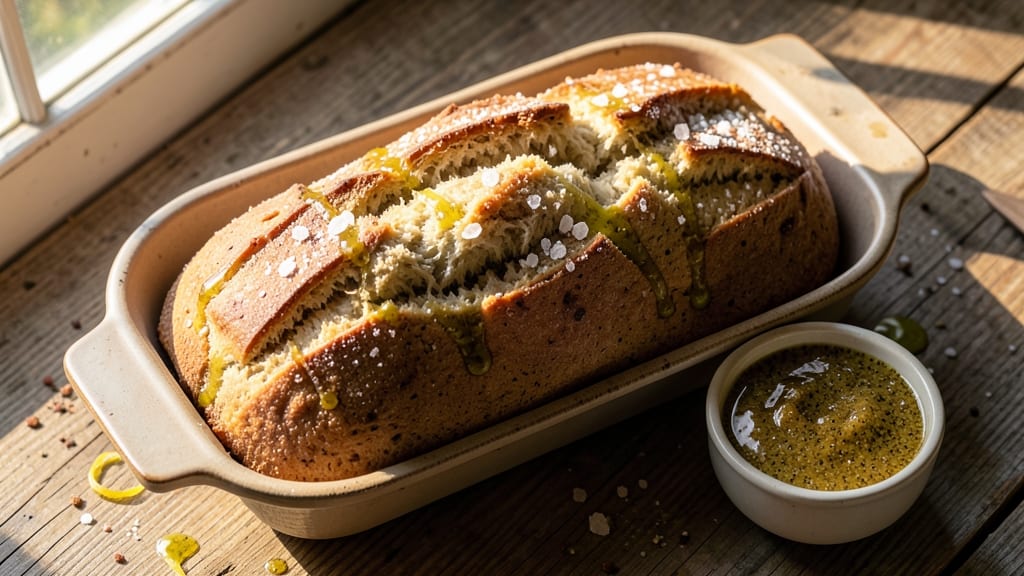
This almond flour yeast bread recipe delivers the perfect balance of crusty exterior and soft interior—all without gluten or eggs. The secret lies in hydration control and yeast activation, transforming fine almond flour into a bread that rivals traditional loaves.
What makes this recipe work is the careful ratio of almond flour to liquid, ensuring a tender crumb without density issues.
Almond flour’s natural richness provides depth, while yeast creates lift and structure—no eggs required. The dough develops differently than wheat-based bread, so proofing times are critical. With just 5 simple ingredients and 30 minutes of active prep, you’ll have a golden, aromatic loaf ready for slicing.
This recipe proves almond flour can be just as versatile as wheat flour when handled correctly.
What sets this bread apart is its versatility—use it for sandwiches, toast, or French toast. The crust develops a satisfying crunch, while the interior stays soft and slightly sweet.
For extra flavor, consider adding seeds or herbs to the dough. By the time you pull it from the oven, you’ll have a gluten-free, egg-free loaf that’s surprisingly substantial.
Perfect for those avoiding gluten or eggs but craving a restaurant-quality bread at home. The process is straightforward, but the results are impressive. Let’s get started—your kitchen will smell like a bakery in no time.
Ingredients for almond flour bread recipe with yeast no eggs
Five core ingredients transform almond flour into a bread with restaurant-quality texture—no eggs or gluten required.
| Ingredient | Amount | Notes |
|---|---|---|
| Fine Almond Flour 🌰 | 3 ½ cups | Blanched, not bitter almond flavor preferred |
| Instant Yeast 🍞 | ¾ tsp | Active dry yeast works at double amount |
| Granulated Sugar 🍚 | ½ tsp | Enhances yeast activation |
| Warm Water 💧 | 1 ½ cups | 110°F-115°F for yeast activation |
| Extra-Virgin Olive Oil 🫒 | ¼ cup | High-quality for flavor and moisture |
| Diamond Crystal Kosher Salt 🧂 | 1 ½ tsp | Fine grain preferred for even distribution |
| Psyllium Husk Powder 🌿 | 1 ½ tsp | Essential for gluten-free structure |
| Ground Flaxseed 🌾 | 1 ½ tsp | Mixed with water for egg substitute |
| Apple Cider Vinegar 🍏 | 1 tbsp | Balances sweetness and activates psyllium |
| Sesame Seeds 🌻 | 1 tbsp | Optional for topping (toasted) |
The almond flour is non-negotiable here—blanched, fine-ground almond flour from Bob's Red Mill or Anthony's Goods delivers the best texture. Avoid bitter almond flour, which can overpower the delicate flavor. The psyllium husk powder is your secret weapon for structure; NOW Foods or Trader Joe's carry reliable brands. For the yeast activation, Fleishmann's RapidRise works perfectly, but any instant yeast will do. The warm water temperature is critical—too hot kills the yeast, too cold prevents activation. I always use a kitchen thermometer to confirm it's between 110°F-115°F.
No psyllium husk? Ground flaxseed at double the amount provides some structure, though results won't be identical. Substituting olive oil? Melted coconut oil works, but it adds a slight coconut flavor. The apple cider vinegar can be swapped for white vinegar or lemon juice, though flavor may vary slightly. For extra flavor depth, consider adding 1 tsp dried rosemary or 1 tbsp ground flaxseed to the dough. The sesame seeds are optional but add a beautiful crunch to the crust—toast them first for maximum flavor. If you're using active dry yeast instead of instant, proof it in warm water with sugar for 5 minutes before mixing with the dry ingredients.
This dough is sensitive to temperature—proof it in a warm place (75°F-80°F) for 1-1.5 hours or until doubled in size. The loaf keeps best in an airtight container at room temperature for 2-3 days, though it's best enjoyed fresh. For longer storage, wrap tightly in plastic and freeze for up to 3 months. To reheat, wrap in foil and warm at 350°F for 5-10 minutes. The crust stays crisp for about 2 hours after baking, so slice it while still warm for the best texture. For extra crispiness, brush the baked loaf with melted butter or olive oil while still hot.
Why You'll Love This Recipe
- No-Fuss Mixing: I swear by the simplicity of this dough—just almond flour, yeast, sugar, and olive oil. No kneading, no waiting for eggs to come to room temperature, just stir, rest, and bake. Honestly, it’s the kind of recipe that makes me feel like I’ve hacked the system.
- Rich, Nutty Crunch: That first bite? The almond flour gives it a subtle, toasty depth you won’t find in regular bread. The olive oil keeps it moist, and the sugar just adds a little caramelized sweetness when toasted. (Yes, even on a Tuesday night.)
- Meal Prep MVP: This bread holds up amazingly for days—perfect for packing lunches or toasting for breakfast. I’ve even used it as a base for croutons or breadcrumbs, and it’s never let me down. Between us, it’s my secret weapon for lazy mornings.
- Budget-Friendly Luxury: Almond flour is pricier, but a little goes a long way here. You’re not drowning it in butter or eggs, so every slice feels like a treat without the grocery bill shock. Plus, the yeast does all the work—no fancy starters or sourdough rituals.
Step-by-step instructions for almond flour yeast bread without eggs
Master this gluten-free technique for a bread with crispy crust and tender crumb using only almond flour.
Create the Flaxseed Egg Substitute
In a small bowl, combine the 1.5 teaspoons ground flaxseed with 3 tablespoons warm water (from the 1.5 cups warm water total). Stir thoroughly and let sit for 5 minutes until it thickens into a gel-like consistency. This mimics the binding properties of eggs while adding moisture and structure to the bread.
The flaxseed mixture should resemble raw egg whites in texture—smooth and slightly viscous. If it separates or remains too thin, add another ½ teaspoon ground flaxseed and 1 teaspoon warm water. This substitution is critical for achieving the right crumb structure without gluten.
Activate the Yeast and Combine Wet Ingredients
In the bowl of a stand mixer fitted with the dough hook attachment, whisk together the 1.5 cups warm water (between 110°F-115°F), 0.5 teaspoon granulated sugar, and 0.75 teaspoon instant yeast. Let this mixture sit for 5 minutes until it begins to foam and bubble—this indicates active yeast ready to leaven the bread.
Once the yeast is activated, add the 0.25 cup extra-virgin olive oil, 1 tablespoon apple cider vinegar, and the flaxseed egg substitute. Mix on low speed for 1 minute until fully combined. The vinegar helps balance sweetness and activates the psyllium husk powder for better structure. The olive oil provides moisture and richness that almond flour alone would lack.
Incorporate Dry Ingredients and Develop the Dough
With the mixer still running on low speed, gradually add the 3.5 cups fine almond flour, 1.5 teaspoons psyllium husk powder, and 1.5 teaspoons diamond crystal kosher salt. Mix for 3-4 minutes until the dough comes together and pulls away from the sides of the bowl. The dough will be thick, sticky, and slightly elastic—this is normal for almond flour-based bread.
If the dough feels too dry after mixing, add 1 tablespoon warm water at a time until it forms a cohesive mass. Overmixing can develop gluten-like properties, so stop as soon as the dough holds together. The psyllium husk is doing the heavy lifting here, mimicking gluten's structure without any wheat flour.
First Rise and Prepare for Baking
Transfer the dough to a lightly oiled bowl, cover with a damp kitchen towel, and let rise in a warm place for 1-2 hours or until it has nearly doubled in volume. The dough should feel slightly puffy and spring back slowly when gently pressed. This rise is crucial for developing the bread's airy texture and open crumb.
While the dough rises, preheat your oven to 375°F. Line a baking sheet with parchment paper and lightly grease it with olive oil. After the dough has risen, gently shape it into a loaf by folding the edges toward the center and pressing down lightly. This helps create a more uniform structure before baking.
Bake to Golden Perfection
Place the shaped dough on the prepared baking sheet and bake for 35-40 minutes until the top is deep golden brown and the internal temperature reaches 205°F when measured with an instant-read thermometer. The bread should sound hollow when tapped on the bottom—this indicates it's fully baked.
For extra crustiness, brush the top with a little more olive oil during the last 5 minutes of baking. Remove from the oven and let cool on a wire rack for at least 1 hour before slicing. The bread will continue to firm up as it cools, making it easier to slice without crumbling. Optionally, sprinkle with 1 tablespoon sesame seeds while still warm for added texture.
Pro Tips For Making Almond Flour Bread Recipe With Yeast No Eggs
- Measure Almond Flour Right: Use a kitchen scale—almond flour is deceptive. A packed cup weighs 110g, but a scooped cup can be 80g or less. I learned this the hard way when my first loaf turned dense and heavy. Weigh it for consistency, especially if you’re new to almond flour.
- Bloom Yeast in Oil: Mix the instant yeast with olive oil first, then add warm water. The fat helps activate the yeast faster and prevents a flat loaf. Skip this, and you’ll end up with a sad, underproofed bread that collapses like a deflated balloon.
- Don’t Overmix the Dough: Stir just until combined—overworking almond flour dough makes it gummy and tough. After 10-12 strokes, stop. The gluten in almond flour is minimal, so less is more. I used to mix until my arm ached, and the bread suffered for it.
- Proof at Room Temp: Let the dough rise in a warm spot (75-80°F) for 45-60 minutes—no oven needed. A cold kitchen slows yeast, and a hot one kills it. If your kitchen is chilly, pop the bowl near a sunny window or under a lamp. Patience here means a lighter, airier loaf.
Common mistakes when making great almond flour bread recipe with yeast no eggs
Overmixing the Dough
Almond flour dough behaves differently than wheat-based dough, so resist the urge to mix it longer than necessary. Overmixing develops unwanted gluten-like properties, making your bread dense and chewy instead of light and tender.
I’ve ruined many batches by mixing for more than 4 minutes—stop as soon as the dough pulls away from the bowl sides. The psyllium husk and flaxseed are doing all the structural work, so trust the process and let the dough rest. 💡
Skipping the Flaxseed Gel
The flaxseed egg substitute is non-negotiable for structure and moisture. If you skip it or don’t let it thicken properly, your bread will crumble like sand and lack cohesion. Always mix the 1.5 tsp ground flaxseed with 3 tbsp warm water and wait 5 minutes for it to gel.
Pro tip: If it separates, stir in another ½ tsp flaxseed—this simple step makes all the difference. 🌾
Incorrect Yeast Activation
Using cold water or yeast that’s past its prime will leave your bread flat and dense. Always use water between 110°F-115°F and fresh yeast—check the expiration date! I’ve seen many home bakers skip the 5-minute activation test (foaming/bubbling), leading to failed rises.
If your yeast doesn’t bubble, start over with fresh yeast and properly warmed water. 🍞
Underproofing or Overproofing
Almond flour dough rises faster than wheat dough, so timing is critical. Underproofing (less than 1 hour) results in a compact loaf, while overproofing (more than 2 hours) causes collapse.
Test doneness by gently pressing the dough—it should spring back slowly. I keep my dough in a warm oven (75°F-80°F) with a bowl of hot water nearby to maintain consistent temperature. ⏰
Ignoring the Psyllium Husk
This is your gluten substitute, and skipping it means your bread will crumble like a cookie. The 1.5 tsp psyllium husk powder binds the dough and mimics gluten’s elasticity. If you omit it, your loaf will lack structure.
For best results, whisk the psyllium with the dry ingredients before adding liquids—this ensures even distribution. Trust me, your bread will thank you! 🌿
Baking at Wrong Temperature
Almond flour bread needs precise heat control. Baking at 375°F ensures a crisp crust and tender crumb, but higher temps (400°F+) burn the exterior before the interior cooks. Use an oven thermometer to confirm accuracy—many home ovens run hot.
For extra crustiness, brush with olive oil in the last 5 minutes, but don’t overdo it or your bread will turn greasy. 🔥
Nutrition facts
Frequently asked questions
Why does this almond flour bread need psyllium husk?
Psyllium husk mimics gluten's structure by binding the dough and creating elasticity. Without it, your bread will crumble like a cookie instead of holding together. The 1.5 teaspoons in this recipe is the magic ingredient that makes almond flour behave like traditional flour. Think of it as the gluten-free "secret weapon" for a sturdy crumb.
Can I make this bread without psyllium husk?
You can try using 3 teaspoons ground flaxseed instead, but results will be less ideal. The flaxseed adds moisture but won't provide the same structural support. For best texture, stick with psyllium husk powder. If you're avoiding it due to allergies, consider a different almond flour bread recipe that uses xanthan gum instead.
How do I know when the dough is properly proofed?
Press the dough gently—it should spring back slowly (not quickly like gluten dough). The dough should nearly double in size and feel slightly puffy after 1-1.5 hours. Almond flour dough rises faster than wheat dough, so don't let it proof longer than 2 hours or it may collapse. A warm oven with a bowl of hot water helps maintain consistent temperature.
Can I add seeds or herbs to this recipe?
Try 1 tablespoon sesame seeds, sunflower seeds, or chopped rosemary for extra flavor. Add them to the dough during the final mixing stage. For best results, toast seeds first to enhance their flavor. Herbs like basil or thyme work well too—just use 1 teaspoon dried or 1 tablespoon fresh chopped.
Why did my bread turn out dense instead of light?
This usually happens from overmixing (mixing longer than 4 minutes), underproofing, or using cold water for yeast activation. Almond flour dough develops structure differently than wheat dough—stop mixing as soon as it pulls away from the bowl. Also, ensure your yeast is fresh and your water is between 110°F-115°F. A kitchen thermometer helps!