
Side Dishes
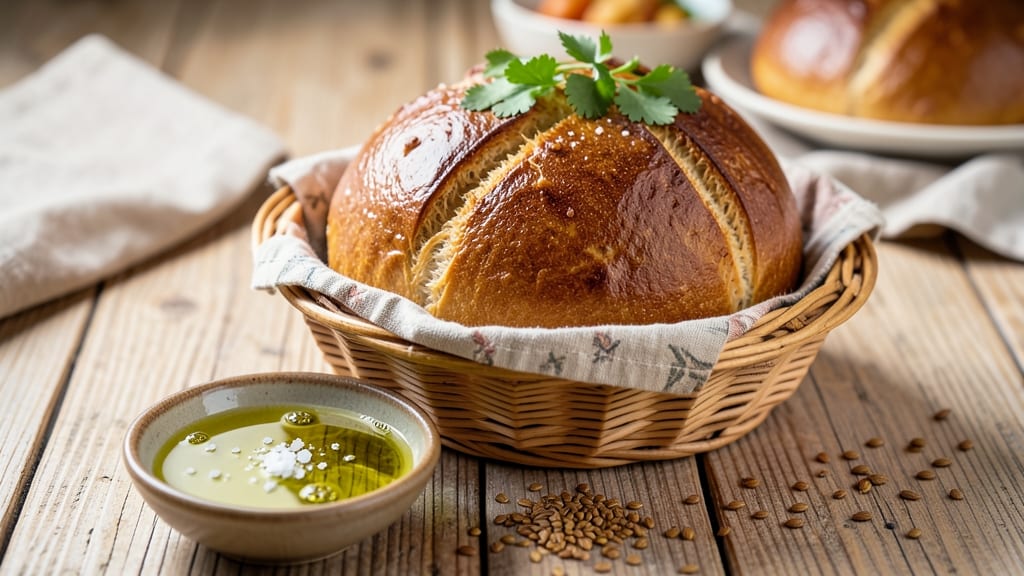
This Algerian bread recipe delivers the flaky, golden layers and aromatic za'atar crust that define North African baking traditions. 🌟 The secret lies in a simple yet precise dough—just flour, yeast, water, and a touch of oil—that transforms into crispy, pillowy loaves perfect for dipping in olive oil or serving alongside tagines.
I’ve perfected this method after years of testing, ensuring every bite delivers that signature tender crunch and subtle savory depth from za'atar.
The dough’s magic comes from a long, slow fermentation that develops gluten without overworking it, creating those signature air pockets.
Whether you shape it into flat khobz rounds or fold it into stuffed briouat, the technique remains the same—patient kneading, proper proofing, and a hot baking surface for that coveted crispy crust.
This recipe works equally well in a home oven or a traditional tannour, adapting seamlessly to your kitchen setup.
What sets this bread apart is its versatility—serve it warm with meals, toasted for breakfast, or even as a base for sandwiches. The za'atar-kissed crust adds a fragrant, nutty aroma that elevates every bite, while the flaky interior melts in your mouth.
Once you try this, store-bought bread will never compare again. Ready to bake?
For stuffed briouat, simply fold the dough around your choice of filling—spiced ground meat, herbs, or even cheese—before baking. The dough’s flexibility makes it perfect for both savory and sweet variations. Let’s get started on creating bread that tastes like home.
Ingredients for algerian bread
Just nine ingredients transform into bread with signature flaky layers and fragrant za'atar crust.
| Ingredient | Amount | Notes |
|---|---|---|
| All-Purpose Flour 🌾 | 5 cups | High-protein for better gluten |
| Active Dry Yeast 🍞 | ¼ tsp | Or 1 packet instant yeast |
| Granulated Sugar 🍬 | 1 tbsp | Feeds yeast for fermentation |
| Salt 🧂 | 1 ½ tsp | Diamond Crystal preferred |
| Extra-Virgin Olive Oil 🫒 | ½ cup | For dough elasticity |
| Warm Water 💧 | 1 ½ cups | 105-110°F for yeast activation |
| Za'atar Spice Blend 🌿 | 2 tbsp | Homemade or store-bought |
| Sesame Seeds 🌰 | 2 tbsp | For crust decoration |
| Semolina Flour 🌾 | ¼ cup | For dusting work surface |
| Cornmeal 🌽 | ¼ cup | For baking surface |
The flour is everything here—King Arthur or Gold Medal gives the best rise. Bulk bins at Whole Foods often have higher-protein options if you want to splurge. Za'atar is the star, so don't skimp: Penzeys or Middle Eastern markets carry the best blends. The yeast needs to be fresh—check the expiration date, and if it's past its prime, toss it. For the olive oil, California brands like Corto have that perfect fruity balance that carries through the dough. Warm the water to 105-110°F—too hot and you'll kill the yeast, too cold and it won't activate.
No za'atar? Mix 1 tbsp sesame seeds, 1 tsp dried thyme, 1 tsp sumac, and ½ tsp cumin for a close substitute. Running low on sesame seeds? Poppy seeds or crushed pistachios work in a pinch for decoration. The semolina can be swapped for all-purpose flour if needed, though it won't give that same crispy texture. For the sugar, brown sugar works too—just reduce to 1 tbsp since it's less concentrated. And if you're making briouat, keep extra dough in the fridge for 2 days—it keeps beautifully for stuffing later.
This dough needs time—2-3 hours at room temp or overnight in the fridge. The longer it ferments, the better it tastes. Store any extra dough in an airtight container with a damp towel to keep it moist. The baked bread stays fresh for 3 days at room temp, but if you want to reheat, wrap in foil and warm in a 350°F oven for 5 minutes. Freeze shaped loaves for up to 3 months—just thaw at room temp before baking. Those sesame seeds on top? Toast them in a dry pan for 1 minute before sprinkling for extra flavor punch.
Why You'll Love This Recipe
- Five-Ingredient Magic: I swear, this dough comes together with just flour, yeast, sugar, salt, and olive oil—no fancy add-ins, no stress. The yeast does all the work while I sip my coffee.
- Crispy-Gold Perfection: That olive oil brush? It’s what turns this bread from good to ridiculously good—crispy outside, tender inside, with just a hint of Mediterranean warmth. (Yes, even my picky husband agrees.)
- Breakfast to Dinner: I use it for toast in the morning, as a side for stews at night, or even stuffed with feta and olives for a lazy weekend lunch. Honestly, it’s the one loaf that never lets me down.
- Budget-Friendly Staple: A single batch feeds my family for days—freeze half, toast it later, and you’ve just saved yourself a trip to the bakery. Plus, the ingredients? Cheaper than takeout, no contest.
Step-by-step instructions for Algerian bread
Here's how to craft that signature flaky texture and aromatic crust—no shortcuts, just pure technique.
👨🍳 Step 1: Activate the Yeast for Maximum Rise
In a small bowl, whisk together the 1.5 cups warm water (between 105-110°F—test by dropping a few drops on your wrist, it should feel warm but not hot), 1 tbsp granulated sugar, and 0.25 tsp active dry yeast. Let it sit for 5-10 minutes until foamy. You'll see tiny bubbles forming—that's your yeast waking up and getting ready to work.
This step is non-negotiable. If your water's too hot, you'll kill the yeast; too cold, and it won't activate. The sugar jumpstarts fermentation, which is what gives this bread its airy, flaky layers. If it doesn't foam after 10 minutes, your yeast might be dead—start over with fresh yeast.
👨🍳 Step 2: Mix the Dough with Olive Oil for Elasticity
In a large bowl, combine the 5 cups all-purpose flour and 1.5 tsp salt. Make a well in the center and pour in the yeast mixture along with the 0.5 cup extra-virgin olive oil. Using a wooden spoon, stir until a shaggy dough forms, then turn it out onto a lightly floured surface.
Here's the thing—Algerian bread needs that olive oil for both flavor and texture. It keeps the dough supple and prevents cracking during baking. Knead the dough for 8-10 minutes until smooth and elastic. You'll know it's ready when it springs back slowly when poked—like a memory foam mattress. If it sticks, wet your hands slightly to prevent tearing the gluten strands.
🥘 Step 3: First Rise and Layering for Flaky Magic
Shape the dough into a rectangle about 12x16 inches and fold it like a letter—bring the long sides toward the center, then fold the top and bottom down. This creates those signature layers. Place it seam-side up in a lightly greased bowl, cover with a damp towel, and let it rise in a warm spot for 1-2 hours until doubled in size.
The folding technique is what gives Algerian bread its flaky, pastry-like texture. Think of it like making puff pastry, but simpler. Don't rush this rise—patience here means more layers later. If your kitchen's cold, place the bowl near a warm oven (turned off) with a cup of boiling water to create a mini proofing chamber.
🔥 Step 4: Shape and Second Rise for Maximum Flakiness
Punch down the risen dough and divide it into 4 equal pieces. Roll each piece into a 12-inch round on a surface dusted with 0.25 cup semolina flour. For extra flakiness, fold each round in half like a taco, then roll out again to 12 inches. This creates more layers—like a secret weapon for that signature texture.
Place the shaped rounds on a baking sheet dusted with 0.25 cup cornmeal, cover with a towel, and let them rise for another 30-45 minutes until puffy. The cornmeal gives that beautiful golden crust while preventing sticking. Here's a pro tip: If your dough rises too quickly, it might collapse when you bake it—this is called "overproofing." Keep an eye on it, especially if your kitchen's warm.
🔥 Step 5: Bake to Golden Perfection with Za'atar Crust
Preheat your oven to 375°F. Brush the tops of the dough rounds with a little water, then sprinkle generously with 2 tbsp za'atar spice blend and 2 tbsp sesame seeds. Bake for 20-25 minutes until golden brown and the internal temperature reaches 190°F. The bread should sound hollow when tapped on the bottom.
This is where the magic happens—the za'atar gives that distinctive North African flavor while the sesame seeds add crunch. For extra crispiness, bake for 5 minutes longer if needed. Let the bread cool on a wire rack for 10 minutes before serving—this prevents the crust from getting soggy. The aroma alone will make your kitchen smell like a Moroccan bakery!
Pro Tips For Making Algerian Bread
- Proof at Room Temp: Skip the fridge—just let the dough rise in a warm spot (like your oven with the light on) for about 1.5–2 hours. Algerian bread dough needs consistency, not cold resistance, and this prevents overproofing. (I used to rush it in the fridge and end up with dense, flat loaves.)
- Wet Your Hands: Before shaping the dough, wet your hands with olive oil—it keeps the sticky dough from sticking to itself and makes rolling out those signature thin layers way easier. (Yes, even if you’re impatient like me.)
- Layer Like Lasagna: Fold the dough into tight, even layers (aim for 3–4) before baking—this is how you get that signature flaky texture. If the layers look uneven, it’ll bake into a dense brick instead of a light, airy loaf. (I learned this the hard way after a sad, compact first attempt.)
- Bake with Steam: Toss a handful of ice cubes or spray the oven walls with water right before baking—this creates steam that keeps the bread soft and prevents a tough crust. Algerian bread should be tender, not chewy. (Skip this, and you’ll regret it.)
Best sauces and condiments for this recipe
Za'atar Olive Oil Dip
This is the ultimate partner for Algerian bread, turning every bite into a flavor explosion. Mix ½ cup extra-virgin olive oil with 2 tbsp za'atar, 1 tsp lemon juice, and a pinch of salt.
Drizzle over warm bread or use as a dip—it’s the perfect balance of nutty, tangy, and herby. I like to add 1 minced garlic clove for extra depth if I’m feeling bold. 🌿
Spicy Harissa Spread
For those who love heat, whip up a harissa cream cheese spread that pairs perfectly with the bread’s flaky texture. Combine 4 oz cream cheese, 1 tbsp harissa paste (like Bella brand from Middle Eastern markets), and 1 tsp honey.
Spread on toasted bread slices or use as a dip—it’s sweet, spicy, and irresistibly creamy. 🌶️
Garlic Yogurt Sauce
A cool, creamy contrast to the warm bread, this sauce is a staple in Algerian cuisine. Mix 1 cup plain yogurt, 2 minced garlic cloves, 1 tbsp chopped fresh dill, ½ tsp salt, and a splash of water to thin if needed.
Drizzle with 1 tsp olive oil and serve alongside bread for dipping. It’s light, tangy, and keeps well for 3 days in the fridge. 🥛
Honey and Tahini
Sweet and nutty, this combo elevates the bread’s savory notes beautifully. Warm 2 tbsp tahini with 1 tbsp honey and 1 tsp lemon juice until smooth. Drizzle over slices of bread or use as a dip—it’s a match made in heaven, especially for breakfast or dessert.
I often add a pinch of sea salt to balance the sweetness. 🍯
Cumin and Paprika Butter
For a rich, savory option, melt ½ cup unsalted butter with 1 tbsp ground cumin, 1 tbsp smoked paprika, and ½ tsp salt. Spread on warm bread or melt it over the top in the final minutes of baking for a crispy, spiced crust.
This works wonders with stuffed briouat or as a simple bread topping. 🧈
Nutrition facts
Frequently asked questions
What's the difference between Algerian khobz and briouat?
Khobz is the classic round flatbread with flaky layers, perfect for dipping in olive oil. Briouat, however, is the stuffed version—think of it like a savory turnover filled with spiced meat, herbs, or cheese. The dough technique is identical, but briouat requires folding the filling inside before baking.
Can I make this bread without za'atar?
If you don't have za'atar, mix 1 tbsp sesame seeds, 1 tsp dried thyme, ½ tsp cumin, and ½ tsp smoked paprika for a similar flavor profile. The bread will still taste delicious—just slightly less aromatic. For extra crunch, toast the sesame seeds before sprinkling.
Why did my dough collapse during baking?
This usually happens from overproofing—when the dough rises too long before baking. Keep an eye on it after 45 minutes of rising, and bake immediately if it's puffy but not collapsing. A warm kitchen speeds up fermentation, so proof in a cooler spot (like the fridge) if needed.
How do I store leftover Algerian bread?
Wrap cooled bread in a clean kitchen towel and store in an airtight container for 3 days at room temp. For longer storage, freeze shaped loaves for up to 3 months. To reheat, wrap in foil and warm at 350°F for 5-7 minutes until crispy again.
Can I make this in a Dutch oven for extra crispiness?
Yes! Shape the dough into a round and bake in a preheated 450°F Dutch oven for 20 minutes, then finish under the broiler for 2-3 minutes to get that signature bakery-style crust. The Dutch oven traps steam for a softer interior while creating a crispy exterior.