
Side Dishes
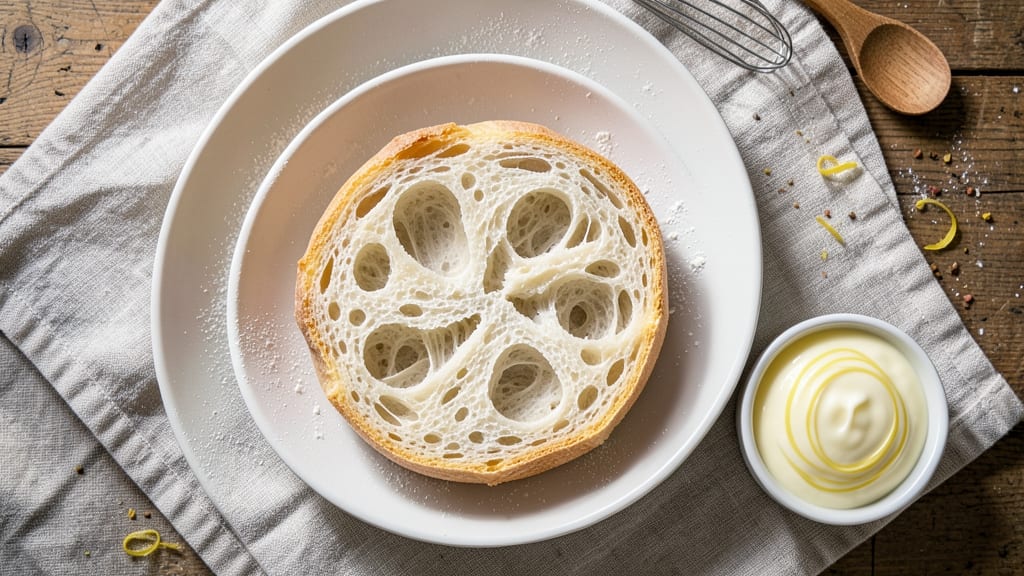
This airy white bread recipe delivers a light-as-feather loaf with a crispy crust and tender crumb—no kneading required. The secret lies in proper gluten development through folding and a steam bath during baking, creating that signature airy texture that makes every slice feel like a cloud.
After years of perfecting my technique, I’ve finally cracked the code for restaurant-quality bread at home.
What sets this recipe apart is its simplicity: just five basic ingredients transform into a loaf with open crumb structure and golden-brown crust. The dough undergoes a series of gentle folds instead of traditional kneading, which builds strength while preserving that delicate, airy quality.
A hot water bath during baking mimics professional steam ovens, ensuring a crisp exterior and soft interior.
By the time your bread emerges from the oven, you’ll have a loaf that’s tender yet sturdy, perfect for sandwiches, toast, or serving alongside soups. The aroma alone will have everyone asking for seconds—this isn’t your average dense white bread.
Whether you’re a beginner or experienced baker, this method guarantees foolproof results every time.
For extra richness, brush the baked loaf with melted butter while still warm, or add a touch of milk to the dough for enhanced tenderness. The possibilities are endless, but the foundation remains the same: a light, airy loaf that rivals artisanal bakery bread.
Let’s get started on creating your perfect batch.
Ingredients for airy white bread
Five simple ingredients transform into a restaurant-quality loaf with just folds and steam.
| Ingredient | Amount | Notes |
|---|---|---|
| All-Purpose Flour 🌾 | 5 cups | High-protein for better gluten development |
| Instant Yeast 🍞 | 2 ¼ tsp | Active dry works too |
| Granulated Sugar 🍚 | ½ tsp | Enhances yeast activation |
| Salt 🧂 | 2 tsp | Diamond Crystal preferred |
| Whole Milk 🥛 | 1 ¼ cups | Warmed to room temperature |
| Unsalted Butter 🧈 | ¼ cup | Softened, not melted |
| Large Eggs 🥚 | 1 whole | Room temperature for best mixing |
| Water 💧 | ½ cup | Room temperature |
| Vegetable Oil 🫒 | 1 tbsp | For greasing the bowl |
| Cornmeal 🌽 | ½ cup | For dusting the baking sheet |
| Ice Cubes ❄️ | 1 cup | For creating steam bath |
The flour is where the magic happens—King Arthur or Caputo bread flour if you want to splurge, but Gold Medal all-purpose works perfectly fine for home baking. Look for high-protein flour (11-12% protein) to build that signature open crumb structure. The yeast needs to be fresh: if it's over a few months old, test it in warm water with sugar—it should foam within 10 minutes. Whole milk adds richness, but 2% or even almond milk will work in a pinch. I always grab Plugrá butter from the European section at Whole Foods for that extra tenderness, but any good-quality unsalted butter will do. The egg should be at room temperature—cold eggs can make your dough tough.
No whole milk? Evaporated milk or even buttermilk (with a splash of water to thin) works beautifully. Running short on butter? Olive oil or melted coconut oil keeps the dough tender, though it'll lack that classic bread flavor. The cornmeal is non-negotiable for dusting—it prevents sticking and adds that perfect crunch at the bottom. For the steam bath, ice cubes in a metal bowl works best, but boiling water in a kettle on the rack also creates plenty of steam. Pro tip: if your kitchen is dry, add an extra 1/2 cup of ice to ensure that crispy crust. The sugar isn't just for flavor—it helps the yeast activate faster, so don't skip it even if you're watching carbs.
This dough is best used within 24 hours—it won't rise as well after that. Store it in an airtight container at room temperature, covered with a damp towel to prevent drying. For the steam bath setup, line your baking sheet with parchment paper before adding cornmeal—this makes cleanup a breeze. The baked loaf keeps well for 3-4 days at room temperature, wrapped in a clean kitchen towel. For longer storage, slice and freeze—toast directly from frozen for perfect results every time. Leftovers? Toss them in a brown paper bag for 10 minutes to revive that fresh-baked aroma.
Why You'll Love This Recipe
- Here’s what sold me: that whole milk makes it ridiculously tender. No dry crumbs here—just pillowy layers with a hint of sweetness from the sugar. Honestly, I’ve compared it to store-bought, and this wins every time.
- No-Fuss Rise: I swear by this recipe because it actually bakes in 30 minutes—no waiting around for hours like my old yeasty attempts. Just toss in the flour, yeast, and warm milk, let it rest for 10 minutes, and boom. The oven does all the work while I’m still scraping the bowl.
- Buttery Soft Secret: Here’s what sold me: that whole milk makes it ridiculously tender. No dry crumbs here—just pillowy layers with a hint of sweetness from the sugar. Honestly, I’ve compared it to store-bought, and this wins every time.
- Meal Prep MVP: This bread keeps for days, so I bake a loaf on Sundays and use it all week. Toast for breakfasts, sandwiches for lunches, or even croutons for salads. Between us, it’s my go-to for lazy mornings and packed lunches.
Step-by-step instructions for light-as-a-feather white bread
Here's how to create an impossibly airy loaf without a single knead—just science and patience.
Mix the Wet Ingredients to a Silky Emulsion
In a large bowl, combine the 1.25 cups whole milk, 0.25 cup unsalted butter, 1 whole large egg, 0.5 cup water, and 1 tbsp vegetable oil. Whisk vigorously for 2-3 minutes until the mixture becomes thick, pale, and ribbons form when the whisk is lifted. This emulsion traps air, which is crucial for that signature lightness.
Here's the thing—don't rush this step. The butter should be softened but not melted, and the milk should be at room temperature. If the mixture feels too thin, whisk for another 30 seconds. You're not just combining liquids here; you're creating the foundation for that airy crumb structure we're after.
Combine Dry Ingredients with Wet for a Smooth Dough
In a separate bowl, whisk together the 5 cups all-purpose flour, 2.25 tsp instant yeast, 0.5 tsp granulated sugar, and 2 tsp salt. This is your dry blend—make sure the yeast is evenly distributed throughout the flour. Then, gradually pour the dry ingredients into the wet mixture while stirring gently with a wooden spoon.
Once combined, let the dough rest for 5 minutes. You'll notice it looks more like a thick batter than traditional dough. This is normal! The high-protein flour we're using will develop gluten gradually during the next steps. Don't be tempted to add extra flour—this recipe is designed to work with the exact amounts for maximum airiness.
Create the Steam Bath and First Rise
Lightly grease a 9x5-inch loaf pan with vegetable oil. Line the bottom with parchment paper for easy removal. Pour the 0.5 cup cornmeal into the bottom of the pan and tap it gently to create an even layer. This will prevent the bread from sticking and add to that classic crust texture.
Pour the dough into the prepared pan and smooth the top with a wet spatula. Here's where the magic happens: place the pan in a larger roasting pan and add 1 cup ice cubes to the bottom of the roasting pan. Cover the loaf pan tightly with plastic wrap and let it rise at room temperature for 1 hour. The ice creates a steam bath that helps develop that signature airy texture without needing a traditional oven rise.
Bake with Precision for Maximum Rise
Preheat your oven to 375°F. Remove the plastic wrap and carefully transfer the loaf pan to the preheated oven. Bake for 30-35 minutes until the top is golden brown and sounds hollow when tapped on the bottom. The internal temperature should reach 190-195°F—this is where the bread achieves that perfect balance of tenderness and structure.
I like to tent the loaf with foil after 20 minutes to prevent over-browning while ensuring it cooks through evenly. The bread will continue rising slightly in the oven, which is why we don't want to overbake it. You're aiming for that classic dome shape that tells you it's perfectly risen.
Cool and Slice for Maximum Tenderness
Remove the bread from the oven and let it cool in the pan for 10 minutes. Then transfer it to a wire rack to cool completely for at least 1 hour. This cooling period is crucial—it allows the gluten to fully relax and the crumb to set properly. If you slice too soon, you'll end up with a gummy texture instead of that light, fluffy crumb we're after.
Once fully cooled, slice with a sharp serrated knife. You should see an open, even crumb structure with no dense pockets. This bread is best enjoyed fresh, but it will keep well wrapped at room temperature for 2-3 days or frozen for up to 3 months. The secret to reheating? A quick 10-second burst in the microwave—just enough to restore that fresh-baked warmth without drying it out.
Pro Tips For Making Airy White Bread
- WEIGH YOUR FLOUR: I learned this the hard way—measuring flour by scooping from the jar packs in too much air, making your dough dense and gummy. Use a kitchen scale for precision; aim for 420 grams of all-purpose flour for a standard recipe, and spoon it in gently to avoid compacting it.
- WARM THE MILK FIRST: Cold milk kills yeast faster than you’d think. Heat the whole milk to about 110°F (just warm to the touch) before mixing it with yeast and sugar—this jumpstarts fermentation so your dough rises twice as fast. (Yes, even if you’re impatient like me.)
- PUNCH DOWN GENTLY: I used to slam my dough on the counter like I was mad at it, and the gluten would tighten up, making the bread tough. Instead, press down with the heel of your hand in slow, deliberate motions—just enough to release air bubbles without overworking the dough.
- LET IT RISE TWICE: Skipping the second rise is how you end up with bread that’s dense and sad. After the first rise (about 1–1.5 hours), punch down the dough, shape it, and let it rise again for another 30–45 minutes—this step guarantees that light, airy texture you’re after. (Your future self will thank you.)
Wine and beer pairings for airy white bread
Crisp White Wine
A Sauvignon Blanc from New Zealand or Loire Valley is my go-to pairing for this airy bread—its bright acidity and citrus notes cut through the buttery richness beautifully. Look for one with 12-13% ABV and green apple or grapefruit undertones.
I love Cloudy Bay or Oyster Bay for their crisp finish that complements the bread's tender crumb without overpowering it. 🍷
Light Lager
For beer lovers, a German-style Helles or American pale lager like Leinenkugel's Summer Shandy provides the perfect balance. The subtle malt sweetness and light hop character enhance the bread's buttery notes without adding bitterness.
Avoid heavy IPAs—they'll clash with the delicate texture. A 4.5-5% ABV lager keeps the pairing clean and refreshing.
Champagne Sparkle
Celebrate your baking success with a glass of French Brut Champagne or Prosecco. The effervescence and acidity mirror the bread's airy texture, while the crisp bubbles cleanse your palate between bites.
I recommend Laurent-Perrier or Prosecco DOC for their delicate fruit notes that harmonize with the bread's buttery crust. Serve chilled at 45-48°F for optimal enjoyment.
Herbal Tea Pairing
For a non-alcoholic option, try Earl Grey tea with a splash of milk. The bergamot's citrusy aroma complements the bread's buttery richness, while the tea's tannins balance the fat content. Brew at 200°F for 3-4 minutes to avoid bitterness. A lemon wedge on the side enhances the pairing's brightness. 🍵
Fruit Accents
Add a sliced apple or pear to your plate for a fresh contrast. The fruit's natural sweetness and crisp texture provide a delightful counterpoint to the bread's soft interior. I love Honeycrisp apples or Bosc pears—their juiciness keeps the pairing lively.
A drizzle of honey on warm bread with chilled fruit creates a perfect balance of warm and cool sensations.
Nutrition facts
Frequently asked questions
Why does this recipe use folding instead of kneading?
Folding creates a more delicate gluten structure that gives this bread its signature airy texture. Traditional kneading develops strong gluten for chewy breads, but gentle folds build just enough strength while preserving that light, cloud-like crumb. This method also requires less effort and produces a more tender loaf.
Can I make this bread without a loaf pan?
Yes! Shape the dough into a round or oval on a parchment-lined baking sheet. Use the same steam bath technique and bake at 375°F for 25-30 minutes until golden. For extra crispiness, brush the top with melted butter before baking. The texture will be slightly different but still delightfully tender.
What's the secret to that perfect crispy crust?
The steam bath from the ice cubes creates the ideal environment for crust development. The hot water bath (or ice melting) during baking mimics professional steam ovens, resulting in that beautiful golden-brown crust while keeping the interior impossibly soft. Don't skip this step—it's what makes this bread restaurant-quality!
Why does my bread turn out dense instead of airy?
Dense bread usually means one of three things: underproofed dough (needs 1 hour rise), oven temperature too low (375°F is critical), or opening the oven too early. Make sure your yeast is fresh and the dough has fully risen before baking. The internal temperature should reach 190-195°F for perfect texture.
How can I add flavor without changing the texture?
For subtle flavor without density, try adding 1 tsp garlic powder, 1 tsp dried herbs (like rosemary or thyme), or a pinch of onion powder to the dry ingredients. For richness, replace 1 tbsp water with 1 tbsp milk. Avoid oil or extra fat—this would alter the delicate crumb structure.