
Side Dishes
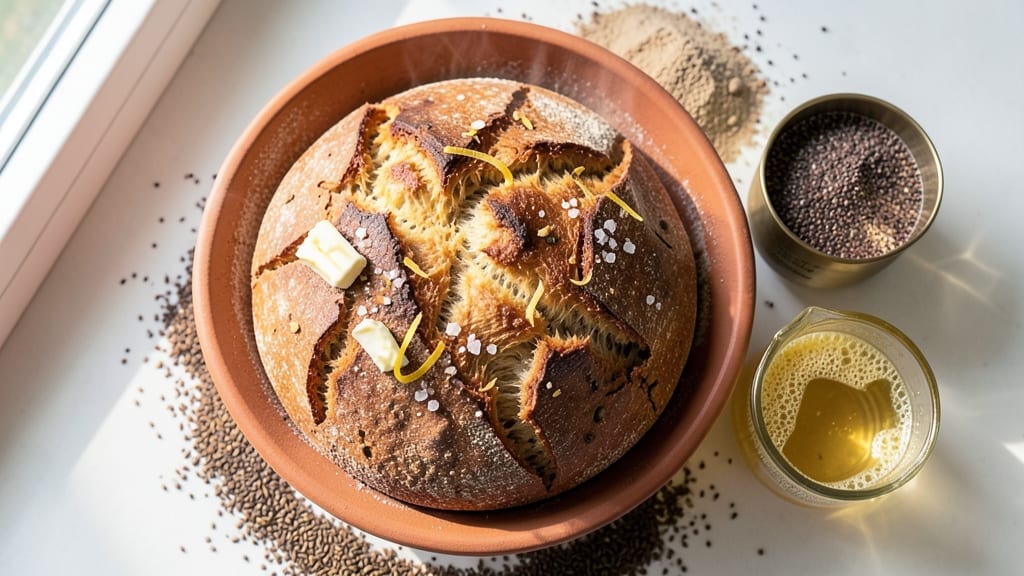
This African yeast bread recipe transforms simple ingredients into a fragrant, textured loaf with deep cultural roots. The dough's signature spiced swirls and crispy crust make it perfect for soaking up stews or serving alongside grilled meats.
I developed this version after years of perfecting the balance between tender crumb and sturdy structure—key for traditional African breads that double as both plate and utensil.
The secret lies in the fermentation process, where the dough develops its signature tang and elasticity. We'll use a mix of all-purpose flour and teff flour for authenticity (with gluten-free options available), along with warm spices like cardamom and cinnamon that create aromatic layers.
The dough requires patience—letting it rise overnight at room temperature builds complex flavors that no quick recipe can match.
By the time you pull this loaf from the oven, you'll have a golden-brown crust with those coveted spiced swirls peeking through. The interior remains soft and slightly chewy, with just enough structure to hold up to hearty meals.
This bread isn't just food—it's a connection to traditions where every meal begins with hands dipped in oil and shared community.
Whether you're serving it with Ethiopian wat, South African bobotie, or simply enjoying it with butter and jam, this recipe delivers restaurant-quality results at home. The best part?
Leftovers keep beautifully for days, making it perfect for meal prep or gifting. Let's get started on creating your own loaf of tradition.
Ingredients for african yeast bread
Simple flours, warm spices, and a touch of patience create this fragrant African bread loaf.
| Ingredient | Amount | Notes |
|---|---|---|
| All-Purpose Flour 🌾 | 4 cups | For structure and texture |
| Teff Flour 🌾 | ½ cup | For authentic African flavor |
| Active Dry Yeast 🍞 | 0.03 oz | Or 1 packet (2.25g) |
| Granulated Sugar 🍚 | 1 tbsp | Feeds yeast activation |
| Warm Water 💧 | 1 ¼ cups | 110°F for yeast activation |
| Unsalted Butter 🧈 | ½ cup | Softened for dough richness |
| Large Egg 🥚 | 1 whole | For structure and binding |
| Salt 🧂 | 1 tsp | Kosher or sea salt |
| Ground Cardamom 🌿 | ½ tsp | Warm spice for aroma |
| Ground Cinnamon 🍃 | ½ tsp | Complements cardamom beautifully |
| Olive Oil 🫒 | 2 tbsp | For dough elasticity |
| Honey 🍯 | 1 tbsp | Adds subtle sweetness |
| Sesame Seeds 🌻 | 2 tbsp | For decorative topping |
The teff flour is what gives this bread its signature depth—Bob's Red Mill or Anthony's Goods are my go-tos for quality. If you can't find teff, substitute with extra all-purpose flour, but the flavor won't be quite the same. The yeast is non-negotiable here—Saf-Instant or Fleischmann's Active Dry both work perfectly. For the spices, Penzeys carries excellent whole cardamom pods if you want to grind your own, but pre-ground is fine too. Just make sure they're fresh—if they smell like dust, toss them. The butter should be soft but not melted—room temperature is key for that perfect dough texture.
No teff flour? Swap for extra all-purpose plus 1/4 tsp malt powder (or a pinch of sugar) to mimic its slight sweetness. Running low on cardamom? Allspice or nutmeg at half the amount works in a pinch. The honey can be swapped for maple syrup if you prefer, but raw local honey adds a lovely floral note. For the dough, I always use a digital kitchen scale for accuracy—weighing the flour gives you consistent results every time. If you're gluten-free, Bob's Red Mill 1:1 Gluten-Free Flour Blend works well, but expect a slightly denser crumb.
This dough needs time—at least 8 hours overnight at room temperature for maximum flavor. Store any leftovers wrapped in a clean kitchen towel at room temperature for 2-3 days, or freeze slices for up to 3 months. For reheating, wrap in foil and warm at 350°F for 5-10 minutes—nothing beats that fresh-from-the-oven crunch. I always make a double batch—one for the table, one for gifting. Trust me, it disappears fast!
Why You'll Love This Recipe
- No-Fuss Dough: I swear by this recipe because it’s basically foolproof—just mix the all-purpose flour, teff flour, yeast, and warm water, let it rise, and bake. No kneading, no fuss, no stress. Even if I’m distracted (looking at you, laundry piles), this bread still turns out light and fluffy.
- Earthy Depth: That teff flour? It’s the secret weapon. A tiny amount gives this bread a nutty, slightly tangy flavor that’s addictive—like a warm hug in bread form. Honestly, it’s the kind of taste that makes you want to eat it straight from the oven, crust and all.
- Weeknight Workhorse: This bread is my go-to for sandwiches, toast, or even as a side with stews. It’s sturdy enough to hold up to strong flavors but soft enough to melt in your mouth. Between us, I’ve used it for everything from breakfast wraps to dinner rolls—no regrets.
- Budget Stretch: A little teff flour goes a long way, and the rest of the ingredients are pantry staples. I make a big batch on Sundays, and it lasts me all week—perfect for stretching meals without breaking the bank. Plus, the yeast makes it feel special without costing a fortune.
Step-by-step instructions for African yeast bread
This dough comes together beautifully with just a few key techniques—let's create something extraordinary.
Activate the Yeast and Prepare the Dough Base
In a small bowl, combine the 0.03 oz active dry yeast, 1 tablespoon granulated sugar, and ½ cup of the warm water (110°F). Let it sit for 5-10 minutes until it becomes frothy—this tells you the yeast is alive and ready to work. If it doesn't bubble, your yeast might be dead or your water too hot.
In a large mixing bowl, whisk together the 4 cups all-purpose flour, ½ cup teff flour, 1 teaspoon salt, ½ teaspoon ground cardamom, and ½ teaspoon ground cinnamon. The teff flour will give your bread that authentic African warmth we're after. Make a well in the center and pour in the yeast mixture, remaining ¾ cup warm water, 2 tablespoons olive oil, and 1 tablespoon honey.
Develop the Dough and Add Butter
Using a wooden spoon or dough whisk, stir the ingredients until they begin to come together. Then switch to your hands and knead for 5-7 minutes until the dough becomes smooth and elastic. You'll know it's ready when it springs back slowly when poked. If it feels too sticky, add 1 tablespoon flour at a time.
Once the dough is smooth, cover it with a damp towel and let it rest for 15 minutes. This resting period relaxes the gluten, making it easier to incorporate the butter. After resting, take the dough out and flatten it into a rectangle on a lightly floured surface. Spread the ½ cup softened unsalted butter evenly over the surface, then roll it up tightly like a log. Seal the seam well to prevent air pockets.
First Rise and Shape the Loaf
Place the sealed dough log seam-side down in a greased 9x5-inch loaf pan. Cover it with the damp towel again and let it rise in a warm place for 1 to 1½ hours, or until it has nearly doubled in size. The dough should feel light and springy when you press it gently with your finger.
While the dough rises, preheat your oven to 375°F. Once the dough has risen, brush the top with a beaten large egg for a golden finish. Sprinkle the 2 tablespoons sesame seeds evenly over the top—they'll add beautiful texture and a nutty flavor that pairs perfectly with the spices.
Bake to Golden Perfection
Bake the bread for 35-40 minutes until it's golden brown and sounds hollow when tapped on the bottom. The internal temperature should reach 190-200°F. If the top browns too quickly, tent it loosely with aluminum foil to prevent over-browning while it finishes baking.
Remove the bread from the oven and let it cool in the pan for 10 minutes before transferring it to a wire rack. The bread will continue to firm up as it cools, developing that perfect crusty exterior we're after. Slice it while still warm for the best texture—each slice should reveal a tender crumb with beautiful swirls from our spiced butter.
Pro Tips For Making African Yeast Bread
- Mix Teff Last: Teff flour is like a tiny gremlin—it absorbs moisture faster than regular flour and can turn your dough into a sticky mess if you mix it in early. Add it after the all-purpose flour and yeast have already hydrated, then gently fold it in until just combined. Overmixing here means dense, gummy bread.
- Bloom Yeast in Sugar Water: Skip the dry yeast in flour trick—this bread needs a head start. Dissolve the sugar in your warm water first, then sprinkle the yeast on top and let it foam for 5–7 minutes before adding to the dough. The sugar jumpstarts fermentation, and you’ll get that signature lightness instead of a dense, flat loaf.
- Knead Until Silky, Not Sticky: African yeast bread dough should stretch like window film, not cling like glue. Work it on a lightly floured surface until it’s smooth and slightly tacky but pulls away cleanly. If it’s still sticky after 8–10 minutes, you’ve overhydrated it—add a tablespoon of flour gradually and knead again. No shortcuts here.
- Proof at Room Temp, Not Warm: That oven with the light on? Not ideal. Yeast loves warmth, but not heat—proof your dough in a draft-free spot at 75–80°F (like a turned-off oven with the door ajar) for 1–1.5 hours. A warm oven can overproof it in 30 minutes, leaving you with a sad, collapsed loaf. Patience wins.
Flavor customization for these flavors
Spice Swap Variations
Trade the cardamom and cinnamon for 1 tsp ground coriander and ¼ tsp black pepper for a North African twist that pairs beautifully with tagines. I've found this combo works especially well when serving with lamb dishes.
For a more Eastern African profile, try ½ tsp fenugreek and ¼ tsp cloves—this gives the bread a warm, slightly bitter depth that complements spicy stews. 🌶️
Sweet Glazed Options
Add 1 tbsp orange zest and 1 tbsp honey to the dough for a citrusy brightness that cuts through rich meals. Brush the baked loaf with ½ cup melted butter mixed with 1 tbsp maple syrup while still warm for a sticky, caramelized finish.
This works wonderfully with breakfast or as a dessert bread when lightly toasted. 🍯
Herb-Infused Dough
Fold in 2 tbsp finely chopped fresh rosemary or thyme during the final kneading for a fragrant Mediterranean-African fusion. For a stronger herbal note, try 1 tbsp dried mint—this pairs exceptionally with grilled meats or spicy dips.
The herbs should be finely chopped to distribute evenly throughout the dough. 🌿
Nutty Seed Additions
Mix ¼ cup toasted sesame seeds directly into the dough for extra crunch and depth. For a more exotic touch, add 2 tbsp ground flaxseeds or poppy seeds—these add nutritional benefits while complementing the warm spices. The seeds should be toasted first for maximum flavor impact. 🌻
Smoky Variations
Add ½ tsp smoked paprika to the dry ingredients for a subtle smokiness that works well with barbecued meats. For a bolder effect, incorporate 1 tbsp chipotle powder into the butter layer before rolling. This creates a beautiful contrast between the smoky interior and crispy crust. 🔥
Savory Cheese Twist
Fold in ½ cup crumbled feta or goat cheese during the final kneading for a tangy, creamy variation. The cheese should be finely crumbled to distribute evenly. This version pairs exceptionally with tomato-based sauces or as a side for charcuterie boards. 🧀
Nutrition facts
Frequently asked questions
Can I make this African yeast bread without teff flour?
Yes! While teff flour adds authentic flavor, substitute with ½ cup extra all-purpose flour plus ¼ teaspoon malt powder (or sugar) to mimic its slight sweetness. For a gluten-free version, use a 1:1 gluten-free flour blend like Bob's Red Mill, though the texture will be denser. The bread will still taste delicious—just expect a subtler African profile.
Why does my dough smell so strong after rising?
The warm spices (cardamom, cinnamon) and teff flour create an intense aroma during fermentation—that's normal and actually a good sign! Let the dough rise in a warm spot (like near a turned-off oven with a cup of hot water) to enhance the fermentation process. The smell will mellow as it bakes, revealing a fragrant, spiced bread with complex flavors.
How do I store leftovers to keep them fresh?
Wrap cooled slices in a clean kitchen towel or beeswax wrap to maintain moisture. Store at room temperature for 2-3 days or freeze for up to 3 months. To reheat, wrap slices in foil and warm at 350°F for 5-10 minutes—this restores the crusty exterior while keeping the interior soft.
Can I use this recipe for gluten-free or vegan versions?
For gluten-free, replace all flours with a 1:1 gluten-free blend (like Bob's Red Mill) and add ½ teaspoon xanthan gum to improve texture. For vegan, substitute the egg with 1 tablespoon ground flaxseed mixed with 3 tablespoons water, and use vegan butter instead of regular. The dough will be slightly denser but still delicious!
What's the best way to serve this bread?
This bread shines with Ethiopian stews (wat), South African bobotie, or as a side for grilled meats. Tear warm slices to scoop up sauces, or serve with butter and honey for breakfast. The spiced swirls also make it perfect for charcuterie boards alongside cheeses and cured meats.