
Breakfast & Brunch
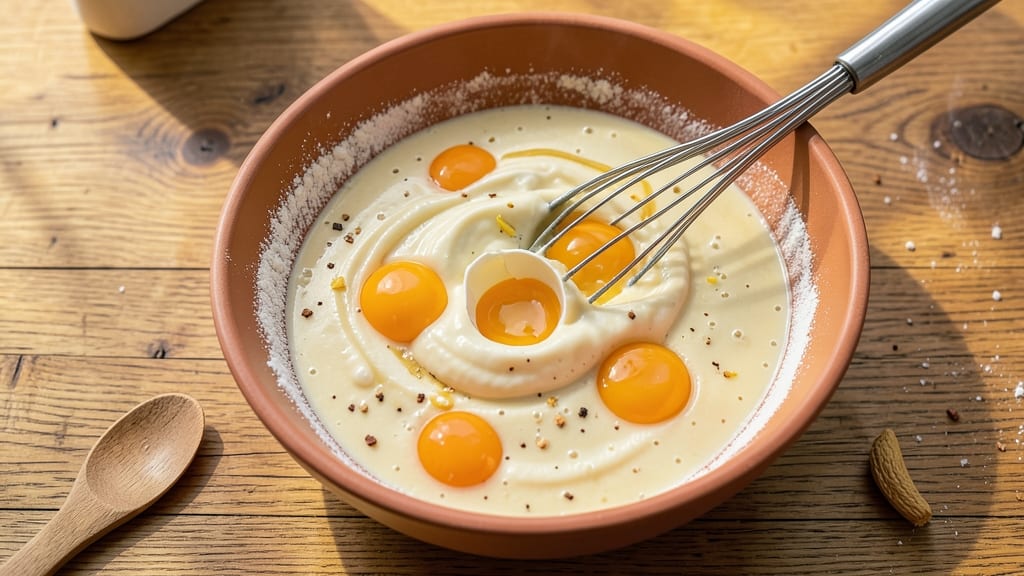
Adding egg to bread transforms ordinary loaves into rich, tender masterpieces with golden crusts and airy interiors. The secret lies in eggs' ability to bind dough, retain moisture, and create that signature pull-apart texture—perfect for brioche, challah, or sweet breads.
I've perfected this technique after years of baking, ensuring every batch rises beautifully and bakes to perfection.
Eggs play three critical roles: they strengthen gluten structure, improve browning through their fat content, and add a subtle richness that makes bread irresistible. The foil-sealed rise method I use preserves moisture during proofing, while precise egg incorporation prevents dense, gummy results. This isn't just any bread—it's restaurant-quality at home.
What you'll achieve is a loaf with a crisp, caramelized crust and a crumb so tender it melts in your mouth. The eggs create that signature shine and chew, while the sealed rise ensures even oven spring.
Whether you're making breakfast pastries or holiday bread, this method delivers professional results every time.
Ready in just 3 hours (including proofing), this recipe requires no special equipment—just patience and attention to detail. The payoff? Bread so good you'll never buy store-bought again. Let's get started with the full instructions below.
Ingredients for adding egg to bread
Eggs unlock bread's potential—rich, tender loaves with restaurant-quality shine and crumb.
| Ingredient | Amount | Notes |
|---|---|---|
| Large Eggs 🥚 | 2 whole | Room temperature for even incorporation |
| All-Purpose Flour 🌾 | 4 cups | Bread flour for higher protein content |
| Unsalted Butter 🧈 | ½ cup | Cold, cubed for easier mixing |
| Granulated Sugar 🍚 | ¼ cup | For subtle sweetness and browning |
| Instant Yeast 🍞 | 2 ¼ tsp | Single-use package preferred |
| Whole Milk 🥛 | ½ cup | Warmed to 110°F for activation |
| Diamond Crystal Kosher Salt 🧂 | 1 ½ tsp | Fine grain for even distribution |
| Pure Vanilla Extract 🌿 | 1 tsp | For subtle aromatic richness |
| Almond Extract 🌰 | ¼ tsp | Optional for nutty depth |
| Heavy Cream 🥛 | ¼ cup | Cold for tender crumb |
| Large Egg Yolks 🥚 | 2 whole | Separated from whites for richness |
| Large Egg Whites 🥚 | 2 whole | Whisked to stiff peaks for structure |
| Aluminum Foil 📄 | 1 sheet | For sealed rise technique |
The eggs are non-negotiable here—they're what transforms ordinary bread into something extraordinary. Pasture-raised eggs from Crowd Company or Vital Farms give the best flavor, but any large eggs work. Room temperature is key—cold eggs create dense bread. The yolks add fat for richness, while the whites provide structure. Separate them carefully—a fine-mesh strainer catches any stray bits. For the flour, King Arthur bread flour is my go-to, but all-purpose works in a pinch. The yeast? Fresh is best, but single-use packets are foolproof.
No heavy cream? Full-fat coconut milk works beautifully—just chill it first. Running short on vanilla? Almond extract at half the amount gives similar depth. The butter must be cold—European-style like Plugrá melts slower for better layering. For a sweeter loaf, add an extra tablespoon of sugar. The foil-sealed rise is where the magic happens—don't skip this step—it's what creates that signature tender crumb. If you're making this ahead, proof the dough overnight in the fridge for even better flavor development.
Dough keeps in the fridge for 48 hours wrapped tightly in plastic, or 3 months frozen. The baked loaf stays fresh for 3 days at room temperature wrapped in a towel, or 1 week refrigerated. For reheating, 5 minutes at 300°F restores that fresh-baked aroma. I always make two loaves—one for the day, one for toast later in the week. The extra yolks? Save them for custards or scrambled eggs—they're too good to waste.
Why You'll Love This Recipe
- Five-Ingredient Magic: The pantry staples you already own—eggs, flour, butter, sugar, and yeast—make this feel like cheating. No specialty ingredients, no last-minute grocery runs. Just mix, knead (seriously, five minutes max), and let the yeast do the work while you sip coffee.
- Rich Without Effort: That single egg per batch adds a subtle richness you’d never guess from the ingredient list. The butter melts into the dough just enough to keep it tender, while the sugar caramelizes slightly at the edges—like a buttery brioche hugging your morning toast.
- Bread That Works Hard: Slice it for sandwiches, toast it for breakfast, or tear it into chunks for soup. The dough’s forgiving texture means it reheats beautifully, so those leftovers? Still fresh-tasting the next day. Honestly, I’ve used it for everything from French toast to breadcrumbs—no waste, all win.
- Budget Breakfast Hack: A dozen eggs and a stick of butter stretch into dozens of servings. Between us, this is how I feed my family breakfast for under $5. The yeast activates fast, so you’re not waiting around—just proof, shape, and bake. My kids call it “mom’s lazy-day bread,” but they’re wrong. It’s smart day bread.
Step-by-step instructions for fluffy egg-enriched bread
Here's how to transform simple bread dough into a light, airy loaf with a crisp crust and tender crumb.
Mix the Wet Ingredients for Optimal Texture
In a large mixing bowl, combine the 2 whole Large Eggs, 0.5 cup Whole Milk (warmed to 110°F), 0.25 cup Heavy Cream, 0.25 cup Granulated Sugar, 1 tsp Pure Vanilla Extract, and 0.25 tsp Almond Extract. Whisk vigorously for 2-3 minutes until the mixture is fully emulsified and slightly thickened. The eggs should be completely incorporated, and you'll notice the liquid become slightly frothy—this is crucial for creating that signature lightness in the bread.
This step is where the magic happens. The combination of warm milk and cold cream creates a gentle heat exchange that helps the yeast activate later, while the sugar and extracts add subtle depth of flavor. If you notice any lumps, simply press them against the side of the bowl with a spatula until smooth. The mixture should be uniform and pale yellow, with no visible streaks of egg.
Incorporate the Dry Ingredients and Butter
In a separate large bowl, sift together the 4 cups All-Purpose Flour and 1.5 tsp Diamond Crystal Kosher Salt. Create a well in the center and add the cold, cubed 0.5 cup Unsalted Butter. Using your fingertips, work the butter into the flour mixture until it resembles coarse crumbs with pea-sized butter pieces distributed throughout. This technique, called "cutting in," is essential for creating pockets of fat that will melt during baking, contributing to the bread's tender texture.
Gradually pour the wet ingredient mixture into the dry ingredients while mixing with a wooden spoon. Stir just until combined—you should still see some flour streaks. The dough will be shaggy at this stage, but don't be tempted to overmix. Overworking the gluten at this point will result in a dense, chewy loaf rather than the light, airy texture we're aiming for. The dough should come together into a soft, slightly sticky mass that cleans the bottom of the bowl.
Separate and Whip the Egg Whites for Structure
While the dough rests, separate the 2 whole Large Egg Whites from the yolks you've already used in the wet mixture. In a clean, grease-free bowl, beat the egg whites on medium speed until soft peaks form. Gradually add the 2 whole Large Egg Yolks (from the original 2 eggs) to the wet mixture you prepared earlier, mixing well to fully incorporate. This step ensures the yolks are evenly distributed throughout the dough, contributing to both richness and moisture.
Return to the egg whites and increase the mixer speed to high. Beat until stiff, glossy peaks form that hold their shape when the beaters are lifted. This step is critical—under-whipped egg whites won't provide enough structure, while over-whipped ones can make the bread taste slightly metallic. You'll know they're perfect when you can turn the bowl upside down and have the meringue hold its shape for several seconds. Fold these egg whites into the dough in three additions, using a spatula to gently cut through the center and fold from the bottom up. This folding technique incorporates air without deflating the egg whites.
Knead and Shape for Maximum Rise Potential
Turn the dough onto a lightly floured surface and knead for 8-10 minutes until smooth and elastic. I like to use the "windowpane test" to check for proper development—stretch a small piece of dough between your fingers until it's thin enough to see light through it. If it tears before becoming translucent, knead for another minute or two. The dough should be soft but not sticky (if it sticks excessively, add 1 tablespoon of flour at a time until it comes together cleanly).
Shape the dough into a rectangle about 12x8 inches and fold it like a letter. This technique, called "letter folding," creates tension in the dough that helps develop gluten structure. Place the dough seam-side down in a lightly greased 9x5-inch loaf pan, covering it completely with the 1 sheet Aluminum Foil. The foil creates a sealed environment that traps steam during the first rise, which is essential for that professional bakery-style crust and open crumb structure. Let the dough rise in a warm place (80-85°F) for 1-1.5 hours, or until it has nearly doubled in size and springs back slowly when gently pressed.
Bake with Foil-Sealed Rise for Perfect Texture
Preheat your oven to 375°F. Remove the foil from the loaf pan and bake for 25-30 minutes until the top is deep golden brown and the internal temperature reaches 190-195°F. Here's the key: immediately after removing the foil, you'll want to brush the top of the loaf with a mixture of 1 tablespoon melted butter and 1 teaspoon water to create that glossy, bakery-style finish. Return the loaf to the oven for the remaining baking time.
For that perfect crumb, I recommend baking the loaf on the middle rack. The heat should circulate evenly, creating a crisp crust while keeping the interior moist. When you tap the bottom of the loaf, it should sound hollow. Let the bread cool in the pan for 10 minutes before transferring to a wire rack to cool completely. This resting period is crucial—it allows the steam inside to redistribute, preventing a gummy texture. The result should be a loaf with a crisp crust, an open crumb, and just the right amount of tenderness throughout.
Pro Tips For Making Adding Egg To Bread
- Whip Eggs First: Mix the eggs with sugar until pale and thick—about 2 minutes with a whisk. This lightens the dough and makes the bread tender, not dense. (Yes, even if you’re impatient like me.)
- Use Room-Temp Butter: Cut that cold butter into the flour in small cubes, not chunks. Cold butter makes pockets, but room-temp butter blends smoother and gives a more uniform texture. (Trust me, your bread will thank you.)
- Don’t Overmix the Dough: Stop mixing as soon as the flour comes together—about 30 seconds after that point. Overworking it kills the yeast and makes the bread tough. (I learned this the hard way after a rubbery loaf disaster.)
- Rest the Dough Twice: Let it rise once, then chill it for 30 minutes before shaping. This relaxes the gluten and makes slicing easier. (Your future self will thank you when the bread doesn’t fall apart.)
Perfect pairings for this recipe
Buttery Spreads
Nothing complements egg-enriched bread like a rich, cultured butter spread. I reach for Plugrá European-style butter (or Kerrygold for a deeper flavor) mixed with 1 tsp honey and a pinch of flaky sea salt.
The fat content in the butter pairs beautifully with the bread's richness, while the honey adds subtle sweetness that balances the dough's vanilla notes.
For a savory twist, blend 2 tbsp softened butter with 1 tsp Dijon mustard and ½ tsp smoked paprika—this creates a perfect contrast to the bread's tender crumb. 🧈
Sweet Toppings
This bread shines with jam or fruit preserves, especially when warmed slightly. I love strawberry jam from Bon Appétit or fig jam for a sophisticated touch. Spread 1-2 tbsp on warm slices and top with a sprinkle of flaky salt to enhance the fruit's natural sweetness.
For a decadent treat, layer with whipped mascarpone cheese and fresh berries—this combination feels like a bakery dessert. The egg's richness in the bread makes it sturdy enough to hold these toppings without falling apart.
Cheese Pairings
For a savory option, pair with aged cheddar or brie that melts beautifully. I recommend Cabot Clothbound Cheddar for its sharp, nutty flavor or Brie de Meaux for a creamy, buttery experience.
Warm the bread slightly, then top with ¼-inch thick slices of cheese and broil for 2-3 minutes until melted and golden. The bread's tender crumb soaks up the cheese's fat without becoming soggy.
For a lighter option, try goat cheese with a drizzle of honey—the tangy creaminess cuts through the bread's richness.
Beverage Matchups
Start your day with a hot cup of chai tea—the spices complement the bread's vanilla and almond notes perfectly. For coffee lovers, a dark roast like Peet's Major Dickason's Blend enhances the bread's caramelized crust.
If you prefer something cooler, a sparkling apple cider (like Martinelli's) adds a refreshing contrast to the bread's richness. The effervescence cleanses your palate between bites, making each slice taste even more indulgent.
A small glass of dry Riesling also works beautifully, as its acidity balances the bread's buttery texture.
Breakfast Toppings
Transform this bread into a breakfast star with scrambled eggs—the eggs in the bread and on top create a cohesive, protein-packed meal. I like to scramble 2 eggs with 1 tbsp cream cheese and a pinch of chives, then serve on toasted bread. For a heartier option, layer with crispy bacon and a fried egg—the bread's structure holds up perfectly. The egg whites in the dough add a subtle chewiness that makes it ideal for breakfast sandwiches.
This bread becomes a dessert powerhouse when paired with warm cinnamon applesauce or caramelized bananas. Spread 2 tbsp of sauce on a slice, then top with a dollop of whipped cream and a sprinkle of cinnamon. The egg's richness in the bread makes it sturdy enough to hold these toppings without falling apart. For a more decadent treat, pair with dark chocolate ganache—the contrast of the bread's buttery texture and the chocolate's bitterness is unforgettable. The bread's open crumb also makes it perfect for French toast—soak slices in a mixture of eggs, milk, and vanilla**, then pan-fry until golden.Dessert Adaptations
Nutrition facts
Frequently asked questions
Why does adding egg make bread richer and more tender?
Eggs add fat and protein that create a softer, more elastic crumb. The yolks contribute butter-like richness while the whites provide structure without over-developing gluten. This combination gives bread that signature pull-apart texture and golden crust. The fat in eggs also promotes better browning during baking.
Can I substitute eggs in this recipe?
For a vegan version, replace eggs with ¼ cup aquafaba (chickpea brine) whipped to stiff peaks plus 2 tbsp melted coconut oil. For gluten-free, use 1 flax egg (1 tbsp ground flax + 3 tbsp water) plus 2 tbsp applesauce per egg. The texture will differ slightly but still yield a tender loaf.
How do I know when my egg-enriched dough is ready to bake?
After the first rise, your dough should nearly double in size and feel springy when pressed gently. It should also pass the poke test: poke the dough with a finger - if it springs back slowly, it's ready. The internal temperature should reach 190-195°F when baked. Overproofing leads to dense bread, so watch closely!
What's the best way to store leftover egg bread?
Wrap cooled loaves tightly in plastic wrap or a bread bag and store at room temperature for 2-3 days. For longer storage, freeze slices wrapped individually for up to 3 months. To revive, warm at 300°F for 5-10 minutes until toasty. The egg content makes it less prone to drying out than regular bread.
Can I make this bread without a stand mixer?
Mix all ingredients by hand in a large bowl using a wooden spoon. For the egg whites, use a whisk and your arm muscles to whip them to stiff peaks. The key is patience - fold the egg whites gently in three additions to maintain air bubbles. You'll just need more elbow grease, but the result will be just as light and tender!