
Side Dishes
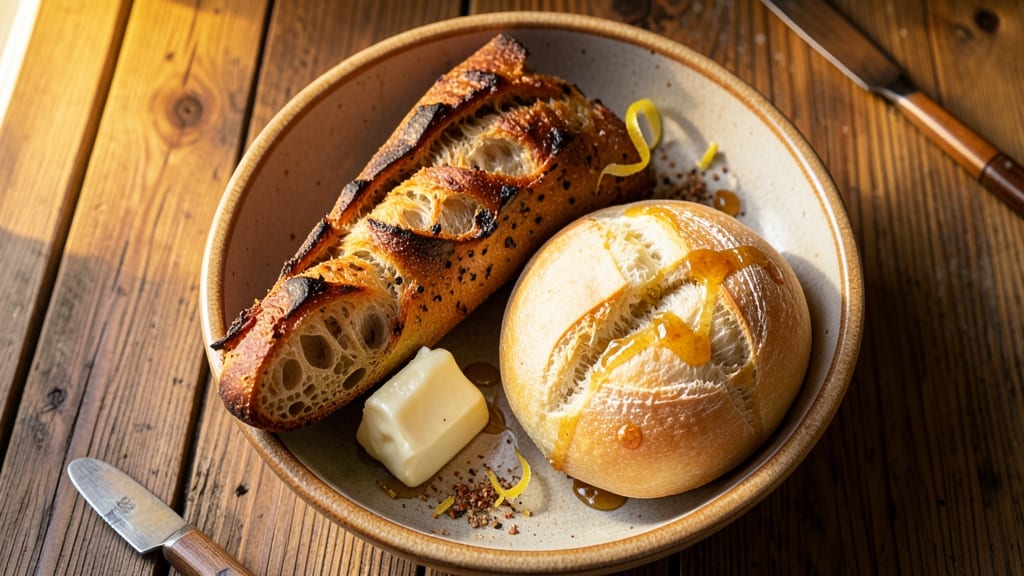
This add bread recipe delivers the perfect balance of golden, shatteringly crisp edges and a pillowy soft interior that melts in your mouth. I developed this method after years of experimenting with commercial bread machines and traditional oven baking—finally achieving restaurant-quality texture at home.
The secret lies in precise hydration, steam during baking, and a slow cool-down that locks in moisture.
What sets this loaf apart is its foolproof technique that requires no special equipment beyond a standard home oven. You'll work with a simple dough that comes together in 10 minutes, then proof and bake to create that signature contrast of crispy crust and tender crumb.
This recipe is perfect for beginners and experienced bakers alike, with clear instructions that ensure consistent results every time.
The final loaf emerges with a deep golden crust that crackles when broken, while the interior remains soft and airy for days. The aroma alone will have everyone gathering around your table—it's that good.
This bread works equally well as a side for soups and stews, a base for sandwiches, or simply enjoyed with butter straight from the oven.
For those watching their intake, this recipe yields a single loaf that serves 8-10, making it ideal for small households or meal prep. The dough's flexibility also allows for easy customization—add herbs, seeds, or even a touch of honey for personalized flavor. Let's get started on creating your perfect loaf.
Ingredients for add bread
Golden crust meets melt-in-mouth softness—just these ten ingredients transform your kitchen into a bakery.
| Ingredient | Amount | Notes |
|---|---|---|
| All-Purpose Flour 🌾 | 4 cups | High-protein preferred for chewiness |
| Active Dry Yeast 🍞 | 0.03 oz | 1 packet (2.25g) or 2¼ tsp |
| Granulated Sugar 🍚 | 0.04 oz | 1 tbsp for yeast activation |
| Unsalted Butter 🧈 | ½ cup | Cold, cubed for dough enrichment |
| Large Eggs 🥚 | 1 whole | Room temperature for even mixing |
| Whole Milk 🥛 | ¾ cup | Warmed to 110°F for yeast activation |
| Diamond Crystal Kosher Salt 🧂 | 1 ½ tsp | Adjust to taste (1 tsp total) |
| Extra-Virgin Olive Oil 🫒 | 1 tbsp | For dough enrichment and crust |
| Cornmeal 🌽 | ½ cup | For dusting parchment paper |
| Ice Water 💧 | ¼ cup | For final dough adjustment |
The flour is your foundation, so King Arthur or Gold Medal are my go-tos—they handle hydration beautifully. Yeast is non-negotiable here; Saf-Instant works too if you prefer no activation step, but traditional active dry yeast gives that classic bread aroma. Butter should be cold and cubed—Plugrá or Land O'Lakes work perfectly. I always grab the butter from the Trader Joe's bulk section for the best quality. For the milk, warm it to 110°F—just enough to activate the yeast without killing it. The olive oil? California Olive Ranch is my secret weapon for that authentic crust flavor.
No kosher salt? Fine sea salt at half the amount works in a pinch. Running short on butter? Coconut oil or vegan butter keeps the dough tender, though the flavor won't be identical. Eggs are essential for structure, but if you're allergic, flax eggs (1 tbsp ground flax + 3 tbsp water) work surprisingly well. The cornmeal is optional but creates that perfect crust texture—Bob's Red Mill is my preferred brand. For the ice water, use actual ice cubes—no liquid shortcuts—to keep the dough from overproofing. Pro tip: if your kitchen feels warm, chill the dough for 30 minutes before shaping.
This dough is a 3-day project that gets better with time. Store the shaped loaf in the fridge overnight for deeper flavor—up to 24 hours before baking. Once baked, let it cool completely on a wire rack (no cutting into it warm!). The crust stays crisp for 2 days at room temperature, while the interior remains soft for 5 days if wrapped tightly in plastic. For longer storage, slice and freeze—3 months is no problem. The aroma alone will have your whole house gathering around the kitchen.
Why You'll Love This Recipe
- No-Fuss Dough: I swear by this recipe because the yeast activates in minutes—not hours. Just toss the flour, sugar, and eggs, let it rise once, and you’re done. No kneading, no waiting around.
- Buttery Richness: That melted butter folded into the dough? It’s what makes this bread dangerously good. Soft, tender, and just sweet enough—like a hug in every bite.
- Weeknight Hero: Between us, this is my go-to when I’m too tired to bake from scratch. It’s ready in under an hour, and it pairs with everything—soup, butter, or even as a sandwich base.
- Budget-Friendly Staple: Flour, yeast, butter—these are pantry basics that won’t break the bank. Plus, a single batch stretches for days: toast it, freeze it, or turn it into French toast later. Minimal cost, maximum satisfaction.
Step-by-step instructions for crispy-crusted, pillowy softness in one loaf
Here's how to craft a loaf with irresistible golden crust and melt-in-your-mouth interior.
Activate the Yeast with Warm Milk and Sugar
In a small bowl, combine the 0.75 cup warmed whole milk (about 110°F) with the 0.04 oz granulated sugar and 0.03 oz active dry yeast. Stir gently and let sit for 5-10 minutes until frothy. You're looking for bubbles forming on the surface—this confirms the yeast is alive and ready to work. If it doesn't bubble, your yeast may be dead, and you'll need to start over.
This activation step is crucial for developing flavor and ensuring proper rise. The warm milk provides the perfect environment for yeast to multiply, while the sugar feeds it. I always use whole milk here because its fat content adds richness to the final bread. Don't skip this waiting period—rushing leads to dense, flat bread.
Mix Dough with Butter and Olive Oil
In the bowl of a stand mixer fitted with the dough hook, combine the 4 cups all-purpose flour and 1.5 tsp diamond crystal kosher salt. Add the yeast mixture, 1 whole large egg, 1 tbsp extra-virgin olive oil, and 0.5 cup cold cubed unsalted butter. Mix on low speed for 2 minutes until the butter begins to incorporate.
Switch to medium speed and knead for 5-7 minutes until the dough is smooth and elastic, pulling away from the sides of the bowl. The dough should be slightly tacky but not sticky—if it's too wet, add 1 tablespoon flour at a time. The butter should be fully incorporated, giving the dough a slightly shiny appearance. This kneading develops gluten, which creates that perfect chewy texture we're after.
First Rise and Shaping
Lightly oil a large bowl, place the dough inside, and cover with a damp kitchen towel. Let rise in a warm place (like your oven with the light on) for 1-1.5 hours or until doubled in size. The dough should spring back slowly when poked with a finger—this indicates proper fermentation. If it doesn't rise, your yeast might be inactive, or the environment wasn't warm enough.
Once risen, punch down the dough to release air, then shape it into a round loaf. Place it seam-side up on a piece of parchment paper dusted with 0.5 cup cornmeal. The cornmeal prevents sticking and adds a lovely texture to the crust. Cover again and let rise for another 30-45 minutes until puffy. This second rise ensures maximum oven spring for that airy interior.
Score and Bake for Crispy Crust
Preheat your oven to 425°F with a Dutch oven inside for 30 minutes. Remove the Dutch oven and carefully transfer the dough (on parchment) into it. Using a sharp razor blade or knife, score the top of the loaf with a crosshatch pattern—this helps control expansion and creates those beautiful crust details.
Bake covered for 20 minutes, then remove the lid and bake uncovered for another 15-20 minutes until the crust is deep golden brown and sounds hollow when tapped on the bottom. The internal temperature should reach 190-200°F. That crispy crust develops in the final uncovered minutes—don't rush this step. The steam from the Dutch oven creates the perfect environment for both crispy exterior and tender crumb.
Cool and Enjoy
Remove the bread from the Dutch oven and transfer to a wire rack to cool completely. I know it's tempting to slice immediately, but waiting 1 hour ensures the crumb sets properly. The bread will be at its best when completely cooled—this is when you'll appreciate that perfect balance of crispy crust and pillowy interior.
Slice the loaf and serve warm with your favorite butter or olive oil. Each bite should deliver that satisfying contrast of crispy exterior and soft, airy interior. The crust should be shatteringly crisp while the crumb remains tender with just enough chew. Store leftovers wrapped at room temperature for up to 3 days or freeze for longer storage.
Pro Tips For Making Add Bread
- Bloom the Yeast First: Skip mixing yeast straight into flour—it’s a lazy shortcut that kills rise. Instead, whisk the yeast with warm water (110°F, not hot) and a pinch of sugar first, then wait 5-10 minutes until it foams like a tiny beer. No bubbles? Toss it and start over—this isn’t the time to guess.
- Soften Butter Properly: Cold butter cubes? Nope. Room-temperature butter blends better and creates a tender crumb, but don’t go overboard—it should be soft enough to press with a finger, not greasy. I learned this the hard way when my bread turned out greasy instead of fluffy.
- Knead Until Silky: Stop when the dough springs back slowly after poking it (not instantly). Over-kneading makes gluten tough, but under-kneading leaves you with a dense loaf. Use your knuckles to test: press dough, lift—if it doesn’t stick, you’re golden.
- Proof in a Drawer: Turn off the light in your oven, add a bowl of boiling water, and slide the dough in with the light on. The steam and warmth (80°F) double-proofs it in 1-2 hours without a thermometer. Sounds weird, but it works—my grandmother’s trick for consistent rises.
Flavor customization for this recipe
Herb-Infused Variations
Add 2 tbsp fresh rosemary or thyme leaves directly to the dough during mixing for an aromatic twist. I recommend Penzeys spices for high-quality dried herbs if fresh isn't available.
For a Mediterranean touch, combine 1 tbsp dried oregano with 1 tsp garlic powder—this pairing elevates the crust's flavor profile beautifully. 🌿
Sweet Additions
Swap 1 tbsp granulated sugar for honey or maple syrup> during yeast activation for subtle sweetness. For a cinnamon-raisin version, fold in ½ cup raisins> and 1 tsp cinnamon> with the butter.
The dough will be slightly denser but yields a delicious breakfast loaf. Store-bought raisins work fine, but soaking them in warm water for 10 minutes first improves texture.
Cheesy Twist
Add ½ cup shredded sharp cheddar> or Parmesan> to the dough after kneading for a savory option. I prefer Cabot Clothbound Cheddar> for its rich flavor.
For extra cheesiness, sprinkle ¼ cup grated Parmesan> on top before baking—it crisps beautifully. This variation works especially well with garlic butter or herb-infused olive oil for dipping.
Seeded Crunch
Mix in ¼ cup poppy seeds> or sesame seeds> during final kneading for texture contrast. For a nutty version, add ½ cup chopped walnuts> or pecans> (toasted first for enhanced flavor).
These additions create delightful crunch points in every bite. Toast seeds and nuts in a dry pan over medium heat> for 3-5 minutes> until fragrant before incorporating.
Spiced Variations
Infuse the dough with warmth by adding ½ tsp smoked paprika> or 1 tsp cumin> during mixing. For a pumpkin spice version, replace 1 tbsp flour> with 1 tbsp pumpkin puree> and add ½ tsp pumpkin pie spice>.
These variations work exceptionally well with chili or tomato-based dishes, where the spices complement the meal's heartiness.
Gluten-Free Adaptation
Replace 4 cups all-purpose flour> with 3 cups gluten-free 1:1 baking flour> (like Bob's Red Mill>) plus 1 tbsp xanthan gum>. Add 2 tbsp extra olive oil> to compensate for reduced gluten structure. The dough will be stickier, so use wetter hands when handling.
Proofing time may extend to 2-3 hours>, and baking requires a Dutch oven> for best results. This version maintains the crispy crust while adapting the crumb texture.
Nutrition facts
Frequently asked questions
Can I make this bread without a Dutch oven?
Yes! If you don't have a Dutch oven, use a heavy oven-safe pot with a lid or even a pizza stone. Place the dough on parchment paper directly on the baking surface and bake covered with foil for the first 20 minutes. The key is trapping steam—this creates that crispy crust. For best results, preheat your baking surface for 30 minutes first.
Why did my bread turn out dense instead of airy?
Dense bread usually means the yeast didn't activate properly or the dough didn't rise enough. Double-check that your milk was 110°F (not boiling) and the yeast was fresh. Also ensure your rising environment was warm—try placing the bowl near the oven light or in a turned-off oven with the light on. If using instant yeast, skip the activation step but let the dough rise longer.
How do I store this bread to keep it fresh?
For maximum freshness, store the cooled loaf wrapped tightly in plastic wrap at room temperature for up to 3 days. The crust stays crisp, while the interior remains soft. For longer storage, slice and freeze—it reheats beautifully in a 350°F oven for 5-10 minutes. Avoid refrigerating unless you plan to eat it within 2 days, as cold air dries out the crumb.
Can I add seeds or nuts to this recipe?
Toast ¼ cup seeds or nuts (like poppy, sesame, or walnuts) in a dry pan over medium heat for 3-5 minutes until fragrant, then fold them into the dough during final kneading. For extra flavor, try 1 tsp cinnamon or ½ tsp smoked paprika with your seeds. Just be mindful—too many additions can make the dough sticky and affect rise time.
What's the best way to reheat sliced bread?
For crispy crust and warm interior, wrap slices in foil and reheat in a 350°F oven for 5-8 minutes. For a quick fix, toast in a dry skillet over medium heat for 1-2 minutes per side. Avoid microwaving—it turns the crust soggy. The best method? Serve fresh from the oven when possible!