
Side Dishes
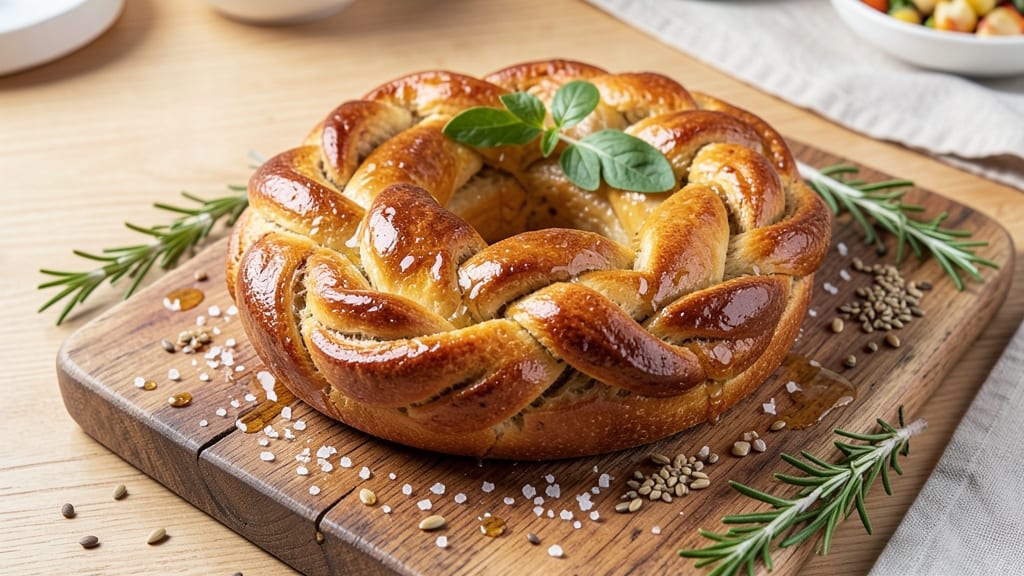
This 8 plait bread recipe transforms your kitchen into a bakery with its elegant braids and irresistible aroma. 🌟 The secret lies in a perfectly balanced dough—rich with butter, tender yet sturdy enough to hold eight delicate plaits without collapsing.
I've baked countless loaves, and this method guarantees a golden, crisp crust that contrasts beautifully with a soft, fluffy interior.
The process starts with a simple yet precise dough recipe, where butter and eggs create that signature buttery flavor and structure. Shaping the eight braids requires patience—each strand must be even to ensure uniform proofing and baking.
The key is in the egg wash and baking technique, which locks in moisture while creating that coveted crackly crust.
What you'll end up with is a showstopping loaf that looks as impressive as it tastes—ideal for holidays, gifts, or simply elevating your dinner table. The aroma alone will have everyone gathering around, and the first bite delivers that perfect balance of buttery richness and airy texture.
Whether you're a beginner or an experienced baker, this recipe delivers restaurant-quality results with a traditional touch. Let's get started on creating your masterpiece!
Ingredients for 8 plait bread
Twelve essential ingredients crafting restaurant-quality braided bread with signature buttery crust and airy interior.
| Ingredient | Amount | Notes |
|---|---|---|
| All-Purpose Flour 🌾 | 5 cups | High-protein for structure (12-13% protein) |
| Unsalted Butter 🧈 | 1 cup | Cold, cubed, European-style preferred |
| Large Eggs 🥚 | 2 whole | Room temperature for even mixing |
| Granulated Sugar 🍚 | ¼ cup | Fine grain for smooth texture |
| Instant Yeast 🍞 | 2 ¼ tsp | Freshness tested (1 year shelf life max) |
| Diamond Crystal Kosher Salt 🧂 | 1 ½ tsp | Fine grain for even distribution |
| Whole Milk 🥛 | ½ cup | Room temperature for fermentation |
| Large Egg Yolk 🥚 | 1 whole | Reserved for egg wash |
| Granulated Sugar 🍚 | 1 tbsp | For egg wash (extra fine) |
| Cornmeal 🌽 | ¼ cup | Fine grain for dusting |
| Poppy Seeds 🌻 | 1 tbsp | Optional for decorative finish |
| Sesame Seeds 🌱 | 1 tbsp | Optional for decorative finish |
The flour is non-negotiable—King Arthur or Bread Flour yield the best structure for eight plaits. European-style unsalted butter (like Plugrá) delivers superior flavor and moisture retention, though Land O'Lakes works in a pinch. Instant yeast must be fresh—test by dissolving in warm water (should foam in 10 minutes). For the egg wash, reserve a yolk and use large eggs (50g minimum each) to achieve that signature glossy finish. Diamond Crystal kosher salt is preferred for its fine grain, which dissolves evenly without graininess. Whole milk at room temperature ensures optimal fermentation without overheating the yeast.
No European butter? Plugrá or Kerrygold are excellent substitutes, but Land O'Lakes will work if softened properly. Instant yeast can be swapped for active dry (proof in warm water first). For a lower-fat version, replace 2 tbsp butter with applesauce—though texture will be slightly less tender. Poppy and sesame seeds can be omitted or replaced with everything bagel seasoning for a different aesthetic. Cornmeal is ideal for dusting, but semolina works equally well. If your dough feels too sticky, add 1 tbsp flour at a time until it reaches a smooth, slightly tacky consistency—this ensures the plaits hold without tearing.
Store unbaked dough wrapped in plastic in the fridge for up to 24 hours—proofing time will extend slightly. Freshly baked loaves cool completely on a wire rack to prevent sogginess, then wrap in a clean kitchen towel and store at room temperature for 2-3 days. For longer storage, slice and freeze portions in airtight bags for up to 3 months. The egg wash can be prepped ahead and stored in the fridge for 2 days, though it's best used fresh. Butter should be kept cold until mixing to maintain proper dough temperature—never melt it beforehand
Why You'll Love This Recipe
- No-Knead Magic: I swear by this dough—just mix, let it rise, and shape. The butter and sugar work their way into every fold, so you get that buttery pull with zero effort.
- Sweet Butter Crunch: That crispy golden crust with a tender, buttery interior? It’s the sugar and butter doing all the heavy lifting. Honestly, I’ve never resisted a second slice.
- Breakfast to Brunch: Tear it warm with jam for a lazy morning or toast slices for French toast—it’s my go-to weeknight staple. Even my picky husband doesn’t skip it.
- Budget-Friendly Staple: Five ingredients, one dough, endless uses. A loaf lasts me days, and the yeast stretches my grocery budget without sacrificing flavor. (Yes, even on a Tuesday night.)
Step-by-step instructions for braided beauty with buttery crust and soft center
Mastering the 8-strand plait requires patience and precision—here's how to achieve that signature braid every time.
👨🍳 Step 1: Prepare the Dough for Optimal Fermentation
In a stand mixer fitted with the dough hook, combine the 5 cups all-purpose flour and 2.25 tsp instant yeast. Mix on low speed for 30 seconds to aerate the flour before adding the 1 cup cold cubed unsalted butter. Let the mixer run until the butter is fully incorporated and the mixture resembles coarse crumbs.
In a separate bowl, whisk together the 2 whole large eggs, 0.5 cup whole milk, 0.25 cup granulated sugar, and 1.5 tsp diamond crystal kosher salt. Gradually pour this wet mixture into the flour-butter combination while mixing on medium speed. The dough will come together quickly—avoid overmixing once it forms a shaggy mass. Real talk: if it looks too sticky, add 1-2 tablespoons of the reserved flour.
Turn the dough out onto a lightly floured surface and knead gently for 2-3 minutes until smooth. The dough should be soft but not sticky—if it sticks to your hands, dust with more flour. Shape into a round loaf, place in a lightly greased bowl, cover with a damp towel, and let rise in a warm place for 1-1.5 hours or until doubled in size. You'll know it's ready when you poke it gently and the indentation springs back slowly.
🍳 Step 2: Shape the Dough into an 8-Strand Braid
Once the dough has risen, punch it down to release air and divide it into 8 equal strands (each about 12-14 inches long). Here's the thing—this is where precision matters. If the strands aren't uniform, your braid will look lopsided. Roll each strand gently between your palms to smooth the surface and prevent cracks.
Lay the 8 strands parallel to each other, forming a rectangle. This is your foundation for the braid. Starting from the top, take the first strand and cross it over the second strand, then under the third, over the fourth, and so on until you reach the eighth strand. Bring it back down to the center, then repeat the pattern with the next strand. This alternating over-under motion creates the classic braided pattern. Keep the tension even—too tight and the bread will be dense; too loose and it won't hold its shape.
Once all strands are braided, tuck the ends under the loaf to secure it. Place the braided loaf on a parchment-lined baking sheet, cover with a damp towel, and let it rise for another 30-45 minutes until puffy. This second rise is crucial—it gives the bread its final lift and ensures a light, airy texture.
🔥 Step 3: Create the Signature Buttery Crust
Preheat your oven to 375°F. In a small bowl, whisk together the 1 whole large egg yolk, 1 tbsp granulated sugar, and 1 tbsp water to create the egg wash. Brush this mixture generously over the risen braided loaf, focusing on the top and sides. The sugar in the wash will caramelize during baking, giving that beautiful golden crust.
Sprinkle 0.25 cup cornmeal evenly over the top of the loaf—this creates a crispy, textured crust that contrasts beautifully with the soft interior. For extra flair, mix the 1 tbsp poppy seeds and 1 tbsp sesame seeds together and sprinkle them over the cornmeal. Bake for 25-30 minutes until the bread is deep golden brown and sounds hollow when tapped on the bottom.
Here's the moment that matters: the bread is done when the internal temperature reaches 190°F and the crust is a rich, golden brown. If it browns too quickly, tent the loaf with foil to prevent over-browning while it finishes baking. The contrast between the crispy, buttery crust and the soft, pillowy center is what makes this braided beauty worth the effort.
⏰ Step 4: Rest and Serve for Maximum Flavor
Remove the bread from the oven and let it cool on a wire rack for 10-15 minutes before slicing. This resting period allows the steam inside the bread to redistribute, ensuring every slice is soft and moist. If you can't resist, slice it warm—but for the best texture, let it cool completely before serving.
For serving, slice the loaf diagonally to showcase the intricate braid. The layers should pull apart cleanly, revealing a tender crumb with a hint of sweetness from the egg wash. Pair it with butter, jam, or your favorite spread to enjoy the full experience. The buttery crust will melt in your mouth, while the soft center keeps it light and airy—exactly what you want from a braided bread.
Pro Tips For Making 8 Plait Bread
- SOFTEN THE BUTTER RIGHT: Take the unsalted butter straight from the fridge and cut it into cubes—no waiting for it to sit out. Mix it into the flour and sugar with your fingers until it resembles coarse crumbs. This keeps the dough from getting too warm too fast, which is especially important when you’re working with yeast that needs to stay patient.
- WEIGH YOUR FLOUR LIKE A PRO: Scoop that flour into a measuring cup once, then level it off with a knife—don’t pack it down. Too much flour makes the dough tough, and this bread’s delicate plaits need room to stretch. I learned this the hard way when my first batch turned out dense as a brick.
- LET THE DOUGH REST LONGER: After the first rise, don’t rush the shaping. Give the dough a solid 15-20 minutes to relax at room temp before braiding—even if it feels like forever. This prevents the plaits from tearing when you pull them tight, and the final texture will be light, not chewy.
- EGG WASH FOR GOLDEN CRUST: Beat one egg with a splash of water (about 1 tablespoon) and brush it lightly over the shaped loaves before baking. Skip the egg wash, and you’ll end up with a pale, sad-looking crust. This little step makes all the difference for that buttery, caramelized finish.
Flavor customization for this dish
Sweet Variations
For a sweeter twist, replace the 1 tbsp granulated sugar in the egg wash with 2 tbsp honey—this adds caramel notes that caramelize beautifully on the crust. I love drizzling 2 tbsp maple syrup over the braid before baking for a deeper, richer sweetness.
For a festive touch, sprinkle coarse sugar crystals on top before baking to create a candy-like crust. 🌟
Herb-Infused Dough
Swap 1 tbsp dried herbs (like rosemary or thyme) for 1 tbsp flour in the dough for an aromatic twist. Fresh herbs work too—finely chop 2 tbsp fresh rosemary and mix it into the butter before combining with flour.
The herbs infuse the dough with earthy depth, perfect for savory pairings like charcuterie boards. 🌿
Cheesy Twist
Add ½ cup shredded Gruyère or Parmesan to the dough for a nutty, savory variation. The cheese melts slightly during baking, creating pockets of rich flavor in every bite.
For extra decadence, fold 2 oz cream cheese into the dough along with the herbs—this keeps the bread tender while adding a creamy contrast. 🧀
Spiced Adaptations
Incorporate warmth by adding ½ tsp cinnamon and ¼ tsp nutmeg to the dough for a subtle spiced flavor. For a bolder kick, mix 1 tsp smoked paprika and ½ tsp cayenne into the egg wash—this creates a beautifully cracked, spiced crust.
A pinch of cardamom adds a sophisticated floral note. 🌶️
Seed & Nut Enhancements
Boost texture and nutrition by mixing ¼ cup chopped walnuts or pumpkin seeds into the dough. For extra crunch, sprinkle 2 tbsp crushed pistachios or toasted sunflower seeds over the cornmeal before baking. These additions add visual appeal and a satisfying bite. 🌰
Gluten-Free Option
Replace the all-purpose flour with a 1:1 gluten-free flour blend (like Bob's Red Mill) and add ½ tsp xanthan gum. Reduce the milk to ¼ cup and increase the butter to 1 cup + 2 tbsp for moisture.
The braid will be slightly denser but still hold its shape beautifully. 💪
Nutrition facts
Frequently asked questions
Can I make this 8-plait bread with fewer strands?
While the recipe calls for eight plaits, you can easily adapt it to four or six strands for a simpler version. Just divide the dough proportionally—each strand should be roughly the same length to maintain balance. Fewer plaits will create a wider, shorter loaf that's still impressive and delicious.
Why did my braided bread collapse during baking?
Collapse usually happens when the dough isn't properly proofed or the strands aren't tightly braided. Make sure your dough has fully doubled in size before shaping, and keep tension even when braiding. Also, avoid overproofing—the second rise should only take 30-45 minutes at most. If your kitchen is cold, try a warm oven with a bowl of hot water for 5 minutes to help the bread rise properly.
How do I store leftover 8-plait bread?
For short-term storage, wrap the cooled loaf in a clean kitchen towel and store at room temperature for up to 2-3 days. For longer storage, slice the bread and freeze portions in airtight bags for up to 3 months. To revive, toast slices in a toaster or warm in a 350°F oven for 5-10 minutes—they'll taste almost as fresh as day one!
Can I make this bread without a stand mixer?
Yes! You can mix the dough by hand—just combine the flour and yeast, then cut in the cold butter using a pastry cutter or your fingers until it resembles coarse crumbs. Mix in the wet ingredients by hand until the dough comes together, then knead on a floured surface for 8-10 minutes until smooth. The texture will be slightly less tender but still delicious, and the braiding process remains the same.
What's the best way to reheat sliced bread?
The best method is to wrap slices in a damp paper towel and microwave for 10-15 seconds—this restores moisture without making them gummy. For a crispier texture, toast slices in a 375°F oven for 3-5 minutes until golden. Avoid the toaster if your bread has seeds or toppings, as they can burn quickly.