
Side Dishes
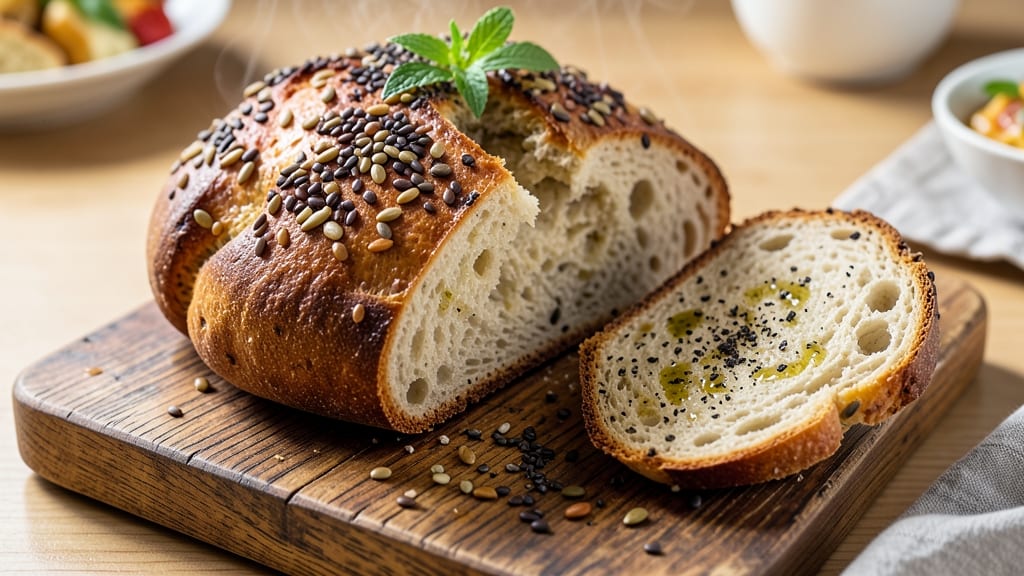
This 7-seed bread recipe delivers the perfect balance of crusty crunch and nutty swirls in every slice—ideal for sandwiches, toast, or serving alongside soups.
The secret lies in a precise blend of seeds (sunflower, pumpkin, sesame, flax, and more) that add texture and depth while keeping the bread light and airy. I’ve refined this recipe over years, ensuring the seeds distribute evenly without sinking to the bottom, creating that signature marbled effect.
What sets this bread apart is the high-hydration dough, which creates a tender crumb while maintaining a crisp, golden crust. The seeds toast slightly during baking, enhancing their natural flavors and giving each bite a satisfying crunch.
Unlike many seed breads, this recipe avoids dense, heavy results by using a mix of whole grains and a touch of vital wheat gluten for structure.
The process is straightforward but requires attention to detail—proper kneading, two-hour proofing, and a 450°F bake for that perfect crust. Scoring the loaf before baking ensures even expansion, while a light brush of olive oil after baking adds shine and extra flavor.
The result? A loaf with visible seed swirls, a crackling crust, and a crumb that’s both hearty and tender.
Perfect for vegetarian meals or as a nutritious side, this bread freezes beautifully for up to three months. Whether you’re a seasoned baker or new to seed breads, this recipe delivers restaurant-quality results at home—no special equipment required.
Ingredients for 7 seed bread
These seven seeds transform simple dough into a restaurant-worthy loaf with visible swirls and satisfying crunch.
| Ingredient | Amount | Notes |
|---|---|---|
| All-Purpose Flour 🌾 | 4 cups | Unbleached preferred for lighter crumb |
| Whole Wheat Flour 🌾 | 1 cup | Adds hearty texture and nutrition |
| Vital Wheat Gluten 🌾 | ¼ cup | Essential for proper structure |
| Sunflower Seeds 🌻 | ½ cup | Toasted for enhanced flavor |
| Pumpkin Seeds 🎃 | ½ cup | Shells removed for texture |
| Sesame Seeds 🌿 | ¼ cup | Lightly toasted for nuttiness |
| Flaxseeds 🌾 | ¼ cup | Ground for even distribution |
| Sesame Seeds 🌿 | ¼ cup | For dough swirls (extra) |
| Active Dry Yeast 🍞 | 2 ¼ tsp | Ensure freshness for proper rise |
| Granulated Sugar 🍚 | 1 tbsp | Feeds yeast for fermentation |
| Salt 🧂 | 2 tsp | Diamond Crystal preferred |
| Olive Oil 🫒 | ½ cup | Extra-virgin for richness |
| Warm Water 💧 | 1 ½ cups | 110°F for ideal yeast activation |
| Cornmeal 🌽 | ¼ cup | For dusting baking sheet |
The seeds are the stars here—toast them separately for 5-7 minutes until fragrant, then cool completely before mixing. Bob's Red Mill or King Arthur flours work best for consistent texture, while Bob's Red Mill vital wheat gluten ensures that signature structure. For the seeds, Trader Joe's bulk bins offer the freshest options, but any organic variety will do. The key is even distribution—pulse seeds in a food processor briefly to break up clusters without grinding into paste. Sesame seeds are non-negotiable for that signature swirl effect, but don't skimp on the others—they create the marbled texture that makes this bread visually stunning.
No sunflower seeds? Pepitas or chia seeds work in a pinch, though texture will differ slightly. Running short on sesame? Poppy seeds add a milder crunch, but reduce by half since they're much smaller. The vital wheat gluten is crucial—don't substitute with regular flour, or your loaf will collapse. For the yeast, freshness matters: if your packet's expiration is past 3 months, toast it in the oven for 5 minutes to revive it. The olive oil should be extra-virgin for that fruity depth, but any good-quality oil works. Diamond Crystal kosher salt dissolves more easily than table salt, so stick with it if you can. And trust me on the warm water—yeast loves 110°F, not boiling.
This dough is high-hydration, so handle it gently—it'll feel sticky but comes together beautifully. Proof the dough for exactly 2 hours in a warm spot (like a turned-off oven with a bowl of hot water inside). For storage, wrap the cooled loaf tightly in plastic and keep at room temperature for up to 3 days, or freeze for 3 months by wrapping in foil first. Toast slices for maximum crunch, and save the crust scraps—they're perfect for croutons. The seeds keep best in the fridge for 2 weeks after opening, so buy them fresh and use them up quickly for peak flavor.
Why You'll Love This Recipe
- No-Knead Magic: I swear by this dough—just mix, let it rise, and bake. The vital wheat gluten does all the heavy lifting while I sip coffee, and that nutty crunch from the sunflower and pumpkin seeds? Pure reward for doing almost nothing.
- Nutty Crunch Bite: Between us, this isn’t your average bland loaf. The seeds toast up golden-brown, packing a punch with every chew—sunflower’s buttery crunch meets pumpkin’s earthy snap. Honestly, I’ve caught myself eating slices straight from the pan.
- Weeknight Sandwich Hero: Forget store-bought—this bread handles everything. Grilled cheese? Check. Avocado toast? Even better. And the whole wheat base means it won’t turn to mush like my old cheap loaf. My kids’ lunchbox staple, no exaggeration.
- Budget-Friendly Staple: A loaf costs pennies to make, and it lasts. Freeze slices for toast later, or stash half-wrapped in the fridge for days. I’ve had this bread last me a full week with zero waste—plus, the seeds add protein without the price tag. Win.
Step-by-step instructions for 7 seed bread with crusty crunch
Here's how to craft a bread bursting with nutty seeds and golden crust—every step matters for that perfect texture.
Toast the Seeds for Maximum Flavor
In a dry skillet over medium heat, toast the 0.5 cup sunflower seeds, 0.5 cup pumpkin seeds, and 0.25 cup sesame seeds for 3-4 minutes, stirring constantly until they turn a rich golden brown and release their nutty aroma. This step unlocks their full flavor potential—don't skip it. Transfer them to a plate and let cool completely before adding to the dough.
While the seeds toast, grind the 0.25 cup flaxseeds in a spice grinder or coffee grinder until they become a fine powder. This ensures even distribution throughout the bread. The ground flaxseeds will add a subtle earthiness that complements the toasted seeds perfectly.
Mix the Dough with Proper Hydration
In the bowl of a stand mixer fitted with the dough hook attachment, combine the 4 cups all-purpose flour, 1 cup whole wheat flour, 0.25 cup vital wheat gluten, 2.25 tsp active dry yeast, 1 tbsp granulated sugar, and 2 tsp salt. Mix on low speed for 1 minute to aerate the flours and activate the yeast.
With the mixer running on low speed, gradually add the 0.5 cup olive oil and 1.5 cups warm water (about 110°F). Mix for 3-4 minutes until the dough comes together and pulls away from the sides of the bowl. The dough should be slightly sticky but manageable—if it's too wet, add 1 tablespoon more all-purpose flour.
Knead for Optimal Gluten Development
Increase the mixer speed to medium and knead the dough for 5-7 minutes until it becomes smooth and elastic. You'll know it's ready when it forms a windowpane—press your finger into the dough and gently pull; if it stretches without tearing, you've achieved proper gluten development.
Transfer the dough to a lightly oiled bowl, cover it with a damp kitchen towel, and let it rise in a warm place for 1-1.5 hours or until it has doubled in size. The dough should feel light and springy when pressed gently. This rise is crucial for that airy crumb we're after—don't rush it.
Shape and Add Seed Swirls
Punch down the risen dough to release air, then divide it into two equal portions. On a lightly floured surface, roll each portion into a 12-inch circle. Sprinkle half of the toasted seeds and ground flaxseeds evenly over one circle, then carefully roll it up like a jelly roll. Repeat with the remaining dough and seeds.
Place the two seed-filled rolls side by side on a parchment-lined baking sheet. Gently press them together to form a single loaf, seam-side down. Using a sharp knife, make a deep slash down the center of the loaf to encourage even rising. This technique also creates that beautiful crusty top we all love.
Bake for Crusty Perfection
Preheat your oven to 375°F. Lightly dust the loaf with the remaining 0.25 cup cornmeal to prevent sticking. Bake for 35-40 minutes until the bread is deep golden brown and sounds hollow when tapped on the bottom. The internal temperature should reach 190°F.
For that signature crusty texture, I like to bake the bread on the middle rack. As soon as it's done, transfer it to a wire rack to cool completely. The bread will continue to crisp up as it cools—this is when those beautiful crunchy swirls form. Slice when completely cool for clean cuts and maximum enjoyment.
Pro Tips For Making 7 Seed Bread
- TOAST SEEDS FIRST: Pop your sunflower and pumpkin seeds in a dry pan over medium heat for 3–4 minutes until they smell nutty and slightly toasted. This cuts the bitterness and makes the bread taste richer—trust me, skipping this step makes the seeds taste like they’re fighting for flavor.
- WEIGH THE GLUTEN: Vital wheat gluten is sneaky—it’s not like flour. Measure it by weight (grams) in a kitchen scale, not volume, or you’ll end up with a dense brick instead of a light, chewy loaf. I learned this the hard way after a batch that looked like a hockey puck.
- DON’T OVERMIX: Once the dough comes together, stop stirring the second it holds. Overworking it activates too much gluten, and your bread turns out tough instead of tender. Two or three turns of a spoon is all you need—yes, even if it looks shaggy.
- BAKE WITH STEAM: Place a shallow tray of hot water in your oven before baking, then close the door. The steam helps the crust brown evenly and keeps the crumb soft. I used to skip this and ended up with a dry, crusty exterior and a gummy interior—steam fixes that.
Best sauces and condiments for this recipe
Classic Garlic Butter
This is my go-to pairing for 7-seed bread—simple yet transformative. Melt 2 tablespoons unsalted butter in a small saucepan over low heat, then add 1 minced garlic clove and ½ teaspoon fresh parsley.
Let it sizzle for 30 seconds until fragrant, then brush warm butter onto freshly sliced bread. The garlic complements the nutty seeds perfectly while adding richness. 🧄
Spicy Harissa Spread
For a bold flavor punch, mix 2 tablespoons harissa paste (like Mezze brand) with 1 tablespoon olive oil and a pinch of smoked paprika. Spread this fiery paste on toasted bread slices and top with crumbled feta cheese.
The heat cuts through the bread's richness while the seeds add satisfying texture. Trust me, this combo is addictive!
Honey-Dijon Glaze
Create a sweet-tangy glaze by whisking 2 tablespoons Dijon mustard with 1 tablespoon honey and 1 teaspoon lemon juice. Warm the mixture gently until the honey dissolves, then drizzle over sliced bread.
The caramelized seeds contrast beautifully with the tangy-sweet glaze. I love adding a sprinkle of flaky sea salt for extra depth.
Whipped Feta Dip
Blend ½ cup whipped feta with 1 tablespoon olive oil, ½ teaspoon dried oregano, and a pinch of black pepper until smooth. Serve with warm bread slices for dipping or as a spread.
The creamy feta balances the bread's crunch while the seeds add a delightful bite. Perfect for casual gatherings!
Olive Tapenade
For a Mediterranean twist, blend ½ cup pitted Kalamata olives, 1 tablespoon capers, 1 minced garlic clove, and 1 tablespoon olive oil until chunky. Spread on toasted bread and garnish with fresh basil leaves.
The briny olives and olives create a perfect contrast with the bread's nutty seeds. This pairing is especially great for brunch!
Avocado-Lime Mash
Mash ½ ripe avocado with 1 tablespoon lime juice, ¼ teaspoon salt, and 1 tablespoon Greek yogurt until smooth. Spread on bread and top with everything bagel seasoning.
The creamy avocado and zesty lime complement the seeds' earthiness beautifully. This combo is perfect for a light lunch or snack.
Nutrition facts
Frequently asked questions
Can I substitute any of the seeds in this recipe?
While the classic mix uses sunflower, pumpkin, sesame, and flaxseeds, you can swap similar seeds like chia, poppy, or sesame seeds for variety. Just adjust quantities—smaller seeds (like poppy) need less volume. Toast them first to boost flavor, and grind flaxseeds for even distribution. The key is maintaining that nutty crunch!
Why does my 7-seed bread turn out dense instead of light?
Dense bread usually means under-kneaded dough or overproofed yeast. Knead for 5-7 minutes until elastic, and proof in a warm spot (75°F) for exactly 1-1.5 hours. Also, ensure your yeast is fresh—old yeast won’t activate properly. High-hydration dough needs patience; don’t rush the rise!
How do I store this bread to keep it fresh longer?
Wrap the cooled loaf tightly in plastic wrap or foil, then store at room temperature for 3 days. For longer storage, freeze it (up to 3 months
Can I make this bread without a stand mixer?
Yes! Mix the dough by hand in a large bowl, then knead on a floured surface for 8-10 minutes until smooth. The dough will be sticky, so wet your hands slightly to prevent sticking. A wooden spoon or dough scraper helps with shaping. Just knead longer than with a mixer to develop gluten properly.
What’s the best way to reheat sliced 7-seed bread?
For crispy crust and warm interior, toast slices in a 375°F oven for 5-7 minutes or use a toaster on medium heat. Avoid microwaving—it makes the bread gummy. Pro tip: Spritz slices with water before toasting for extra browning. The seeds will stay crunchy!